





Editor's Note: This story was originally published August 13, 2025. It was updated August 18 to include the Department of Justice lawsuit.
California Under Fire Over Clean Truck Partnership
Truck makers say they're caught in the crossfire as the Trump administration challenges the California Air Resources board over California's contention that the Clean Truck Partnership agreement is still valid.
August 18, 2025
“California demands that OEMs follow preempted laws; the United States maintains such laws are illegal and orders OEMs to disregard them,” explains the lawsuit. “This situation is not tenable.”
Image: HDT Graphic
6 min to read
California's plans to continue its push to zero-emissions heavy-duty trucks through a prior agreement with truck makers is facing challenges from the Trump administration as well as the truck makers themselves.
At issue is the validity of a 2022 agreement between the California Air Resources board and truck OEMs called the Clean Truck Partnership. After Congress yanked Environmental Protection Agency waivers for more stringent California truck emissions rules this summer, state regulators have indicated they expect truck makers to continue to honor the agreement.
Truck makers disagree. So does the Department of Justice. Both are challenging the California Air Resources Board in court.
In addition, the Federal Trade Commission just wrapped up an investigation into the agreement, saying it raised numerous antitrust concerns, with truck makers agreeing not to abide by the Clean Truck Partnership or sign any such private agreements in the future.
What is the Clean Truck Partnership Agreement?
Since the federal government revoked California’s EPA waivers for its Advanced Clean Trucks and NOx regulations, the state has nevertheless expected truck and engine makers to continue along the state’s path because of the Clean Truck Partnership agreement signed in 2023.
The Clean Truck Partnership agreement was a commitment from the OEMs to meet California’s zero-emission vehicles mandate, “regardless of whether any other entity challenges California’s authority to set more stringent emissions standards under the federal Clean Air Act.”
In return, CARB agreed to modify its regulations for nitrogen oxide emissions to better align with federal standards for 2027 engines, to work with manufacturers to give them reasonable lead time to meet CARB’s requirements and before imposing new regulations, and to support the development of necessary ZEV infrastructure.
California has a suit pending against the federal government contending that the action taken to revoke its Clean Air Act waivers for the Advanced Clean Trucks act and omnibus NOx regulations was unlawful.
The Western States Trucking Association also has challenged the Clean Truck Partnership in a lawsuit.
The latest challenge to the Clean Truck Partnership agreement came in the form of a lawsuit filed August 15 by the U.S. Department of Justice.
“The decision whether to ban internal-combustion engines in heavy-duty trucks rests ultimately with the federal government. And it has declined to take such a far-reaching step,” the Justice Department said.
The Justice Department’s Environment and Natural Resources Division filed the complaints with motions to intervene in pending cases in the Eastern District of California and Northern District of Illinois, according to a DOJ news release.
“Agreement, contract, partnership, mandate — whatever California wants to call it, this unlawful action attempts to undermine federal law,” said Acting Assistant Attorney General Adam Gustafson of ENRD, in a news release.
The Illinois complaint alleges that "in a stunning act of defiance, the State of California is attempting to use its own vehicle and engine emissions standards through a so-called 'Clean Truck Partnership' to ban internal-combustion engines in heavy-duty trucks, notwithstanding duly enacted federal statutes specifically providing that those regulatory standards are preempted."
Truck Makers: Clean Truck Partnership Agreement is Void
On August 11, Daimler Truck North America (which makes Freightliner and Western Star), International Motors, Paccar (parent of Kenworth and Peterbilt), and Volvo Group North America (parent of Mack and Volvo), filed suit against the California Air Resources Board, CARB’s executive officer, and California Gov. Gavin Newsom.
In the lawsuit, the companies requested a declaratory judgement against CARB and Newsom, as well as injunctive relief.
“California demands that OEMs follow preempted laws; the United States maintains such laws are illegal and orders OEMs to disregard them,” explains the lawsuit. “This situation is not tenable.”
Antitrust Concerns About Clean Truck Partnership
The FTC in its investigation said that the structure of the Clean Truck Partnership raised several antitrust concerns:
The agreement forced manufacturers to produce “zero emissions” engines rather than internal combustion engines, and these output restrictions remained in place even if the CARB regulations were later invalidated;
The agreement did not foreclose one truck manufacturer from enforcing its restrictions against a competing truck manufacturer; and
The agreement locked in place terms with limited political accountability and opportunity for elected officials to modify them.
Since the FTC opened its investigation, CARB’s waivers from the Environmental Protection Agency were rescinded, and the manufacturers largely have disclaimed the Clean Truck Partnership agreement.
Daimler Truck, International, Paccar and Volvo Group wrote letters to the FTC to resolve the antitrust concerns, saying the Clean Truck Partnership is unenforceable in the wake of the waiver cancellations. They said they had not and won't attempt to enforce the Clean Truck Partnership’s terms against another manufacturer.
The manufacturers also agree not to enter any restrictive agreement with a U.S. state regulator or government permitting cross-enforcement among competitors or containing an agreement to comply with regulatory limits a state has no authority to impose or enforce.
The Truck & Engine Manufacturers Association, which represents a larger range of truck manufacturers and was involved in negotiating the Clean Truck Partnership, also agreed not to negotiate or enter into future agreements like the Clean Truck Partnership on behalf of its members.
“CARB’s regulatory overreach posed a major threat to American trucking and, in our view, presented serious antitrust concerns,” said Taylor Hoogendoorn, deputy director of the Bureau of Competition.
Truck Makers ‘Caught in the Crossfire’
However, California regulators don't agree that the agreement has been nullified by the revocation of the EPA waivers, and the truck makers are fighting back.
In the lawsuit against CARB, filed in the U.S. District Court for the Eastern District of California, the OEMs say they are “caught in the crossfire” between the Trump administration and California regulators.
The truck makers say the state has threatened OEMs with civil sanctions and unfavorable regulatory treatment if the OEMs refuse to comply with CARB regulations.
The U.S. Department of Justice, on the other hand, issued cease and desist letters to the OEMs, telling them to stop complying with California’s mandates, contending that they are now unlawful.
“The OEMs are subject to two sovereigns whose regulatory requirements are irreconcilable and who are openly hostile to one another,” the suit explains. “Each wields a hammer to enforce its will on industry, leaving OEMs — who simply seek to sell heavy-duty trucks in compliance with the law — unable to plan with the necessary certainty and clarity where their products need to be certified for sale and by which regulatory authority.”
The OEMs say they need to know within a matter of weeks whether they must obtain a model year 2026 certification from CARB to lawfully sell their products in California and other opt-in states, which together represent approximately 25% of the national market for new vehicle registrations for heavy-duty vehicles.
Critics Accuse OEMs of 'Cynical Reversal of Course"
Statements from a number of environmental groups say “the lawsuit paints wealthy truck manufacturers as victims.”
“Imagine being a truck company, working for years towards an agreement with the world's fourth largest economy that helps you sell electric trucks and finance infrastructure despite federal uncertainty... and then burning your regulators and destroying shareholder value by blowing up that agreement,” said Craig Segall, former deputy executive officer of the California Air Resources Board.
Guillermo Ortiz, senior clean vehicles advocate with the Natural Resources Defense Council, called the lawsuit “a cynical reversal of course."
“These companies helped negotiate the Clean Truck Partnership to secure regulatory certainty. Now they’re trying to dismantle the very deal they shaped," Ortiz continued. "This is bad faith, plain and simple, and it raises questions about whether these manufacturers are serious about their ability to deliver clean trucks to the global stage.”
Updated 12:45 p.m. August 13, 2025, to add information about the FTC investigation.
Updated August 18, 2025, to add information about the Justice Department legal challenges.
More Equipment
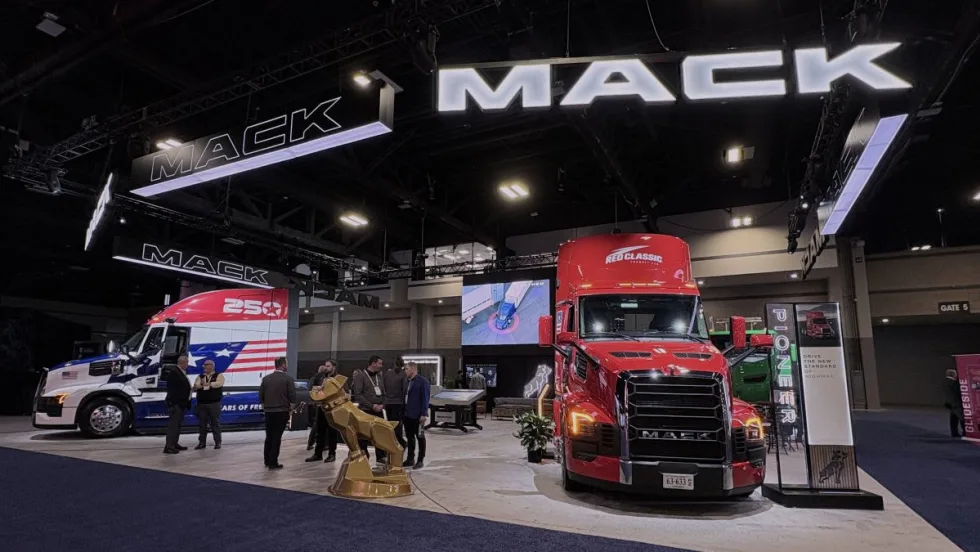
Trucks at ATA's 2026 MC&E in Charlotte, North Carolina [Photos]
From rigs decked out in patriotic America's 250 paint schemes to autonomous trucks and more, check out these photos from ATA's 2026 Management Conference & Exhibition.
Read More →
Help HDT Find Trucking’s Top Products
Have you come across a new product that could make a difference for trucking fleets? Nominate it for HDT’s 2027 Top 20 Products Awards by November 9.
Read More →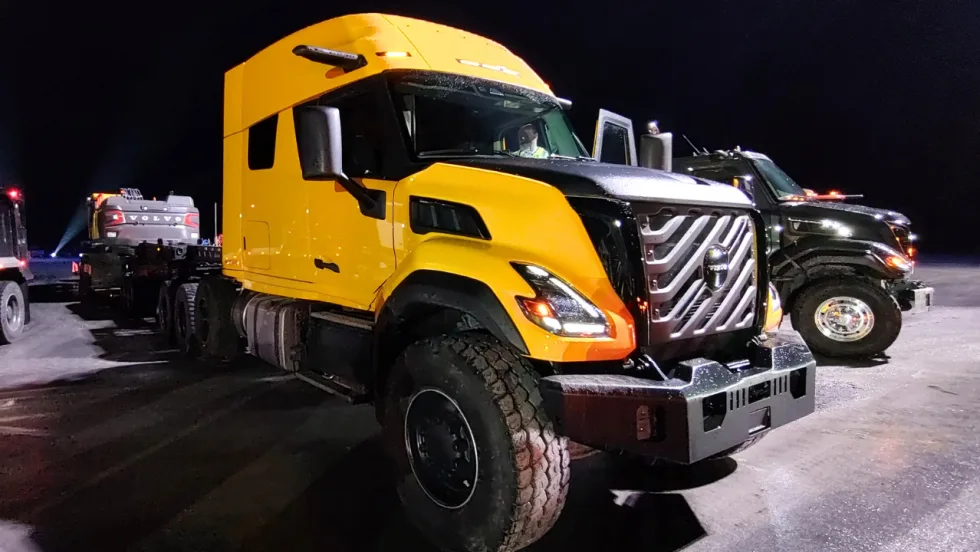
Volvo Unveils New VNX Heavy-Haul and Vocational Truck
Volvo Trucks has launched the VNX, a new vocational truck also available as a tractor in day cab and two sleeper configurations, with one heavy-haul model. The Volvo VNX is powered by Volvo's D13 platform, which delivers up to 540 horsepower and 1,950 pound-feet of torque and is EPA 2027-compliant.
Read More →
How GP Transco Cuts Trucking Fuel Costs, a Tenth of a Gallon at a Time
What’s another tenth of a mile per gallon worth? GP Transco shares how equipment upgrades and driver coaching turn small gains into meaningful fuel savings.
Read More →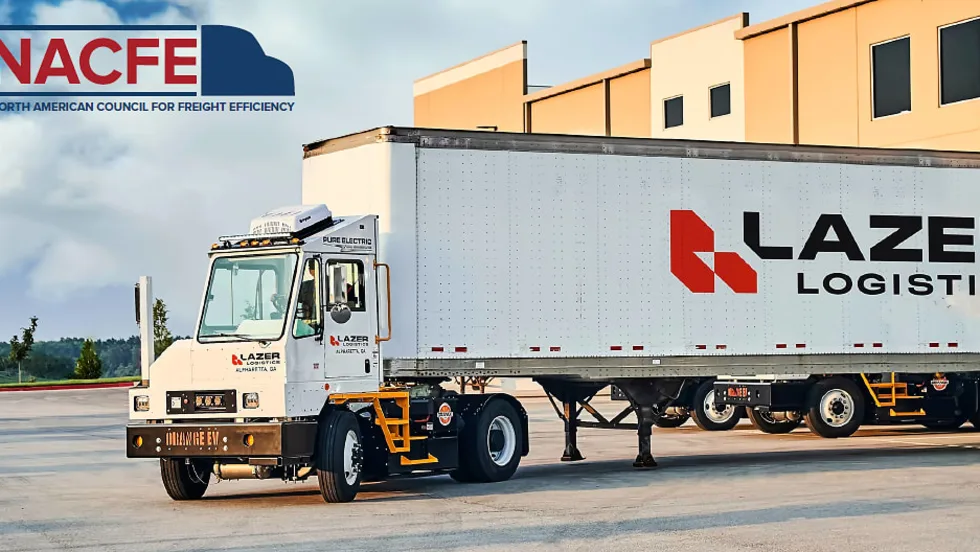
Electric Yard Tractors Move Beyond Pilots
Operating-cost savings have overtaken sustainability goals as the leading reason surveyed fleets are adopting battery-electric terminal tractors, according to new NACFE research.
Read More →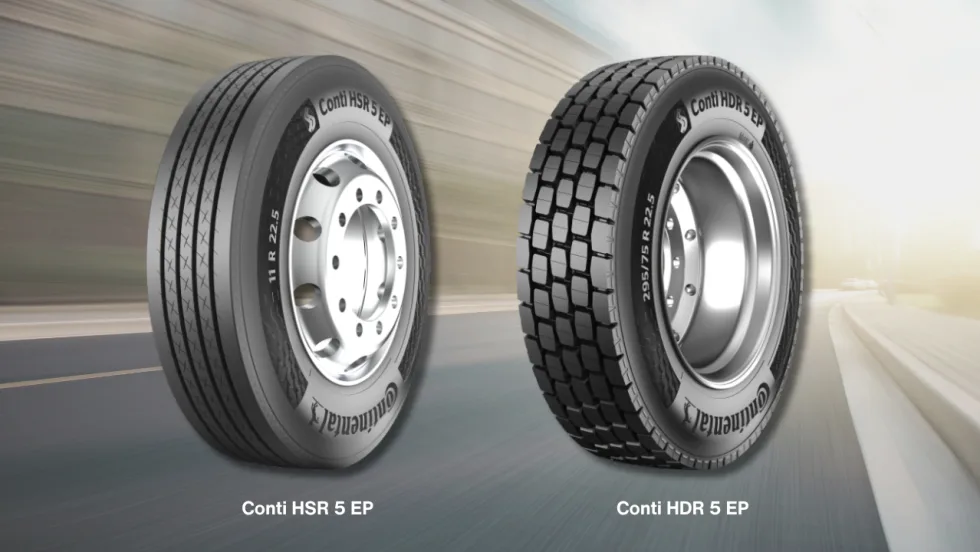
Continental Introduces New Regional Truck Tires
Continental says its new Generation 5 steer and drive tires for regional operations offer longer tread life, with estimated mileage gains of 22% and 19%, respectively.
Read More →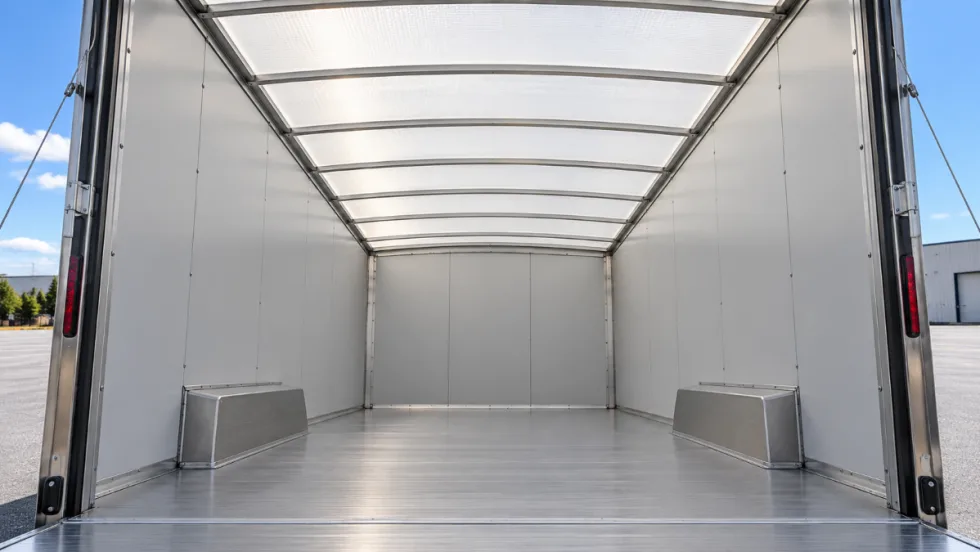
Tekmodo Introduces CargoBright Brand for Translucent Trailer Roofs
CargoBright is designed to diffuse daylight across the cargo area while performing as a working vehicle roof.
Read More →
Fleet Economics Shape Electric Truck Outlook
ACT Research expects costs, charging infrastructure, and technology improvements to drive zero-emission commercial vehicle adoption as federal regulations and incentives retreat.
Read More →
Kodiak Targets Dallas–Houston for Driverless Trucks
The company says its autonomous trucks are completing the I-45 run without a safety observer taking control. It plans to remove the observer by the end of 2026.
Read More →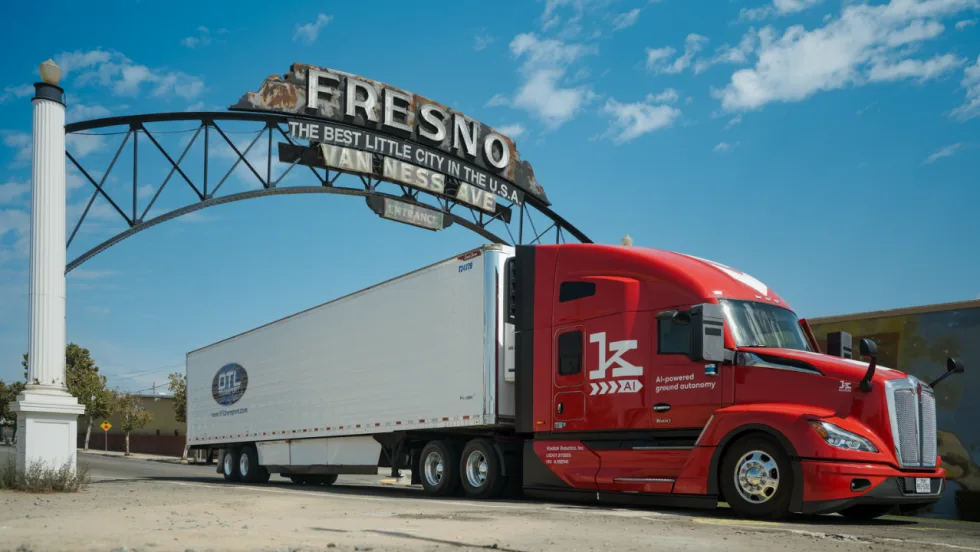
Kodiak Hauls Produce in California Autonomous Truck Pilot
Kodiak AI and DTL Transport have begun hauling produce between Fresno and Los Angeles under California’s new rules for testing heavy-duty autonomous trucks. A safety driver remains behind the wheel.
Read More →