





"Be open, be honest, be prepared to field questions."
How Lance Evans Turns Enforcement Experience Into Better Fleet Safety
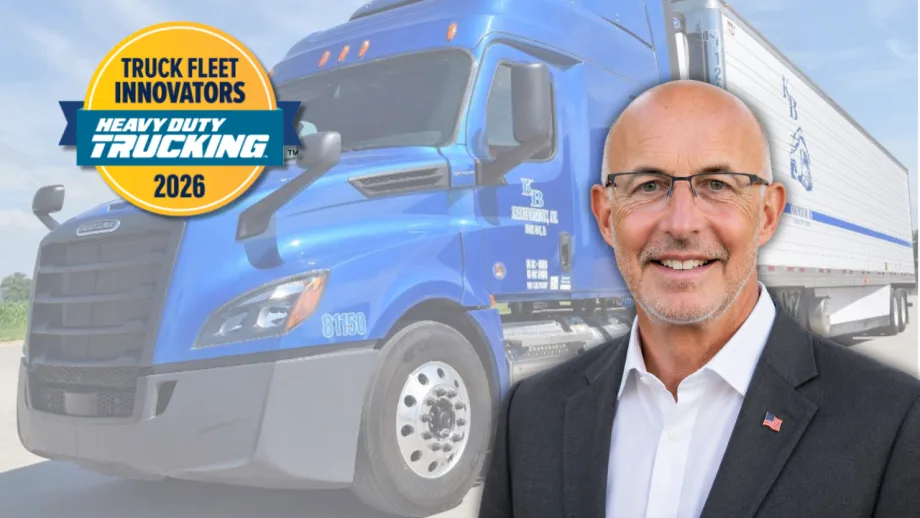
HDT Truck Fleet Innovator Lance Evans brings lessons from law enforcement to K&B Transportation’s approach to safety technology, data, driver coaching, and compliance.
August 20, 2026
For fleets considering new technology, Evans offers practical advice drawn from both his law enforcement and fleet management experience: Do your homework before investing.
Credit:
HDT/Photos courtesy Lance Evans
4 min to read
After 22 years in Iowa law enforcement specializing in commercial vehicles, Lance Evans knows how safety looks from the other side of the windshield.
Today, as director of safety at refrigerated carrier K&B Transportation, he uses that experience to help the fleet hire better drivers, challenge questionable violations through DataQs, and evaluate technologies that can prevent crashes before they happen.
When asked how his career in commercial law enforcement makes him a better safety manager, Evans pointed to several areas.

Lance Evans brings years of experience in commercial law enforcement to his job heading up safety and compliance at K&B Transportation.
Credit:
Courtesy Lance Evans
The driver vetting process: His enforcement experience helps him spot potential warning signs in the data when evaluating prospective drivers. "Does he have a history of traffic infractions? Is his PSP showing signs that the driver may not be fully doing his DVIRs?"
His relationship with drivers: K&B drivers rely on Evans as a resource, calling him to clarify regulations — especially when they've heard something at a truckstop or while sitting at a customer location. "They want to know the real truth, they call me and they ask."
Improving DataQ challenges: Evans' director of compliance handles the company's DataQ filings, which allow motor carriers to request a review of federal and state data they believe is incomplete or incorrect.
"I oversaw the DataQs when I was with state law enforcement," Evans says. That experience allows him to advise the compliance director on how best to approach a challenge, from striking the right tone to recognizing gray areas in the regulations that may be behind a discrepancy.
What Safety Tech Does K&B Use?
That background also plays into K&B's investments in safety technology.
Evans and his team looked at the trends affecting motor carrier safety and investigated technology and tools to address those problem areas.
Take distracted driving. The LifeSaver mobile app keeps drivers from accessing their cell phones when the vehicle is in motion.
Another technology, Esmart, is a GPS-based intelligent speed management tool that Evans calls a game-changer.
"It's really reduced our 6-to-10-mph-over speeds dramatically."
The system also helps prevent bridge strikes. "We haven't hit a bridge since we went with eSmart," he says. "It can detect if we're within 750 feet of a bridge that's under 13 feet 6 inches. And by controlling the throttle, it reduces the truck's speed down to where the driver will not hit that bridge."
And K&B was an early adopter of new weather features from Esmart that automatically adjust vehicle speed in response to hazardous weather conditions.
K&B also uses Netradyne in-cab cameras, which provide five different views. But the fleet doesn't use the driver-facing camera. Evans says its primary benefit would be detecting distracted driving, something K&B already addresses with the LifeSaver app.
That decision has helped with driver acceptance of the camera system. "That's really made a difference. Drivers want privacy, right? And the cameras have really made a difference in how we coach our drivers."
Keys to Successfully Introducing Safety Technologies
Evans doesn't treat safety as one department's responsibility. Drivers, recruiters, technicians, operations and others all have a role to play.
"You can't just go out and say, 'Do this,' or 'Do that,'" he says.
That’s especially important when introducing new technology.
"Everybody has to understand what you're trying to accomplish,” he says. When every department is involved, "it reduces the friction.”
His advice when rolling out new technology: "Be open, be honest, be prepared to field questions."
When K&B rolled out intelligent speed management, for instance, Evans made sure both drivers and maintenance technicians understood how it worked before the first truck came in for service. Otherwise, drivers and techs both might mistake normal system operation for a mechanical problem.
Another key to successful safety tech, he says, is the way a fleet uses the data those systems generate. “Data doesn’t lie,” he says.
That's another lesson he brought with him from law enforcement, where he analyzed trends and patterns in the data. Information on where trucks were most likely to be involved in crashes, for instance, helped him decide where to allocate enforcement resources.
The Importance of Researching New Technology
For fleets considering new technology, Evans offers practical advice drawn from both his law enforcement and fleet management experience: Do your homework before investing.
Before buying anything, Evans wants to know who else is using it, whether customer support answers the phone at 2 a.m., and whether the product solves a real problem.
That means talking to other carriers, asking vendors for customer references, running field trials, understanding customer support, and even asking startup companies where they expect to be five years from now.
"If it doesn't sound right," he says, "you've got to trust your gut."

Subscribe to Our Newsletter
More Safety & Compliance
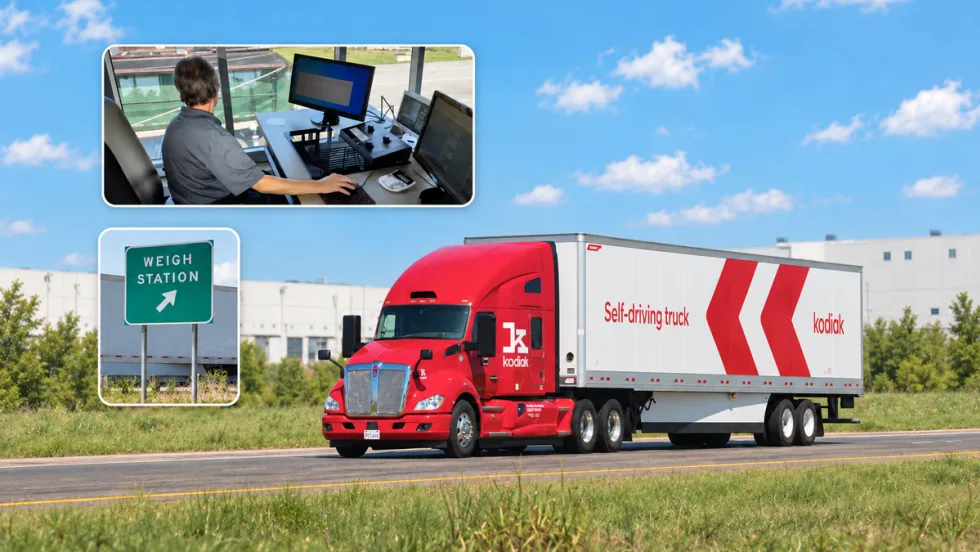
PrePass, Kodiak Connect Driverless Trucks to Roadside Enforcement
The system will allow enforcement agencies to verify Enhanced Inspection information and decide whether Kodiak’s autonomous trucks can bypass roadside screening sites.
Read More →
From One Generation to the Next: How Mentorship Builds Safer Truck Drivers
After three decades in trucking, Harold Perry shares what he's learned about driver safety, mentorship, and helping the next generation build confidence behind the wheel.
Read More →
FMCSA Pauses Biennial-Update Enforcement Amid Motus Transition
Carriers whose updates were due on or after June 1 have more time, while FMCSA works to stabilize its new registration system and warns of phishing sites impersonating its new carrier registration system, Motus.
Read More →
ZF Expands Commercial Vehicle Push in North America
ZF is expanding its North American commercial-vehicle presence with new transmission applications, electrification, trailer technology and autonomous-driving systems.
Read More →
Truck Drivers Need More Than Another Alert
Fleets have more visibility into truck health, safety events, and driver activity than ever. The next challenge is turning all that information into useful guidance for the person who has to decide what to do next.
Read More →
Tesla Wants a Self-Driving Semi. Are Cameras Enough?
Could Tesla’s camera-only autonomous driving technology work on an 80,000-pound Semi? In this commentary, HDT's Deborah Lockridge takes a look at Tesla, Cybercab, and how autonomous trucks see the road.
Read More →
What DOT’s Automated Vehicle Strategy Means for Trucking
The U.S. Department of Transportation issued a new automated-vehicle strategy that outlines plans for driverless-truck regulations, cross-state freight corridors, and federal safety standards.
Read More →
NYC Expands Speed, Pedestrian Safety Tech Across Fleet
New York City is expanding intelligent speed assistance and pedestrian-alert systems across its municipal fleet, moving the technologies from pilot programs into vehicle procurement and retrofit requirements.
Read More →
FMCSA Removes 110 Truck Driver Training Schools from Certified ELDT List
Federal regulators also are targeting more than 160 additional training providers and launching a nationwide audit of third-party CDL skills testers as part of a broader crackdown on trucking fraud.
Read More →
Beyond DOT Compliance: What Makes a Trucking Fleet Truly Safe?
A trucking fleet can follow every rule and still make unsafe decisions. The real test comes when safety conflicts with freight, productivity, or cost.
Read More →