





Related: HDT's 2019 Top Photo Galleries
HDT's Top 19 Trucking News Stories of 2019
After scouring through our website analytics of news items of the past 12 months, HDT came up with the top 19 stories of 2019, giving you a look back on some of the important moments from this past year.
December 27, 2019

5 min to read
After scouring through news items of the past 12 months, HDT came up with the top 19 stories of 2019, giving you a look back on some of the important moments from this past year.
1. California Bill Means 'End for Independent Trucking' in State
The California Trucking Association predicted that Assembly Bill 5 “will put tens of thousands of owner-operator truckers, who service agriculture, retail and other industry sectors, out of business," because its stringent ABC test definition of independent contractor may be impossible for trucking companies to meet.
2. 5 Federal Trucking Regulatory Changes in the Works
Attendees at the Trimble in.sight conference in September got an update on regulatory "hot topics" for trucking. Dave Osiecki, president of Scopelitis Transportation Consulting, gave an update on where several regulatory changes stood, including the CDL drug and alcohol clearinghouse and entry-level driver training.
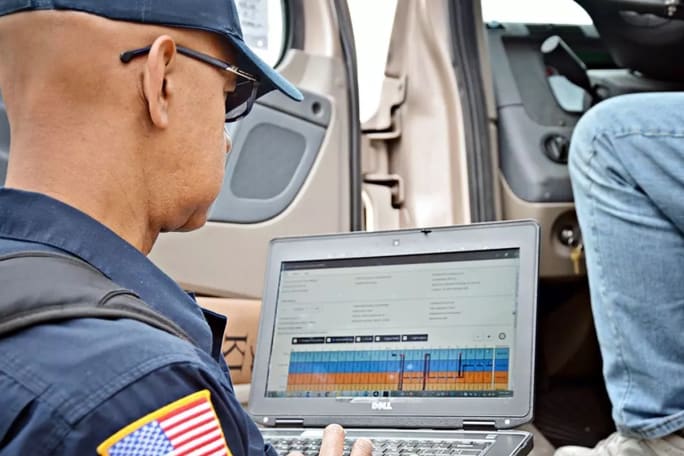
The full ELD mandate kicked in on Dec. 17.
Photo: FMCSA
3. ELD Adoption Fails to Reduce Truck Accidents, Study Says
Alex Scott, assistant professor of supply chain management at the D’Amore-McKim School of Business at Northeastern University, led a study that evaluated inspection and crash data from the Federal Motor Carrier Safety Administration and found that widespread adoption of ELDs in the trucking industry has so far had no measurable impact on the number of accidents.
4. ELD Violations Are Down, But Drivers Still Making Simple Mistakes
One of the more heavily attended sessions during Trimble’s in.sight user conference in September was an update and Q&A session on the upcoming electronic logging device mandate featuring Joe DeLorenzo, chief enforcement officer, Federal Motor Carrier Safety Administration.
5. California Governor Signs Law That Threatens Independent Contractor Status
California Gov. Gavin Newsom on Sept. 18 signed Assembly Bill 5 into law, a measure that trucking interests in the state say will wipe out the ability to use owner-operators.
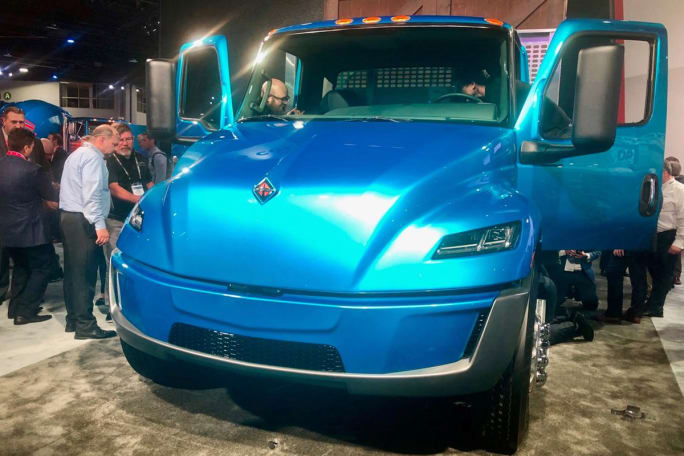
Navistar's electric truck drew a crowd at NACV.
Photo: David Cullen
6. Navistar Unwraps Electric Truck
Navistar drew a standing-room-only crowd at the North American Commercial Vehicle Show, where attendees first saw the OEM’s prototype for a battery-electric drive version of its International MV medium-duty truck, dubbed the eMV, which the OEM is planning to bring to full production by early 2021.

Readers were eager to learn more about the new Autocar conventional.
Photo: Autocar
7. Autocar Rolls out New Conventional Truck Model
America’s self-proclaimed oldest truck builder has a new conventional model hitting the market. The Autocar DC-64R is a completely new conventional truck purpose-built from the ground-up for severe-duty refuse applications.
8. No 'Soft Enforcement' for Dec. 17 ELD Deadline: CVSA
All motor carriers and truck drivers subject to the electronic logging device rule had to start using electronic logging devices starting on Dec. 17, a deadline that also pertained to grandfathered automatic onboard recording devices.
9. Senate Bill Would Require Truck Speed Limiters Set at 65 MPH on All New Trucks
Who says bi-partisanship is dead? In June, a Republican and a Democratic senator teamed up to introduce a bipartisan bill that would require all new Class 7 and Class 8 trucks to be equipped with speed-limiting devices that must be set to a maximum speed of 65 mph and be used whenever in operation.
10. Proposed Hours of Service Changes Designed to Add Flexibility
In August, the Federal Motor Carrier Safety Administration published an eagerly awaited proposal on changes to hours of service rules that would offer more flexibility.
11. Celadon Files Chapter 11; Shut Down of Operations Under Way
Celadon Group, operator of one of the nation’s largest truckload carriers and a pioneer of NAFTA cross-border trucking, voluntarily filed for Chapter 11 bankruptcy, the company announced in early December.
12. Taking a Closer Look at FMCSA's Hours-of-Service Proposal
The Federal Motor Carrier Safety Administration proposed five key revisions to truck driver hours-of-service rules. The changes were made in a process that started with trucking industry concerns about a lack of flexibility in the rules.

CBD oils can result in positive drug tests.
Photo: Julia Teichmann via Pixabay
13. CBD Use Cost This Truck Driver His Job
A New York truck driver sued a company that sells cannabidiol (CBD) products for deceptive business practices after he lost his job as an over-the-road hazmat driver when he failed to pass a random drug test.
14. Speed-Limiter Bill Garners Support of Trucking Groups
Support from trucking lobbies grew in favor of a new bipartisan Senate bill that would require all new Class 7 and Class 8 trucks to be equipped with speed-limiting devices that must be set to a maximum speed of 65 mph and be used whenever in operation.
15. What Does Trump's New Trade War Mean for Trucking?
In May, President Trump sent shockwaves through the financial markets, as well as the automotive industry, when he announced a new round of tariffs aimed at Mexico. While experts warned that the initial impact on trucking will be minimal, the effects would become more dire with each passing month if the dispute is not resolved quickly.
16. Cummins, Hyundai Team up to Commercialize Electric, Fuel-Cell Powertrains
Hyundai Motor Company and Cummins Inc. signed a memorandum of understanding to evaluate opportunities to develop and commercialize electric and fuel cell powertrains, starting with the North American commercial vehicle market.
17. New England Motor Freight Files for Bankruptcy
LTL carrier New England Motor Freight and its subsidiaries voluntarily filed for Chapter 11 bankruptcy in New Jersey, intending to facilitate an orderly wind down of its operations.
18. Supreme Court Rules Truck Owner-Operators Can't Be Forced into Arbitration
Trucking companies that use owner-operator independent contractors may not be able to rely on arbitration clauses to avoid lawsuits from those drivers in the wake of a new U.S. Supreme Court decision.
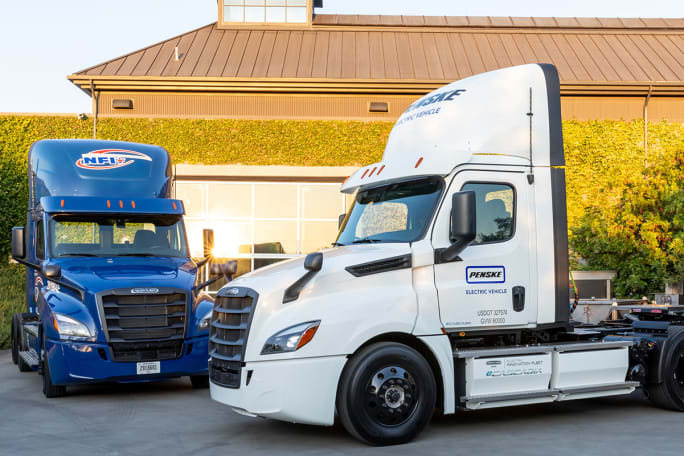
Freightliner's eCascadia electric Class 8 trucks.
Photo: Jack Roberts
19. Freightliner Delivers First eCascadia Electric Trucks
The first two production-model Freightliner eCascadia battery-electric tractors are in the hands of their new owners and about to begin an evaluation process intended to help pave the way for the integration of electric trucks in large-scale fleet operations.
More Fleet Management

Sponsored•September 1, 2026
How Telematics Improves Visibility, Control, and Performance in Refrigerated Fleets
Explore how telematics help refrigerated fleets improve visibility, uptime, efficiency, compliance, and cargo protection across connected cold chain operations.
Read More →
What the U.S.-Canada Trade War Means for Trucking
Escalating U.S.-Canada tariffs could disrupt cross-border freight, reduce truck volumes, raise costs, and create new uncertainty for carriers on both sides of the border.
Read More →
What Are Trucking’s Top Concerns for 2026?
The American Transportation Research Institute wants to know what's worrying trucking fleet managers, drivers, and other stakeholders in its annual Industry Issues survey.
Read More →

American Trucking Associations Looks for a New Leader
ATA President and CEO Chris Spear abruptly left his job at the association on August 21, at a pivotal time for the trucking industry.
Read More →
Public Wi-Fi Cybersecurity Risks: How Truck Drivers and Fleets Can Protect Their Data
Public Wi-Fi can expose truck drivers and fleets to credential theft, malware, and other cyber threats. Here’s how to reduce the risk on the road.
Read More →
For Nicky Cupp, Fleet Innovation Starts With Frustration
HDT Truck Fleet Innovator Nicky Cupp turns everyday pain points at Fraley & Schilling into opportunities for better technology and smarter processes.
Read More →
Adam Buttgenbach’s Approach to Electric Trucks: Start With Where They Fit
HDT Truck Fleet Innovator Adam Buttgenbach helped PepsiCo build one of North America’s largest EV fleets by focusing on where electric trucks make operational sense.
Read More →
Deen Albert: Let Automation Do the Math, People Make the Decisions
HDT Truck Fleet Innovator Deen Albert makes sure people are still at the heart of operations at Grand Island Express, even while adopting artificial intelligence tools. AI-assisted dispatch helped boost revenue 25% with the same number of trucks.
Read More →
Trimble’s New AI Agent Takes Aim at Fleet Back-Office Busywork
Arc Agent works across Trimble TMS products to automate repetitive tasks such as freight orders, maintenance, invoices, fuel costs and more.
Read More →
How HDT’s 2026 Truck Fleet Innovators Are Rethinking Fleet Operations
Meet five trucking leaders who are challenging assumptions, solving operational problems, and putting innovative ideas to work.
Read More →