





Related: How GHG Phase 2 Will Change the Way You Spec Trucks
Will Dustup over Cleanup of Car Emissions Gut Truck GHG Rules?
What does Trump's revocation of California's vehicle emission waiver mean for the federal Phase 2 GHG emission rules already in place for commercial vehicles? Commentary by Executive Editor David Cullen.
September 23, 2019
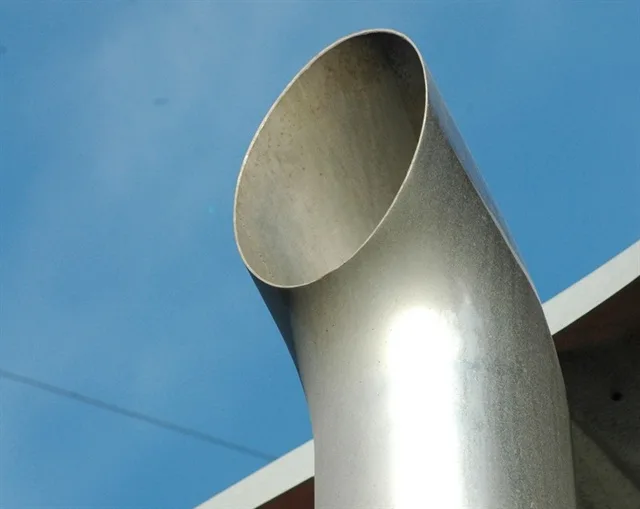
Keep in mind that truck and engine makers have invested an incredible amount of research and development and engineering efforts and costs to meet the Phase 2 GHG rules.
Photo: Jim Park
5 min to read
You may have heard by now that there is a little dustup happening simultaneously out West and back East and, well, when you get right down to it, pretty much all over the country. What literally overnight whirled into a gathering storm of government vs. government lawsuits was launched by the Trump Administration yanking open the political Pandora’s Box known as the California vehicle-emissions exemption.
On Sept. 19, the Department of Transportation’s National Highway Traffic Safety Administration and the Environmental Protection Agency jointly issued a final rule that will force all 50 states to comply with “nationwide uniform fuel economy and greenhouse gas emission standards for automobiles and light duty trucks.”
On Sept. 20, California along with 23 other states and the cities of New York, Los Angeles, and Washington, D.C. jointly sued the Trump Administration on the basis that it had moved to unlawfully remove the Golden State's waiver of federal emission rules that had been granted under the Clean Air Act.
What’s more— and this came only hours after word came the waiver is to be revoked— the head of the California Air Resources Board, Mary Nichols, announced that four of the world’s largest automakers were holding to an agreement already made to meet the state’s GHG emission standards, which are stricter than those federally imposed. Nichols thanked Ford, Honda, Volkswagen and BMW for “standing their ground” despite administration efforts to force them to violate the agreement, according to a news report posted by The Sacramento Bee.
Trump’s “One National Program Rule” both affirms NHTSA’s statutory authority to set nationally applicable fuel economy standards and serves notice that EPA is withdrawing the Clean Air Act preemption waiver it granted to the State of California in January 2013 as it relates to California’s greenhouse gas and zero-emission vehicle programs.
As The Bee report explains, California had made an agreement with the Obama that would cut GHG emissions from cars by about 30% by 2025. And since building lighter cars is the most practical way of lowering carbon emissions, the plan called for upping corporate average fuel economy (CAFE) standards from 35 mpg to about 50 mpg.
Once Trump first signaled he would roll back those standards, California began negotiating with individual car makers. Those deals were announced this summer and would maintain the Obama rules, but give automakers another year (until 2026) to meet the new emissions limits.
That California could set its own stricter-than-federal emission rules— and see numerous states adopt them— is nothing new. The state was first gained the right to submit waivers for review in 1968 under the Clean Air Act. From then on, it has been issued waivers to let it set emission standards higher than the federal limits, all of which was predicated on the state's epic battle against air pollution and smog. Never before has the federal government revoked one of these waivers.
A 2017 whitepaper on U.S. vehicle emission compliance for the International Council on Clean Transportation, authored by researchers Hui He and Lingzhi Jin, points out that the “comprehensive vehicle emission compliance program adopted in the United States was built up over several decades. The process involved a learning curve for both regulators and industry. In the early 1970s and 1980s, there were many contentious cases that ended up in court. Gradually, both the EPA and CARB demonstrated their technical competence to industry by showing their data was able to withstand the scrutiny of industry experts.”
That’s the history and the here and now will soon shift into a courtroom. But not so fast, contends CNBC Reporter Tucker Higgins, who sees the administration having “a steep hill to climb” before it can actually revoke the waiver. “The legal battle raises novel questions about the Clean Air Act, a landmark piece of legislation signed into law in 1963, that will be tested for the first time in this case. The case is expected to go all the way to the Supreme Court,” Higgins observes in his piece.
He also rightly contends that “there is virtually no way in which the legal fight is over before the 2020 presidential election, meaning voters will also get a say in the matter.”
So, what does this mean for the Phase 2 GHG rules already in place for commercial vehicles? Essentially nothing.
No manufacturer or provider of engines or trucks (GVW-rated from Class 2C through Class 8) has ever sought a rollback of the GHG limits that were drawn up and imposed by the Obama administration in 2015.
Yes, back then there were OEMs that argued against separately issued standards on engines and on “complete” vehicles. But again, there was no argument against meeting the GHG goals for trucks, in principle or in practice, and as a result, the GHG rules continue to be met— and with about zero fuss from engine or truck makers.
When the Phase 2 rules were rolled out four summers ago, the reaction from stakeholders ran the gamut from cautionary to laudatory. At that time, the president of the Truck and Engine Manufacturers Association (EMA) said that the Phase 1 GHG rules had been successfully implemented because those standards “were well aligned with EMA member efforts to meet customer demand for more fuel-efficient vehicles.... [and] we look forward to reviewing the current proposal to ensure that the EPA and DOT Phase II proposal continues to align with manufacturers’ efforts and customer needs.”
To be sure, truck and engine makers have invested an incredible amount of research and development and engineering efforts and costs to meet the Phase 2 rules.
What’s more, these suppliers are all global players, which means they need to meet similar emission standards around the world. And those rules are starting to converge, so the last thing any of them wants now is to see the rules here— in the world’s biggest truck market-- upended.
Just a few days ago, an OEM source made a telling point when I asked whether the Trump car-waiver revocation would reverberate on truck developments: “Truck and engine makers were the only ones that did not go to the [Trump] White House looking to change GHG and fuel economy rules.”
Subscribe to Our Newsletter
More Blog Posts
Congress Dancing on the Ceiling. Again.
It’s time once more on Capitol Hill to battle over the debt ceiling, rather than conduct the nation’s urgent business, says HDT Business/Washington Contributing Editor David Cullen.
Read More →
Infrastructure on Capitol Hill: On Two Tracks to Somewhere
It’s likely an infrastructure bill will pass. But how big it will be, and who will pay for it, rides on lots of politicking.
Read More →
Gaming Out The Biden Infrastructure Proposal on Capitol Hill
The Biden Administration's American Jobs Act, the core of which is infrastructure funding, is on a long road to becoming law – replete with more twists and turns than a mountain highway.
Read More →
4 Ways Washington May Change Trucking Laws and Regulations
As the balance of power in Washington has shifted, trucking likely will see changes in laws and regulations. But how that happens isn't just like the Schoolhouse Rock version of "I'm Just a Bill."
Read More →
Regulatory Outlook 2020: Keep an Eye on Hours of Service
What's in store for trucking from the regulators in Washington, D.C., this year? Executive Editor David Cullen says the government wheels move slowly, but hours-of-service is among those to watch in 2020.
Read More →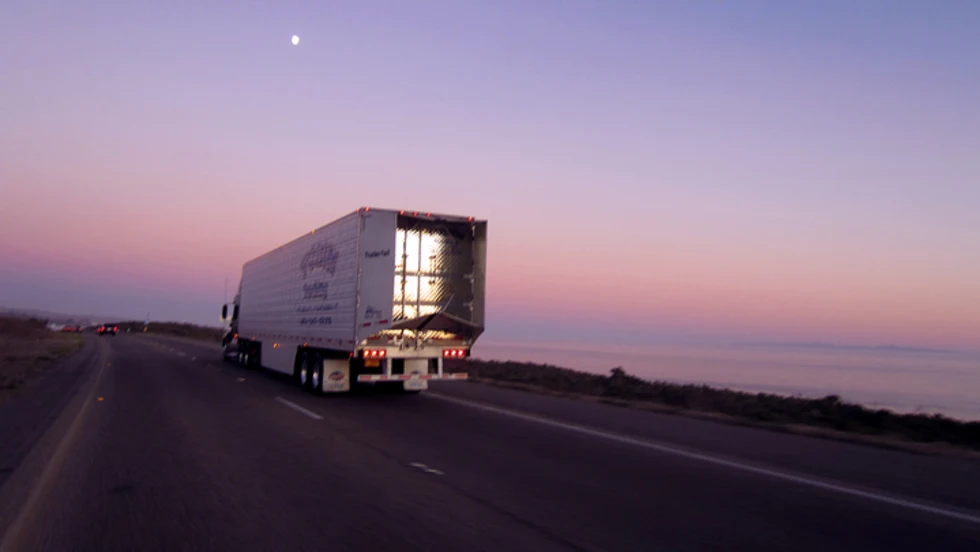
Logistics Ain't What it Used to Be
You can no longer expect to run a motor carrier of any size without at least a glancing appreciation for the impact logistics— in one way or another-- has on every link in the supply chain.
Read More →
Some Sober Advice on the Drug & Alcohol Clearinghouse
The Federal Motor Carrier Safety Administration's prep work for the Drug & Alcohol Clearinghouse includes amassing an impressive amount of informational guidance online that can be accessed at a dedicated website. Commentary by Executive Editor David Cullen.
Read More →
Here's to Our Winners
The managers, executives, and owners of truck operations who are honored each year by Heavy Duty Trucking with our Truck Fleet Innovator awards so often seem to be moving at a fast clip in how they think about things. Blog Commentary by Executive Editor David Cullen.
Read More →
ATA Takes Madison Avenue to Pitch Highway Funding on Capitol Hill
A new advertising and grassroots campaign by ATA might just sell Congress on fixing our roads. Commentary by David Cullen, Executive Editor.
Read More →
FedEx Reveals What's Inside Every 'Last Mile'
Valuable insight about how FedEx sees the marketplace and reacts to it will not be found in the stark numbers of its latest earnings report. Commentary by David Cullen, Executive Editor.
Read More →