





Related: Meritor Announces Major Electric Truck Push for 2019
Dumping the Driveshaft on Electric Vehicles
Drive axles for battery-electric vehicles will feature integrated motors. This eliminates the drivetrain, creates room for batteries, and puts the axle maker in charge of powering the vehicle.
January 16, 2019
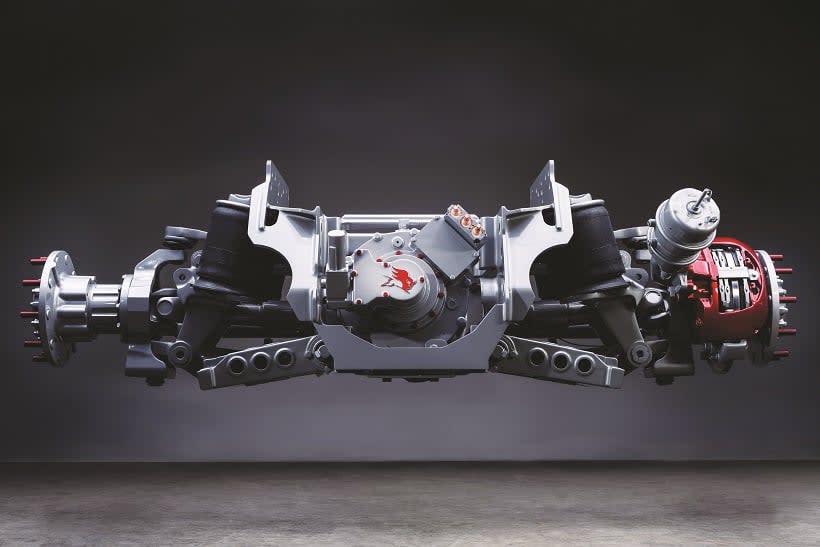
Eliminating some portion of the traditional axle housing could open opportunities for new suspensions for heavy trucks, such as this example of an independent suspension.
Photo: Meritor
7 min to read
As electric motors take the place of traditional diesel powertrains in some applications, they may open new possibilities for driven axle packaging and integration. Such configurations can do without traditional transmissions, driveshafts, power dividers and differentials. Everything changes once you get over the idea that we need an internal combustion engine at the front of the truck.
Ditch the diesel, and you dispense with the need for a driveshaft to get the rotational forces back to the drive wheels. Placing electric motors in, on or near the drive axles also frees up frame space for batteries and the associated electronics.
A battery-electric Class 8 tractor requires several tons of batteries, and the safest and most convenient place for them is under the cab between the frame rails. You don’t want to be sharing that space with a driveshaft. It’s much easier to route wires around the batteries than to put a driveshaft through the middle of the battery pack.
“From a complexity and weight standpoint, taking out all those pieces makes a lot of sense to me if you’re doing a clean-sheet design,” says Rick Mihelic, director of future technologies studies at the North American Council for Freight Efficiency and a former vehicle development engineer at Peterbilt.
Which brings us to the point of this story: the drive axles. We need drive axles to drive the truck, obviously, and to support the load on the frame. We can’t radically change the purpose or the basic axle design overnight because of the need for compatibility with legacy components such as brakes and suspensions. That differentiates startups such as Nikola, Tesla and Thor from the established OEMS and Tier 1 suppliers.
“If you own a product line based around a diesel engine and a conventional drivetrain, and you want to introduce an electric motor to that, the most cost-effective way to do that is to replace one component at a time in the model rather than completely redesigning the whole model line,” Mihelic says. “If you have all that existing infrastructure and inertia in current products, it’s very difficult to turn to a clean-sheet design.”
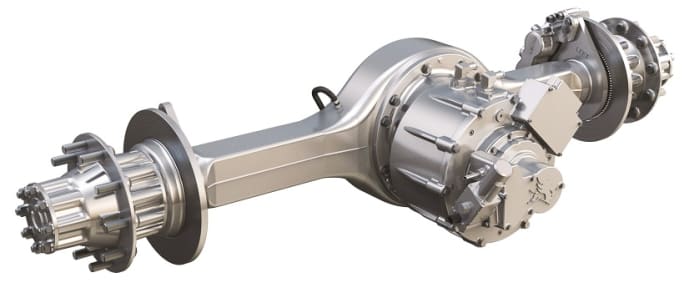
Using a traditional axle housing with a motor mounted where carrier and driveshaft input would normally go is an easy and economical first step toward electrically powered drive axles.
Photo: Meritor
The startups have none of that overhead or inertia. But they also have no revenue source until they have a product they can sell, while established truck makers and suppliers have to deal with the capital investment to support an entire family of products.
“They have to reallocate money very judiciously,” Mihelic says. “That’s especially challenging when you consider the potential market for this technology will be very small for the near future. They make money on volume. They have to be careful not to starve how they make their fortunes while wading into the electric side of it.”
Nevertheless, Tier 1 suppliers Dana and Meritor have electric drive axles they are happy to talk about. Daimler Trucks just announced a foray into electric propulsion, as well, but told us it’s a bit early to be talking about specifics.
Thomas Healy, founder and CEO of Hyliion, a startup that makes a hybrid-electric drive axle for use in 6x2 tractors (making them effectively 6x4 tractors), sees three pathways to drive axle electrification.
“We will see an evolution take place with electric axles,” he says. “Right now, the solution we’re using is an electric motor that mounts perpendicular to the drive axle. Power comes in from one direction and gets rotated 90 degrees by a pinion gear. The next evolution will be an inline motor mounted in the center of the axle. My personal feeling is the third evolution will be an in-wheel-motor setup. It won’t even be an axle as we know it today. You’ll have a motor located in the wheel hub.”
In fact, wheel-hub, brake and wheel-end component supplier Conmet announced last year that it has partnered with Protean Holdings Corp. to develop an electric in-wheel drive system for the medium- and heavy-duty commercial vehicle markets. The deal pairs Protean’s automotive wheel-end-motor expertise with Conmet’s commercial vehicle wheel-end experience.
Tier 1 options
Offerings from Dana and Meritor reflect Healy’s first two pathways. Meritor’s eAxle features an electric motor combined with a two-speed gear box mounted directly to the front of a traditional axle housing. The motor and gear assembly essentially takes the place of the forward carrier assembly and still uses the differential. From a mechanical perspective, it’s similar in shape and design to current conventional drive axles.
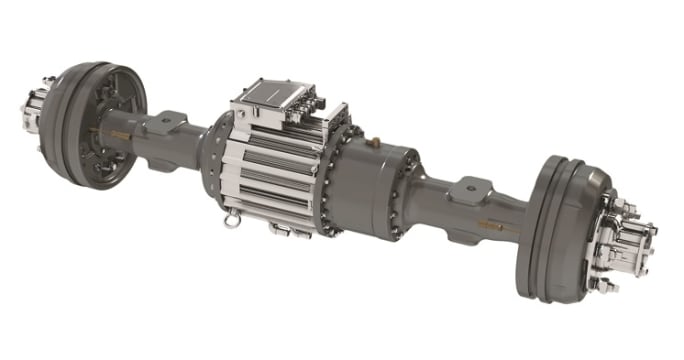
Inline motors can be integrated into the axle housing for greater packaging flexibility and weight savings.
Photo: Dana
“You can put the motor in a lot of different places, so you have to go through the pros and cons of each different architecture,” says John Bennett, Meritor VP and chief technology officer. “We use a single motor inline with the current carrier. By integrating the motor that way, we can nest a lot of the gearing inside the motor. Our eAxle changes very little. You can literally plug the motor into the housing and the suspension mounts do not change.”
Meritor’s option is in keeping with Mihelic’s notion of a managed transition from internal combustion to electric power. Among the challenges is dealing with what’s called overhung mass, i.e., the weight of the motor and gear assembly bolted to the front of the axle housing, like the carrier is now. Bennett says special attention is required to make sure the joint between the housing and the mounted motor stays true and doesn’t develop leaks. To address that, Meritor is opting for a smaller, more efficient and lighter motor with a two-speed gearbox to more closely match motor speed to wheel speed.
This sort of an axle configuration would be suited to Class 6 and 7 trucks and school buses with a GVW up to 33,000 pounds. Class 7 and 8 trucks and 4x2 and 6x2 tractors would possibly require an extra set of reduction gears at the wheel-end. Heavy Class 8 highway and vocational trucks would require a separate motor for each axle in a tandem setup along with wheel-end gear reduction as well. Published literature suggests Meritor will use existing axles, such as the 12X, 14X and 17X, with an “e” designation, as in 14Xe.
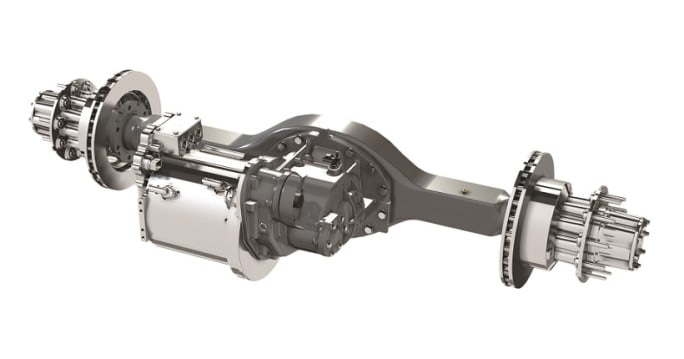
The low profile of the motor on Dana’s eS5700r axle used on medium-duty vehicles allows van bodies to be mounted closer to the chassis, improving cargo capacity.
Photo: Dana
Meanwhile, Dana is going a slightly different route. Following a joint venture announced in June with Quebec-based TM4, which designs and manufactures motors, power inverters, and control systems for electric vehicles, Dana will develop a line of e-axles with the motors built into or alongside the axle housing in what it calls a parallel-axis configuration.
Dana is currently using two different axles for Class 3 vehicles and Class 4-6. The sS5700r features an inline motor and gearing built right into the axle. In fact, the motor housing is part of the axle. The slightly heavier eS9000r has an externally mounted motor that is still inline with the axle housing. It’s geared directly to the axle shaft inside a more traditional-looking axle housing. Both are designed as drop-in replacements for traditional drive axles.
“Parallel-axis gears typically run a little bit more efficiently than you’d expect in a hypoid gear set,” says Ryan Laskey, Dana VP of commercial vehicle engineering. “With hypoid gear sets you can traditionally lose a couple of percentage points in efficiency during that torque transition in the 90-degree phase. In a parallel-axis arrangement, you’re losing probably half of that. It’s small, but in a battery-powered system we want to do everything we can do to reduce energy consumption. Anything you can do in the bearings and the gears to reduce frictional losses will provide additional range, which will be critical in the time frame of the early adoption phase with the cost of batteries as high as they are.”
We won’t see many of these axles in revenue service in the Class 8 space for some time, although Dana’s sS5700r is installed in a number of Class 3 trucks built by the Workhorse Group and currently under fleet evaluation with UPS.
Mihelic sees a 15- to 20-year timeframe before traditional drive axles become scarce. It may be 30 years or more before electric and hybrid takes the place of diesel power.
“A strong argument can be made that diesel will be around for a long time yet, because it’s very well suited to the long-haul environment and the infrastructure is already in place,” he says. “That said, the people who buy trucks understand the fundamental differences and inherent advantages to each type of powertrain. They will have one truck for city work and another for the highway…There’s no single solution in everyone’s future.”
Subscribe to Our Newsletter
More Equipment

Help HDT Find Trucking’s Top Products
Have you come across a new product that could make a difference for trucking fleets? Nominate it for HDT’s 2027 Top 20 Products Awards by November 9.
Read More →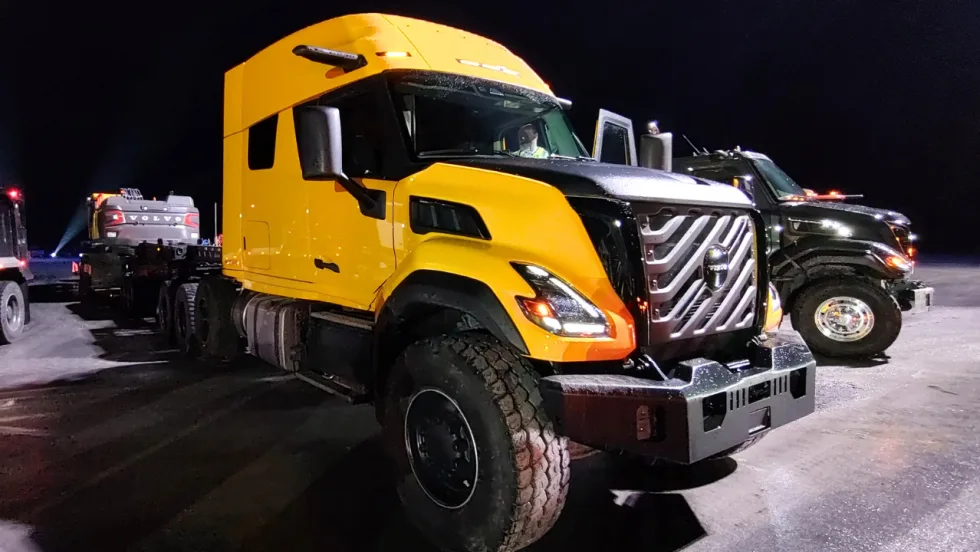
Volvo Unveils New VNX Heavy-Haul and Vocational Truck
Volvo Trucks has launched the VNX, a new vocational truck also available as a tractor in day cab and two sleeper configurations, with one heavy-haul model. The Volvo VNX is powered by Volvo's D13 platform, which delivers up to 540 horsepower and 1,950 pound-feet of torque and is EPA 2027-compliant.
Read More →
How GP Transco Cuts Trucking Fuel Costs, a Tenth of a Gallon at a Time
What’s another tenth of a mile per gallon worth? GP Transco shares how equipment upgrades and driver coaching turn small gains into meaningful fuel savings.
Read More →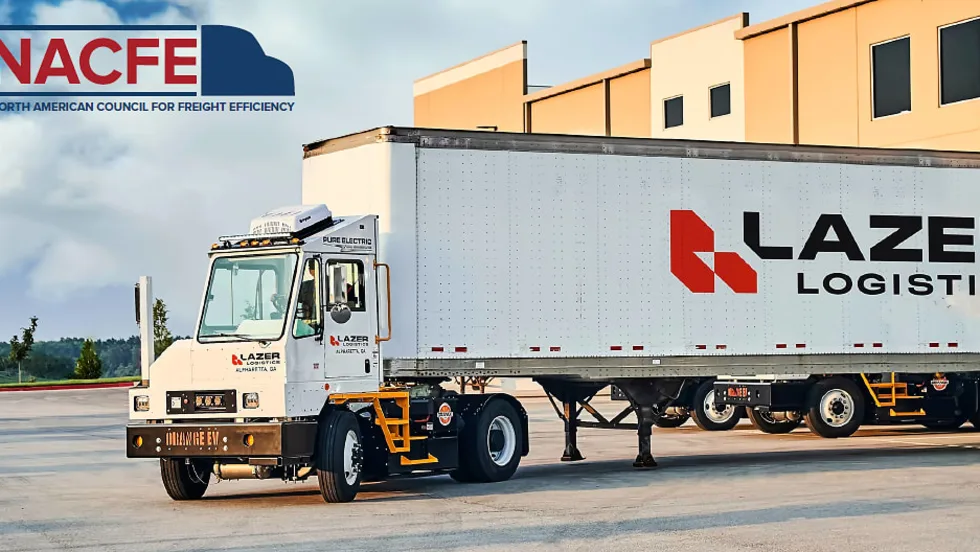
Electric Yard Tractors Move Beyond Pilots
Operating-cost savings have overtaken sustainability goals as the leading reason surveyed fleets are adopting battery-electric terminal tractors, according to new NACFE research.
Read More →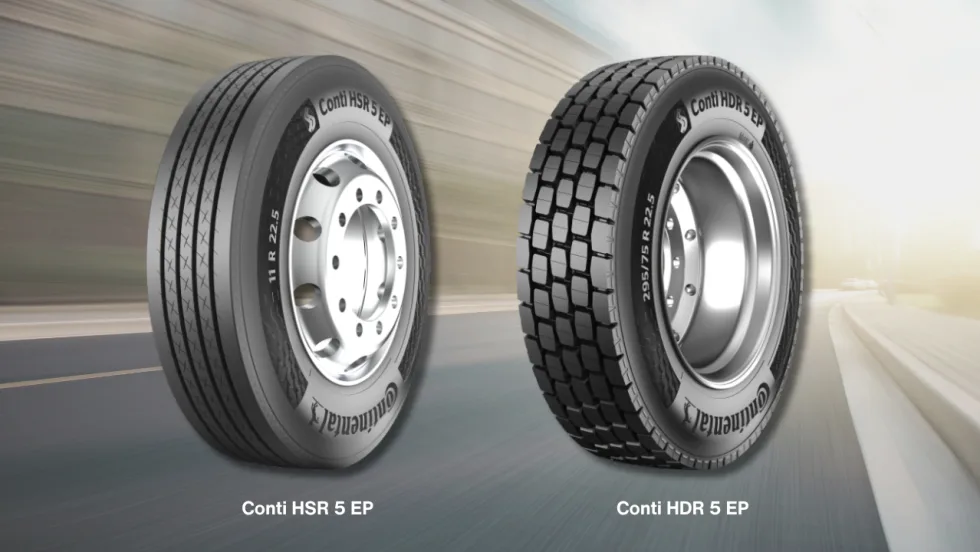
Continental Introduces New Regional Truck Tires
Continental says its new Generation 5 steer and drive tires for regional operations offer longer tread life, with estimated mileage gains of 22% and 19%, respectively.
Read More →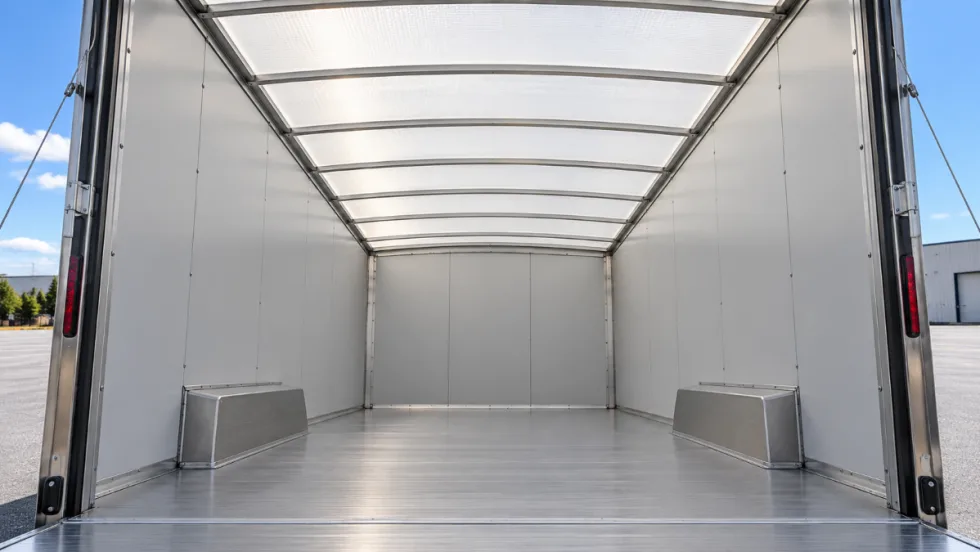
Tekmodo Introduces CargoBright Brand for Translucent Trailer Roofs
CargoBright is designed to diffuse daylight across the cargo area while performing as a working vehicle roof.
Read More →
Fleet Economics Shape Electric Truck Outlook
ACT Research expects costs, charging infrastructure, and technology improvements to drive zero-emission commercial vehicle adoption as federal regulations and incentives retreat.
Read More →
Kodiak Targets Dallas–Houston for Driverless Trucks
The company says its autonomous trucks are completing the I-45 run without a safety observer taking control. It plans to remove the observer by the end of 2026.
Read More →
Kodiak Hauls Produce in California Autonomous Truck Pilot
Kodiak AI and DTL Transport have begun hauling produce between Fresno and Los Angeles under California’s new rules for testing heavy-duty autonomous trucks. A safety driver remains behind the wheel.
Read More →
Used-Truck Remarketing Math Is Changing
Used-truck value is no longer just a concern at trade-in. Decisions made throughout a truck’s first life can influence what it’s worth years later.
Read More →