





Related: Daimler's Daum Talks Future Trucks and Current Business at IAA Show
Daimler's Daum: Platooning May Not be the Holy Grail
At the HDMA Breakfast at the IAA Show in Hannover, Germany, the head of Daimler’s Truck and Bus business division noted that not all new technologies ultimately pan out. And truck platooning may be one of them.
September 21, 2018

The head of Daimler’s Truck and Bus business division, Martin Daum, said that not all new technologies ultimately pan out. And truck platooning may be one of them.
Photo: Jack Roberts
4 min to read
The 2018 IAA Commercial Vehicle Show in Hannover, Germany, is a snapshot of an industry in flux, transitioning rapidly toward a future filled with new technologies such as electrification and automation.
However, in his remarks as the keynote speaker at the annual Heavy Duty Manufacturers Association Breakfast Friday morning in Hannover, Martin Daum, head of Daimler’s global truck and bus business, noted that while trucking is in an “analyze, failure and learning” mode in adapting new technology, not all new systems or initiatives ultimately earn a spot on a commercial vehicle. And truck platooning, he said, may be one such technological dead end.
Expect More use of Data, Electric Trucks
There’s a lot of excitement and hype surrounding trucking technology, said Wilfried Aulbur with Roland Berger Consultants, who spoke on electric and automation trends in trucking. He noted that in terms of stock values on paper, Tesla is worth 20 times more than Daimler and 80 times more than Ford. Not that those figures reflect the equity of those businesses, he said, but they’re a telling indicator about much of the buzz surrounding trucking tech.
But it’s not all hype. Aulbur said change is coming, and predicted that by 2025, real world data will verify a return on investment of 42 to 60 months for new electric trucks. “So, there is a solid business case to made for operating these vehicles,” he said.
However, he noted it is unlikely there will be a large penetration of electric trucks in heavy-duty market segments and stressed that the bulk of orders will be in bus and medium-duty vocational truck markets.
Sandeep Kar, chief strategy officer for telematics developer Fleet Complete, centered his remarks on the rise of data throughout the trucking industry and how that trend will only accelerate in the future.
A few years ago, he noted, Walmart was fining fleets when drivers arrived late to appointed dock times. Today the company is countering the facility congestion that move caused by fining fleets if drivers arrive early. Kar sees this as an opening salvo in a push toward a data-driven revolution in just-in-time deliveries. Telematics and big data will be key enablers, he said, eventually supercharging the effectiveness and efficiency of the entire trucking logistics network.
Referencing blockchain, smart infrastructure, and vehicle-to-vehicle communication systems, Kar said, “The idea today is to make freight ‘smart,’ and the data being generated by OEMs and Tier 1 suppliers is making that a reality. And that data is also a at work at reducing congestion and emissions in cities.”
Fleets should move quickly, Kar said, and start using data and getting comfortable with its capabilities so they can understand both its potential and its limitations. “My advice for you is to embrace data now,” he told attendees at the breakfast. “Because data is the future. And the future is here now.”
Is the ROI There for Truck Platooning?
Daimler’s Martin Daum followed Kar and offered the keynote speech to wrap up the HDMA Breakfast. Enthusiastic and upbeat as usual, Daum began by saying, “Vision is one thing. Execution is something else altogether. Many people have visions. But few are able to bring them to reality. Not every innovation takes off immediately. It takes time to gain knowledge on new ideas and learn from mistakes. This phase is largely where trucking is today with electric and autonomous truck technologies.“
At this point, Daum dropped something of a bombshell on attendees. “When it comes to automated vehicle technology, there is a very compelling business case for these systems. However, platooning might not be the Holy Grail we initially thought.”
The reason, Daum explained, is that while platooning tests in the past have yielded good results in boosting fuel economy on older model trucks and trailers, recent testing has shown that the MPG results in platooning operations were “not as high as expected” for newer model vehicles with highly efficient aerodynamic tractor-trailer combinations.
“Therefore,” Daum added, “I am a little bit critical of platooning today, but at Daimler we will continue testing this technology and see where it eventually leads us.”
Daum rounded out his remarks by stating his brimming confidence in electric trucks, which he said will soon transform urban delivery routes while being better for the environment. He also noted recent developments in both Level 2 and Level 3 autonomous vehicle technologies and related active safety systems, pointing out that Daimler’s recent launch of its new Mercedes Actros tractor in Europe already features many of these systems that will soon migrate to North America, including Active Brake Assist with a pedestrian stop mode, partially automated driving capabilities, a new Mirror Cam system that improves vehicle aerodynamics and rear views for the driver, as well as a new, multimedia cockpit that he said creates a “great environment for a driver to work in.”
Building on Kar’s comments, Daum noted that every truck Daimler builds today around the globe is a connected truck that are “data generators” on an international scale, and stressed that he is a “huge proponent of free trade. Because everyone benefits from a world economy.”
Subscribe to Our Newsletter
More Equipment

ZF Expands Commercial Vehicle Push in North America
ZF is expanding its North American commercial-vehicle presence with new transmission applications, electrification, trailer technology and autonomous-driving systems.
Read More →
Tesla Wants a Self-Driving Semi. Are Cameras Enough?
Could Tesla’s camera-only autonomous driving technology work on an 80,000-pound Semi? In this commentary, HDT's Deborah Lockridge takes a look at Tesla, Cybercab, and how autonomous trucks see the road.
Read More →
Kodiak: Driverless Long-Haul Truck Launch on Track for 2026
Kodiak AI says its driverless long-haul safety case is 93% complete and it remains on track to begin commercial operations by year-end 2026.
Read More →
What DOT’s Automated Vehicle Strategy Means for Trucking
The U.S. Department of Transportation issued a new automated-vehicle strategy that outlines plans for driverless-truck regulations, cross-state freight corridors, and federal safety standards.
Read More →
East Coast Port Launches $45M Electric Truck Push
The Port Authority of New York and New Jersey announced millions in incentives for zero-emission drayage trucks, yard tractors, and new charging hubs near the port.
Read More →
PlusAI Going Public to Fund Autonomous Truck Launch
A SPAC deal could provide PlusAI with up to $300 million as it works toward a 2027 commercial launch of factory-built autonomous trucks.
Read More →
NHTSA Moves to Rewrite Truck Fuel-Economy Rules
The National Highway Traffic Safety Administration says it lacks authority to regulate medium- and heavy-duty truck engines separately from complete vehicles, but the existing standards have not yet been eliminated.
Read More →
Detroit Opens Orders for EPA 2027 Engines
Detroit isn’t starting from scratch to meet EPA 2027 diesel emissions standards. Its Gen 6 DD13 and DD15 engines keep much of today’s platform while updating the fuel and aftertreatment systems.
Read More →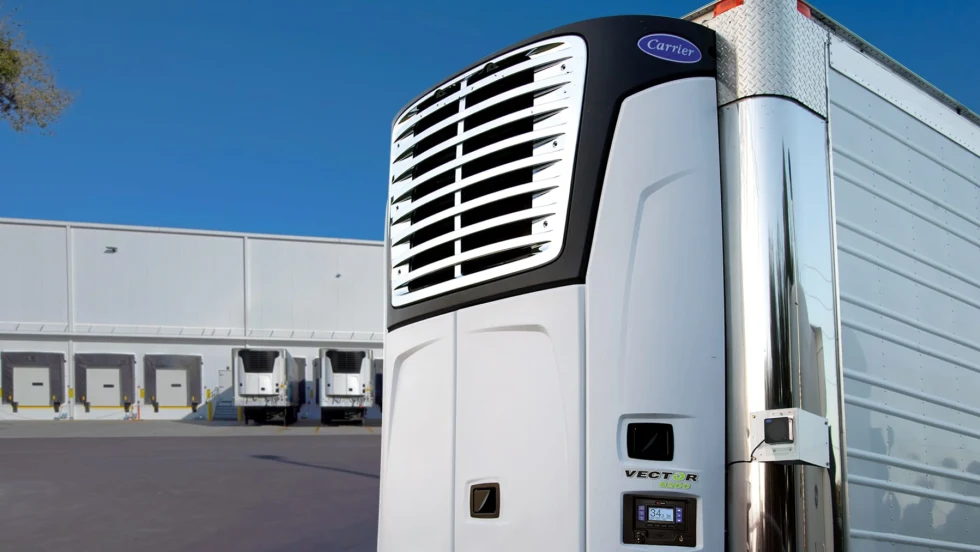
Carrier Transicold Adds All-Electric TRU for Stationary Cold Storage
Carrier Transicold’s new Vector 8200 all-electric transport refrigeration unit gives fleets a diesel-free option for temporary refrigerated and frozen trailer storage.
Read More →
A Closer Look at Kenworth’s Electric T880E Vocational Truck [Video]
Learn more about Kenworth's T880E battery-electric vocational truck at the Paccar Technical Center, including its range, applications, upfitting considerations, and PTO options, in this HDT Spotlight video.
Read More →