




Also from the TCA virtual safety and security meeting: Pandemic No Time to Relax Safety Standards
Could Some COVID-19 Waivers Become Permanent?
Federal regulators have introduced a series of waivers in response to COVID-19, to ensure that freight continues to move south of the border. Now they’re looking at whether selected waivers could become a permanent fixture.
by John G. Smith, Today's Trucking
June 24, 2020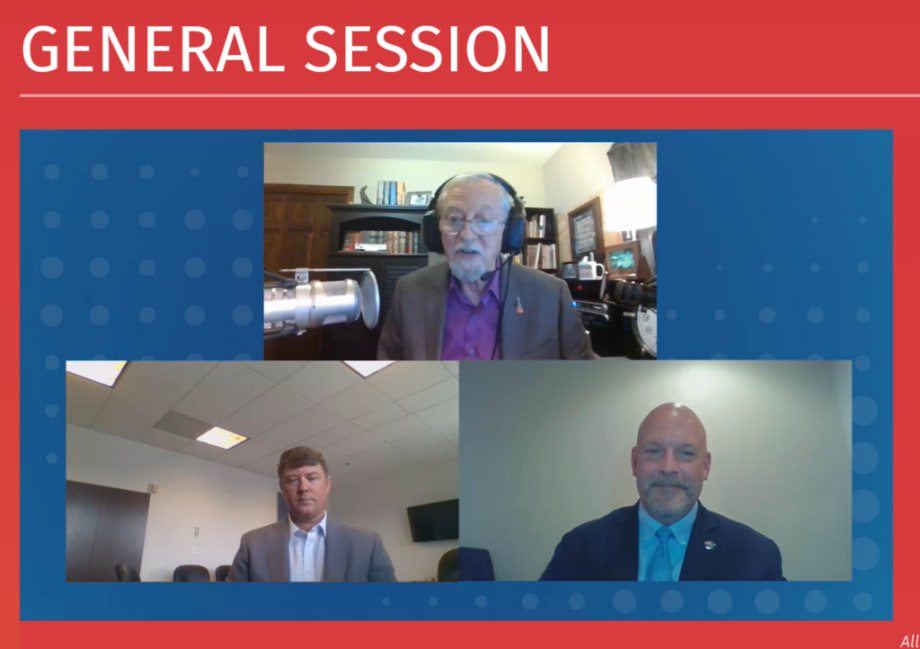
FMCSA’s Jim Mullen (lower left) joined the Truckload Carriers Association’s Dave Heller (lower right) during an online presentation on a wide range of regulatory issues.
Image: Screen capture of TCA virtual session.
5 min to read
Federal regulators have introduced a series of waivers in response to COVID-19, to ensure that freight continues to move south of the border. Now they’re looking at whether selected waivers could become a permanent fixture.
Federal Motor Carrier Safety Administration Acting Administrator Jim Mullen admitted the appetite for some discussed licensing changes is not as strong as expected. But the administration continues to look at things such as the off-site reviews for safety ratings, he said June 23 during the Truckload Carriers Association’s virtual safety and security meeting.
Many recent regulatory waivers have focused on licensing issues – such as the timing required to offer proof of medical certification, letting states administer skills tests to out-of-state CDL applicants, and allowing CDL examiners to administer knowledge tests. Those with a learner’s permit can currently drive without a CDL holder in the front seat of the vehicle, as long as the CDL holder is still elsewhere in the cab.
Other waivers have included things like certain drug and alcohol testing requirements for furloughed truck drivers, and hours of service rules around specific pandemic-related relief supplies.
The changes have been part of the agency’s response to President Trump’s call for federal agencies to be responsive during the pandemic.
“Time sensitivity was paramount,” Mullen said of the order. “I think we have seen the best of government during this time.”
Hours of Service Changes
A key example of that came in the quicker-than-expected rollout of hours of service changes, set to take effect on Sept. 29. Dave Heller, TCA's vice president of government affairs, admitted that the industry was surprised to see the change so quickly.
“We’re in the midst of this pandemic, and all of a sudden we have hours of service upon us,” he said, noting that about two years were trimmed from the traditional regulatory review process. “This might have been record speed to get a rule out.”
Central to the updated rules is the way a 30-minute break can include anything other than a driving task, rather than a full break from work. It simply has to be logged as on duty/not driving.
Other changes have included a modified sleeper berth exemption to allow drivers to split 10-hour off-duty time into 8/2 or 7/3 splits, with neither period counting against the driver’s 14-hour driving window. Adverse driving conditions exceptions are to be extended by two hours. And the short-haul exemption will increase from 12 to 14 hours, with its mileage limits extending from 100 air miles to 150 air miles.
“Just getting a break from that task alone provided benefits,” Mullen said. “That time off task is beneficial on the safety side."
“The vast majority of the industry has responded very favorably to the 30-minute change,” he added.
Heller agreed the approach to the 30-minute break could prove to be an effective way to deal with detention time.
There is other work to do, of course. A document of answers to frequently asked questions is being prepared, and there are plans for more outreach.
Taking questions from viewers of the TCA session, for example, Mullen explained how short moves that last a few minutes in a truck yard could be marked as personal conveyance depending on the reasoning. Moving the truck back into the shade would count as that. Repositioning a trailer for unloading wouldn’t fall into that category.
“There’s more to come on that,” he said. “There will be some more guidance on the personal conveyance.”
And the agency continues to move forward with the Sept. 29 rollout, despite language proposed in the INVEST in America Act, an infrastructure bill, which would delay implementation.
“We’re obviously proceeding as if there will be no delay, because that’s our task in hand,” Mullen said.
Drug and Alcohol Clearinghouse
The recent regulatory changes have hardly ended there. A new Drug and Alcohol Clearinghouse, established as a repository for drug testing files on truck drivers, has recorded 24,000 individual positive tests since being launched.
“They’re not able to circumvent the system,” Mullen said of the records that are now available to all employers. “That obviously was the intent.”
Admittedly, the rollout wasn’t perfect. “We had some IT issues the first 48 hours or so,” he said, noting that most of those issues were addressed within a week or so. “A lot of that stuff, guys, came down to people couldn’t remember their passwords.” Still, he added, “It shouldn’t be that hard.
“It didn’t go as we wanted, but I think we now have the folks and resources to make sure those things are corrected.”
“We do like where the clearinghouse is right now,” Heller said, referring to trucking as a zero-tolerance industry. “We have the ability to see what kind of drivers we’re bringing on.”
Now, the agency is considering the use of limited queries for pre-employment of drivers. And there’s already been an exemption introduced for the motion picture industry.
Broker Transparency
Mullen said there are limits to what can be done to address friction around broker relationships.
The Owner-Operator Independent Drivers Association has been demanding an electronic copy of a transaction record within 48 hours of a service being completed, and asked the agency to prohibit brokers from including provisions that require carriers to waive rights to access transaction records.
For its part, FMCSA is investigating about 10 specific allegations in which the rules were not followed, Mullen said. “But the regulation says what it says.”
John G. Smith is the editorial director of Today's Trucking, where this article originally appeared, and was used with permission from Newcom Media as part of a cooperative editorial agreement.
More Safety & Compliance
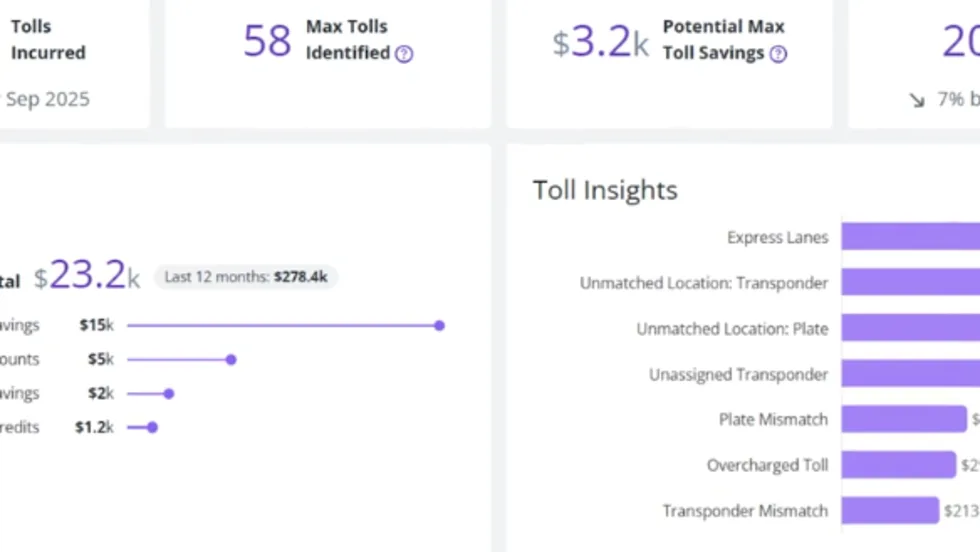
PrePass Intelligence Mines Fleet Bypass, Toll and Safety Data
PrePass Intelligence helps fleets measure bypass savings, flag potential toll overcharges, and spot suspicious transactions by combining data from separate systems.
Read More →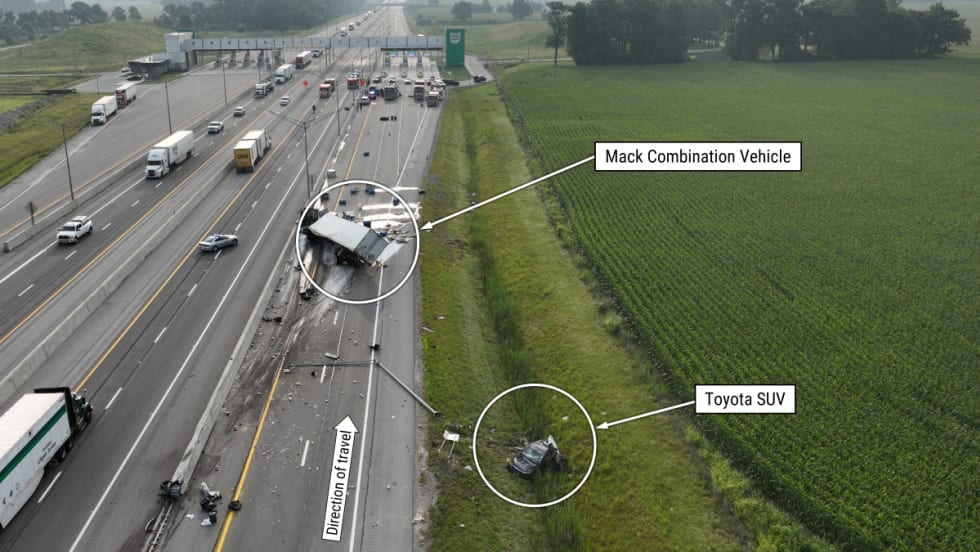
Fatal Crash Exposes Toll Plaza Risks
An NTSB investigation found that last-minute lane changes and large speed differences at an Ohio toll plaza created a hazard the truck driver couldn't avoid in time.
Read More →
When Language Stops the Truck: The Return of ELP Out-of-Service Orders
English language proficiency rules for commercial drivers aren’t new, but renewed out-of-service enforcement has raised the stakes. Here’s what carriers need to know before a driver reaches a roadside inspection.
Read More →

Sponsored•October 6, 2026
A Camera Isn't a Safety Program. Here's What Brokers Are Screening for Now
Footage alone may not be enough to pass broker vetting processes. Here's what counts as a defensible safety program now.
Read More →
Marijuana and Trucking’s Drug-Testing Dilemma
Marijuana is getting stronger, laws are changing, and drug tests still can’t reliably establish impairment. What does that mean for truck drivers and the fleets that employ them?
Read More →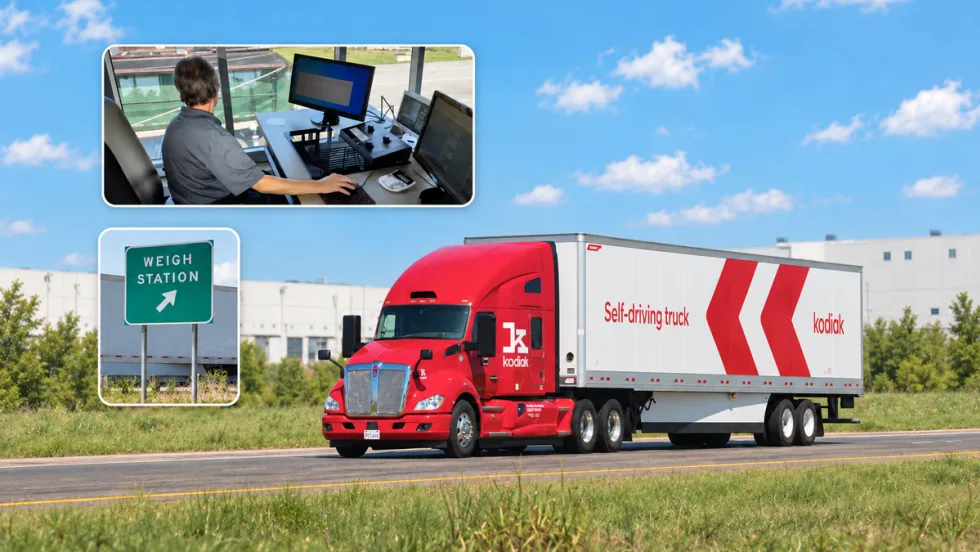
PrePass, Kodiak Connect Driverless Trucks to Roadside Enforcement
The system will allow enforcement agencies to verify Enhanced Inspection information and decide whether Kodiak’s autonomous trucks can bypass roadside screening sites.
Read More →
From One Generation to the Next: How Mentorship Builds Safer Truck Drivers
After three decades in trucking, Harold Perry shares what he's learned about driver safety, mentorship, and helping the next generation build confidence behind the wheel.
Read More →
FMCSA Pauses Biennial-Update Enforcement Amid Motus Transition
Carriers whose updates were due on or after June 1 have more time, while FMCSA works to stabilize its new registration system and warns of phishing sites impersonating its new carrier registration system, Motus.
Read More →
ZF Expands Commercial Vehicle Push in North America
ZF is expanding its North American commercial-vehicle presence with new transmission applications, electrification, trailer technology and autonomous-driving systems.
Read More →
Truck Drivers Need More Than Another Alert
Fleets have more visibility into truck health, safety events, and driver activity than ever. The next challenge is turning all that information into useful guidance for the person who has to decide what to do next.
Read More →