




Obama Starts Next Truck Fuel Economy Rule
UPDATED -- President Obama pushed the start button on the next phase of medium- and heavy-duty fuel economy standards.

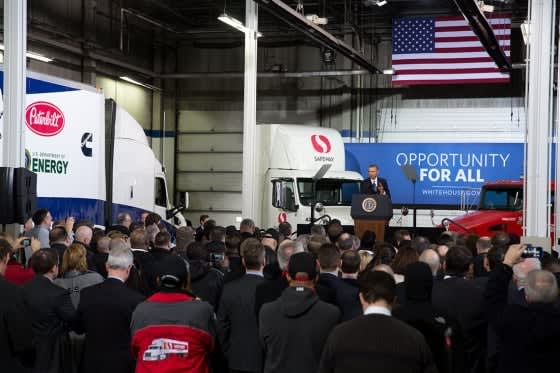
President Barack Obama delivers remarks on improving the fuel efficiency of American trucks, at the Safeway Distribution Center in Upper Marlboro, Md., Feb. 18, 2014. (Official White House photo by Amanda Lucidon)

UPDATED -- President Obama pushed the start button on the next phase of medium- and heavy-duty fuel economy standards.
He told the Environmental Protection Agency and the National Highway Traffic Safety Administration to propose a rule by March 2015, and finish the rule by March 2016.
The president announced the move Tuesday at a Safeway Distribution Center in Upper Marlboro, Md.
The first round of greenhouse gas emission rules, posted in 2011, set standards for model years 2014 through 2018. It focused on efficiencies obtained by refinements to tractors and engines. This next round of rules is likely to be more ambitious.
According to the White House announcement EPA and NHTSA will assess engine and powertrain improvements, aerodynamics, weight reduction, improved tires, automatic engine shutdown and improving accessories such as water pumps and fans, as well as hybrid technologies.
The fact sheet does not mention it, but EPA has indicated that it will look at trailers as well as power equipment.
Trailer aerodynamics can be an important factor in fuel efficiency but EPA and NHTSA stayed away from the subject in the first rule. They cited the complexity of trying to regulate equipment that is so often interchanged with varied power units, and a lack of familiarity with that market.
Last June Christopher Grundler, director of the EPA Office of Transportation and Air Quality, said that trailers will be on the agency’s agenda for this round of rulemaking.
The White House said EPA and NHTSA will work with manufacturers, the trucking industry and other stakeholders, including the California Air Resources Board, to develop the new rule.
In his prepared remarks Obama mentioned the National Clean Fleets Partnership program, which promotes alternative fuels, and EPA SmartWay. He cited Con-way, a 2013 SmartWay excellence award winner, for equipping all of its power equipment and almost half of its trailers with SmartWay certified technologies.
The White House release also discusses the SuperTruck program, which aims to show that the freight-hauling efficiency of heavy-duty trucks can be increased by 50%.
It says that under the program the Department of Energy has worked with Cummins, Volvo, Navistar and Daimler Trucks North America to increase fuel economy from about 6.5 mpg to about 9.75 mpg.
“Since 2010, SuperTruck partners Cummins and PACCAR’s Peterbilt Motors Company have demonstrated a 20% increase in engine efficiency, reaching over 10 miles per gallon under real world driving conditions on a Class8 tractor-trailer,” the release says.
It says Cummins, Volvo, Navistar and Daimler have either achieved or are close to a 50% fuel economy increase through aerodynamics and engine efficiencies.
Obama also is calling on Congress to establish an Energy Security Trust Fund to pay for research and development of advanced vehicle technologies.
Heavy trucks are a likely target for fuel efficiency and clean-air gains. In 2010, they represented 4% of registered vehicles but produced 25% of highway fuel use and emissions, the White House said. They are the second largest source of transportation emissions after cars.
The first efficiency rule is projected to save $50 billion and 530 million barrels of oil over the lifetimes of the affected vehicles.
“For example,” the White House said, “an operator of a new 2018 semi truck could pay for the technology upgrades in under a year and realize a net savings of $73,000 through reduced fuel costs over the truck’s useful life.”
Positive Industry Reaction
Trucking interests responded positively.
The Heavy Duty Fuel Efficiency Leadership Group, an alliance of carriers and manufacturers, said the move is an important step.
“Finalizing new fuel efficiency standards for medium and heavy duty trucks will be an important milestone that should result in significant benefits to our economy, the trucking industry and the environment,” said Douglas W. Stotlar, president and CEO of Con-way Inc.
Con-way is a member of the group along with Cummins, Eaton, FedEx Corp., Wabash National and Waste Management.
Stotlar said the initiative shows meaningful progress between government and industry.
“This collaborative approach will result in realistic, achievable goals and an effective regulatory framework to improve fuel efficiency and reduce greenhouse gas emissions,” he said in a statement.
Dick Giromini, president and chief executive officer of Wabash National Corporation, applauded the probable inclusion of trailers in the new standard.
“Wabash National has been a leader in the development of aerodynamic and other fuel efficiency technology on trailers for nearly a decade,” Giromini said.
“We look forward to working with the EPA and the Department of Transportation, as well as our customers and industry partners, to achieve new standards that result in greater fuel efficiency and environmental benefits in the years ahead.”
The group posted a set of principles it says should guide the rulemaking. Among them is a call to make sure that the program avoids conflicts and inconsistencies among the regulatory agencies, EPA, NHTSA and CARB.
Also, the rule should not restrict fleet choices on product specifications, it should build on the testing protocols established in the first rule and it should provide enough lead time for suppliers to develop the necessary technology.
The principles also say that trailers should be included, that credits to promote early adoption should be retained and that other incentives such as accelerated depreciation, greater highway investment and new size and weight rules should be considered.
American Trucking Associations said it supports the current rule and wants better fuel efficiency but the administration should be careful about setting new standards.
“Trucking is a very diverse industry,” said ATA Chairman Phil Byrd, president of Bulldog Hiway Express, Charleston, S.C. “Whatever standards the administration sets should reflect that diversity and whatever tests are devised should accurately reflect what drivers face on the roads every day.”
ATA President and CEO Bill Graves said the new rule should not conflict with other environmental or safety rules, or force technologies that are not ready.
Update adds reaction from the Heavy Duty Fuel Efficiency Leadership Group and ATA.
More Fuel Smarts
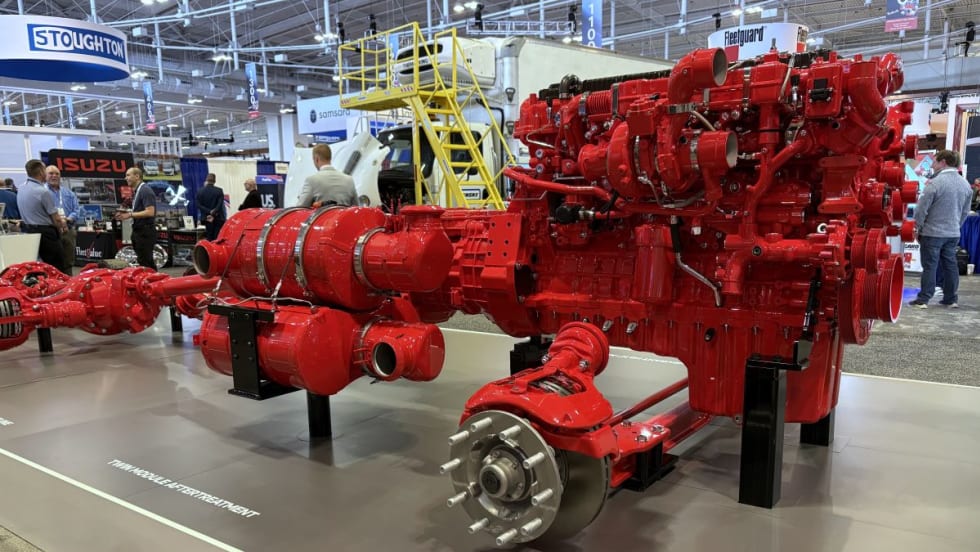
Cummins Adjusts 2027 Engine Rollout After EPA Proposal
The engine maker will gradually introduce its new Model Year 2027 diesel engines while continuing to offer current models during the transition, citing the EPA's proposed emissions rule changes.
Read More →
EPA Proposal Could Ease 2027 Truck Costs and Buying Uncertainty
The proposal doesn't change the tougher NOx standard, but it would revise key implementation requirements that manufacturers say have driven up costs and complicated fleet purchasing decisions.
Read More →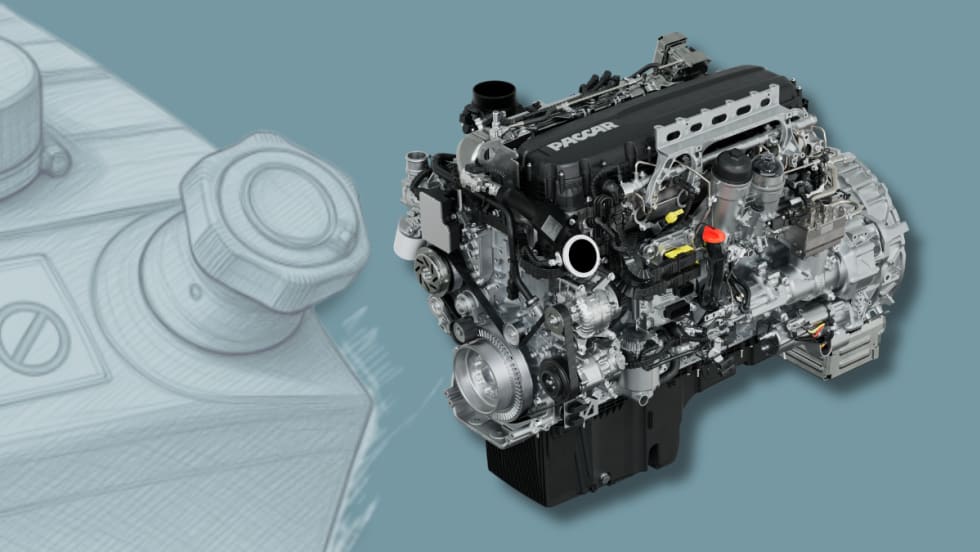
Cummins, Paccar Ease DEF Derates After EPA Guidance
Updated diesel engine software gives truck operators more time to address emissions-system issues while staying compliant with EPA emissions standards.
Read More →
Maintenance in the Messy Middle Part 3: Biodiesel
Biodiesel can reduce emissions, improve fuel-system lubricity and use existing diesel infrastructure. But NACFE’s Messy Middle maintenance report says fleets must actively manage storage, cold-weather operation, filters and oil drain intervals to avoid problems.
Read More →
Enhance Fleet Performance with High-Efficiency Auxiliary Power Units
Drive sustainable cost savings while increasing driver comfort during short- and long-haul logistics operations.
Read More →
Maintenance in the ‘Messy Middle’ Part 2: Renewable Diesel Fuel
NACFE's latest Messy Middle Powertrain Service & Maintenance report says renewable diesel gives fleets an opportunity to reduce carbon emissions without changing trucks, fueling infrastructure or maintenance practices. But technicians still need to understand several important operational differences.
Read More →
The Diesel Engine Enters NACFE’s ‘Messy Middle’
NACFE’s new Messy Middle Powertrain Service & Maintenance report says keeping modern diesel engines running now depends as much on software, diagnostics and data as traditional mechanical service.
Read More →
DTNA Software Update Gives Truckers More Time Before DEF Derates Take Effect
The changes reflect EPA guidance aimed at reducing downtime caused by emissions-system faults while maintaining compliance requirements.
Read More →
New Agentic Predictive Maintenance Report Demonstrates How Degraded Aftertreatment Systems Waste Fuel
Questar analyzed a large mixed-class fleet and discovered it was wasting as much as $30 in fuel per vehicle, per day, because of mechanically degraded aftertreatment systems.
Read More →
New York City's Microhub Project is Delivering Results
Trucking, last-mile delivery companies, and environmental advocates like what they are seeing so far with New York's microhub program.
Read More →