





Why Electrified Trailer Axles Are a Game-Changer for Trucking
The Promise of Powered Trailers
New powered trailers can make diesel-powered tractor trailers cleaner and more efficient than ever before, as well as help with adoption of zero-emission trucks.
August 29, 2024
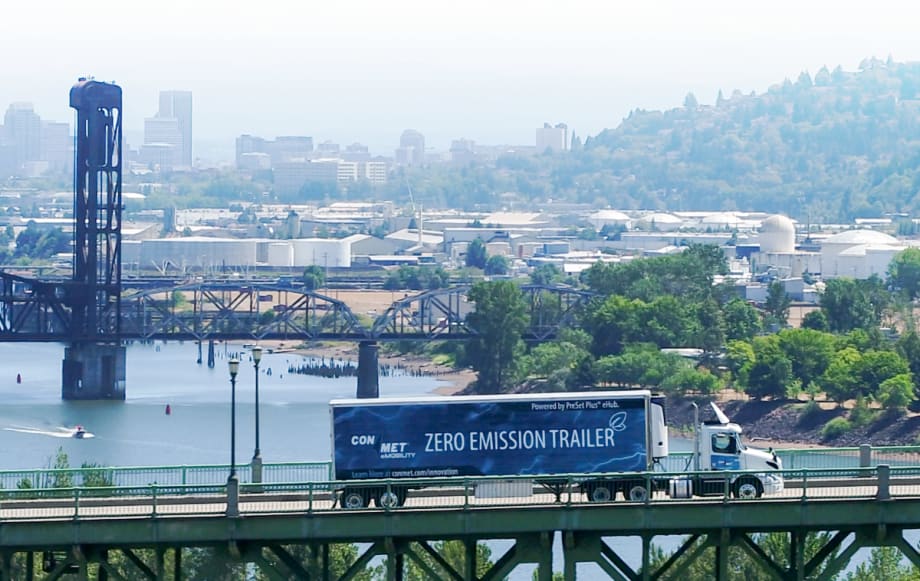
A new generation of powered trailers is poised to transform the traditional tractor-trailer powertrain forever.
Photo: ConMet
5 min to read
Tractor.
Both vehicles are modern marvels — absolutely essential components in our logistics network.
But taken separately, they’re not much use. It’s only when the two systems are combined that their awesome potential for transporting goods is made possible.
Trailers have long been the passive partner in that relationship. Sure, they can carry an incredible amount of goods. But at the end of the day, tractors were simply pulling big dumb boxes full of stuff around behind them.
All that is changing. New technology is transforming how tractors and trailers interact. The next generation of heavy-duty trailers is smarter. They communicate more effectively with tractors, fleets, and shippers.
They are also actively helping tractors move goods down the road with advanced aerodynamic designs and intelligent electric axles that can pitch in and help diesel engines out in tough terrain — and reduce emissions while doing so.
Trailers Offer a World of Opportunities to Improve Tractor-Trailer Efficiency
“The whole concept of next-generation trailers really comes down to designing trailers with the same attention to detail and functionality as tractors,” explains Jason Paauwe, head of trailer sales, North American Group, ZF.
“We know, for example, that smarter trailers boost safety. And we know powered trailer axles can extend the range of electric tractor-trailers and reduce fuel burn and emissions for diesel-powered units. That’s why at ZF, we have our hand in a lot of different technologies when it comes to trailers. Because we see a whole new world of opportunities out there in terms of how trailers contribute to every facet of fleet operations now.”
ConMet has been a pioneer in developing next-generation trailers. Marc Trahand, vice president and general manager for the company, says it's focused on finding new ways to optimize the efficiency of the tractor-trailer as a true combined system.
“The first step in this journey was the implementation of telematic systems onto trailers,” Trahand says. “Now the focus is shifting toward getting better performance from a tractor and a trailer combined together.”
These efforts will translate into reduced emissions of CO2 from diesel engines, as well as extended range on battery-electric tractor-trailers that can help speed the adoption of new, zero-emission commercial vehicles, Trahand adds.
“Electric trucks are still very expensive,” he notes. “And their range is limited compared to diesel trucks. But we can now use a trailer to add range with some propulsion. And the same configuration works well with a diesel truck as well, because we can help the truck maintain speed on grades, for example. That reduces fuel consumption and emissions.”
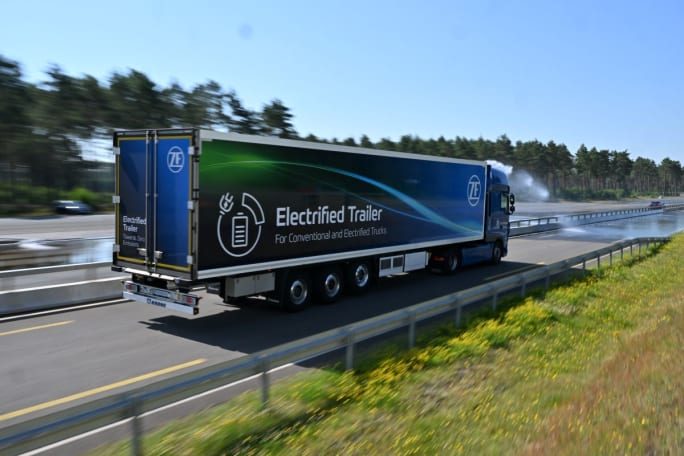
ZF believes next-generation trailers will be designed with the same attention to detail and functionality as tractors are today.
Photo: ZF
Thanks to new and emerging technologies, trailers are really the low-hanging fruit when it comes to tractor-trailer design today, Paauwe adds.
“There’s a whole new world of opportunities when it comes to advanced braking systems on trailers,” he says. “And trailers with solar panels or onboard batteries can be used in a vehicle-to-grid arrangement to help fleets mitigate electricity costs. So, we’re really about to see some fundamental changes in how we use trailers. They’re not just for hauling cargo anymore. They can do so much more.”
How Electrified Trailers Can Further Sustainability in Trucking
Perhaps the most promising of all new trailer technologies when it comes to improved efficiency is the introduction ability of small but powerful axle-mounted electric motors.
These electric motors can turn 53 feet of dead weight into an active propulsion system, aiding a diesel tractor as it’s getting under way or climbing a grade, or simply adding extra range to battery-electric tractor-trailer combo. This technology is being developed by companies such as ConMet, Range Energy, SAF-Holland, Schmitz CargoBull, and ZF.
Historically, the trucking industry hadn’t considered the trailer as a viable step towards electrification, says Ali Javidan, founder and CEO of Range Energy. Instead, the industry has largely focused on directly replacing combustion engines with battery-electric trucks.
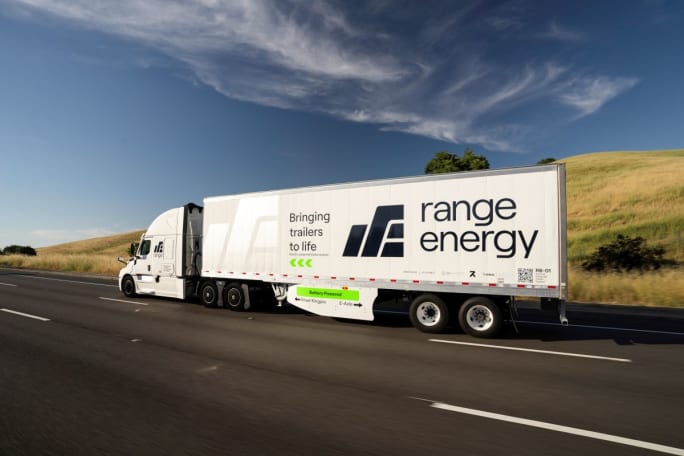
The energy produced by electrified trailers can be used to extend the range of electric tractors, or reduce fuel burn and emissions for diesel-powered trucks.
Photo: Range Energy
“Range was born out of the understanding that ZEV trucks are still 5-10 years away from mass scale, constrained by various factors, such as a lack of a viable charging infrastructure,” Javidan explains.
"To date, on-road transportation’s transition to electric has been primarily led by consumer EVs, though widespread EV adoption has slowed due to the lack of a compatible charging infrastructure, grid instability, and cost prohibitions.
"We are now showing that trailers matter in commercial trucking electrification and that on-road transportation is at an inflection point where it now needs commercial-driven innovation, such as Range’s electric-powered trailer system.”
How Do Electrified Trailers Work?
This new technology basically works by electrifying the mechanical components on the trailer so they contribute to the propulsion of the tractor-trailer, explains Ralph Dimenna, who has a lot of experience with wheel-ends and the Internet of Things through his career with Michelin, Decisiv, and most recently Aperia Technologies as chief commercial officer.
The result is a significant increase in the overall efficiency of the tractor-trailer.
“Electrification includes axles, hubs, wheel-end motors and similar components,” Dimenna says. “These motors generate power when the wheel is rotating. That energy can be used to either assist in the propulsion of the vehicle or charge a battery that can power a TRU (transport refrigeration unit).
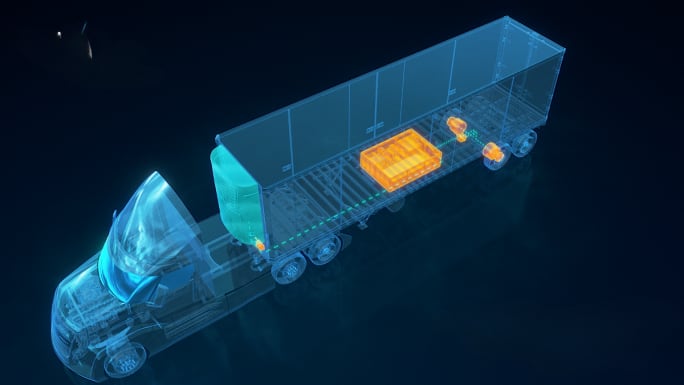
ConMet's basic SmartHub configuration consists of two, small but power electric motors mounted on trailer axles and a small battery located somewhere on the trailer to store energy.
Graphic: ConMet
"The new technology provides a more efficient and reliable system, often integrated into smart hubs or combined with other wheel-end systems to provide consistent, reliable power," he adds.
“We’re seeing the combination of a lot of existing, and new technologies contributing to the concept of powered trailers,” ZF's Paauwe adds.
One example he points to is regenerative braking systems, which capture kinetic energy generated by a moving vehicle and store it in onboard batteries. ZF says an electrified trailer solution is possible by integrating ZF´s AxTrax 2 electric axle plus a battery system box with battery modules and battery management in the trailer. This allows braking energy to be recuperated, and the recovered power can support traction and ease the workload of the primary engine in the truck. This alone can reduce fuel consumption and emissions of a diesel truck by up to 16%, according to ZF's website.
“Really we’re in the early stages of next-generation trailers,” says ZF's Paauwe. “And the key has to be what, ultimately, is the end goal as to how a trailer is being used. Does the fleet that runs it want to get better fuel economy? Hit Scope 1, 2 or 3 emissions goals? Are they looking for electric reefer operations to meet CARB requirements?
"Doing all of these things can get pretty expensive, pretty quickly. Which I why I think we’ll see a high degree of flexibility and spec’ing when it comes to trailer design in the future.”
Subscribe to Our Newsletter
More Equipment

How Volvo Updated Its D13 for EPA 2027 [Watch]
Volvo’s updated D13 promises lower emissions without sacrificing performance or fuel economy. Take a closer look at what changed inside the engine in this HDT Spotlight video.
Read More →
Michelin Tire Improves Efficiency and Durability for Regional Fleets
The Michelin X Multi Energy D2 is a regional haul drive tire engineered to help fleets improve fuel efficiency, durability and traction in demanding stop-and-go operations.
Read More →
ZF Expands Commercial Vehicle Push in North America
ZF is expanding its North American commercial-vehicle presence with new transmission applications, electrification, trailer technology and autonomous-driving systems.
Read More →
Tesla Wants a Self-Driving Semi. Are Cameras Enough?
Could Tesla’s camera-only autonomous driving technology work on an 80,000-pound Semi? In this commentary, HDT's Deborah Lockridge takes a look at Tesla, Cybercab, and how autonomous trucks see the road.
Read More →
Kodiak: Driverless Long-Haul Truck Launch on Track for 2026
Kodiak AI says its driverless long-haul safety case is 93% complete and it remains on track to begin commercial operations by year-end 2026.
Read More →
What DOT’s Automated Vehicle Strategy Means for Trucking
The U.S. Department of Transportation issued a new automated-vehicle strategy that outlines plans for driverless-truck regulations, cross-state freight corridors, and federal safety standards.
Read More →
East Coast Port Launches $45M Electric Truck Push
The Port Authority of New York and New Jersey announced millions in incentives for zero-emission drayage trucks, yard tractors, and new charging hubs near the port.
Read More →
PlusAI Going Public to Fund Autonomous Truck Launch
A SPAC deal could provide PlusAI with up to $300 million as it works toward a 2027 commercial launch of factory-built autonomous trucks.
Read More →
NHTSA Moves to Rewrite Truck Fuel-Economy Rules
The National Highway Traffic Safety Administration says it lacks authority to regulate medium- and heavy-duty truck engines separately from complete vehicles, but the existing standards have not yet been eliminated.
Read More →
Detroit Opens Orders for EPA 2027 Engines
Detroit isn’t starting from scratch to meet EPA 2027 diesel emissions standards. Its Gen 6 DD13 and DD15 engines keep much of today’s platform while updating the fuel and aftertreatment systems.
Read More →