





California’s Straight-Truck TRU Deadline Puts the Squeeze on Fleets
Trends in Truck Transport Refrigeration Units
For refrigerated haulers, reducing GHG emissions means changes to transport refrigeration units, not just trucks.
July 1, 2024
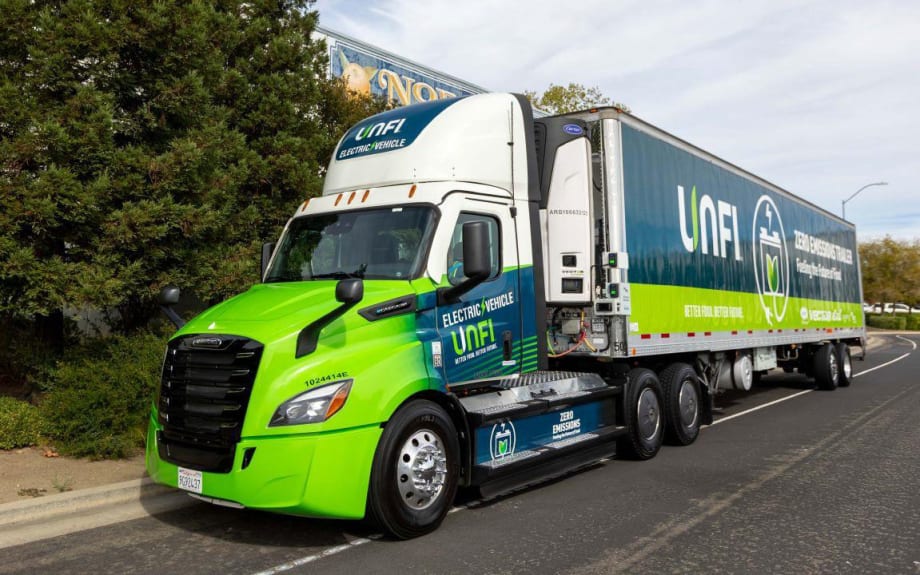
United Natural Foods matched electric tractors to refrigerated trailers cooled by an electric TRU and a regenerative e-hub.
Photo: UNFI
8 min to read
The quest for sustainability in trucking means an additional challenge for refrigerated haulers — the transport refrigeration unit that keeps food and other goods at the right temperature.
Some of this is driven by regulations, some by fleet sustainability goals.
California is a prime example of where both drive fleet decisions.
Performance Food Group touts its Gilroy, California, facility as a sustainable distribution center model of the future. In addition to adding electric trucks to its fleet, PFG’s sustainability plan calls for the food distributor to move away from diesel-powered TRUs. The company has replaced diesel-powered TRUs with more than 30 Advance Energy Machines zero-emission SolarTechTRUs.
Each of the electric TRU installations in PFG’s fleet of refrigerated trailers has helped the company eliminate approximately 20 tons of CO2 per TRU, per year.
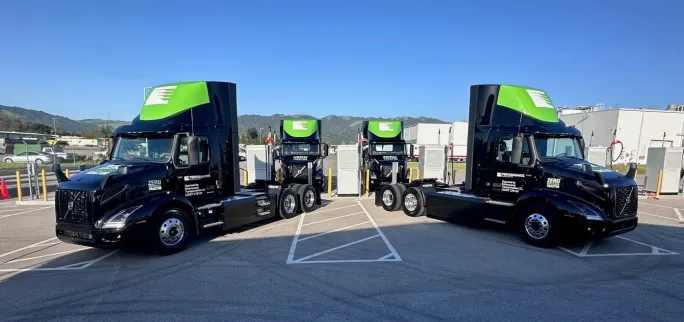
PFG has paired Volvo VNR Electric trucks with electric transport refrigeration units from Advance Energy Machines' zero-emission SolarTechTRUs.
Photo: PFG
California TRU Regulations
In the light- and medium-duty space, the California Air Resources Board banned the sale of diesel-powered refrigeration units for medium-duty trucks at the beginning of this year. That was the first step in a rule mandating a 15% annual fleet turn-over to all electric refrigeration units.
That, of course, requires an all-electric truck to power the refrigeration unit. The trucks exist, but access to the energy to power them is not always readily available. Fleets have the option of buying a battery pack for their diesel truck to run the electric TRU, but that adds weight and cost. The rule prohibits using the diesel engine in any form or manner to drive the TRU.
According to one person close to the situation, this has resulted in a decline in demand for medium- and light-duty TRU products from hundreds to dozens.
The conundrum has led to partnerships to develop medium-duty electric trucks with integrated zero-emissions refrigeration.
At the recent Advanced Clean Transportation (ACT) Expo in Las Vegas, Penske Truck Leasing, Daimler Truck North America, and Carrier Transicold unveiled an all-electric refrigerated medium-duty truck to help leasing customers with temperature-controlled freight experience electric refrigeration units.
A Class 7 Freightliner eM2 battery-electric box truck was combined with Carrier Transicold’s Supra e11eCool electric refrigeration unit on a 26-foot refrigerated body. An electric power take-off on the eM2 allows the TRU to use energy directly from the truck’s high-voltage battery.
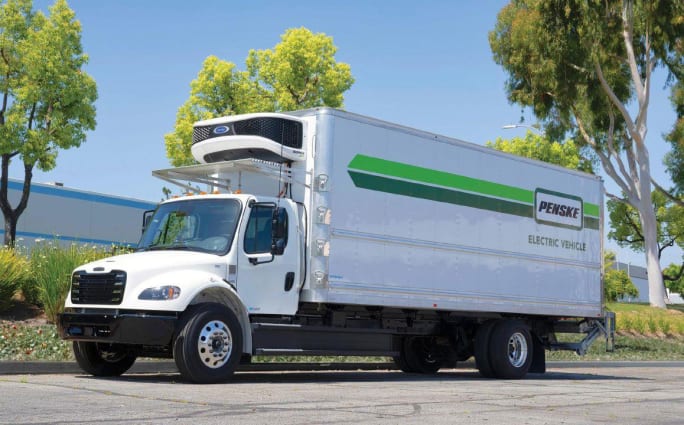
Penske Truck Leasing, Daimler Truck North America, and Carrier Transicold unveiled an all-electric refrigerated medium-duty truck to help leasing customers with temperature-controlled freight experience electric refrigeration units.
Photo: Penske/DTNA/Carrier
And Isuzu Commercial Truck of America announced an all-electric Isuzu NRR EV truck integrated with the Thermo King e300 all-electric TRU. The Isuzu powertrain is equipped with an electric power take-off that can produce 7 to 12 kWh output, with a peak output of 26 kWh for demand spikes.
The NRR-EV’s onboard computer will communicate directly with the Thermo King e300 all-electric transport refrigeration unit and supply the power needed.
On the heavy-duty side — the over-the-road sector — a final rule on electric TRUs is still in the works. Expectations are that CARB and the Environmental Protection Agency will require a fully electric solution, but the two regulatory bodies might be willing to accept auxiliary power supplied by an e-axle system.
Charging Infrastructure for Electric Transport Refrigeration
The successful deployment of zero-emission trucks and TRUs only works when a charging solution is in place to handle the need for electric power.
Trucking fleets want products that align with their sustainability goals, but they’re leery about jumping in just yet because of the lack of facilities equipped to handle the new technology.
“Charging infrastructure is crucially lagging behind the development of electric TRUs,” says Paul Kroes, trailer innovation leader, Thermo King Americas.
“This is going to be the pacing item within the industry and will be a major roadblock to wider scale adoption.”
Very few industry and regulatory planners understand what is required to support TRU charging, he says.
“Thermo King is working to raise awareness nationally about charging standards and power requirements but more is needed to make sure that when facilities are built to accommodate electric truck and tractor charging, that electric TRU charging is also considered.”
Plug-in Hybrid TRUs
Meanwhile, diesel/electric hybrid systems are gaining market acceptance, as the electric side can eliminate emissions during the pre-cool and staging phases of operation. But this requires suitable plug-in power be available at facilities where refrigerated trucks are loaded and unloaded, particularly in California.
“The use of electric standby to power electric and diesel TRUs during loading, unloading or staging continues to trend upwards,” says Bill Maddox, senior manager – product management, Carrier Transicold Truck/Trailer/Rail Americas.
“This enables them to plug into an electric power source to deliver constant refrigeration and freezing without an onboard power source."
For a diesel TRU, using electric standby can reduce operating costs by 40 to 70%, depending on the fuel cost, he says.
Thermo King's Kroes also notes that the industry is “starting to coalesce around hybrid solutions that provide an easier and more realistic path toward fuel savings and decarbonization without risking the food loss that can be associated with the full transition to all-electric solutions.
“That’s not to say engineless battery-electric systems aren’t capable, but they come at the cost of needing more robust and expensive systems and are best suited in niche applications at the moment.”
Combining e-Trailers and e-TRUs
Last year, Utility Trailer Manufacturing Company and European trailer manufacturer Schmitz Cargobull Corp. announced they were bringing a new transport refrigeration unit technology and brand to North America.
Under the name Cargobull North America, Utility is the exclusive North American distributor of Schmitz Cargobull’s latest TRU technology on its refrigerated trailers.
The Cargobull technology offers as much as 20% less fuel consumption, according to the company.
Plug-in units have been rolled out nationwide.
Still to come are fully electric TRUs that will use an electric e-axle to recuperate energy from the axle to charge the battery and power an all-electric cooling unit.
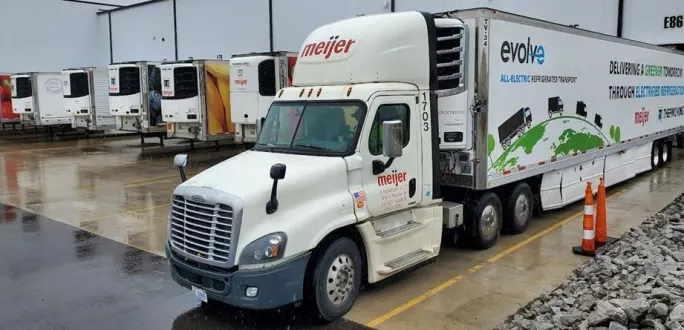
Meijer tested Thermo King's evolve electric TRUs during the Michigan winter.
Photo: Thermo King
During a TMC press conference earlier this year, Utility officials noted that the 32 kilowatt hour batteries and recuperation might slightly diminish truck mileage, but the significant fuel savings that come from not needing to run a diesel on your TRU more than make up for it.
Schmitz Cargobull isn’t the only company working on using regenerative energy from trailer axles to power TRUs.
Carrier's Vector eCool system is an all-electric refrigerated trailer system that fully regenerates while the unit is in motion, according to Maddox.
Instead of an engine and generator, an in-wheel electric motor within the hub assembly captures energy that would otherwise go wasted as heat from friction brakes. The electricity is stored in a high-capacity battery and used to power the electric TRU with none of the emissions or noise associated with diesel engines.
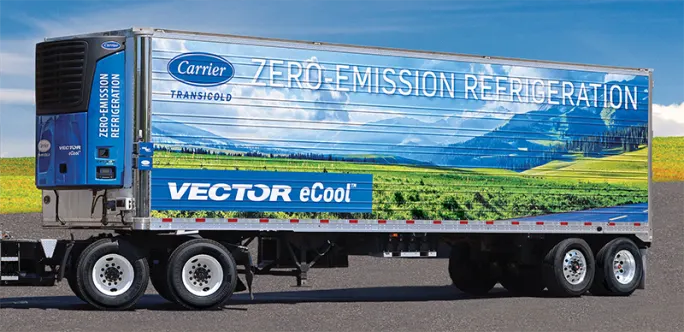
Carrier's Vector eCool system is an all-electric refrigerated trailer system that fully regenerates while the unit is in motion.
Photo: Carrier
At ACT Expo, a Vector eCool trailer was shown with ConMet’s Nmotion TR series of power generators for refrigerated trailers. Nmotion uses in-wheel electric motors to generate power that can be used to operate an electric transport refrigeration unit.
Last year, Penske Logistics paired a ConMet nMotion TR 160-45 equipped reefer trailer with a Freightliner eCascadia electric tractor, hauling refrigerated freight for a California customer.
The pairing enables zero-emission refrigerated transport by combining an all-electric tractor with a reefer trailer cooled by an electric standby trailer refrigeration unit that is powered by energy generated from in-wheel electric motors. Using the in-wheel e-hub technology, the nMotion system generates power for the reefer whenever the vehicle is in motion to keep cargo cold during transport.
Another example is Range Energy’s trailer electrification platform and equipment set announced last year. The e-axle, battery pack, and smart kingpin package provides power to auxiliary devices and enables zero-emission precooling for transportation refrigeration units.
Range Energy and Thermo King announced a strategic collaboration at ACT Expo to accelerate the commercialization of electric refrigerated trailers.
This collaboration enables the companies to align on an electric trailer technology system, including integrating Range’s electric trailer platform with Thermo King’s hybrid trailer refrigeration units and electric TRUs.
The Role of Telematics and Data in Transport Refrigeration
Carrier Transicold, Thermo King, and new entrant Schmidt Cargobull all provide TRU telematics.
These systems can help fleet managers capture data regarding fuel use, dwell time, remote refrigeration unit monitoring, control and diagnostics, automatic “proof of temperature” reports, data management, identifying door-opening events, automatic location alerts, and so forth. Alerts from TRU experiencing issues on the road can help fleets determine if the problem can wait or whether the driver should be directed to the nearest dealership or terminal for immediate service.
But telematics data also can be a valuable tool in adoption of electric TRUs by fleets.
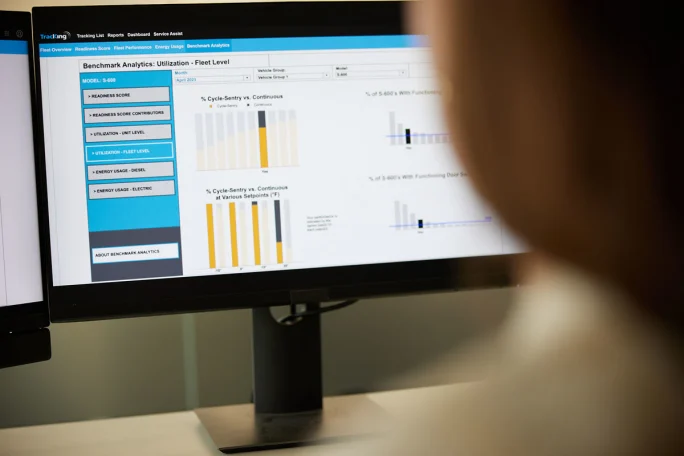
Telematics data can be a valuable tool in adoption of electric TRUs by fleets.
Photo: Thermo King
“The industry is starting to recognize the value of data,” says Kroes. “When you electrify, you digitize.”
“We can help them understand their fleet operations today down to a granular level, and together we can understand what the transition to electric will look like,” he explains.
That kind of data helps minimize the risk of investing in some very expensive assets. The data can help fleets make informed decisions about the best routes to deploy electric assets, configuration requirements, and a transition and investment roadmap.
Thermo King has developed an energy consumption tool to calculate the estimated total dollar savings and CO2 emissions savings when running an all-electric truck reefer in comparison to a diesel fuel equivalent truck reefer on a specified route.
The calculation takes into consideration unique specifications including box size, insulation material, temperature (ambient and set point), door type (swing or roll up), door opening duration, etc.
Subramanian explains, “We then conduct an analysis working closely with our customer to understand if this route is feasible for their fleet with an electric solution.”
Editor and Associate Publisher Deborah Lockridge contributed to this story.
Topics:Equipment
Subscribe to Our Newsletter
More Equipment
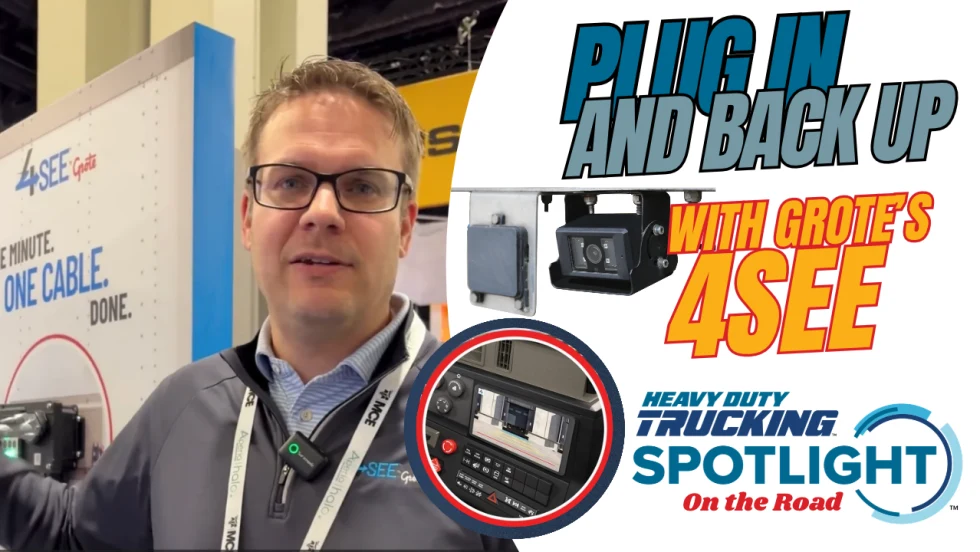
More Trailer Data Through the Same Seven-Way [Video]
Can trucking’s standard seven-way connector handle more cameras and trailer data? Grote’s Adam Slade shows HDT how the company is using new technology with its 4See trailer system, not only to add a new backup camera but also to expand other capabilities — without adding another connection.
Read More →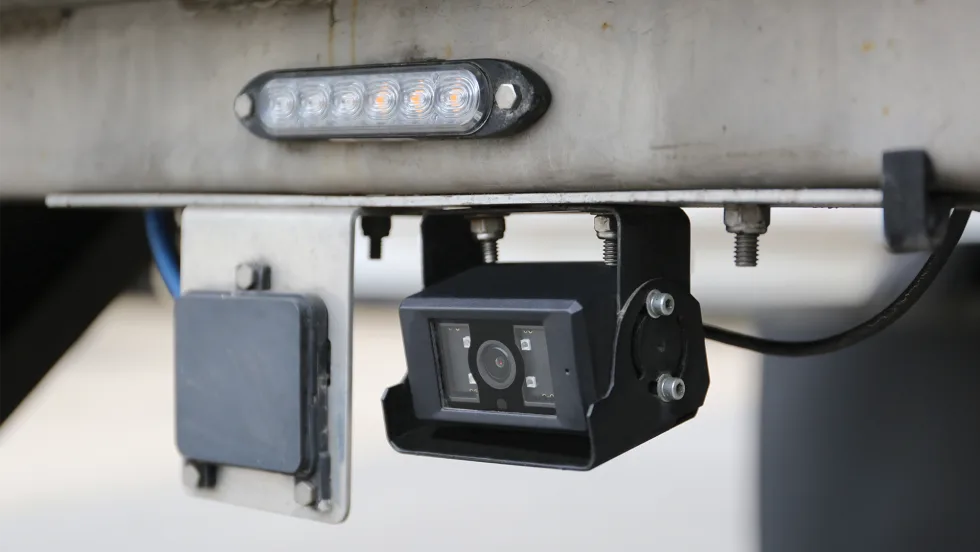
Grote: More Cameras, Same Seven-Way Connector
The next-generation 4See rear-view backup camera from Grote uses the standard seven-way connector and supports additional cameras and other trailer data.
Read More →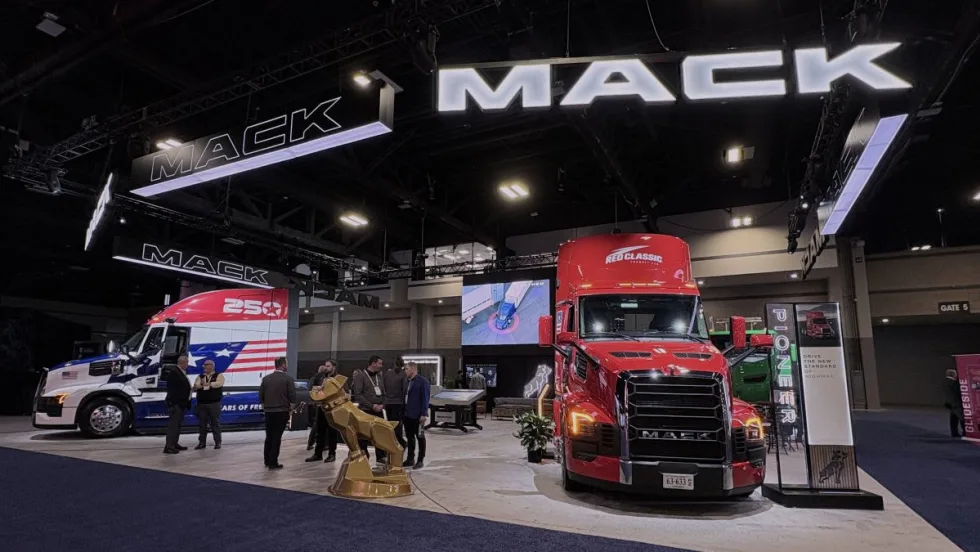
Trucks at ATA's 2026 MC&E in Charlotte, North Carolina [Photos]
From rigs decked out in patriotic America's 250 paint schemes to autonomous trucks and more, check out these photos from ATA's 2026 Management Conference & Exhibition.
Read More →
Help HDT Find Trucking’s Top Products
Have you come across a new product that could make a difference for trucking fleets? Nominate it for HDT’s 2027 Top 20 Products Awards by November 9.
Read More →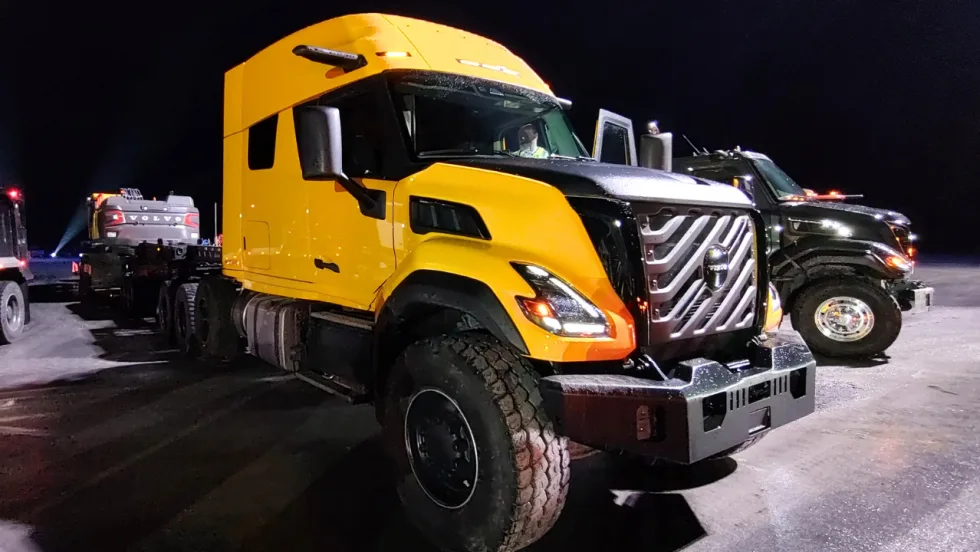
Volvo Unveils New VNX Heavy-Haul and Vocational Truck
Volvo Trucks has launched the VNX, a new vocational truck also available as a tractor in day cab and two sleeper configurations, with one heavy-haul model. The Volvo VNX is powered by Volvo's D13 platform, which delivers up to 540 horsepower and 1,950 pound-feet of torque and is EPA 2027-compliant.
Read More →
How GP Transco Cuts Trucking Fuel Costs, a Tenth of a Gallon at a Time
What’s another tenth of a mile per gallon worth? GP Transco shares how equipment upgrades and driver coaching turn small gains into meaningful fuel savings.
Read More →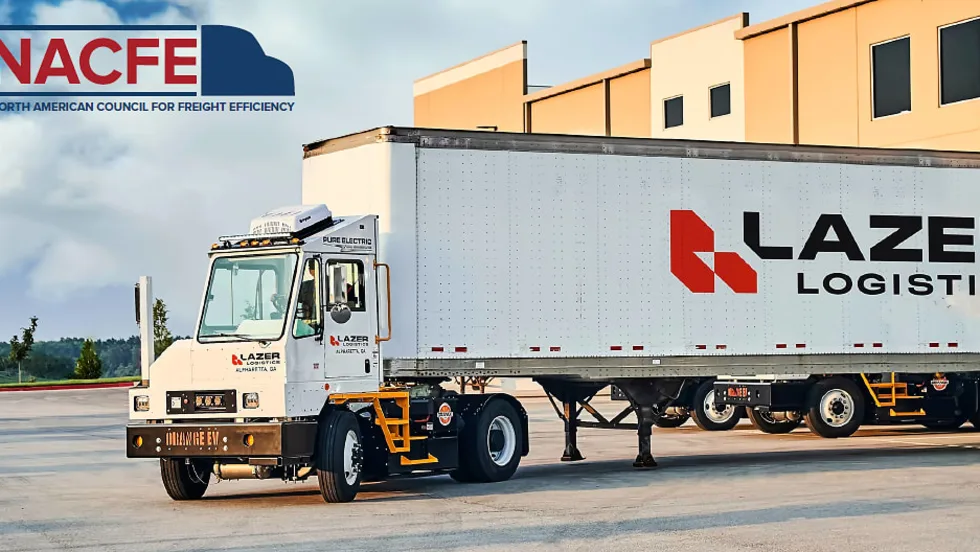
Electric Yard Tractors Move Beyond Pilots
Operating-cost savings have overtaken sustainability goals as the leading reason surveyed fleets are adopting battery-electric terminal tractors, according to new NACFE research.
Read More →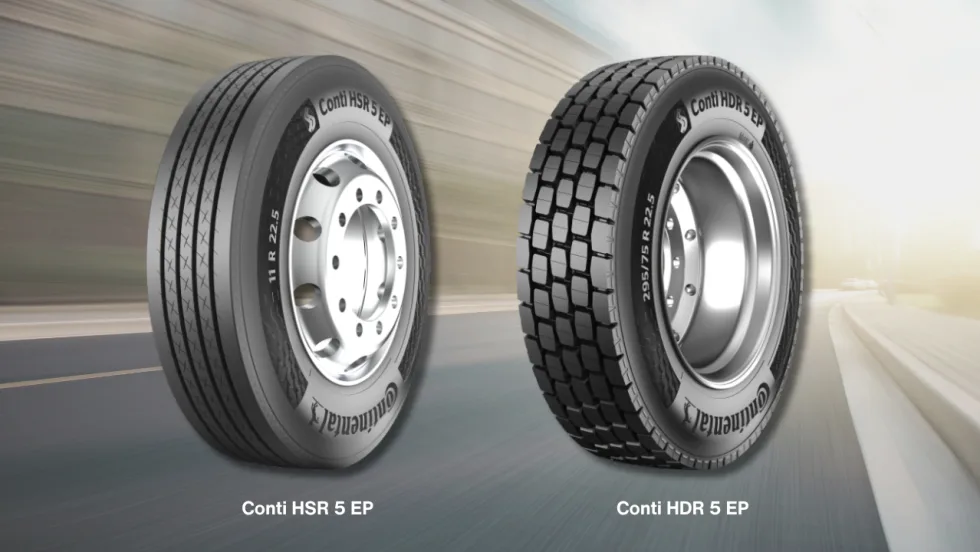
Continental Introduces New Regional Truck Tires
Continental says its new Generation 5 steer and drive tires for regional operations offer longer tread life, with estimated mileage gains of 22% and 19%, respectively.
Read More →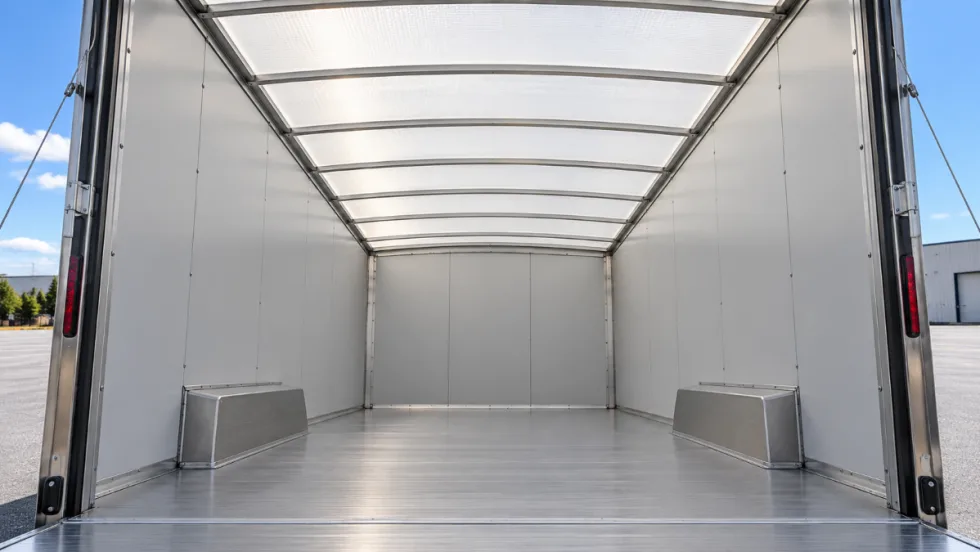
Tekmodo Introduces CargoBright Brand for Translucent Trailer Roofs
CargoBright is designed to diffuse daylight across the cargo area while performing as a working vehicle roof.
Read More →
Fleet Economics Shape Electric Truck Outlook
ACT Research expects costs, charging infrastructure, and technology improvements to drive zero-emission commercial vehicle adoption as federal regulations and incentives retreat.
Read More →