




What Are Scope 3 Emissions And Why Should Trucking Companies Care?
A trucking fleet’s Scope 1 emissions are part of a shipper’s Scope 3 emissions.

Image: HDT graphic
In conversations with customers about sustainability, trucking companies are likely going to hear the terms Scope 1, Scope 2, and Scope 3 greenhouse gas emissions.
Scope 1 emissions are direct emissions that result from the assets that you own. If you own trucks, you are producing a lot of Scope 1 emissions. “For trucking companies, that’s been predominantly where we have been spending a lot of our time and attention is on our Scope 1 reductions and plans to reduce those emissions,” says Shawntell Kroese, AVP of sustainability and sales operations for Werner Enterprises.
Scope 2 emissions result from the electricity that you buy and pull from the grid to power your facilities. How much do you use? What’s the source of the energy?
Scope 3 is everything else, and a huge part of that is a company’s supply chain. “It's indirect emissions, both upstream and downstream, in the whole supply chain process,” Kroese says. “And so it’s complicated. There are a lot of different categories, as you think through your business, and what you would include in terms of the activities of your company.”
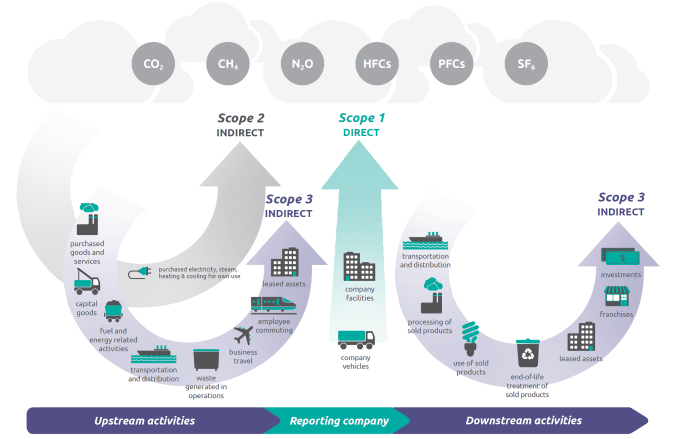
Your trucking fleet's Scope 1 emissions are your customers' Scope 3 emissions.
Source: EPA
How Trucking Companies Can Help Customers Be Greener
The key for trucking in this discussion is that a fleet’s Scope 1 emissions are part of a shipper’s Scope 3 emissions. And large companies, for many reasons, are looking to reduce those emissions.
"That’s why we’re a big deal to our customers, because we’re a big part of their Scope 3,” says Kroese.
Werner's goal is to disclose Scope 1 and Scope 2 GHG emissions in 2025. Scope 1 is being disclosed now, and the trucking giant said it's on track to report Scope 2 by 2025.
So far, Werner said in its latest sustainability report, it has achieved a 16% Scope 1 emissions reduction. To calculate Scope 2 data, the company has been building a waste and energy scorecard to measure progress around waste reduction and electricity use.
For private fleets, determining their Scope 1, Scope 2, and Scope 3 emissions often are part of a larger corporate focus on ESG and sustainability goals.
Sysco, for instance, set an ambitious science-based climate goal to reduce its global Scope 1 and Scope 2 emissions by 27.5% by 2030 compared to a 2019 baseline. And it has committed to working with suppliers representing 67% of Scope 3 emissions to set their own targets by 2026.
In its latest Corporate Social Responsibility report, Sysco said it is transitioning to a new, global emissions tracking platform so it will be able to report those Scope 1 and 2 emissions.
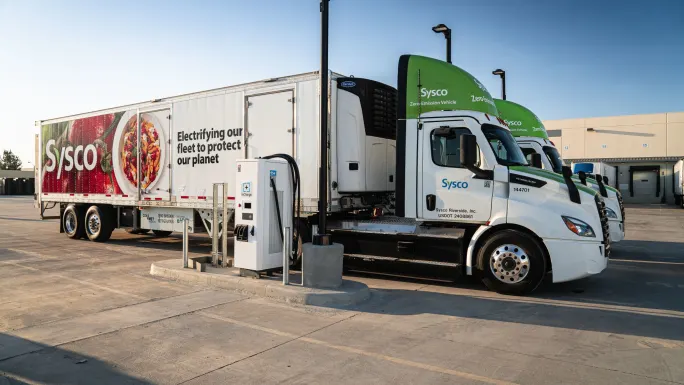
For large private fleets, Scope 1, 2, and 3 emissions goals are often part of larger corporate sustainability goals.
Photo: Sysco
Regulations' Role in Scope 3 Emissions Focus
You may have heard about Scope 3 emissions in the news during the past year or two.
California last fall passed a law requiring emissions reporting from large companies, including Scope 3 emissions. The California Climate Accountability Act applies to both
public and private companies that do business in the state and make more than $1 billion in annual revenue.
What exactly those regulations will include, and what legal challenges may mean to the eventual rules, is yet to be seen.
In January, a coalition of business organizations filed a legal challenge, saying the new laws will impose “massive” costs on businesses, violate free speech protections, and act as de facto national emissions regulations, usurping the role of federal regulators as set up under the Clean Air Act.
The U.S. Securities and Exchange Commission recently published new rules requiring greenhouse gas emissions reporting from publicly traded companies. Those rules did not go as far as requiring Scope 3 emissions reporting, as the SEC had originally proposed.
“The Scope 3 is just a bear,” explains Beth Davis-Sramek, the chair of the Department of Supply Chain Management at Auburn University in Alabama. “It’s the big companies, the big globals, that are trying to figure out how to tackle that.
“For most companies, if you’re getting a sense of what your Scope 1 and Scope 2 are, you’re way ahead of the curve.”
Why Do My Customers Want to Know My Trucking Company's Scope 3 Emissions?
Davis-Sramek explains the recent focus on Scope 3 emissions this way:
“Companies such as Apple have been really good at saying, ‘We're carbon neutral.’ But Apple doesn’t own anything. Everything is manufactured abroad. They don’t have trucks, they don’t have manufacturing; they outsource it. So their Scope 1 and Scope 2 numbers are tiny.
“If you look at Scope 3, if you look at their supply chain, and you think about where’s the social and the environmental concerns, it’s in their supply chain.
“So now companies, the big ones, are on the hook to manage their supply chains and to think about, ’How am I dealing with my Scope 3 emissions?”
Since a motor carrier’s Scope 1 emissions are part of shippers’ Scope 3 emissions, she says, “Now they’re on the hook to demonstrate that they’re doing something about your emissions.
“This is where I think companies are going to be pressured,” she says. “It's going to be the small and medium sized companies that are a part of bigger supply chains that are going to be under pressure for this kind of reporting system.”
More Fuel Smarts
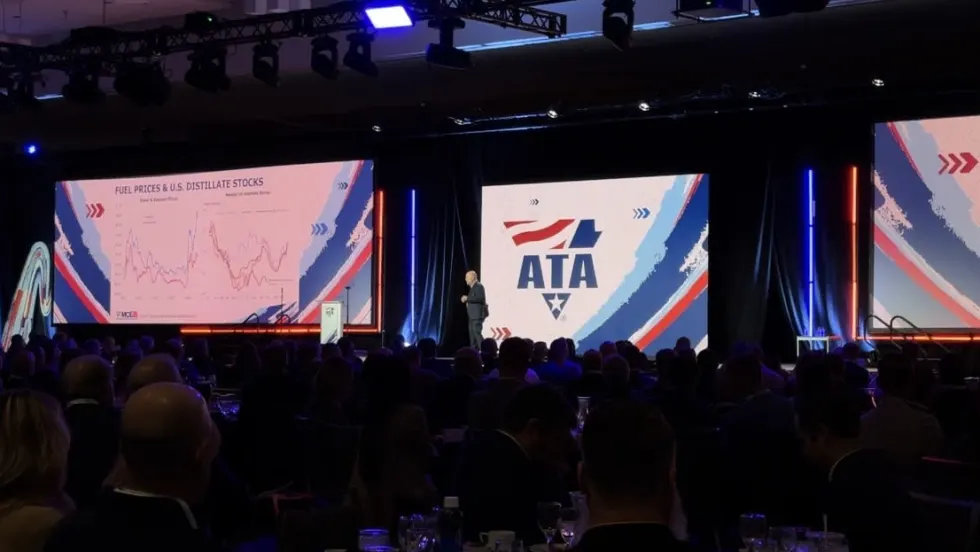
Trucking’s Diesel Squeeze Isn’t Letting Up
With diesel topping $6 a gallon nationally, ATA's Bob Costello explains why fleets should prepare for continued pressure at the pump.
Read More →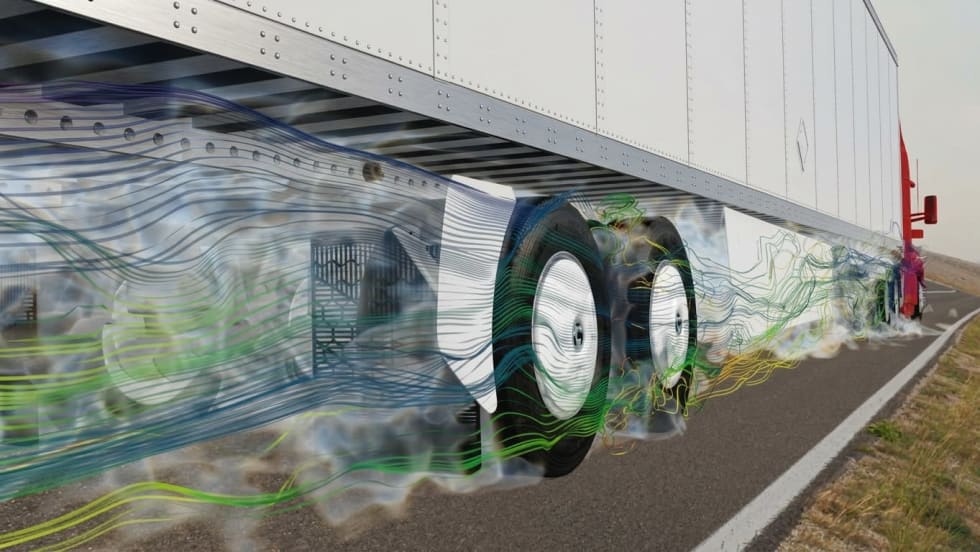
FlowBelow Redesigns Trailer AeroSlider to Cut Fuel Use
The lighter trailer aerodynamic system installs in less than 45 minutes, according to the company, with potential payback in under a year depending on fuel prices and trailer mileage.
Read More →
Why Diesel Price Relief Efforts May Fall Short
Diesel prices have eased from September’s record high, but doubts about additional Russian supply and limits on dyed-diesel tax relief mean trucking fleets still face expensive fuel. And prices could go higher.
Read More →
Why Small Fuel Savings Matter in Trucking
Can better fuel economy help pay for driver raises? In this podcast, GP Transco explains how small efficiency gains create room to reinvest in its people.
Read More →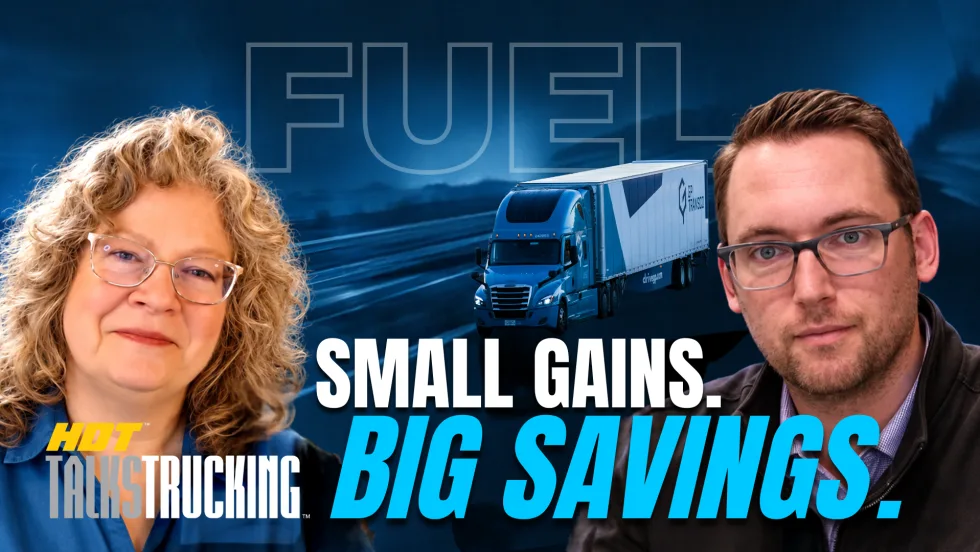
How GP Transco Cuts Trucking Fuel Costs, a Tenth of a Gallon at a Time
What’s another tenth of a mile per gallon worth? GP Transco shares how equipment upgrades and driver coaching turn small gains into meaningful fuel savings.
Read More →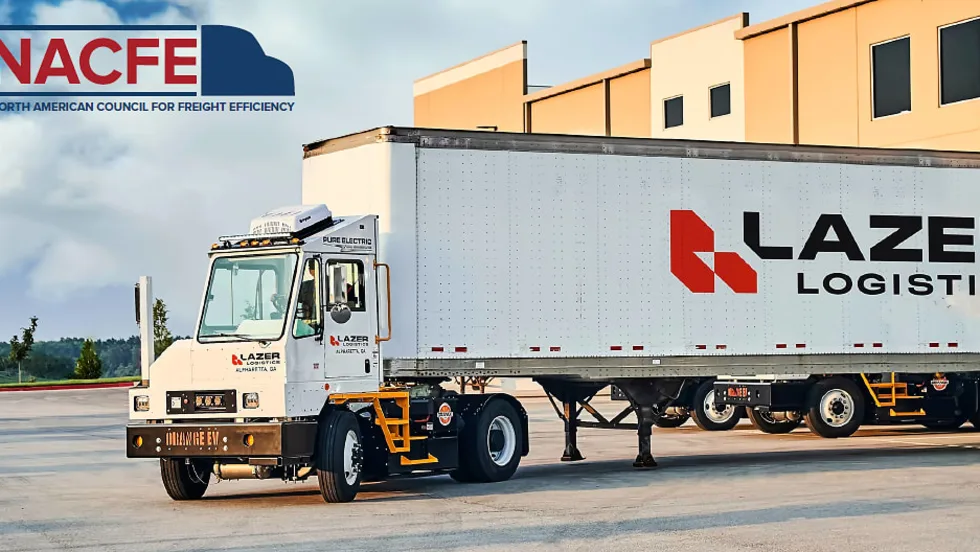
Electric Yard Tractors Move Beyond Pilots
Operating-cost savings have overtaken sustainability goals as the leading reason surveyed fleets are adopting battery-electric terminal tractors, according to new NACFE research.
Read More →
Geotab Links Fleet Card to Vehicle Data
The new card combines fuel discounts with telematics-based purchase controls. Geotab’s analysis also points to potential savings from choosing lower-priced fuel stops.
Read More →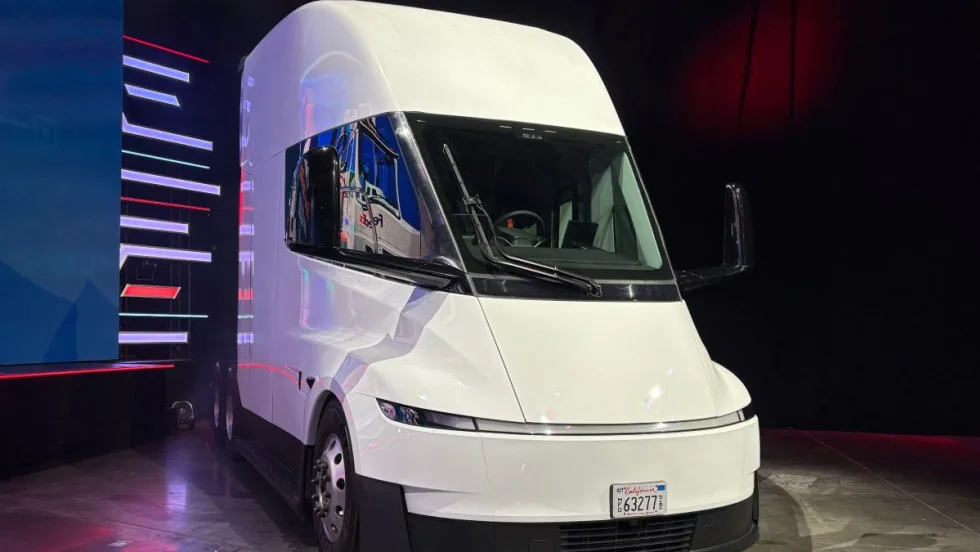
Fleet Economics Shape Electric Truck Outlook
ACT Research expects costs, charging infrastructure, and technology improvements to drive zero-emission commercial vehicle adoption as federal regulations and incentives retreat.
Read More →
Wex Adds Cardless Fuel Payments for Over-the-Road Customers
A new fuel card feature for Wex customers offers convenience and security.
Read More →
New California Law Could Shed Light on Electric Truck Prices
Why do battery-electric Class 8 trucks remain so expensive? A California bill signed by Gov. Gavin Newsom would give fleets and state agencies more visibility into what manufacturers charge.
Read More →