




EPA Wants to Know: Are DEF De-Rates Really Needed for Diesel Emissions Compliance?
The Environmental Protection Agency is asking diesel engine makers to provide information about diesel exhaust fluid system failures as it considers changes to emissions regulations.

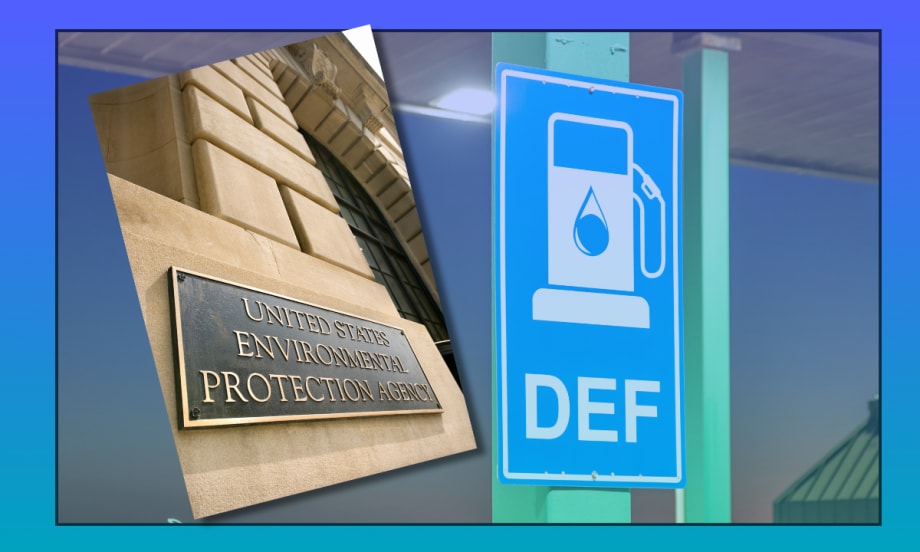
The EPA is demanding information from major diesel engine manufacturers on critical data from DEF system failures.
HDT Graphic
- The EPA is seeking input from diesel engine manufacturers regarding failures in diesel exhaust fluid systems.
- This is part of the EPA's considerations for changing emissions regulations.
- The agency is questioning the necessity of diesel DEF de-rates for maintaining emissions compliance.
*Summarized by AI
The Environmental Protection Agency is asking diesel engine makers to provide information about diesel exhaust fluid system failures as it considers changes to emissions regulations.
The move is a follow-up to the EPA’s guidance last August to address the frustration experienced by truckers when DEF system failures result in sudden speed losses and shutdowns.
That guidance called on manufacturers to revise DEF system software in existing fleets to prevent these sudden shutdowns and give operators more time to repair faults.
What's the Problem with De-Rates?
Previously under the EPA emissions regulations, if DEF ran out or there was an unexpected mechanical failure, the vehicle would “de-rate,” or drastically reduce. In many cases, vehicles were limited to as little as 5 mph within hours of a DEF-related fault, according to the EPA.
EPA now is pursuing rulemaking opportunities to provide further relief. As it is working on its proposal for the reconsideration of the 2022 Heavy-Duty Engine and Vehicle NOx rule, it is considering whether derates may no longer be necessary for compliance.
To that end, EPA is demanding information from major diesel engine manufacturers on critical data from DEF system failures. The data collected will allow EPA to independently evaluate ongoing system failures and help inform the next steps the agency takes in 2026 pertaining to DEF.
Calling the problem “a massive issue,” EPA Administrator Lee Zeldin said that on top of that “commonsense guidance” put out last August, “Today, we are furthering that work and demanding detailed data to hold manufacturers accountable for the continued system failures.”
What Information Does EPA Want From Engine Makers?
Under Section 208(a) of the Clean Air Act, EPA is authorized to require manufacturers to provide information needed to assess whether emission control systems are functioning properly and whether manufacturers are meeting their obligations to identify and fix defects.
EPA is demanding information from the top 14 on-road and nonroad manufacturers that account for over 80% of all products used in DEF systems.
Specifically, EPA is requiring data on warranty claims, failure rates, and repair information for Model Years (MY) 2016, 2019, and 2023 emission control products to determine whether ongoing DEF system failures are related to a specific generation of products.
Manufacturers will have 30 days to provide the requested information; failure may result in additional inquiries or penalties.
The agency said in a news release that it is “committed to working with manufacturers to ensure practical, durable solutions that simultaneously support emissions reductions and reliable operations.
“EPA has been meeting with manufacturers to receive updates on their progress in developing improved software in response to EPA’s guidance. The agency has consistently encouraged manufacturers to provide the relief as quickly as possible. “
Background
Since 2010, most on-road diesel trucks and many types of nonroad equipment (such as tractors and construction machinery) have used selective catalytic reduction systems that inject DEF into exhaust streams to reduce nitrogen oxide emissions.
Under the Trump EPA’s August guidance, major changes were undertaken. Heavy-duty trucks now should only receive a warning light for 650 miles or 10 hours after a fault is detected.
Following that time, the engine will only mildly derate, allowing trucks to operate normally and without speed limits for up to 4,200 miles or two work weeks. Only after about four work weeks does speed drop to 25 mph until repairs are made.
In addition to EPA’s August 2025 guidance, EPA stated that starting with MY 2027, all new diesel on-road trucks must be engineered to avoid sudden and severe power loss after running out of DEF.
More Equipment

How Volvo Updated Its D13 for EPA 2027 [Watch]
Volvo’s updated D13 promises lower emissions without sacrificing performance or fuel economy. Take a closer look at what changed inside the engine in this HDT Spotlight video.
Read More →
Michelin Tire Improves Efficiency and Durability for Regional Fleets
The Michelin X Multi Energy D2 is a regional haul drive tire engineered to help fleets improve fuel efficiency, durability and traction in demanding stop-and-go operations.
Read More →
ZF Expands Commercial Vehicle Push in North America
ZF is expanding its North American commercial-vehicle presence with new transmission applications, electrification, trailer technology and autonomous-driving systems.
Read More →
Tesla Wants a Self-Driving Semi. Are Cameras Enough?
Could Tesla’s camera-only autonomous driving technology work on an 80,000-pound Semi? In this commentary, HDT's Deborah Lockridge takes a look at Tesla, Cybercab, and how autonomous trucks see the road.
Read More →
Kodiak: Driverless Long-Haul Truck Launch on Track for 2026
Kodiak AI says its driverless long-haul safety case is 93% complete and it remains on track to begin commercial operations by year-end 2026.
Read More →
What DOT’s Automated Vehicle Strategy Means for Trucking
The U.S. Department of Transportation issued a new automated-vehicle strategy that outlines plans for driverless-truck regulations, cross-state freight corridors, and federal safety standards.
Read More →
East Coast Port Launches $45M Electric Truck Push
The Port Authority of New York and New Jersey announced millions in incentives for zero-emission drayage trucks, yard tractors, and new charging hubs near the port.
Read More →
PlusAI Going Public to Fund Autonomous Truck Launch
A SPAC deal could provide PlusAI with up to $300 million as it works toward a 2027 commercial launch of factory-built autonomous trucks.
Read More →
NHTSA Moves to Rewrite Truck Fuel-Economy Rules
The National Highway Traffic Safety Administration says it lacks authority to regulate medium- and heavy-duty truck engines separately from complete vehicles, but the existing standards have not yet been eliminated.
Read More →
Detroit Opens Orders for EPA 2027 Engines
Detroit isn’t starting from scratch to meet EPA 2027 diesel emissions standards. Its Gen 6 DD13 and DD15 engines keep much of today’s platform while updating the fuel and aftertreatment systems.
Read More →