




Daimler Adds Cummins Engines to 2027 Powertrain Lineup
Freightliner and Western Star models will offer a broader mix of gasoline, diesel and natural gas engines designed to meet EPA 2027 emissions standards.

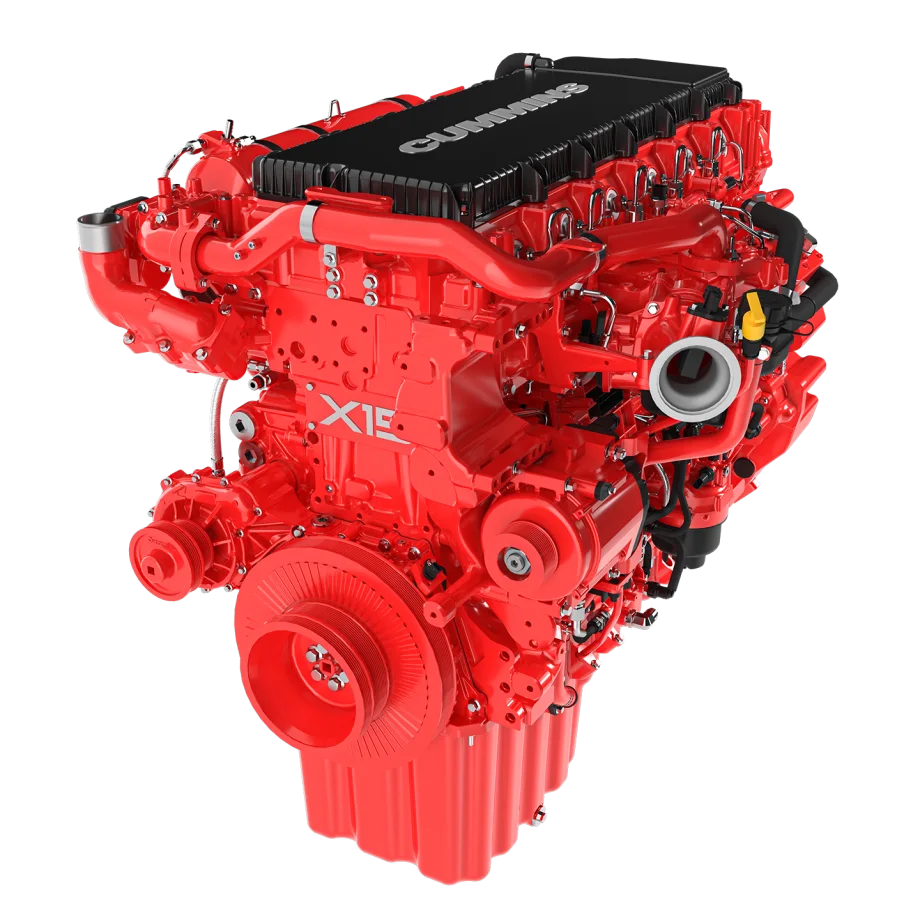
The Cummins X15 diesel engine has been updated to meet the upcoming emissions requirements while maintaining the durability and performance that have made it widely used in long-haul operations.
Cummins
Daimler Truck North America (DTNA) is expanding its 2027 powertrain portfolio. The OEM is adding several new Cummins engine options alongside Detroit’s next-generation diesel platform across Freightliner and Western Star models.
The move broadens the range of engines available to fleets as the industry prepares for the Environmental Protection Agency’s 2027 emissions regulations.
The expanded lineup includes Cummins’ new B6.7 Octane gasoline engine, the clean-sheet X10 platform and a redesigned X15, complementing Detroit’s Gen 6 diesel engines.
“Cummins is a critical partner for DTNA, and integrating their engines ensures our portfolio covers the full spectrum of applications for our customers,” said Joanna Buttler, general manager of Product Strategy and Market Development for DTNA. “Their next generation of engines strengthen the range of powertrain solutions available across Freightliner and Western Star, and support customers as they prepare for upcoming emissions requirements and long-term operational needs.”
Cummins Introduces Gasoline Option for Medium-Duty Trucks
The new Cummins B6.7 Octane engine brings a purpose-built gasoline option to the medium-duty segment and will be available in the Freightliner M2 106.
Designed specifically for commercial applications, the engine produces up to 300 horsepower and 660 lb.-ft. of torque while running on widely available 87-octane gasoline.
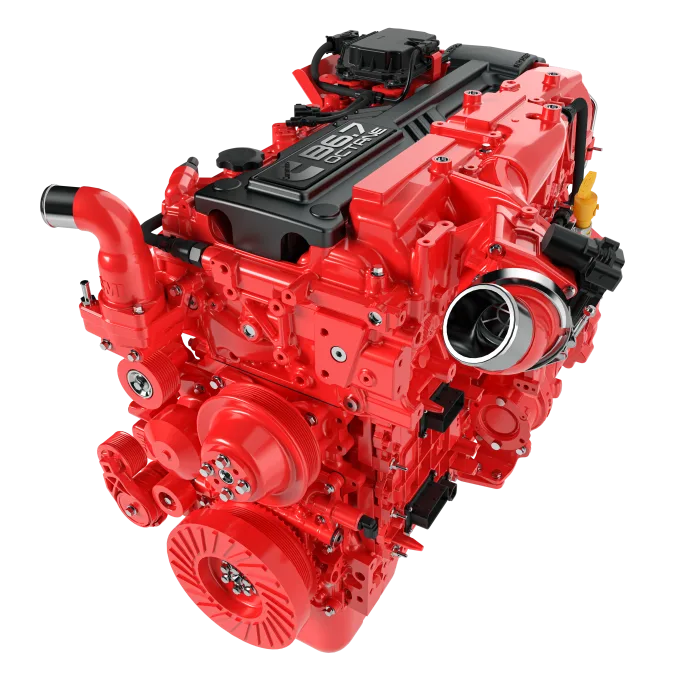
According to Cummins, the B6.7 offers fuel efficiency that can be up to 10% better than comparable gasoline engines.
Cummins
Cummins said the engine aims to deliver diesel-like performance while offering the simplicity associated with gasoline powertrains.
Built on Cummins’ HELM platform architecture, the engine uses a common base that supports multiple combustion systems. The design allows the B6.7 Octane to deliver strong torque response for demanding duty cycles, including operations in hilly terrain and cold environments.
The Cummins “HELM” engine platform acronym stands for “Higher-Efficiency, Lower-Emissions, Multiple Fuels.”
The B6.7 engine also features a simplified emissions system using a three-way catalyst that eliminates diesel exhaust fluid, active regenerations and diesel aftertreatment hardware. Cummins said fuel efficiency can be up to 10% better than comparable gasoline engines, while oil service intervals can extend to 15,000 miles.
“The B6.7 Octane provides fleets a commercial-grade gasoline solution built for tough duty cycles without increasing maintenance demands,” said Jim Nebergall, executive director of Product and Market Strategy at Cummins. “By combining diesel-like durability with gasoline simplicity, the B6.7 Octane offers customers dependable performance in a footprint they already trust.”
Ordering for the engine opens the week of March 9, 2026, with production scheduled to begin in the third quarter of 2026.
New Cummins Platforms Target Medium- and Heavy-Duty Applications
DTNA’s expanded lineup will also include the new Cummins X10 and a redesigned X15 engine for 2027 model-year trucks.
The X10 is a clean-sheet design intended to replace both the Cummins L9 and X12 engines. It delivers up to 380 horsepower for medium-duty applications and up to 450 horsepower in heavy-duty configurations. The engine incorporates a 48-volt electrical system designed to quickly heat emissions-control components during cold starts, helping reduce emissions and support compliance with EPA 2027 standards.
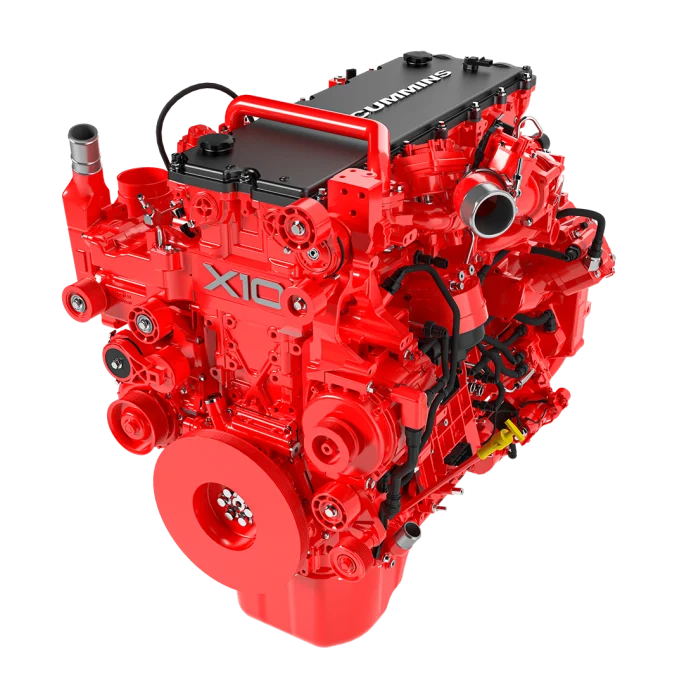
The Cummins X10 is a clean-sheet design intended to replace both the Cummins L9 and X12 engines.
Cummins
Cummins’ redesigned X15 will continue as a cornerstone engine for heavy-duty applications, updated to meet the upcoming emissions requirements while maintaining the durability and performance that have made it widely used in long-haul operations.
In addition to the new platforms, several existing Cummins engines will continue in the lineup, including the B6.7 diesel, the L9N natural gas engine and the X15N natural gas engine for heavy-duty and long-haul applications.
Together, the options provide fleets with multiple fuel and powertrain pathways depending on operational requirements, emissions strategies and long-term fleet planning.
Detroit Gen 6 Engines Anchor DTNA Diesel Strategy
Alongside the Cummins offerings, DTNA will continue to deploy its Detroit Gen 6 diesel engine platform, which includes the DD13, DD15 and DD16.
The Gen 6 engines build on a platform with more than 1.2 million units already in service and incorporate a series of design updates aimed at improving efficiency while meeting the more stringent 2027 emissions requirements.
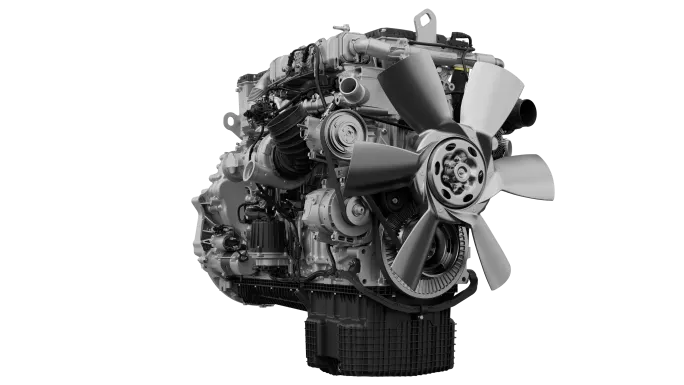
Alongside the Cummins offerings, DTNA will continue to deploy its Detroit Gen 6 diesel engine platform, which includes the DD13, DD15 and DD16.
Daimler Truck North America
Key changes include a redesigned fuel system that removes amplified injection while delivering stronger and more consistent fuel flow. An asymmetric intake port increases swirl and improves fuel and air mixing, while Miller timing on the camshaft reduces compression work and improves overall efficiency.
To meet stricter nitrogen oxide limits under the EPA’s 2027 rules, the Gen 6 engines will incorporate a pre-Selective Catalytic Reduction system placed upstream of the main aftertreatment system. Combined with a thermal control valve, the design allows the aftertreatment system to reach operating temperature more quickly, reducing the need for parked regenerations.
DTNA said the new aftertreatment system preserves existing chassis space and does not affect back-of-cab packaging, an important consideration for vocational applications and truck equipment manufacturers.
Production of the Detroit Gen 6 DD13 and DD15 engines is scheduled to begin in January 2027, followed by the DD16 in January 2028.
By combining Cummins engines with its Detroit platform, DTNA said it aims to provide fleets with a multi-fuel, multi-platform strategy that supports a wide range of operational needs across gasoline, diesel and natural gas powertrains.
More Equipment

How Volvo Updated Its D13 for EPA 2027 [Watch]
Volvo’s updated D13 promises lower emissions without sacrificing performance or fuel economy. Take a closer look at what changed inside the engine in this HDT Spotlight video.
Read More →
Michelin Tire Improves Efficiency and Durability for Regional Fleets
The Michelin X Multi Energy D2 is a regional haul drive tire engineered to help fleets improve fuel efficiency, durability and traction in demanding stop-and-go operations.
Read More →
ZF Expands Commercial Vehicle Push in North America
ZF is expanding its North American commercial-vehicle presence with new transmission applications, electrification, trailer technology and autonomous-driving systems.
Read More →
Tesla Wants a Self-Driving Semi. Are Cameras Enough?
Could Tesla’s camera-only autonomous driving technology work on an 80,000-pound Semi? In this commentary, HDT's Deborah Lockridge takes a look at Tesla, Cybercab, and how autonomous trucks see the road.
Read More →
Kodiak: Driverless Long-Haul Truck Launch on Track for 2026
Kodiak AI says its driverless long-haul safety case is 93% complete and it remains on track to begin commercial operations by year-end 2026.
Read More →
What DOT’s Automated Vehicle Strategy Means for Trucking
The U.S. Department of Transportation issued a new automated-vehicle strategy that outlines plans for driverless-truck regulations, cross-state freight corridors, and federal safety standards.
Read More →
East Coast Port Launches $45M Electric Truck Push
The Port Authority of New York and New Jersey announced millions in incentives for zero-emission drayage trucks, yard tractors, and new charging hubs near the port.
Read More →
PlusAI Going Public to Fund Autonomous Truck Launch
A SPAC deal could provide PlusAI with up to $300 million as it works toward a 2027 commercial launch of factory-built autonomous trucks.
Read More →
NHTSA Moves to Rewrite Truck Fuel-Economy Rules
The National Highway Traffic Safety Administration says it lacks authority to regulate medium- and heavy-duty truck engines separately from complete vehicles, but the existing standards have not yet been eliminated.
Read More →
Detroit Opens Orders for EPA 2027 Engines
Detroit isn’t starting from scratch to meet EPA 2027 diesel emissions standards. Its Gen 6 DD13 and DD15 engines keep much of today’s platform while updating the fuel and aftertreatment systems.
Read More →