




Detroit Bets on Evolution, Not Reinvention, for EPA 2027
Detroit's DD13, DD15, and DD16 engines get a pre-SCR boost, 3% fuel-efficiency gains, and familiar service intervals as Daimler prepares for trucking's next emissions era.

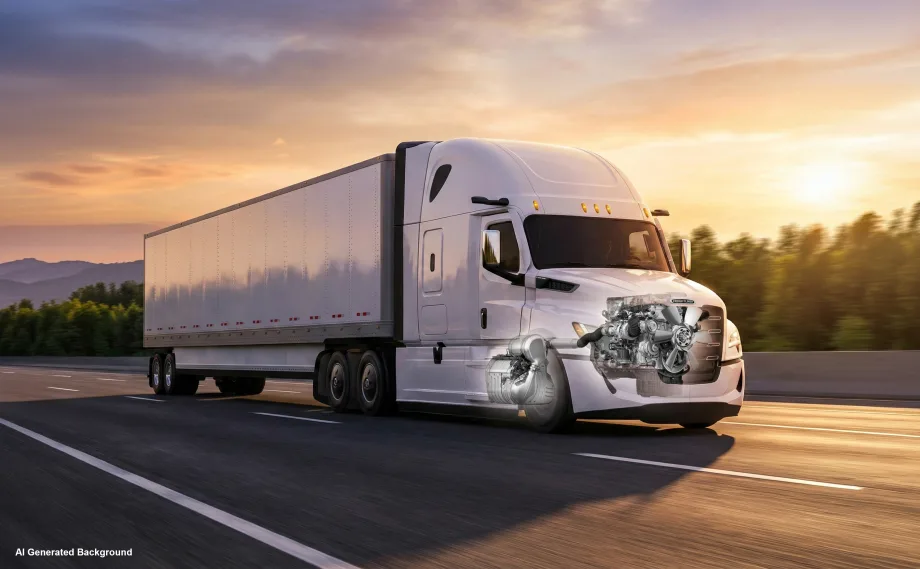
Daimler's new Gen 6 diesel engines are here -- but the OEM says fleets and technicians will find their overall design and packaging strikingly familiar.
Daimler Truck North America
At its Detroit powertrain manufacturing campus west of downtown Detroit, on February 17, Daimler Truck North America rolled out the sixth generation of its Detroit DD Series diesel engine family.
Dubbed the Gen 6 of its Heavy-Duty Engine Platform (HDEP), the new versions of the DD13, DD15, and DD16 engines have been designed to meet the Environmental Protection Agency’s ultra-low 0.035 g/hp-hr NOx standard.
Those standards go into effect next year, further limiting the amount of smog-causing nitrogen oxides (NOx) generated by burning fuel.
But Daimler engineers stressed that fleets and technicians will find the overall design and packaging of the new engines strikingly familiar.
“We’re fully prepared for 2027,” said David Carson, senior vice president of sales and marketing, in his opening remarks. “But this is not just an emissions change. There’s real value here for customers.”
A 20-Year-Old Platform’s Biggest Test
The Detroit DD engine family debuted in 2007 as a clean-sheet response to the EPA ’07 emissions overhaul.
Since then, each successive generation — unveiled in 2010, 2013, 2016, and 2021 — has layered efficiency and emissions improvements onto the same fundamental architecture.
Today, Daimler says 1.2 million DD engines are operating across North America.
The Gen 6 iteration of the engine family represents the most aggressive emissions tightening since 2010, when selective catalytic reduction (SCR) and the required diesel exhaust fluid (DEF) fundamentally reshaped diesel aftertreatment.
The new EPA standard slashes allowable NOx emissions to 0.035 grams per horsepower-hour. That’s a level that would have seemed implausible in the 1990s.
In fact, today’s heavy trucks are astoundingly clean, said Joanna Buttler, general manager, product strategy and market development for DTNA.

Joanna Buttler, general manager, product strategy and market development, Daimler Trucks North America, noted that it takes more than 100 new Class 8 trucks today to produce the same amount of NOx emissions as a single truck did in the 1990s.
Jack Roberts
“It takes more than 100 new Class 8 trucks today to produce the same amount of NOx emissions as a single truck did in the 1990s,” she said.
Still, Buttler said, the engineering question wasn’t whether Detroit could hit the new emission number. Rather, it was how to do it without breaking the trust fleets have built with the DD platform over the past 20 years.
Reduced Aftertreatment Complexity
Visually, the Gen 6 aftertreatment system looks almost unchanged from the fifth-generation DD platform. The familiar Detroit “one-box” design remains mounted on the frame rail where it’s been for years.
The difference is what’s been added upstream, according to Greg Braziunas, head of powertrain engineering, North America.
Detroit has introduced a pre-SCR system positioned ahead of the primary aftertreatment unit. The technology inside it isn’t exotic. In fact, Braziunas said that’s the point.
“This is the same catalyst technology we’ve been perfecting since 2010,” he explained. “We’re using known, robust elements and applying them in a way that helps us convert NOx earlier in the drive cycle.”
The strategy addresses one of the core challenges of EPA 2027: Emissions control during cold start and low-load operation.
By converting NOx earlier — before the primary aftertreatment reaches full temperature — Detroit can meet the 2027 standard without resorting to adding new electrical heating systems or significantly reworking chassis packaging.
Steve Collins, director of Detroit field sales engineering, told reporters in a virtual briefing that the positioning of the pre-SCR system, on top of the one-box aftertreatment, allows it to take advantage of the engine and exhaust heat to heat up the catalyst more quickly.
Critically for vocational customers, the design preserves back-of-cab space.
“That was something we worked really hard on,” Braziunas said. “The pre-SCR module is serviceable independently. And many internal components, including DPF elements and sensor architecture, carry over from the Gen 5 engine family.”
For fleets burned by disruptive emissions transitions in the past, familiarity matters, he added.
Efficiency as a Counterweight to DEF Consumption
Collins said the new EPA rule inevitably drives higher DEF consumption. That’s just simple physics, he explained.
Detroit’s response is to offset that cost upstream.
Collins said the Gen 6 engines will deliver approximately 3% improvement in driving fuel efficiency for a typical linehaul fleet, assuming proper thermal management and idle discipline.
The gains come from a series of targeted refinements:
- A new oil-lubricated high-pressure fuel pump
- 2,500-bar common rail pressure
- Simplified, non-amplified injectors
- Miller cam timing
- Higher compression ratio
- Electronically controlled variable-displacement oil pump
- Updated oil separator moving from oil-driven to electronic control
Each change trims parasitic losses or improves combustion efficiency.
The move from a fuel-lubricated to oil-lubricated pump is particularly notable, according to Collins. Fuel quality variability has been a persistent industry concern.
“Our customers can’t always control the quality of the fuel they get,” Collins said. “This system is more robust and will provide more reliable service when fuel quality is poor.”
One fuel-related change is a new fuel filter module that includes an integrated heating element to prevent gelling in cold climates. But operational procedures for technicians remain largely the same, Collins said.
Reliability: Seven Years and 8 Million Miles
Gen 6 adds new torque ratings up to 1,900 lb.-ft, including lower-horsepower, higher-torque variants designed to enable further downspeeding, according to Braziunas.
For fleets running fast rear-axle ratios of 2.05:1 paired with direct drive, that means lower engine speeds at cruise without sacrificing grade performance.
Detroit is also standardizing its ball-bearing asymmetric turbocharger across the lineup, improving spool-up response and altitude consistency through a refined wastegate strategy.
Braziunas said the Gen 6 platform has been under development for nearly seven years and subjected to more than 8 million miles of real-world testing across extreme climates — from 40 degrees below zero to 130 degrees.
Winter validation was still underway in Alaska as the launch event was taking place.
Importantly, Braziunas said, Gen 6 engine service intervals remain unchanged. That includes DPF ash-cleaning intervals and oil-drain intervals.
Even the upcoming lower-viscosity PC-12 (often referred to as “FB-4”) oil category has been factored into the engine’s design, though factory fill decisions are still being finalized.
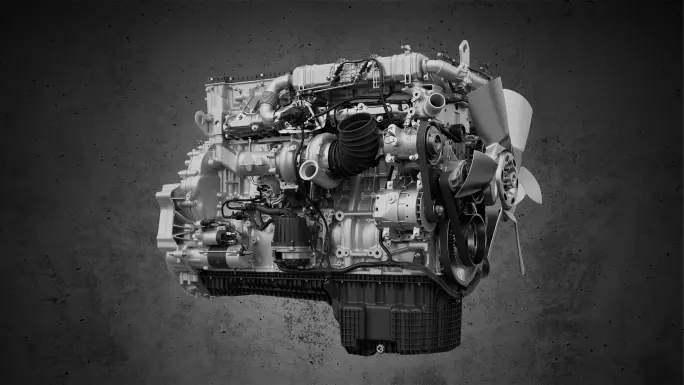
Detroit's new Gen 6 line of diesel engines adds new torque ratings up to 1,900 lb.-ft, including lower-horsepower, higher-torque variants designed to enable further downspeeding.
Daimler Truck North America
The DD16 Stays but With a Staggered Timeline
For a regulatory cycle that many feared would force major disruption, Detroit’s approach is notably conservative.
Production of the Gen 6 DD13 and DD15 will begin in January 2027. The DD16 follows in January 2028.
The delay, Carson said, spreads development resources and makes use of regulatory provisions to ensure continued availability of the current DD16 during the transition.
The 16-liter remains focused on heavy vocational and heavy-haul applications, where Detroit is effectively the last major OEM offering displacement at that level, Carson said.
The launch comes amid shifting federal signals around enforcement and warranty provisions tied to the EPA Clean Trucks Plan.
Detroit’s position is straightforward: Build for the regulation as written.
“We decided to move forward,” Braziunas said. “The 0.035 standard remains in place.”
Software calibrations related to DEF inducements have already been addressed in Gen 5 engines, and Gen 6 launches with updated logic.
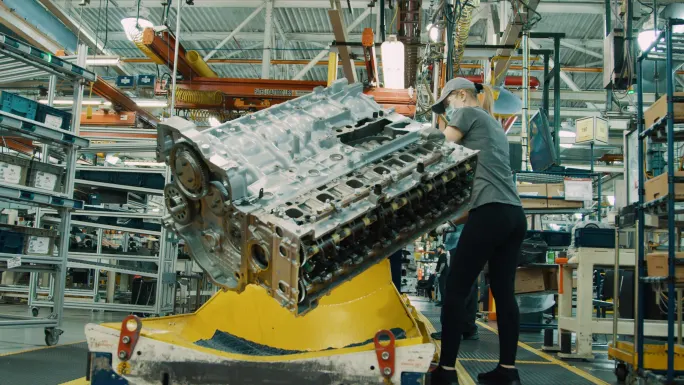
Production of the Gen 6 DD13 and DD15 will begin in January 2027 with the DD16 following in January 2028.
Daimler Truck North America
Last year, the EPA issued new guidance to engine manufacturers to reduce the number of DEF inducements, or "derating," an automatic trigger that forces diesel engines to operate at reduced capacity when the emissions system runs out of diesel exhaust fluid or there's a DEF-related fault.
If further adjustments are required, engineers say those would likely be handled via calibration updates.
The Importance of Optimizing the System as a Whole
Daimler is careful to frame Gen 6 as part of a broader Detroit ecosystem that includes DT12 automated manual transmissions, proprietary axles, Detroit Assurance safety systems, and Detroit Connect telematics.
Their argument is vehicle integration.
Rather than engineering an engine in isolation, Detroit engineers stress that they are optimizing an entire vehicle system. This includes the powertrain, software, safety, and connectivity. With all of those systems anchored around fleet economics.
Taken as a whole, Daimler engineers said they believe they have now extended a proven powertrain platform that fleets trust into one of the strictest emissions eras in U.S. trucking history.
More Equipment

More Trailer Data Through the Same Seven-Way [Video]
Can trucking’s standard seven-way connector handle more cameras and trailer data? Grote’s Adam Slade shows HDT how the company is using new technology with its 4See trailer system, not only to add a new backup camera but also to expand other capabilities — without adding another connection.
Read More →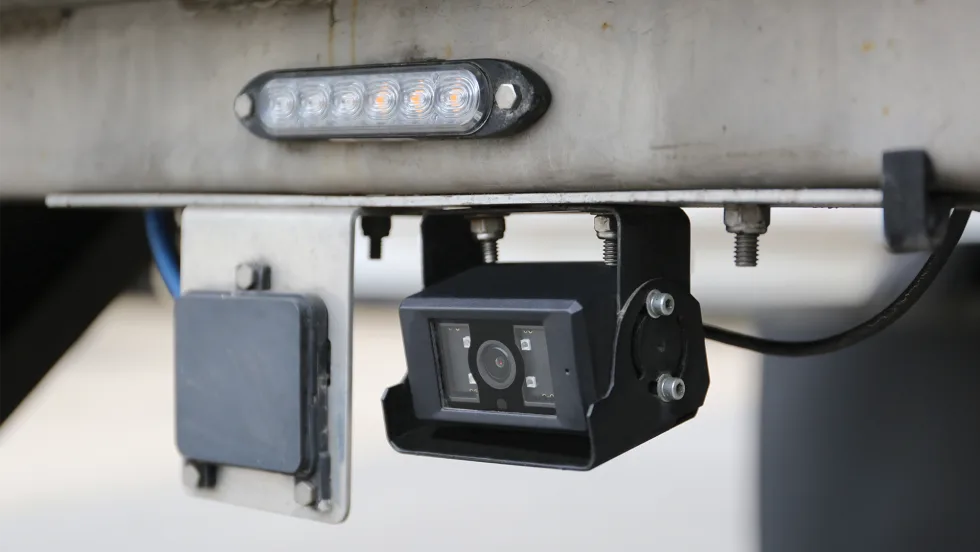
Grote: More Cameras, Same Seven-Way Connector
The next-generation 4See rear-view backup camera from Grote uses the standard seven-way connector and supports additional cameras and other trailer data.
Read More →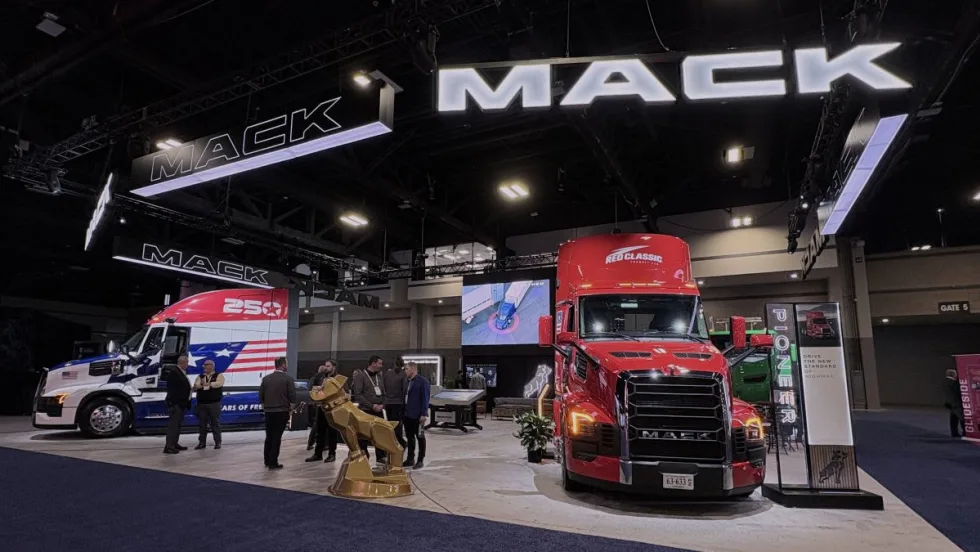
Trucks at ATA's 2026 MC&E in Charlotte, North Carolina [Photos]
From rigs decked out in patriotic America's 250 paint schemes to autonomous trucks and more, check out these photos from ATA's 2026 Management Conference & Exhibition.
Read More →
Help HDT Find Trucking’s Top Products
Have you come across a new product that could make a difference for trucking fleets? Nominate it for HDT’s 2027 Top 20 Products Awards by November 9.
Read More →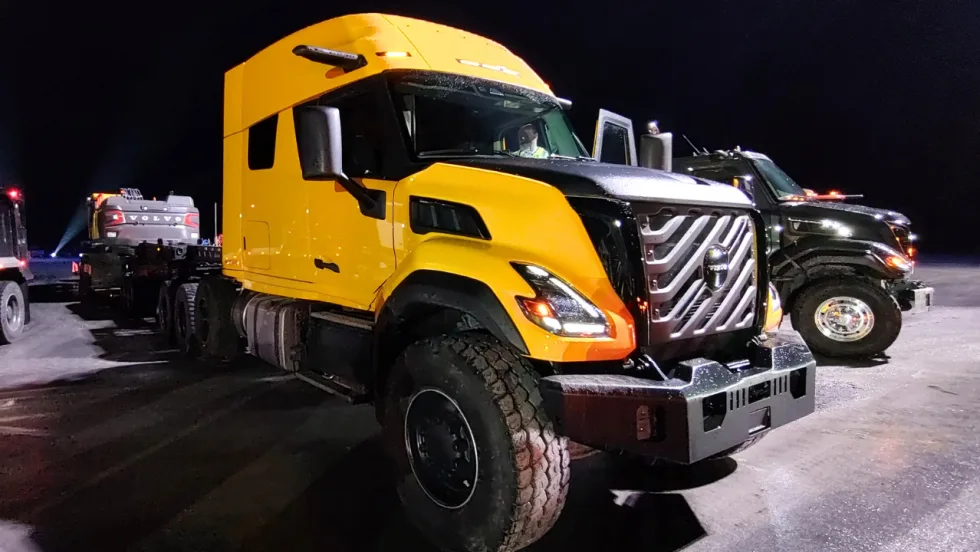
Volvo Unveils New VNX Heavy-Haul and Vocational Truck
Volvo Trucks has launched the VNX, a new vocational truck also available as a tractor in day cab and two sleeper configurations, with one heavy-haul model. The Volvo VNX is powered by Volvo's D13 platform, which delivers up to 540 horsepower and 1,950 pound-feet of torque and is EPA 2027-compliant.
Read More →
How GP Transco Cuts Trucking Fuel Costs, a Tenth of a Gallon at a Time
What’s another tenth of a mile per gallon worth? GP Transco shares how equipment upgrades and driver coaching turn small gains into meaningful fuel savings.
Read More →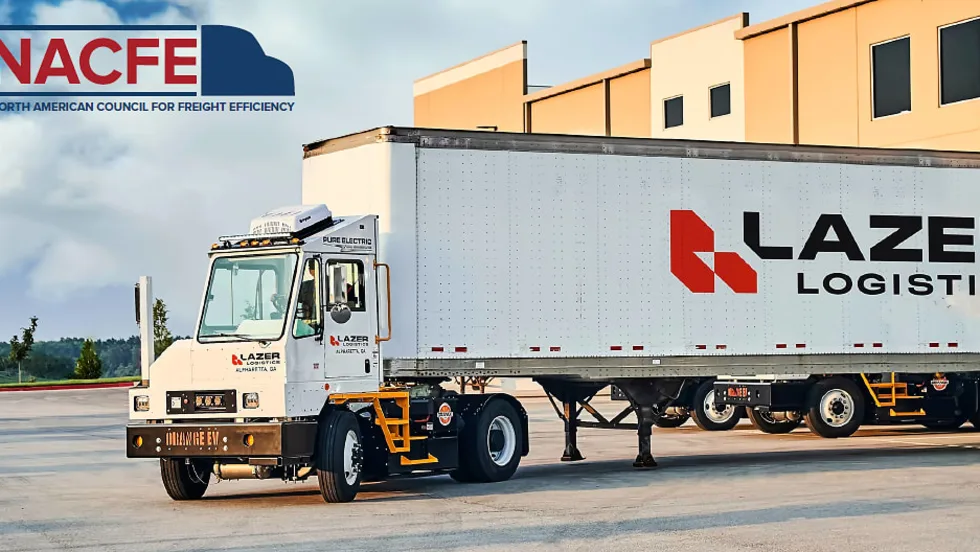
Electric Yard Tractors Move Beyond Pilots
Operating-cost savings have overtaken sustainability goals as the leading reason surveyed fleets are adopting battery-electric terminal tractors, according to new NACFE research.
Read More →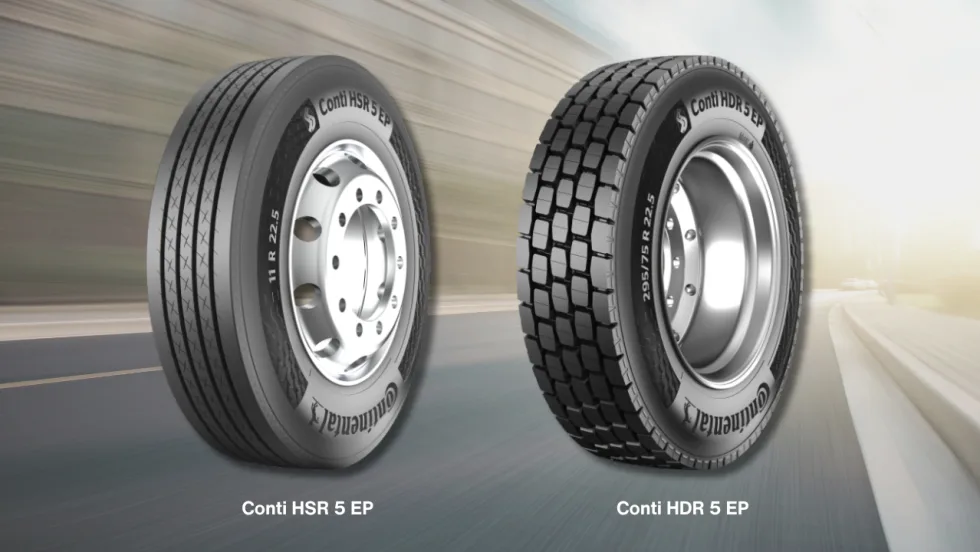
Continental Introduces New Regional Truck Tires
Continental says its new Generation 5 steer and drive tires for regional operations offer longer tread life, with estimated mileage gains of 22% and 19%, respectively.
Read More →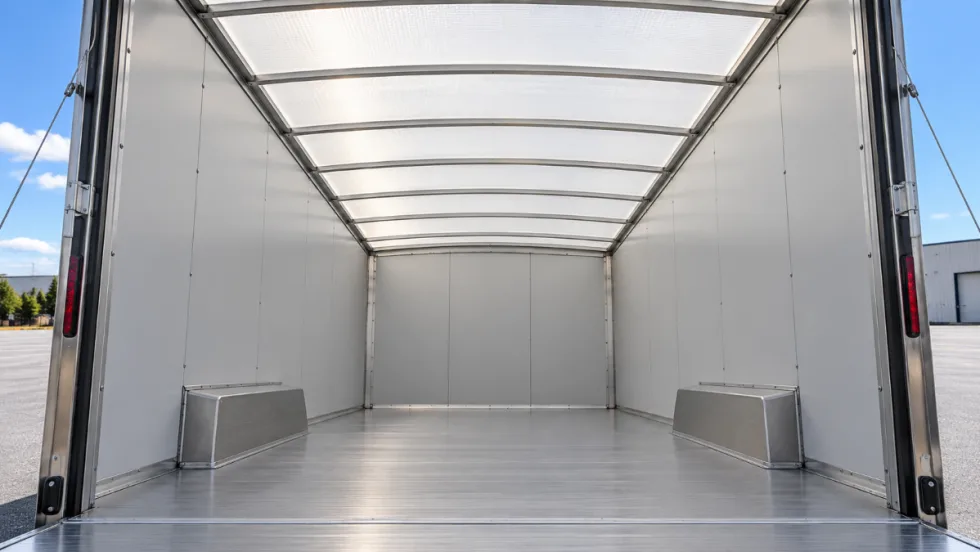
Tekmodo Introduces CargoBright Brand for Translucent Trailer Roofs
CargoBright is designed to diffuse daylight across the cargo area while performing as a working vehicle roof.
Read More →
Fleet Economics Shape Electric Truck Outlook
ACT Research expects costs, charging infrastructure, and technology improvements to drive zero-emission commercial vehicle adoption as federal regulations and incentives retreat.
Read More →