




What to Expect from 2027 Diesel Engine Oils
New EPA 2027 emissions rules also mean new engine oil specs. HDT recently got an update on their development.


2027 heavy-duty engines are still a couple of years away. But the American Petroleum Institution is already hard at work on the next generation of oils that will lubricate them.
Photo: Shell Rotella
New EPA 2027 emissions rules also mean new diesel engine oil specs. A new generation of heavy-duty engine oils will feature lower viscosity, improved thermal resistance, and possibly longer oil drain intervals.
In conjunction with an event showing off its Starship technology demonstrator truck, Shell recently offered an update on the current state of the heavy-duty diesel engine oil category being developed by the American Petroleum Institute to meet the needs of the new generation of engines.
The current oil category is actually two — CK-4 and FA-4 categories, depending on viscosity requirements. Launched in 2016, those categories were the first time the heavy-duty diesel engine category had been split in two.
However, new diesel engine emissions regulations from the Environmental Protection Agency further limiting NOx (Nitrogen Oxides) emissions come into effect on January 1, 2027. Those regulations require hardware changes on equipment. And those, in turn, require some additional performance characteristics from the oil that lubricates those engines.
Lower-Viscosity Oils
API spent about a year evaluating the current category to determine if an upgrade was feasible. Once that was decided, API then had to define what the new requirements would be, explained Karin Haumann, Shell OEM technical manager for heavy-duty engines.
The end result, she said, will be a move toward lower-viscosity oils for heavy-duty diesel engines with a new "FB" category, which will include the addition of 5W-20 and 0W-20 grade oils.
“European truck OEMs use lower viscosity grades,” she noted. “And we expect this new category to remain the industry standard until 2040.”
The new oils will offer fleets numerous improvements, including better oxidation stability, which means better thermal resistance for the oil.
“That will allow the OEMs to potentially extend oil drain intervals,” she added.
“When you have better oxidative stability, that allows the OEMs to do one of two things: Either run the engine hotter to be able to manage viscosity and efficiency that way or extend oil drain intervals.”
OEMs could opt to do both, Haumann said, although she noted that would be something of a balancing act.
“I do think the trend will be going toward extending current drain intervals,” she said. “But that will probably happen on a case-by-case basis for each engine OEM.”
Tough New Aftertreatment Regulations
The biggest issue facing the new oil category will be the much longer lifespan and performance required of 2027 diesel exhaust aftertreatment systems.
“The [Truck and] Engine Manufacturers Association came to API and asked if we could help them with the new aftertreatment systems,” Haumann said.
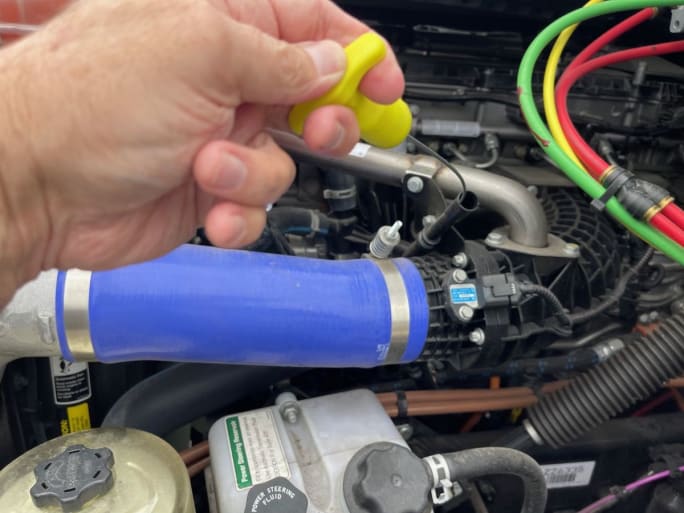
The next generation of heavy-duty diesel engine oils will feature better oxidation stability, which means better thermal resistance for the oil.
Photo: Jack Roberts
That's because the new regulations also extend the definition of "useful life" of both the engine and the aftertreatment system.
The EPA will expect a new truck’s exhaust aftertreatment system to last and maintain near-peak efficiency (or close to it) throughout the life of the truck. The current “useful life” of a diesel engine is defined by EPA as 400,000 miles. For 2027 model trucks, that useful life number will increase to 650,000 miles.
“EPA is also requiring longer warranties for exhaust aftertreatment systems,” Haumann said.
“That’s to discourage any disabling of or workarounds to defeat the systems. Or help fleets avoid having a relatively new truck on its hands that is polluting. They’re shifting that responsibility onto the OEMs, so the customers don’t have to worry about it.”
Will New Oils Be Backward-Compatible With Current Ones?
API is working hard to ensure the new oil category will be backward compatible with current diesel engine lubricants as well, Haumann said.
The first step in that process will be to retire some older engine oil tests and establish new ones.
“We have several engine tests that are required for the API categories that are going away,” she explained, “because the parts needed to run them are becoming depleted.
"In order to maintain backward compatibility, we have to have some kind of substitute or some kind of assurance that the new category without that test is still going to have the same performance as the older category.”
Three PC12 tests will be carried over. A new test, dubbed the DD13 Scuffing Test, along with a replacement test for the existing T-11 Soot Handling test, will replace three older ones being retired.
The industry does not have enough engine hardware to support three of the current tests through 2040, Haumann said. However, the performance of those tests is redundant to existing tests. So if an oil fails one of the new tests, it will also fail the tests that aren’t being carried over.
“That gives us assurance that we’ve established good backward compatibility with the CK oils,” she said.
Backward compatibility in the FA-4 portion of the category is a little different, though. That’s because lower-viscosity oils are intended for new-technology engines that generate lower levels of soot than older engines do.
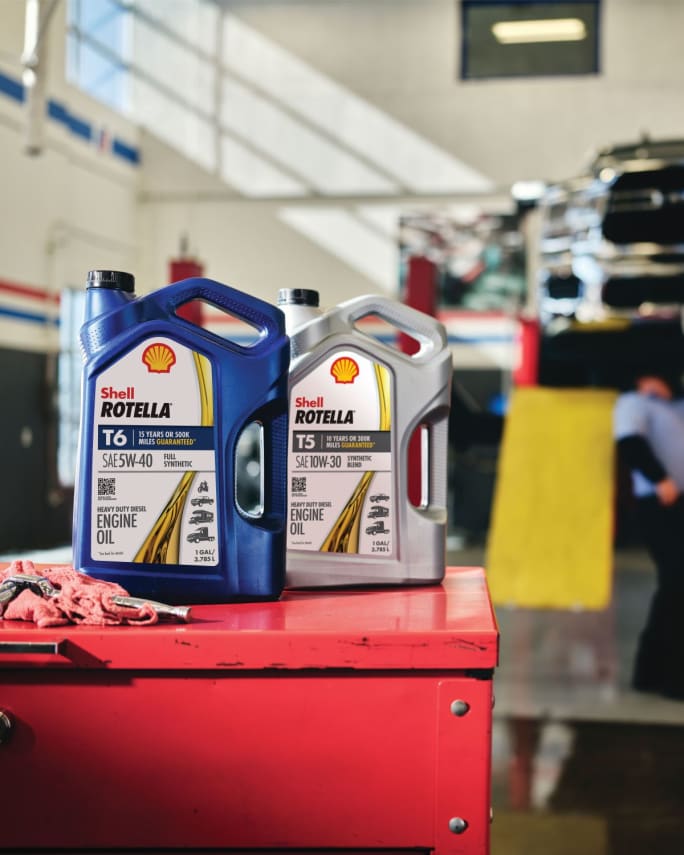
Ensuring that 2027 oils will be backward-compatible for use in current diesel engines is a priority for API engineers.
Photo: Shell Rotella
That, in turn, means the new oil category, presumably to be called FB-4, will not need the same soot-handling requirements as FA-4 blends do.
“We’ve lowered the soot-handling requirements for the new category,” Haumann said. “But other than that, all of the performance requirements are equal to or better than CK-4 and FA-4. So, they will be backward compatible.”
The first licensing date for the new API heavy-duty engine categories will be January 1, 2027. That date corresponds with the new EPA NOx regulations that go into law on that day, as well.
“The OEMs are going to require these new oils be used on 2027 model year engines and newer,” Haumann says. “You can expect the new oils rolling out early January 2027.”
More Equipment

How Volvo Updated Its D13 for EPA 2027 [Watch]
Volvo’s updated D13 promises lower emissions without sacrificing performance or fuel economy. Take a closer look at what changed inside the engine in this HDT Spotlight video.
Read More →
Michelin Tire Improves Efficiency and Durability for Regional Fleets
The Michelin X Multi Energy D2 is a regional haul drive tire engineered to help fleets improve fuel efficiency, durability and traction in demanding stop-and-go operations.
Read More →
ZF Expands Commercial Vehicle Push in North America
ZF is expanding its North American commercial-vehicle presence with new transmission applications, electrification, trailer technology and autonomous-driving systems.
Read More →
Tesla Wants a Self-Driving Semi. Are Cameras Enough?
Could Tesla’s camera-only autonomous driving technology work on an 80,000-pound Semi? In this commentary, HDT's Deborah Lockridge takes a look at Tesla, Cybercab, and how autonomous trucks see the road.
Read More →
Kodiak: Driverless Long-Haul Truck Launch on Track for 2026
Kodiak AI says its driverless long-haul safety case is 93% complete and it remains on track to begin commercial operations by year-end 2026.
Read More →
What DOT’s Automated Vehicle Strategy Means for Trucking
The U.S. Department of Transportation issued a new automated-vehicle strategy that outlines plans for driverless-truck regulations, cross-state freight corridors, and federal safety standards.
Read More →
East Coast Port Launches $45M Electric Truck Push
The Port Authority of New York and New Jersey announced millions in incentives for zero-emission drayage trucks, yard tractors, and new charging hubs near the port.
Read More →
PlusAI Going Public to Fund Autonomous Truck Launch
A SPAC deal could provide PlusAI with up to $300 million as it works toward a 2027 commercial launch of factory-built autonomous trucks.
Read More →
NHTSA Moves to Rewrite Truck Fuel-Economy Rules
The National Highway Traffic Safety Administration says it lacks authority to regulate medium- and heavy-duty truck engines separately from complete vehicles, but the existing standards have not yet been eliminated.
Read More →
Detroit Opens Orders for EPA 2027 Engines
Detroit isn’t starting from scratch to meet EPA 2027 diesel emissions standards. Its Gen 6 DD13 and DD15 engines keep much of today’s platform while updating the fuel and aftertreatment systems.
Read More →