




PlusAI, T2 Partner to Bring Level 4 Autonomous Trucks to Japan
PlusAI is seeking to relieve Japan’s acute truck driver shortage by accelerating the adoption of autonomous trucks in the country.

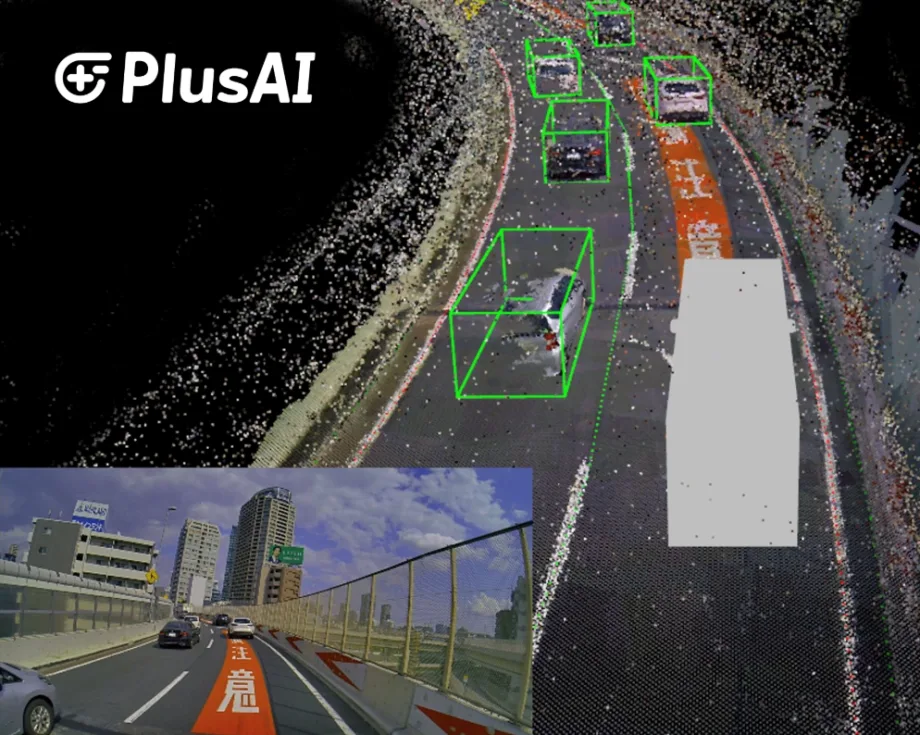
An acute labor shortage in Japan has made autonomous trucking an increasingly attractive option for maintaining capacity, improving safety, and stabilizing logistics operations.
Photo: PlusAI
PlusAI and Tokyo-based T2 have announced a strategic partnership aimed at accelerating the deployment of Level 4 autonomous trucks in Japan.
T2 is a tech company dedicated to transforming transportation in Japan via autonomous driving. Having pioneered Japan’s first commercial Level 2 autonomous trunk line operations in July 2025, T2 is now accelerating its mission to implement Level 4 autonomous trucking.
According to the companies, the new partnership marks a significant step in applying automated driving technology to one of the world’s most constrained freight markets.
A Focus on Hub-to-Hub Autonomous Solutions
The collaboration brings together PlusAI’s experience deploying autonomous truck technology with global OEM partners and T2’s deep understanding of Japan’s logistics environment and operating conditions.
The companies say the partnership will focus on developing hub-to-hub autonomous freight solutions tailored to Japan’s unique infrastructure, regulatory framework, and labor challenges.
Japan’s trucking industry faces a severe and worsening driver shortage, driven by an aging workforce, strict labor regulations, and rising freight demand.
Those pressures have made autonomous trucking an increasingly attractive option for maintaining capacity, improving safety, and stabilizing logistics operations.
Autonomous, hub-to-hub truck operations are viewed as a practical first step toward addressing those challenges by enabling longer operating hours, more predictable freight movement, and reduced reliance on human drivers for long-haul routes.
“Backed by Mitsui, this partnership is about bringing the right capabilities together for Japan,” said David Liu, CEO and co-founder of PlusAI. “T2 understands the unique requirements of Japan’s freight ecosystem, and PlusAI brings experience from commercial programs overseas.”
T2 CEO Masatomo Kumabe said the partnership aligns with the company’s focus on applying autonomous technology to support Japan’s logistics sector.
“Working with PlusAI, a company with demonstrated global expertise in autonomous trucking, positions us to accelerate the path toward safer, more efficient, more productive freight services in Japan,” Kumabe said.
Combining Global Experience with Local Expertise
PlusAI has been working with major truck manufacturers including the Traton Group, Iveco Group, and Hyundai on autonomous truck programs in the U.S. and Europe.
Those efforts have focused on commercial pilots and early deployments designed to operate in real-world freight environments.
T2, meanwhile, brings operational experience and technology design expertise specific to Japan, where freight operations face tight urban corridors, dense traffic patterns, and strict safety expectations.
The companies say combining those capabilities will be critical to adapting Level 4 autonomous systems to Japan’s roads and logistics networks.
Mitsui’s investment in PlusAI is intended to support that effort and reflects the trading company’s broader strategy to strengthen Japan’s logistics infrastructure through next-generation mobility technologies.
While much of the autonomous trucking activity to date has centered on North America, Japan represents a strategically important market for automation, given its labor constraints and emphasis on operational efficiency and safety, the companies said.
The PlusAI -- T2 partnership signals growing momentum behind autonomous trucking in Asia, with a focus on targeted, commercially viable applications rather than broad, long-haul deployment.
Hub-to-hub operations -- where trucks travel between fixed logistics nodes -- are widely seen as a practical entry point for Level 4 automation.
The companies did not disclose a deployment timeline but said the partnership is intended to lay the groundwork for next-generation autonomous freight services tailored to Japan’s needs.
More Equipment

How Volvo Updated Its D13 for EPA 2027 [Watch]
Volvo’s updated D13 promises lower emissions without sacrificing performance or fuel economy. Take a closer look at what changed inside the engine in this HDT Spotlight video.
Read More →
Michelin Tire Improves Efficiency and Durability for Regional Fleets
The Michelin X Multi Energy D2 is a regional haul drive tire engineered to help fleets improve fuel efficiency, durability and traction in demanding stop-and-go operations.
Read More →
ZF Expands Commercial Vehicle Push in North America
ZF is expanding its North American commercial-vehicle presence with new transmission applications, electrification, trailer technology and autonomous-driving systems.
Read More →
Tesla Wants a Self-Driving Semi. Are Cameras Enough?
Could Tesla’s camera-only autonomous driving technology work on an 80,000-pound Semi? In this commentary, HDT's Deborah Lockridge takes a look at Tesla, Cybercab, and how autonomous trucks see the road.
Read More →
Kodiak: Driverless Long-Haul Truck Launch on Track for 2026
Kodiak AI says its driverless long-haul safety case is 93% complete and it remains on track to begin commercial operations by year-end 2026.
Read More →
What DOT’s Automated Vehicle Strategy Means for Trucking
The U.S. Department of Transportation issued a new automated-vehicle strategy that outlines plans for driverless-truck regulations, cross-state freight corridors, and federal safety standards.
Read More →
East Coast Port Launches $45M Electric Truck Push
The Port Authority of New York and New Jersey announced millions in incentives for zero-emission drayage trucks, yard tractors, and new charging hubs near the port.
Read More →
PlusAI Going Public to Fund Autonomous Truck Launch
A SPAC deal could provide PlusAI with up to $300 million as it works toward a 2027 commercial launch of factory-built autonomous trucks.
Read More →
NHTSA Moves to Rewrite Truck Fuel-Economy Rules
The National Highway Traffic Safety Administration says it lacks authority to regulate medium- and heavy-duty truck engines separately from complete vehicles, but the existing standards have not yet been eliminated.
Read More →
Detroit Opens Orders for EPA 2027 Engines
Detroit isn’t starting from scratch to meet EPA 2027 diesel emissions standards. Its Gen 6 DD13 and DD15 engines keep much of today’s platform while updating the fuel and aftertreatment systems.
Read More →