





Behind the Scenes with Volvo's Autonomous Truck Development Plans
Volvo Repeats as Europe’s Heavy-Truck Market Leader in 2025
Volvo Trucks held onto the top spot in Europe’s heavy-duty truck market for the second straight year.
January 29, 2026
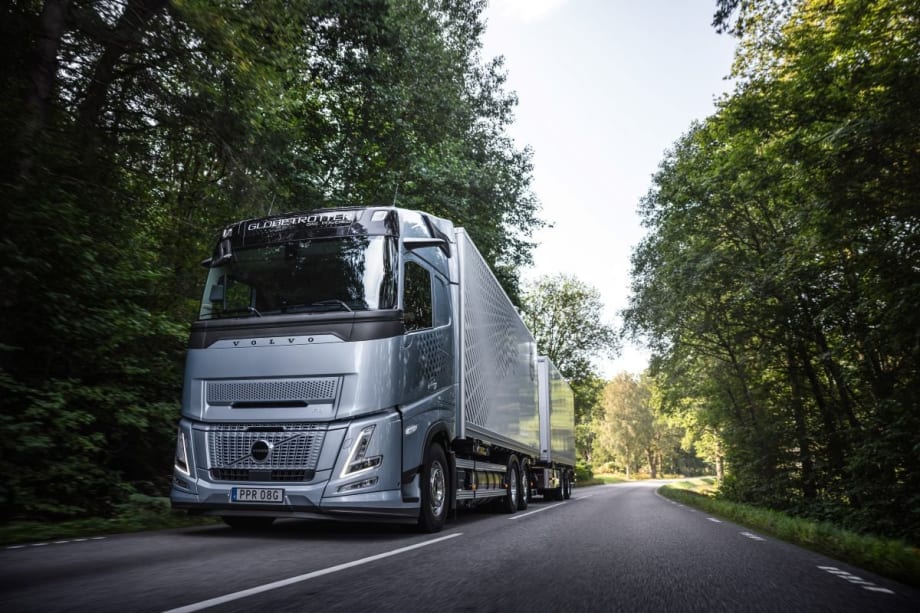
The FH Aero model is Volvo's flagship European tractor.
Photo: Volvo Group
2 min to read
Once again, Volvo Trucks said it is the market share leader in Europe. The OEM announced a 19.0% share in 2025 for vehicles weighing 16 tons or more.
That’s up from 17.9% in 2024, according to Volvo, and comes as the OEM continues to lean in on its long-haul FH Aero lineup as a key driver of growth across the region.
Eyes on North America
“We are very proud to be market leader in Europe for the second consecutive year,” said Roger Alm, president of Volvo Trucks. “Our goal is to be our customers’ best business partner and being market leader is strong proof of the confidence our customers put in us.”
Volvo said its strongest European markets by registrations in 2025 included the United Kingdom, France, Poland, Germany, Lithuania and Spain.
The OEM defined Europe as the European Union plus the UK, Norway and Switzerland (EU30).
Volvo said it was either the market leader or the No. 2 heavy truck brand in 30 countries globally in 2025.
In North America, Volvo Trucks reported a 9.2% combined market share across the U.S. and Canada in 2025. This, the OEM said, is a slight decline from 2024. The company attributed that drop primarily to broader long-haul market conditions -- a core segment that remains central to Volvo’s business in the region.
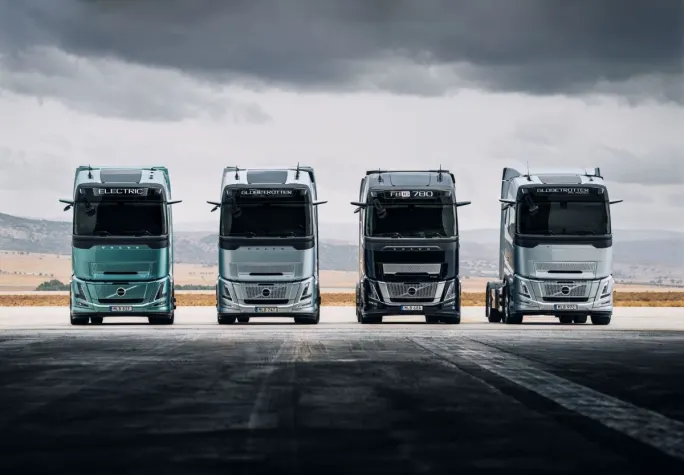
Volvo said its strongest European markets by registrations in 2025 included the United Kingdom, France, Poland, Germany, Lithuania and Spain.
Photo: Volvo Group
Volvo delivered 21,428 trucks in the U.S. and Canada in 2025, the company said.
To support long-term growth, Volvo said it has invested more than $2 billion in product development for the North American market, including an additional $400 million in its New River Valley manufacturing facility in Virginia.
Decarbonization Strategy Continues
Volvo also reiterated its long-term push toward fossil-free transport. The OEM has a goal of reaching net-zero emissions by 2040.
The company’s strategy relies on three technology tracks: battery-electric trucks, fuel cell electric trucks, and combustion engines running on renewable fuels such as green hydrogen, biogas, biodiesel or HVO (hydrotreated vegetable oil).
“We will continue to innovate and introduce new trucks that contribute not only to our customers’ businesses, but also to the decarbonization of our industry,” Alm said. “By investing in multiple technologies, we can offer transport solutions that fit a variety of customer needs and markets.”
More Equipment

How Volvo Updated Its D13 for EPA 2027 [Watch]
Volvo’s updated D13 promises lower emissions without sacrificing performance or fuel economy. Take a closer look at what changed inside the engine in this HDT Spotlight video.
Read More →
Michelin Tire Improves Efficiency and Durability for Regional Fleets
The Michelin X Multi Energy D2 is a regional haul drive tire engineered to help fleets improve fuel efficiency, durability and traction in demanding stop-and-go operations.
Read More →
ZF Expands Commercial Vehicle Push in North America
ZF is expanding its North American commercial-vehicle presence with new transmission applications, electrification, trailer technology and autonomous-driving systems.
Read More →
Tesla Wants a Self-Driving Semi. Are Cameras Enough?
Could Tesla’s camera-only autonomous driving technology work on an 80,000-pound Semi? In this commentary, HDT's Deborah Lockridge takes a look at Tesla, Cybercab, and how autonomous trucks see the road.
Read More →
Kodiak: Driverless Long-Haul Truck Launch on Track for 2026
Kodiak AI says its driverless long-haul safety case is 93% complete and it remains on track to begin commercial operations by year-end 2026.
Read More →
What DOT’s Automated Vehicle Strategy Means for Trucking
The U.S. Department of Transportation issued a new automated-vehicle strategy that outlines plans for driverless-truck regulations, cross-state freight corridors, and federal safety standards.
Read More →
East Coast Port Launches $45M Electric Truck Push
The Port Authority of New York and New Jersey announced millions in incentives for zero-emission drayage trucks, yard tractors, and new charging hubs near the port.
Read More →
PlusAI Going Public to Fund Autonomous Truck Launch
A SPAC deal could provide PlusAI with up to $300 million as it works toward a 2027 commercial launch of factory-built autonomous trucks.
Read More →
NHTSA Moves to Rewrite Truck Fuel-Economy Rules
The National Highway Traffic Safety Administration says it lacks authority to regulate medium- and heavy-duty truck engines separately from complete vehicles, but the existing standards have not yet been eliminated.
Read More →
Detroit Opens Orders for EPA 2027 Engines
Detroit isn’t starting from scratch to meet EPA 2027 diesel emissions standards. Its Gen 6 DD13 and DD15 engines keep much of today’s platform while updating the fuel and aftertreatment systems.
Read More →