




NACFE: Natural Gas a Viable Short-Term Decarbonization Option
Natural gas is cleaner burning and produces a lower carbon footprint than diesel. However, it’s not a zero-emissions choice, said the North American Council for Freight Efficiency in a new report.

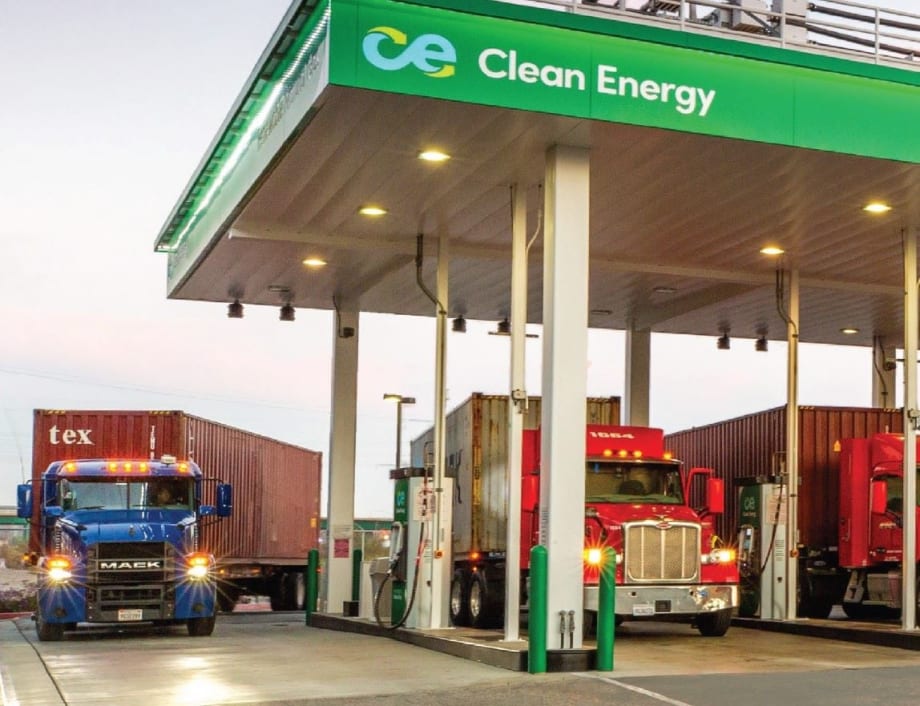
Renewable natural gas might be the perfect transitional fuel to take trucking to zero-emisison vehicles.
Photo: Clean Energy
Can natural gas provide a lower carbon interim solution to today's push to decarbonize trucking? In light of the recent trillon-dollar revelation on electric infrastructure costs, natural gas, especially renewable natural gas, could be a good mid- to long-term alternative to diesel for some fleets.
"Natural gas is clearly part of this 'messy middle,'" said Mike Roeth, executive director of the North American Council for Freight Efficieny. "And renewable natural gas is maybe one of the single biggest reasons why natural gas has such a big role in decarbonizing trucking as we move forward.".
Roeth made that remark at a press briefing following the release of the group's latest Confidence Report: Natural Gas’ Role in Decarbonizing Trucking.
The report focuses on natural gas as a fuel source and its potential to help reduce greenhouse gas emissions while outlining some of its drawbacks. It covers the fuel's significant advantages in reducing more immediate and local health effects caused by air pollutants like nitrogen oxides and particulate matter. But, the report stresses, it's not a zero-emission fuel, and therefore will not qualify under ZEV mandates like Advanced Clean Truck and Advanced Clean Fleet.
Less CO2 than Diesel
While natural gas produces approximately 27% less CO2 per unit of energy than No. 2 diesel, the net CO2 benefit of a natural gas engine is in the range of 13% to 18% compared to a diesel, the report notes. Those figures represent energy losses due to compression, the relatively lower energy density of natural gas compared to diesel, and the problem of upstream methane leakage in production and distribution.
The Environmental Protection Agency estimates the leakage to be 1.4%, and there are some higher estimates, NACFE notes.
Renewable natural gas, on the other hand, is a pipeline-quality vehicle fuel produced by rendering organic waste into biomethane.
RNG offers a significant environmental benefit: It has negative carbon intensity when derived from animal waste such as that obtainable from dairy farms and feed lots. Feedstocks such as landfills and wastewater treatment facilities do not produce a negative CI but still offer an opportunity for fugitive methane recovery.
As renewable resources go, there will always be dairies, chicken farms, cattle, garbage dumps, rotting vegetation, swamps, etc., all of which release methane into the atmosphere.
The report suggests RNG represents an excellent opportunity to take advantage of this abundant and seemingly endless supply of recoverable methane. Nationwide, around 70% of the natural gas used in transportation applications is RNG. In California, the percentage is well above 90%.
Enter the Cummins X15N
While the trucking industry has been powering trucks with natural gas for years, the fuel's track record has been spotty at best. It serves certain niche markets well, but it has failed to gait traction in the key long-haul sector.
NACFE says fleet experience with the fuel breaks down into four categories:
- No desire to experiment or invest.
- Made investment with no success.
- Invested and had some success.
- Invested heavily with success and will continue to do so.
The problem, though, may not have been with the fuel itself, but with the engines we had to work with. They were generally unpopular with drivers given their anemic performance relative to other on-highway diesel engines. They also had strict maintenance requirements that forced fleets to split PM schedules between natural gas and diesel and required them to stock additional fluids.
That said, interest in natural gas was revived when Cummins announced two years ago it would bring to market a 15-liter natural gas burning engine with diesel-like performance and maintenance requirements. Cummins dubbed the new engine the X15N.
Technical writer and contributing author of this Confidence Report, John Baxter, indicated the X15N will check most of the boxes for drivers and maintenance managers.
"Between what the drivers will experience — a lot of drivers complained about the natural gas engines being sluggish not having enough torque — and the advantages in the maintenance department, the X15N is a pretty big deal," he said on the conference call. "It should be a very nice change for both the drivers and the maintenance managers."
Indeed, if natural gas is to take its place as an alternative to BEVs in the mid- or long-term, this engine will make it or break it.
Ongoing Concerns Surrounding Natural Gas
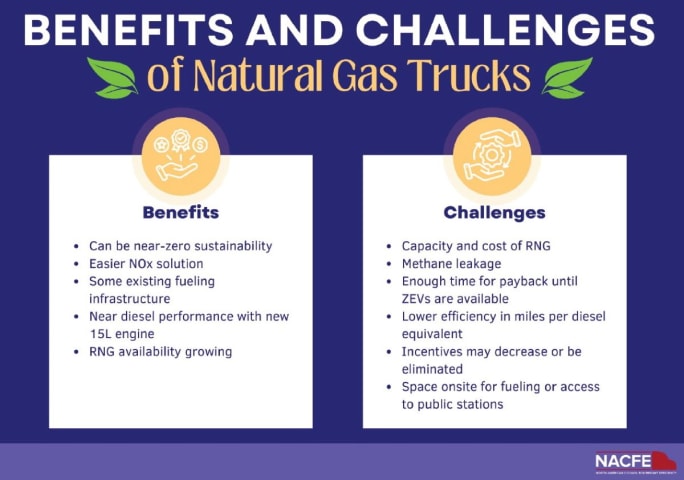
Regardless of the feedstock, petroleum or renewable, certain challenges persist.
Because natural gas is lighter than air, it rises, which means fleets may need to modify some areas of their shops to include adequate ventilation and comply with specific building safety codes.
Additionally, natural-gas fuel tanks on trucks are significantly more costly and complex than diesel tanks, and they are larger and heavier.
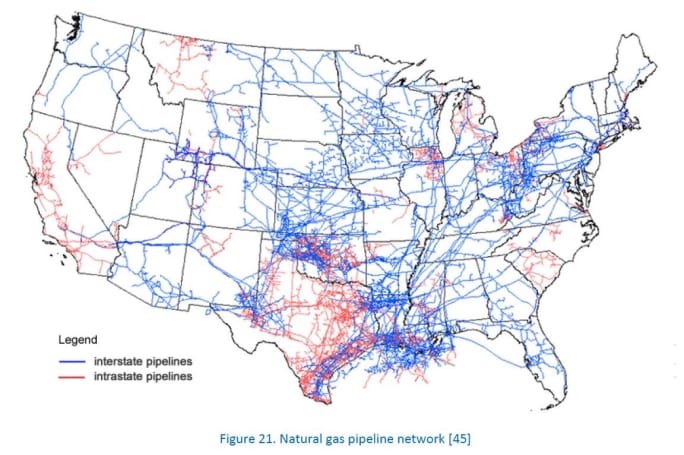
There is also concern about the availability of natural gas fueling stations. As of 2022, the U.S. was home to more than 1,400 CNG fueling stations (772 of which are public). And approximately 97 LNG stations (51 public), mostly in areas servicing the long-haul trucking industry.
“CNG and RNG offer a lot of benefits as we decarbonize the transportation industry, however, there are challenges," said Jeff Seger, NACFE’s clean energy consultant, and former (retired) executive director or electrification and hydrogen powertrains at Cummins.
"Each fleet must assess all of these to be assured it is the right solution while in the messy middle."
The Messy Middle
In early 2024, natural gas looks like a viable alternative to battery or fuel cell trucks, but it's by no means a slam-dunk.
During the call, Roeth stressed that fleets must take a long-term look at their powertrain choices. Natural gas, he noted, will require significant investment compared to diesel, but it may have a limited life-cycle as batteries and fuel cells continue to evolve.
"If you're thinking about what powertrains are in your trucks, start with a zero-emissions solution because we believe that's what we're ultimately going to get," he said.
"Battery-electric and fuel cells don't really make sense in a lot of cases today, but that will change over time. You should look at those first and see if they will make sense to you because it's really where we're headed in the long term."
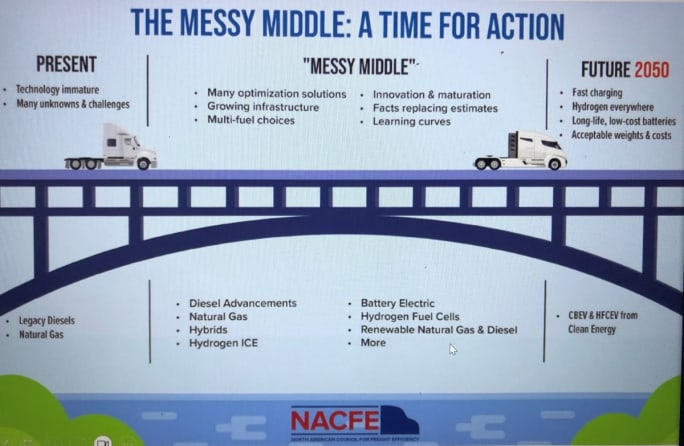
Roeth also said the benefits associated with natural gas, especially RNG, are stacking up and becoming harder to ignore.
"A number of trucking fleets we interviewed a few years ago told us they had basically written off natural gas,” he noted. “But the collection of benefits we're talking about here — the 15-liter engine that's a better fit with many duty cycles, shippers requiring more sustainability, the growth in RNG — are a bigger part of the solution than we thought just a few years ago."
The full 88-page Confidence report is available to download here.
More Fuel Smarts

How Volvo Updated Its D13 for EPA 2027 [Watch]
Volvo’s updated D13 promises lower emissions without sacrificing performance or fuel economy. Take a closer look at what changed inside the engine in this HDT Spotlight video.
Read More →
Diesel Price Spike Shortens Payback for Natural Gas Trucks, Report Says
Energy Vision estimates fleets could recover the higher purchase price of an RNG-fueled Class 8 tractor in 1.3 to 2.8 years under current fuel-price scenarios.
Read More →
Calstart Becomes Catalyst Mobility, Reflecting Broader Focus
Calstart is now Catalyst Mobility, reflecting the nonprofit’s growing national role in clean transportation, including zero-emission trucks, infrastructure and incentive programs.
Read More →

Record Diesel Prices Squeeze Trucking Fleets
Average U.S. diesel prices have climbed to nearly $6 a gallon, surpassing the 2022 record as tight refinery capacity and Middle East disruptions keep fuel costs elevated.
Read More →
How Fuel Delivery Shapes Engine Performance
Fuel delivery depends on more than what happens at the injector. For fleet, maintenance and technical professionals, looking at the full path from pump to injector can provide useful context for understanding engine performance.
Read More →
East Coast Port Launches $45M Electric Truck Push
The Port Authority of New York and New Jersey announced millions in incentives for zero-emission drayage trucks, yard tractors, and new charging hubs near the port.
Read More →
California Bill Could Shed Light on Electric Truck Prices
Why do battery-electric Class 8 trucks remain so expensive? A California bill headed to Gov. Gavin Newsom would give fleets and state agencies more visibility into what manufacturers charge.
Read More →
Detroit Opens Orders for EPA 2027 Engines
Detroit isn’t starting from scratch to meet EPA 2027 diesel emissions standards. Its Gen 6 DD13 and DD15 engines keep much of today’s platform while updating the fuel and aftertreatment systems.
Read More →
Zero-Emission Truck Corridor Planned for West Coast
California, Oregon, Washington, British Columbia and Baja California are coordinating plans for truck charging and hydrogen fueling from Canada to Mexico.
Read More →
A Closer Look at Kenworth’s Electric T880E Vocational Truck [Video]
Learn more about Kenworth's T880E battery-electric vocational truck at the Paccar Technical Center, including its range, applications, upfitting considerations, and PTO options, in this HDT Spotlight video.
Read More →