




HDT's Top 10 Articles of 2019
The subjects of our Top 10 Articles for the year range from the whys and wherefores of complying with new safety regulations, especially the ELD mandate, to what strategies to deploy to curb the driver shortage. Other standout topics include the impact of liberalized marijuana laws on trucking and a look at why there have been so many high-profile fleet closures.
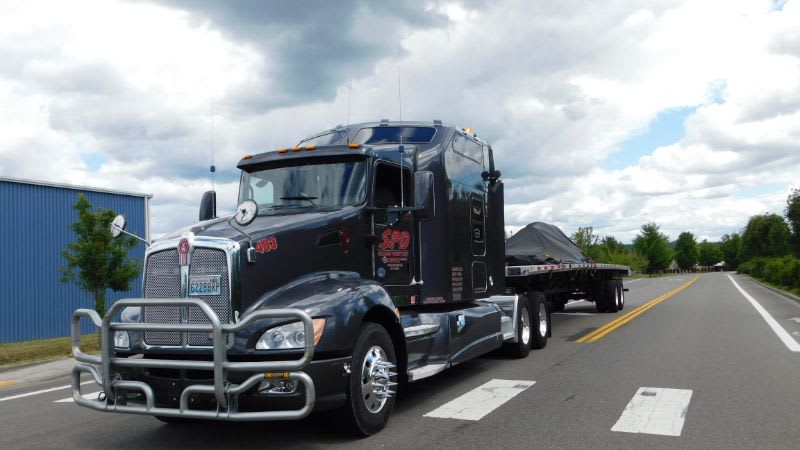
Photo: Smokey Point Distributing
An article— a “feature” in journalese— dives deeper into a topic than a straight-up breaking news story does and may include expert analysis of the topic being discussed. In 2019, HDT’s editors reported in depth on a wide range of topics. The subjects of our Top 10 Articles for the year range from the whys and wherefores of complying with new safety regulations, especially the ELD mandate, to what strategies to deploy to curb the driver shortage. Other standout topics include the impact of liberalized marijuana laws on trucking and a look at why there have been so many high-profile fleet closures.
Fleets are Chasing Drivers with Better Pay and Quality of Life
Many fleets have increased wages to help them find and keep new drivers. Facing high turnover and fewer entrants to the industry, these companies are competing for a pool of talent that is only thinning out each year. But the life of a truck driver can be difficult, and improving pay is only one way to reach them. As a result, fleets are introducing innovative pay packages to help improve quality of life as well.
Trucking Looks for Solutions to California's Stringent New Independent Contractor Law
A new California law, going into effect in January 2020 designed to address worker misclassification could seriously affect the trucking industry. But there’s so much up in the air that there’s no clear path for trucking companies using independent contractor owner-operator drivers in the state.

Photo: Volvo Group
5 Ways Truck Drivers Can Sleep Better
Getting regular quality sleep is one of the biggest challenges long-haul drivers face. Between irregular sleep times, noisy truck stops, uncomfortable mattresses, and an unhealthy lifestyle, it’s no wonder. So how do we as an industry help our drivers get better sleep, improving their health and safety?
7 Things You Need to Know About the New Drug and Alcohol Clearinghouse
The federal Drug and Alcohol Clearinghouse is finally rolling out in January 2020. The clearinghouse has long been sought to keep commercial drivers who have violated federal drug and alcohol rules from lying about those results and simply getting a job with another motor carrier. Here’s what trucking companies need to know…
11 Things to Know to Stay Out of Trouble with Final ELD Deadline
As of Dec. 17, 2019, most motor carriers are required by federal law to use electronic logging devices, or ELDs, to track driver hours of service. Whether you’ve waited until the last minute to flip the switch or you’re already running ELDs, here are some things you need to keep in mind to avoid citations, bad CSA scores, or unsatisfactory safety ratings…
What’s Behind Recent High-Profile Trucking Closures?
Two industry analysts we spoke to acknowledge the freight-hauling environment is more challenging, but they believe this year’s high-profile trucking closures have more to do with company-specific issues than overall market weakness.
How a Frankenstein Truck Averages over 9 MPG
If you see Steve Kron’s 2001 International IHC 9400, you’ll likely do a double-take. He’s heavily modified the truck over the years, including non-OEM aerodynamic headlights, and a bumper and fenders he pulled off a 2011 Mack Vision. And that’s just the exterior…

18 Wheelers and Weed
The tide of marijuana legalization and changing sentiments around it is a challenge for trucking. Marijuana is classified at the federal level as a Schedule 1 controlled substance, which Department of Transportation regulations prohibit use of by commercial drivers— even in states that have fully legalized cannabis. Some fleets, dealerships, and manufacturers in legal states have ended random drug testing for non CDL-holding employees, but others adhere to standing corporate policies of zero tolerance.
Is Your ELD Compliant?
How is any reasonable person to know, really know, if their ELD complies with all the technical requirements? The regulations are convoluted and so full of minutiae that only specially trained people are likely to be able to determine if a device is working as it should. Because the Federal Motor Carrier Safety Administration does not vet the devices, it’s now up to the buyer to ensure a chosen ELD complies.
Tight, but Not too Tight with Wheel Bearing Adjustments
Somewhere between the thickness of a human hair and a sheet of paper. That’s the tolerance you’re toying with when adjusting wheel bearings. Various sources put the diameter of an average strand of hair at 0.001 and a sheet of standard office paper at 0.005 inches. For context, the tolerable end-play for truck wheel bearings is the same: 0.001 to 0.005 inches, also expressed as 1 to 5 mil or 0.025 to 0.127 mm. In other words, it’s perfectly acceptable to adjust wheel bearings so that they are just a little bit loose, but not too loose.
More Fleet Management

Geotab Links Fleet Card to Vehicle Data
The new card combines fuel discounts with telematics-based purchase controls. Geotab’s analysis also points to potential savings from choosing lower-priced fuel stops.
Read More →
How MFA Helps Protect Trucking Fleets
Multi-factor authentication adds protection when passwords are stolen. Here’s how it works and where fleets should start.
Read More →
How Better Freight Data Helps Trucking Teams Get Ahead of Disruption
Trucking and logistics teams have plenty of data. The problem is getting the right information in front of the right people soon enough to act. Better-connected data can help teams spot trouble earlier and make smarter decisions before small problems become big ones.
Read More →

Trimble: Taking Artificial Intelligence in Trucking Beyond Faster Tasks
At Insight 2026, Trimble executives argued that fleets may need to redesign workflows to get more from AI as it introduced new products and enhancements. AI’s value will depend on how fleets combine automation with their people's knowledge.
Read More →
Build a bulletproof fleet: Uniting ELDs and dash cams for total compliance
An ELD can prove compliance, but it cannot always prove what happened on the road. Discover how uniting accurate ELD data with AI-powered dash cam video can help your fleet strengthen compliance, defend against liability, protect drivers and reduce operational costs.
Read More →
Nominations Open for HDT Emerging Leaders
Heavy Duty Trucking is looking for accomplished trucking fleet professionals under 40 who are making an impact and helping lead the industry forward.
Read More →
Why Private Fleets Are Taking More Freight
Private fleets are putting their own trucks on demanding customers and high-cost lanes as companies seek greater control over service, costs, and capacity.
Read More →
Color Match Smarter: Tools That Restore & Perform
For fleet managers and collision repair professionals keeping heavy-duty trucks on the road, getting the color right the first time isn't just about appearance — it's about efficiency, turnaround time, and bottom-line results. Discover how today's digital color tools are transforming the repair process from guesswork to precision.
Read More →
FMCSA Pauses Biennial-Update Enforcement Amid Motus Transition
Carriers whose updates were due on or after June 1 have more time, while FMCSA works to stabilize its new registration system and warns of phishing sites impersonating its new carrier registration system, Motus.
Read More →
2026 Blueprint for Countering Smarter Supply Chain Theft
Cargo theft is no longer just the cost of doing business. It's a multi-billion-dollar criminal enterprise exploiting vulnerabilities across your fleet, drivers, and supply chain.
Read More →