



Fleet Snapshot
Who: ABF Freight
Where: Fort Smith, Arkansas
Fleet: About 4200 road and city tractors
Operations: Less-than-truckload
Fun Fact: Founded in 1923
Challenge: Serve our customers with the best experience possible
 MENU
MENU SEARCH
In an effort to help veterans, ABF Freight’s driver training program eases the transition into civilian life.
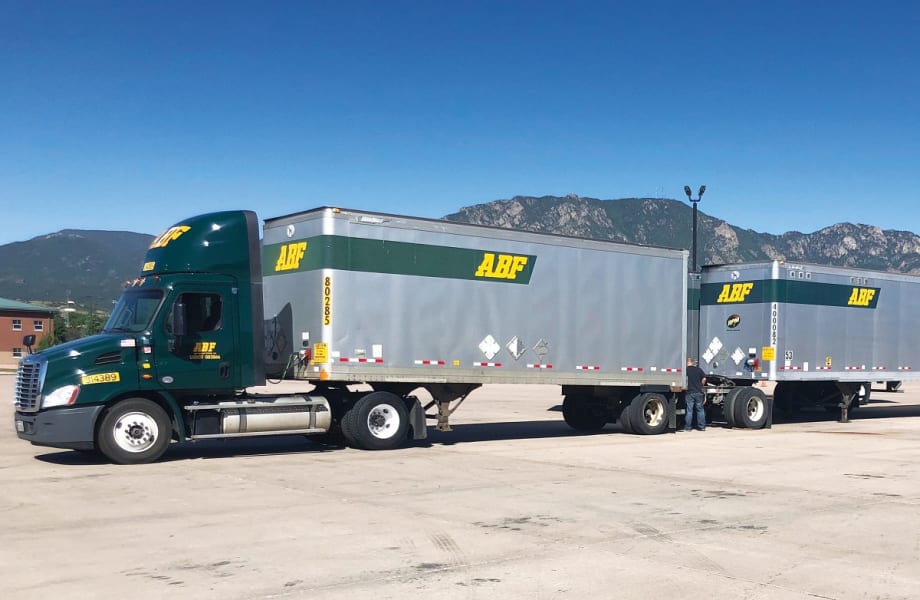
In an effort to help veterans, ABF Freight’s driver training program eases the transition into civilian life.
Photos: ABF Freight
Four years ago, in an effort to increase its pool of drivers, ABF Freight decided to look to individuals who would bring a high-caliber character to the industry – our country’s veterans.
“It’s not hard for these individuals to be on time, or show up to work ready and prepared. These are characteristics that are ingrained in every soldier. These characteristics are the backbone of how anything gets done in the military world,” explains Mike Leverton, ABF Freight’s driver development instructor and a veteran of the U.S. Army.
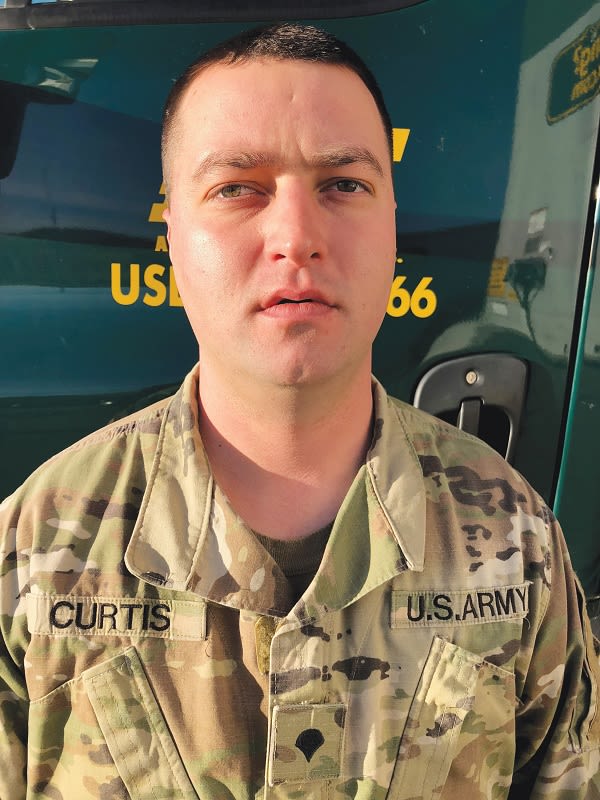
Former U.S. Army Specialist and current ABF employee Frederick Curtis’ first day of training with ABF began while he was still on active duty.
The program originated with ABF and the Teamsters as a part of the Teamsters Military Assistance Program beginning in 2015 at Fort Sill, Oklahoma. It was created to find new drivers, but also to find people who are looking for a good life and a great job once their military career ends.
The program is six weeks long and starts around 90 days before a service member separates from active duty service. The main focus is teaching recruits to operate a tractor-trailer safely and competently. They learn shifting, backing, and driving in city and highway conditions. The program attempts to cover as much as the instructors can to assist these men and women to be successful as soon as they arrive at their service center.
“We help provide a bridge from one career to the next,” Leverton says. “They start and finish the program while they are still on active duty. The day they leave military service they have a job waiting for them with ABF Freight. Soldiers coming out of the ABF TMAP program are all eligible for no-cost health benefits after 90 days of employment. Essentially, they are receiving the same benefits as they would as a member of the Armed Forces.”
Since 2015, the program has graduated more than 350 students, including former Specialist and current ABF employee Frederick Curtis, a city driver out of ABF’s Chester, Pennsylvania, service center.
“[This program] has made my decision to get out an easy one,” Curtis says. “I started about two weeks after leaving the military, and right off the bat I was making more money. I had a mentor who helped further train me and help me get settled in the area of my new service center. It was so much easier than I thought getting out was going to be.”
And there was no gap in terms of when his income ended with the military and began with ABF. Curtis calls his choice “the best decision I could have made.”
“Plus all the health benefits and retirement that I don’t pay for, that is huge for those of us getting out,” he adds. “You’re guaranteed a job and you’re guaranteed to have benefits.”
And, for some graduates, sometimes you return to where you started. Leverton graduated from the ABF TMAP program before he left active duty. Three years ago, he returned as an instructor.
“ABF and the Teamsters have given me the opportunity to come back to the program and pass on the knowledge that I have gained,” says Leverton, adding, “We are not only providing soldiers with a great opportunity, but also ABF benefits by gaining a trustworthy employee, an employee who knows how to show up on time, an employee that is a self-starter. In turn, the Teamsters Union gets new members who are accustomed to being a part of a fraternity, someone who is used to being a part of something more.”

Fleets have more visibility into truck health, safety events, and driver activity than ever. The next challenge is turning all that information into useful guidance for the person who has to decide what to do next.
Read More →
Federal regulators also are targeting more than 160 additional training providers and launching a nationwide audit of third-party CDL skills testers as part of a broader crackdown on trucking fraud.
Read More →
Two pilot programs could eventually reshape hours-of-service rules, giving truck drivers options to pause their 14-hour clock or use longer split sleeper rest periods.
Read More →
Medical-card violations jumped to the top of the driver out-of-service list during CVSA’s 2026 International Roadcheck, while English-language proficiency violations appeared among the leading violations for the first time.
Read More →
New Teletrac Navman research suggests that onboarding, transparency about driver data, and positive feedback can play a significant role in how commercial drivers respond to safety and coaching technology.
Read More →
KLLM is facing a federal sex-discrimination lawsuit over policies the EEOC alleges put female truck driver trainees at a disadvantage.
Read More →
By changing regulations on English-language proficiency requirements for commercial drivers, rather than relying on a guidance memo, the FMCSA said future administrations won't be able to walk back the Trump administration's stricter enforcement with just a memo.
Read More →
Watch to get an inside look at the Western Star trucks, technology, and community behind the Star Nation Experience 2026!
Read More →
The Freedom Haulers program pulls together existing and expanded programs at several federal agencies to recruit veterans to drive commercial heavy-duty trucks and cut the red tape for them to get a CDL, training, and employment.
Read More →
A test drive of Mack’s Command Steer active steering system evaluates how it can make truck driving easier and less tiring.
Read More →