





Akasol AG, based in Darmstadt, Germany, was founded in 1990 and has since emerged as a leading European manufacturer of high-performance, lithium-ion battery systems for commercial vehicles, rail vehicles, industrial vehicles, and ships and boats.
Q&A: Akasol North America President Roy Schulde
Akasol is one of Europe’s largest supplier of battery systems for commercial vehicles with hybrid-electric or all-electric drives and is now moving into the North American commercial vehicle market.
August 2, 2019
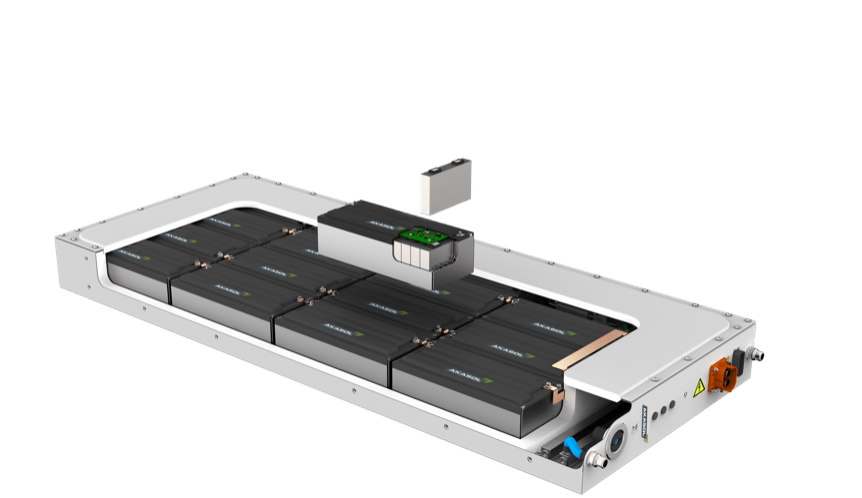
The AKASystem OEM PRC lithium-ion battery system for commercial vehicles will be produced in the U.S. at a plant in Novi, Michigan.
Image: Akasol
4 min to read
Akasol is one of Europe’s largest suppliers of battery systems for commercial vehicles with hybrid-electric or all-electric drives and is now moving into the North American commercial vehicle market.
Roy Schulde, president of Akasol's North American operations, spoke with HDT about his company’s past, its products, and its future goals in this marketplace.
HDT: Tell our readers a little bit about how Akasol was founded.
Schulde: The company began as a student club at the Technical University in Darmstadt.. A group of engineering students founded it as a nonprofit group to compete in academic contests for world championships in emerging battery technology. Those competitions naturally led to involvement with solar vehicles and eventually expanded into battery systems for light vehicles and electric trucks. The common denominator was the battery technology used in each case. And the systems and technologies these students developed led to the founding of Akasol GmbH in 2008. The company went public in 2018 with a successful IPO and became Akasol AG. And today, that translates into over 30 years of experience in developing and deploying these battery systems.
HDT: Over time, then, the company decided to concentrate on commercial vehicles and vocational applications?
Schulde: Yes. Over time, it became clear that passenger car OEMs were going to concentrate on proprietary battery technology for their electric vehicles. So, Akasol made the decision to concentrate on vocational and industrial machines, including construction and mining equipment, and marine vessels as well as medium- and heavy-duty trucks and buses. We have attracted many well-known European customers over the years, including large, blue chip European truck and bus OEMs, such as Daimler and Volvo.
HDT: I wasn’t aware that battery-powered vehicles were moving into mining applications.
Schulde: Yes. There are big benefits for mine operators running full-electric vehicles because that allows them to get away from the massive costs associated with ventilating mines and removing noxious diesel emissions in them. We are working with Medatech in Canada on such applications.
HDT: What is behind Akasol’s decision to move into the North American electric commercial-vehicle market?
Schulde: A lot of it has to do with the global nature of trade today and the fact that our European customers require that we develop products that can be sold in the United States per the Buy America Act guidelines issued by the Federal Transit Administration. Transit buses acquired with federal public transportation funding must have final assembly in the United States and have a certain percentage of the bus cost be of domestic origin. Batteries can make up about 25% of the cost of an electric bus, so it’s necessary for us to manufacture our systems in the U.S. We also want to be able to serve the other commercial vehicle markets in North America with local product.
HDT: What aspects of your products and technology do you feel set you apart from your competitors?
Schulde: We are 'cell agnostic' when it comes to battery technology. We have decades of experience in developing the best available solutions for any given application, whether it demands more power, higher energy levels, a larger number of cycles, or other requirements. We currently offer battery systems that utilize pouch and prismatic cells. We are also in development of a new type of battery system with cylindrical battery cells, which offers higher energy density per pack. We believe they will be applicable for long-haul, heavy-duty electric truck applications where cost and battery weight are limiting design factors. This is similar to battery cell technology employed by Tesla. We showcased a prototype cylindrical cell-based system at the Battery Show in Stuttgart, Germany, earlier this year. And we will have our latest version on display at the Battery Show in Novi, Michigan, later this year.
HDT: Obviously, you are bullish on the developing market for electric trucks in North America.
Schulde: We see buses adopting full electric technology first. And so that market will be our initial focus in the United States. We also have ongoing battery applications for medium-duty trucks with known duty cycles – established, unvarying routes with recharge times over night. So, we are looking carefully at refuse trucks and delivery trucks. We understand that battery technology may not get to a point where we can do all-electric long-haul applications. There you may see fuel-cell technology as the prime power source, which will still need a certain level of battery technology as an intermediate storage medium that we can supply. Generally speaking, our philosophy is there is not one battery solution that fits all applications. And, again, that is why we try to be technology agnostic when assessing a new application.
HDT: Are you in talks with any North American truck OEMs?
Schulde: We are talking with American OEMs. And we expect a major announcement in this area in the near future. But that is all I can say at this time.
Subscribe to Our Newsletter
More Fuel Smarts
Volvo Testing Hydrogen-Fueled Internal Combustion Engines on Trucks in Europe
Hydrogen combustion engine trucks will be especially suitable over longer distances and in regions where there is limited charging infrastructure or time for recharging of battery-electric trucks, according to the company.
Read More →
Toyota’s Entry Into Cellcentric Signals Push to Accelerate Hydrogen Truck Adoption
By joining Daimler Truck and Volvo, Toyota brings fuel cell expertise to a joint effort aimed at making hydrogen viable for heavy-duty transport.
Read More →
U.S. Diesel Prices Hit $5.40, Top $7 in California
Trucking operators are slowing speeds, cutting empty miles, and declining unprofitable freight as diesel costs continue to rise due to conflict in the Middle East.
Read More →
EPA Targets DEF Sensor Failures Behind Truck Derates
New guidance allows engine makers to replace problematic DEF sensors with NOx-based systems, aiming to reduce unnecessary derates and downtime caused by failures in the sensors designed to monitor diesel exhaust fluid on trucks.
Read More →
Heavy Duty Trucking is Searching for the Top Green Fleets of 2026
Is your company a leader in sustainability efforts among trucking fleets? If so, Heavy Duty Trucking's editors want to hear from you.
Read More →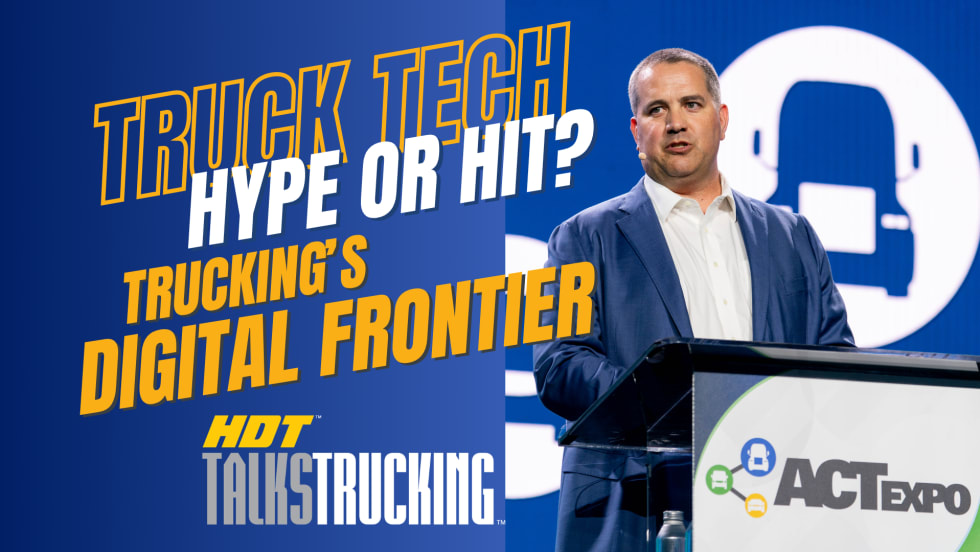
What's Real in Advanced Truck Technology? ACT Expo's Erik Neandross Weighs In
Artificial intelligence, the software-defined vehicle, telematics, autonomous trucks, electric trucks and alternative fuels, and more in this HDT Talks Trucking interview
Read More →Why Diesel Is Climbing Fast—and What the Iran Conflict Has to Do With It
With global oil flows disrupted, U.S. diesel prices have topped $5 across every region, climbing sharply in the past few weeks.
Read More →
From Diesel Prices to Cyberattacks: How the Iran War Is Affecting Trucking
The impact of the Iran conflict extends beyond fuel costs, bringing more fraud and cybersecurity risks to the trucking industry.
Read More →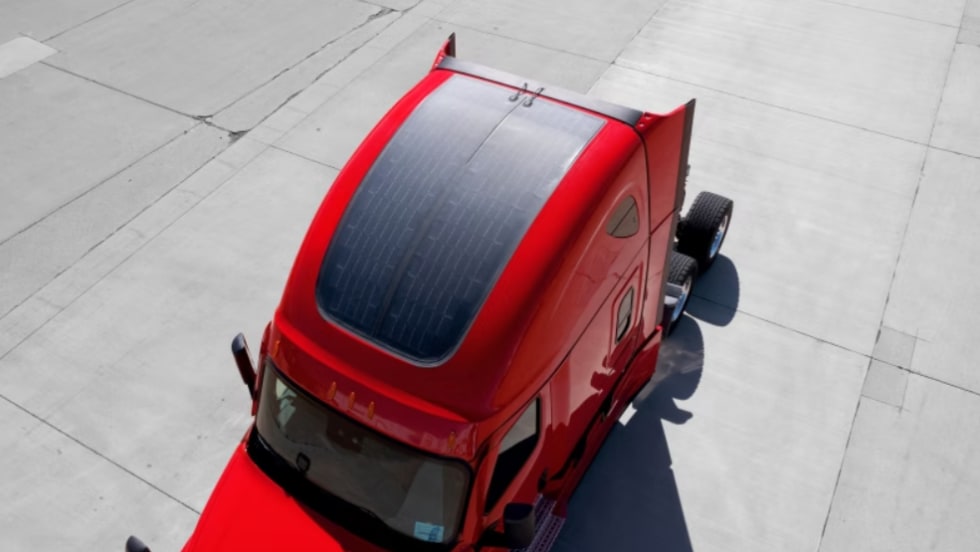
Vanair Introduces Solar, Battery Power Ecosystem for Class 8 Trucks
The company’s expanded EPEQ ecosystem includes flexible solar panels, lithium batteries, hydraulic power systems, and a portable fast charger for electric trucks.
Read More →
Run on Less “Messy Middle” Data Shows Multiple Paths for Truck Powertrains [Listen]
Listen as Mike Roeth of the North American Council for Freight Efficiency shares insights into battery-electric trucks, natural gas, biofuels, and clean diesel on this episode of HDT Talks Trucking.
Read More →