



The long and tumultuous matter of the Port of Los Angeles’ Clean Truck Program came to a head in the Supreme Court Tuesday, with Justices conducting a spirited discussion with opposing attorneys.
 MENU
MENU SEARCH
The long and tumultuous matter of the Port of Los Angeles’ Clean Truck Program came to a head in the Supreme Court Tuesday, with Justices conducting a spirited discussion with opposing attorneys.

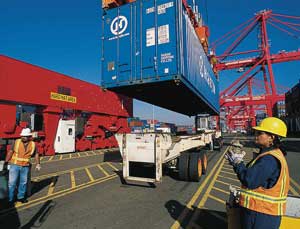
The long and tumultuous matter of the Port of Los Angeles’ Clean Truck Program came to a head in the Supreme Court Tuesday, with Justices conducting a spirited discussion with opposing attorneys.
At issue are two provisions of the port’s 2008 Clean Trucks Program under which drayage carriers must join a concession agreement in order to provide service.
American Trucking Associations has pursued through the lower courts the argument that the port does not have authority to require the provisions.
ATA contends that the Federal Aviation Administration Authorization Act exempts carriers from the off-street parking and placard provisions of the agreement.
Those provisions require carriers to submit an off-street parking plan, and to mount placards with a phone number so the public can report concerns about safety or the environment.
ATA also says that under a 1954 Supreme Court decision, Castle v. Hayes Freight Lines, the port may not suspend or revoke a carrier’s access.
The issues come down to the division of power between states and the federal government, a question the Justices pursued in a number of ways.
By restricting entry and imposing criminal penalties for violations of the agreement, the port is limiting access to a key channel of interstate commerce, argued ATA’s attorney, Daniel Lerman of the Washington, D.C., law firm of Robbins Russell.
“The port is invoking the full coercive power of the state to impose conditions on motor carriers, and that is exactly what Congress sought to prevent,” he said.
The port contends that it can impose these restrictions because it is a participant in the market, rather than just a state regulator, and as such is exempt from the Federal Aviation Act.
Justice Sonia Sotomayor asked Lerman if the court needs to address the market participant question, given that it can decide that the agreement either has the force of law or is a private contract.
“It either has the force and effect of law or it doesn’t,” Lerman replied. If it does have that force, then the court does not need to address market participation, he said.
Justice Stephen Breyer said it seemed clear to him that the port should be able to impose parking requirements under the authority of the states to impose highway route controls.
Justice Ruth Bader Ginsburg asked how the federal government, which is supporting ATA in this matter, thinks the port should deal with the underlying problem of complaints from the people who live near the port.
“Here is a port that’s getting lots of complaints from the neighborhood people,” she said.
“It wants to expand the port, it’s being thwarted by environmental suits, so it wants to go green and it wants to do something about the pollution and the traffic and the hazards from the truck. You’re saying that it can’t do that?”
The attorney for the U.S., Assistant Solicitor General John Bash, replied he was not saying that the port has no recourse.
He cited the port’s approach to getting cleaner trucks into the drayage business, which involved creating a subsidy and incentive program to replace old trucks with new ones, as a way to achieve its goals without imposing criminal penalties.
On another point, Justice Breyer questioned the attorney for the port, Steven Rosenthal of the Washington, D.C., firm Kaye Scholer, about the issue of how the port may control its land.
“The owner of land has to have some control of the type which ATA and the government says we can’t have control over,” Rosenthal said.
Breyer said, “You’re saying it falls outside the definition of ‘routes.’ Well, that argument is not in front of us. I thought we were conceding here (that the concession agreement) falls within the definition of routes or rates or services.”
Rosenthal replied that that is not the case. “Our position is that even it is its rates, routes and services, what the port is doing is regulatory.
“If we are prescribing it, it’s inherent within our ability to access our particular land.”
In a statement released after the argument, ATA said it is concerned about the precedent that will be set if the LA port’s approach is upheld.
“If these rules are allowed to stand, it would clear the way for a patchwork of regulations that would lead to unreasonable burdens on the movement of goods,” said ATA Deputy Chief Counsel Richard Pianka in a statement.
Other groups supporting ATA in the matter are the U.S. Chamber of Commerce, Airlines for America, the Owner-Operator Independent Drivers Association, National Federation of Independent Businesses and the Harbor Trucking Association.
The court is expected to hand down its decision in July.
The Department of Labor plans to expand Pell Grant eligibility to some shorter workforce training programs, a move the American Trucking Associations said will help strengthen commercial driver training schools and diesel technician training programs.
Read More →
For an industry that has watched this issue go back and forth for years, the independent contractor proposal marks the latest swing in the regulatory pendulum.
Read More →
One electronic logging device has been reinstated to the FMCSA's list of registered ELDs.
Read More →
America’s Service Line adopted Link’s SmartValve and ROI Cabmate systems to address whole-body vibration, repetitive strain, and driver turnover. The trucking fleet is already seeing measurable results.
Read More →
The 18th annual contest recognizing the best workplaces for truck drivers sees changes to Top 20, Hall of Fame
Read More →
The Federal Motor Carrier Safety Administration issued more than 550 notices of proposed removal to commercial driver training providers following a five-day nationwide enforcement sweep. Investigators cited unqualified instructors, improper training vehicles, and failure to meet federal and state requirements.
Read More →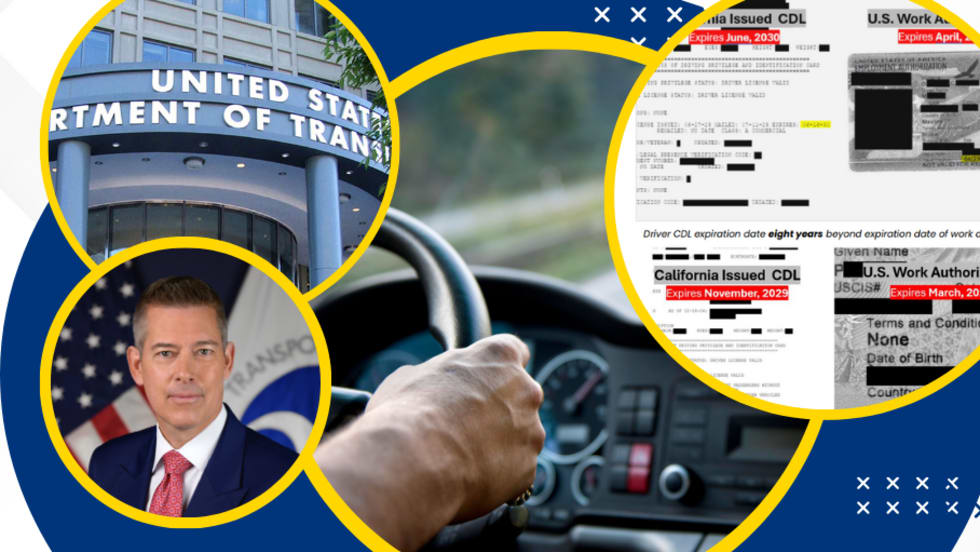
Illinois is the latest state targeted and threatened with the loss of highway funding by the U.S. Department of Transportation in its review of states' non-domiciled CDL issuance procedures. The state is pushing back.
Read More →After a legal pause last fall, FMCSA has finalized its rule limiting non-domiciled commercial driver's licenses. The agency says the change closes a safety gap, and its revised economic analysis suggests workforce effects will be more gradual than first thought.
Read More →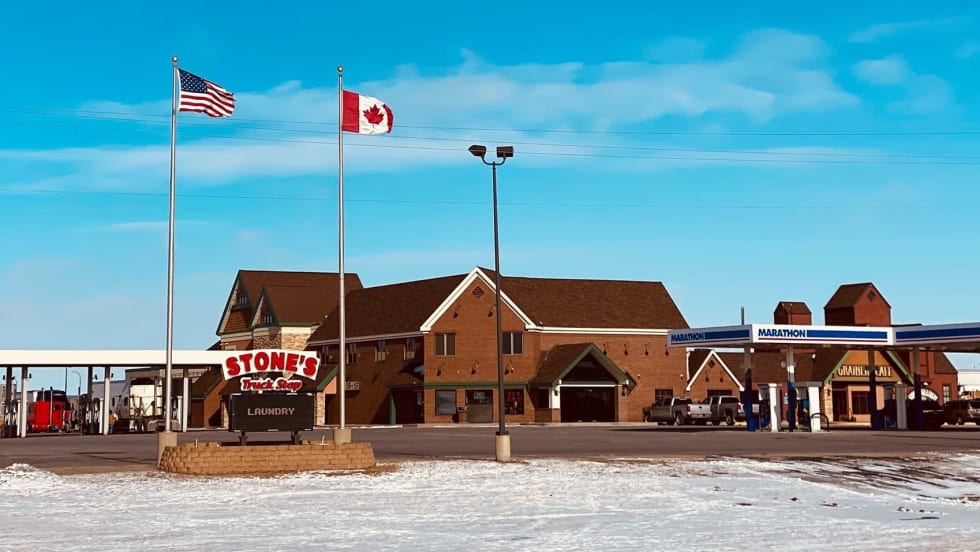
Truck driver ratings reveal the best chain and independent truck stops in the country.
Read More →
6 intelligent dashcam tactics to improve safety and boost ROI
Read More →