




Zero-Emission Truck Deployment Stalls
While zero-emission truck adoption continues to grow when it comes to cargo vans, deployments of zero-emission medium- and heavy-duty trucks have remained flat for 18 months, according to Calstart.

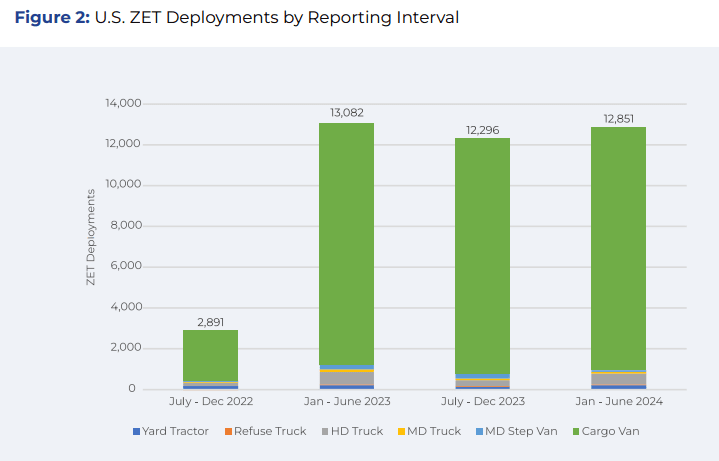
Growth in zero-emission truck deployments has been fairly stagnant the last few years.
Source: Calstart
While zero-emission truck adoption continues to grow when it comes to cargo vans, deployments of zero-emission medium- and heavy-duty trucks have remained flat for 18 months, according to Calstart.
That’s according to the organization’s latest market update to its Zeroing in on Zero-Emission Trucks series, looking at zero-emission commercial truck deployments in the United States as of June 2024.
More than 42,500 zero-emission trucks are now deployed nationwide, a leap from 30,030 at the end of 2023, according to Calstart. However, of deployments since December 2023, the vast majority -- 88% -- are cargo vans, with 11,900 new vehicles.
The report offers a snapshot of the existing U.S. medium- and heavy-duty truck market for Class 2b (8,501-10,000 lbs.) through Class 8 (33,000 lbs. and above), including cargo vans, medium-duty step vans, medium-duty trucks, heavy-duty trucks, refuse trucks, and yard tractors.
A total of 37 manufacturers have deployed ZETs, up from 32.
Used zero-emission trucks are starting to hit the road, with a total of 2,708 deployed, or approximately 6% of all ZET deployments.
Each six-month interval of reporting continues to show a steady increase of ZET deployments, Calstart said.
However, after a steep jump at the start of 2023 due to many OEMs beginning delivery of their ZETs, the growth rate since then remains flat.
Why Have Zero-Emission Truck Deployments Stalled?
The report found that ZETs made up just 2.6% of new truck sales in the first six months of 2024. Current efforts to promote ZETs have not spurred demand due to several barriers:
The high purchase price of ZETs
Infrastructure delays for building out charging and refueling stations
Insurance and monthly lease payments for ZETs are notably higher as insurers and financiers lack historical data to this new technology
Regulatory uncertainty at both the state and federal level leaves fleets and OEMs unsure about how aggressively they should invest in ZETs.
Zero-Emission Truck Deployments Driven by Drayage
Thanks to California emissions regulations that have targeted drayage trucks first, About half of the zero-emission heavy duty trucks deployed in California are at the Ports of Los Angeles and Long Beach.
There are 22,550 trucks in the drayage registry for the Ports of Los Angeles and Long Beach. These ports now have 415 ZETs in their drayage registry (as of October 14, 2024), with more to come.
There are approximately 693 ZE HD trucks deployed in California, and the ports can take credit for more than half of those deployments
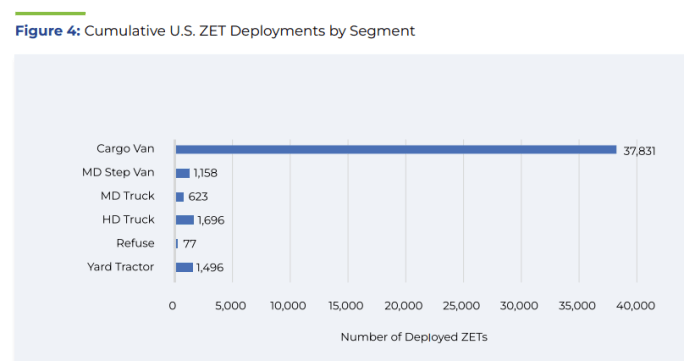
The vast majority of zero-emission medium- and heavy-duty trucks that have been deployed are cargo vans.
Source: Calstart
Zero-Emission Trucks Not Ready for Long-Distance Freight Hauling
While the report signals progress in furthering zero-emission truck adoption, Calstart said, the data makes it clear that the freight industry is not on track to meet federal climate targets for 2030 and beyond.
However, Calstart said, by focusing on high-impact applications, such as local return-to-base operations, first- and last-mile delivery, and drayage — where ZETs have already proven they can meet operational demands — the freight sector can maximize progress toward these goals.
Calstart’s mission is to build the zero-emission commercial vehicle market. It manages more than $500 million in vehicle incentive and technical assistance programs in the United States.
What States Have the Most Zero-Emission Trucks?
The leading three states for zero-emission truck deployments are:
California (6,313)
Texas (4,155)
Florida (3,744).
Sixteen states now have more than 1,000 zero-emission truck deployments. The fastest-growing states by percentage are Maryland, New York, and Oregon.
Outside of California, however, deployments of zero-emission step vans, medium-duty trucks, heavy-duty trucks, refuse trucks, and yard tractors are minimal, with approximately 2,727 across all other states.
More Fuel Smarts

Geotab Links Fleet Card to Vehicle Data
The new card combines fuel discounts with telematics-based purchase controls. Geotab’s analysis also points to potential savings from choosing lower-priced fuel stops.
Read More →
Fleet Economics Shape Electric Truck Outlook
ACT Research expects costs, charging infrastructure, and technology improvements to drive zero-emission commercial vehicle adoption as federal regulations and incentives retreat.
Read More →
Wex Adds Cardless Fuel Payments for Over-the-Road Customers
A new fuel card feature for Wex customers offers convenience and security.
Read More →

New California Law Could Shed Light on Electric Truck Prices
Why do battery-electric Class 8 trucks remain so expensive? A California bill signed by Gov. Gavin Newsom would give fleets and state agencies more visibility into what manufacturers charge.
Read More →
How Volvo Updated Its D13 for EPA 2027 [Watch]
Volvo’s updated D13 promises lower emissions without sacrificing performance or fuel economy. Take a closer look at what changed inside the engine in this HDT Spotlight video.
Read More →
Diesel Price Spike Shortens Payback for Natural Gas Trucks, Report Says
Energy Vision estimates fleets could recover the higher purchase price of an RNG-fueled Class 8 tractor in 1.3 to 2.8 years under current fuel-price scenarios.
Read More →
Calstart Becomes Catalyst Mobility, Reflecting Broader Focus
Calstart is now Catalyst Mobility, reflecting the nonprofit’s growing national role in clean transportation, including zero-emission trucks, infrastructure and incentive programs.
Read More →
Record Diesel Prices Squeeze Trucking Fleets
Average U.S. diesel prices have climbed to nearly $6 a gallon, surpassing the 2022 record as tight refinery capacity and Middle East disruptions keep fuel costs elevated.
Read More →
How Fuel Delivery Shapes Engine Performance
Fuel delivery depends on more than what happens at the injector. For fleet, maintenance and technical professionals, looking at the full path from pump to injector can provide useful context for understanding engine performance.
Read More →
East Coast Port Launches $45M Electric Truck Push
The Port Authority of New York and New Jersey announced millions in incentives for zero-emission drayage trucks, yard tractors, and new charging hubs near the port.
Read More →