




Mullen Three CARB Certified and On Sale Nationwide
Mullen Automotive said its Mullen Three battery-electric truck has received full certification from the California Air Resources Board is now on sale nationwide in the U.S.

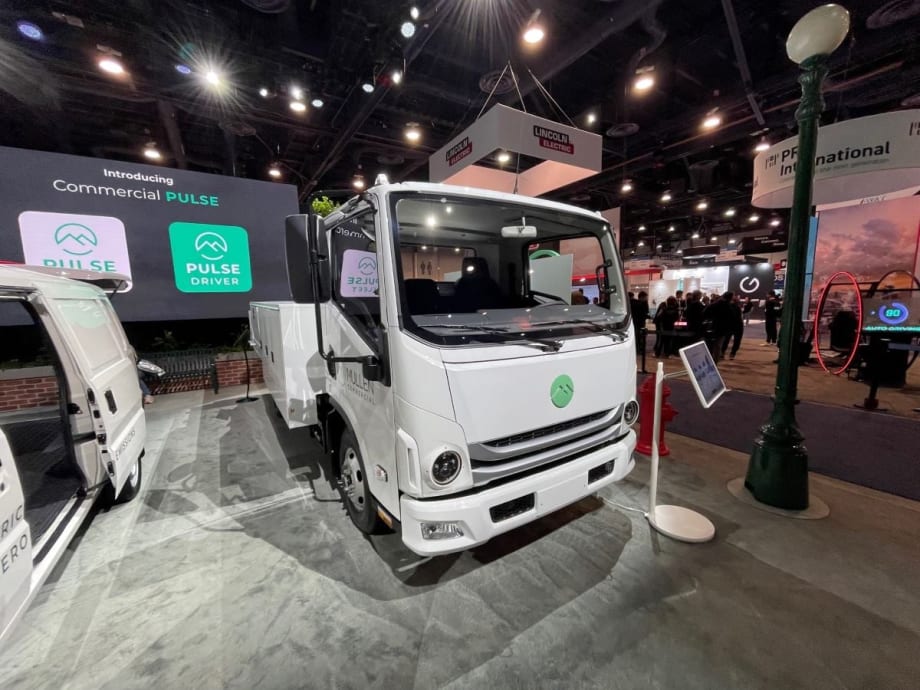
The Mullen Three, shown here at the OEM's display at CES 2024, has received full CARB certification and is now available for sale -- and incentives - across the U.S.
Photo: Jack Roberts
Mullen Automotive announced that its all-electric Class 3 low cab forward chassis truck has been certified by the California Air Resources Board (CARB), clearing the way for sales across the United States. According to the OEM, the Mullen Three has been certified in compliance with CARB emissions standards. This means that the Mullen Three is now available for sale in the District of Columbia and 14 states, including California. These are all states which have adopted vehicle standards under Section 177 of the Clean Air Act that require additional approvals beyond EPA regulations.
Incentive Eligibility
Mullen’s Class 1 and Class 3 commercial vehicles are now both in receipt of Environmental Protection Agency and CARB certifications, the OEM reported. Both vehicles are also in full compliance with U.S. Federal Motor Vehicle Safety Standards. Having received credentials from CARB and the EPA, Mullen can now sell both the Mullen One and Three in every state throughout the U.S. A copy of Mullen’s Class 3 CARB certification can be found on MullenUSA.com.
Additionally, CARB certification opens both the Mullen Oner and Three eligibility for critical state EV incentive programs, which vary by each eligible CARB-compliant state. The certification takes on even more significance with CARB’s recent Advanced Clean Fleets regulation, Mullen added. This regulation includes a requirement that state and local government fleets, including city, county, special district, and state agency fleets, ensure 50% of vehicle purchases are zero-emission beginning in 2024. Additionally, according to the Advanced Clean Fleet regulation, 100% of vehicle purchases must be zero-emission models by 2027. Fleets that fall under high priority may also elect to utilize ZEV milestones as an option to meet overall ZEV targets.
California’s HVIP project is an example of the kind of state incentive program available to CARB-certified vehicles. Under HVIP, the Mullen THREE EV truck, with a suggested MSRP of $68,500.00, may qualify for a rebate of up to $45,000.00 and, when combined with the available $7,500.00 federal tax credit, the net effective cost of the Mullen THREE would be less than $20,000.00.
“CARB approval accelerates commercialization of the Mullen THREE and makes our vehicle even more appealing to customers who want to electrify their fleets,” said David Michery, CEO and chairman of Mullen Automotive. “Having both our Class 1 and Class 3 commercial EVs now CARB and EPA certified will continue to drive sales in all states across America.”
More Fuel Smarts

Wex Adds Cardless Fuel Payments for Over-the-Road Customers
A new fuel card feature for Wex customers offers convenience and security.
Read More →
New California Law Could Shed Light on Electric Truck Prices
Why do battery-electric Class 8 trucks remain so expensive? A California bill signed by Gov. Gavin Newsom would give fleets and state agencies more visibility into what manufacturers charge.
Read More →
How Volvo Updated Its D13 for EPA 2027 [Watch]
Volvo’s updated D13 promises lower emissions without sacrificing performance or fuel economy. Take a closer look at what changed inside the engine in this HDT Spotlight video.
Read More →

Diesel Price Spike Shortens Payback for Natural Gas Trucks, Report Says
Energy Vision estimates fleets could recover the higher purchase price of an RNG-fueled Class 8 tractor in 1.3 to 2.8 years under current fuel-price scenarios.
Read More →
Calstart Becomes Catalyst Mobility, Reflecting Broader Focus
Calstart is now Catalyst Mobility, reflecting the nonprofit’s growing national role in clean transportation, including zero-emission trucks, infrastructure and incentive programs.
Read More →
Record Diesel Prices Squeeze Trucking Fleets
Average U.S. diesel prices have climbed to nearly $6 a gallon, surpassing the 2022 record as tight refinery capacity and Middle East disruptions keep fuel costs elevated.
Read More →
How Fuel Delivery Shapes Engine Performance
Fuel delivery depends on more than what happens at the injector. For fleet, maintenance and technical professionals, looking at the full path from pump to injector can provide useful context for understanding engine performance.
Read More →
East Coast Port Launches $45M Electric Truck Push
The Port Authority of New York and New Jersey announced millions in incentives for zero-emission drayage trucks, yard tractors, and new charging hubs near the port.
Read More →
Detroit Opens Orders for EPA 2027 Engines
Detroit isn’t starting from scratch to meet EPA 2027 diesel emissions standards. Its Gen 6 DD13 and DD15 engines keep much of today’s platform while updating the fuel and aftertreatment systems.
Read More →
Zero-Emission Truck Corridor Planned for West Coast
California, Oregon, Washington, British Columbia and Baja California are coordinating plans for truck charging and hydrogen fueling from Canada to Mexico.
Read More →