




Advanced Clean Fleets Regulation Factsheets and Compliance Planning Tool Available
The California Air Resources Board has developed several factsheets that provide overviews of the Advanced Clean Fleets Regulation, the High Priority and Federal Fleets Requirements, the State and Local Government Agency Fleet Requirements, the Drayage Truck Requirements, and the ZEV Milestones Option.


The California Air Resources Board is making factsheets available to help fleets understand lower-emissions regulations.
Source: Canva/CARB/HDT Illustration
The California Air Resources Board has developed several factsheets that provide overviews of the Advanced Clean Fleets Regulation, the High Priority and Federal Fleets Requirements, the State and Local Government Agency Fleet Requirements, the Drayage Truck Requirements, and the ZEV Milestones Option.
Several more factsheets are in development and will be available soon, according to CARB, and will provide additional compliance assistance as well as information on regulatory exemptions and how to apply for those exemptions.
All factsheets will be posted on the Advanced Clean Fleets Factsheets page and will be available in English, Spanish, and Punjabi.
Fleet Calculator
In addition to these factsheets, CARB has developed a fleet calculator - a compliance planning tool for those fleet owners complying with the Model Year Schedule or the ZEV Milestones Option.
With this tool, fleet owners can project the number of zero-emissions vehicles needed to comply with the High Priority Fleet Model Year Schedule or the ZEV Milestones Option.
Advanced Clean Fleets Regulation
At their April 28, 2023, meeting, CARB approved the adoption of the Advanced Clean Fleets Regulation, the latest of a series of truck regulations aimed at driving the commercialization of zero-emission vehicles in fleets that are best suited to make the transition.
The ACF Regulation is part of a comprehensive strategy to achieve a zero-emissions truck and bus fleet by 2045 everywhere feasible, and significantly earlier for market segments such as last-mile delivery, public fleets, and drayage applications.
CARB said achieving California’s long-term air quality, climate, and public health goals will require a transition from conventional combustion technologies to zero-emissions everywhere feasible and near-zero-emissions powered by clean, low-carbon renewable fuels everywhere else.
Promoting the development and use of zero-emissions trucks will contribute to the goals set by the Governor’s Executive Order N-79-20 and the Sustainable Freight Action Plan, and will help achieve emissions reductions as outlined in the State Implementation Plan, Senate Bill (SB) 350 (de León, Chapter 547, Statutes of 2015), Assembly Bill 32 (Nuñez, Chapter 488, Statutes of 2006), and SB 32 (Pavley, Chapter 249, Statutes of 2016), and Assembly Bill 1279.
More Fuel Smarts
Electric Yard Tractors Move Beyond Pilots
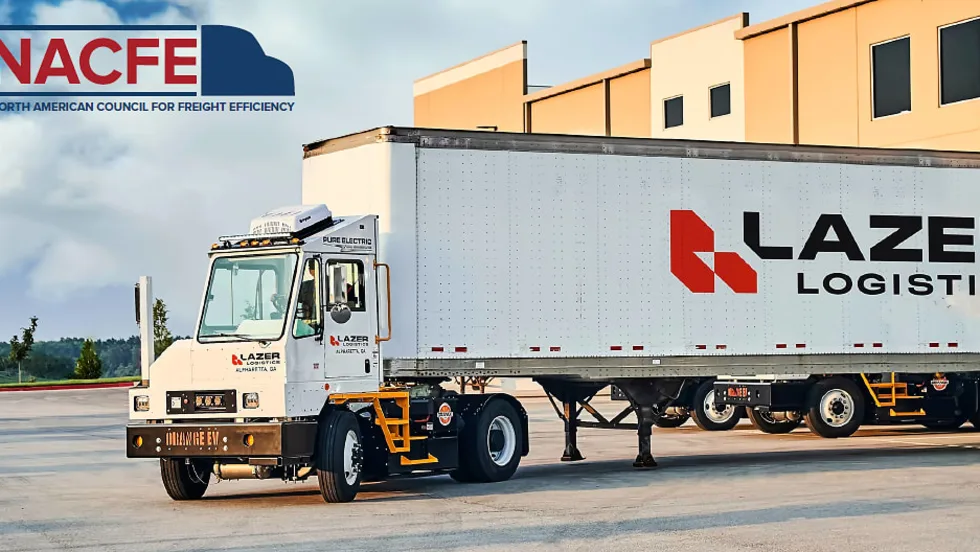
Operating-cost savings have overtaken sustainability goals as the leading reason surveyed fleets are adopting battery-electric terminal tractors, according to new NACFE research.
Read More →
Geotab Links Fleet Card to Vehicle Data
The new card combines fuel discounts with telematics-based purchase controls. Geotab’s analysis also points to potential savings from choosing lower-priced fuel stops.
Read More →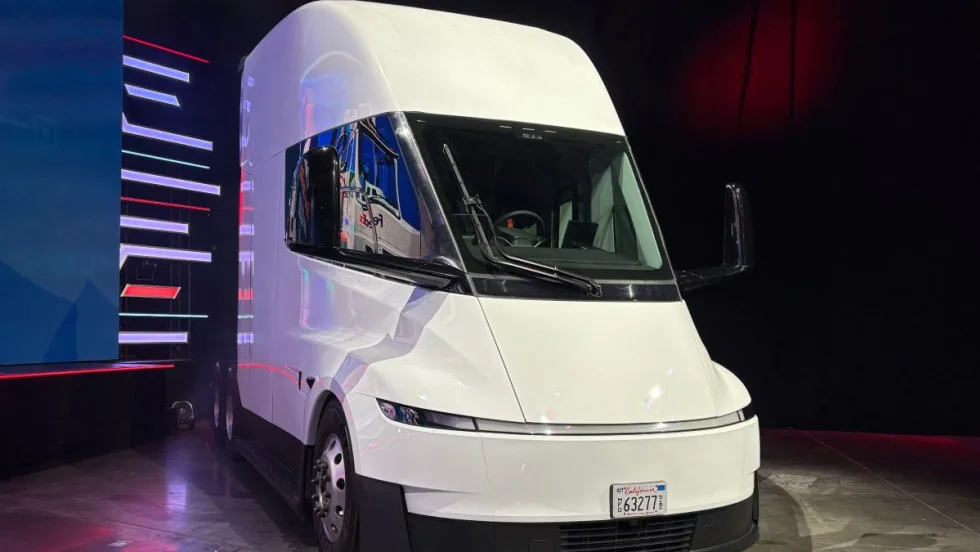
Fleet Economics Shape Electric Truck Outlook
ACT Research expects costs, charging infrastructure, and technology improvements to drive zero-emission commercial vehicle adoption as federal regulations and incentives retreat.
Read More →
Wex Adds Cardless Fuel Payments for Over-the-Road Customers
A new fuel card feature for Wex customers offers convenience and security.
Read More →
New California Law Could Shed Light on Electric Truck Prices
Why do battery-electric Class 8 trucks remain so expensive? A California bill signed by Gov. Gavin Newsom would give fleets and state agencies more visibility into what manufacturers charge.
Read More →
How Volvo Updated Its D13 for EPA 2027 [Watch]
Volvo’s updated D13 promises lower emissions without sacrificing performance or fuel economy. Take a closer look at what changed inside the engine in this HDT Spotlight video.
Read More →
Diesel Price Spike Shortens Payback for Natural Gas Trucks, Report Says
Energy Vision estimates fleets could recover the higher purchase price of an RNG-fueled Class 8 tractor in 1.3 to 2.8 years under current fuel-price scenarios.
Read More →
Calstart Becomes Catalyst Mobility, Reflecting Broader Focus
Calstart is now Catalyst Mobility, reflecting the nonprofit’s growing national role in clean transportation, including zero-emission trucks, infrastructure and incentive programs.
Read More →
Record Diesel Prices Squeeze Trucking Fleets
Average U.S. diesel prices have climbed to nearly $6 a gallon, surpassing the 2022 record as tight refinery capacity and Middle East disruptions keep fuel costs elevated.
Read More →
East Coast Port Launches $45M Electric Truck Push
The Port Authority of New York and New Jersey announced millions in incentives for zero-emission drayage trucks, yard tractors, and new charging hubs near the port.
Read More →