





NOx Isn’t Laughing Gas. Let’s Clear That Up.
EPA Targets DEF Sensor Failures Behind Truck Derates
New guidance allows engine makers to replace problematic DEF sensors with NOx-based systems, aiming to reduce unnecessary derates and downtime caused by failures in the sensors designed to monitor diesel exhaust fluid on trucks.
March 30, 2026
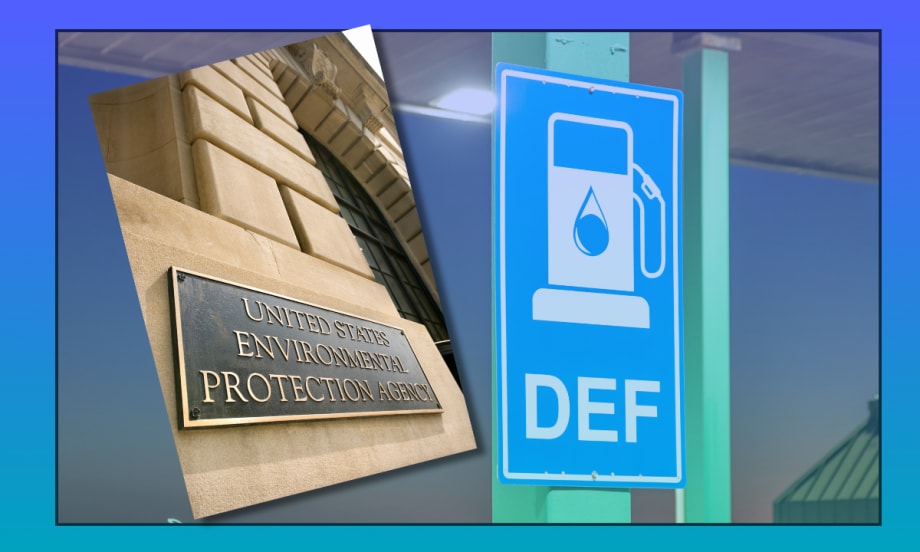
The EPA is targeting faulty DEF sensors with new guidance allowing a different type of sensor to monitor NOx emissions in diesel engines.
Credit:
HDT Graphic
5 min to read
- The EPA has issued new guidance to address DEF sensor failures that lead to truck derates.
- Engine manufacturers are now allowed to use NOx-based systems as replacements for faulty DEF sensors.
- The goal is to minimize unnecessary vehicle downtime and improve the reliability of diesel exhaust fluid monitoring.
*Summarized by AI
In the Trump administration’s latest steps to address the frustrations that truckers have with diesel exhaust sensors and so-called “de-rates” when DEF runs out or is diluted, the Environmental Protection Agency is allowing engine manufacturers to use a different type of sensor than the frustrating DEF sensors.
Rather than rewriting the emissions regulations through the rulemaking process, which can take months or even years, EPA is removing the DEF sensor requirement for diesel engines via a “guidance” document it announced March 27.
The EPA has been working since last August to address the sudden speed losses and shutdowns caused by DEF system failures, saying they compromise safety and productivity for truckers as well as for farmers.
How We Got Here
Since 2010, under Environmental Protection Agency diesel emissions regulations, most diesel engines have used selective catalytic reduction systems that inject DEF into exhaust streams to reduce emissions of nitrogen oxides (NOx). These gases contribute to smog, acid rain, and respiratory problems.
When DEF ran out or an unexpected mechanical failure occurred, the systems forced the vehicle to drastically reduce speed or become inoperable. These were known as inducements or derates. In many cases, vehicles were limited to as little as 5 mph within hours of a DEF-related fault, according to EPA.
In August 2025, the Trump administration announced new guidance:
- Heavy-duty trucks should now generate only a warning light for 650 miles or 10 hours after a fault is detected.
- After that, the engine will only mildly derate, allowing trucks to operate normally for up to 4,200 miles or two work weeks.
- Only after about four work weeks does the speed drop to 25 mph until repairs are made.
In addition, EPA announced changes so that starting with MY 2027, all new diesel on-road trucks must be engineered to avoid sudden and severe power loss after running out of DEF.
DEF Data Shows Sensor Failures
In February, EPA demanded data on DEF system failures from manufacturers. (See EPA Wants to Know: Are DEF De-Rates Really Needed for Diesel Emissions Compliance?) So far, the agency has received data from 11 of the 14 manufacturers, and it used those preliminary findings to issue the new guidance.
The preliminary review of the warranty data suggests that DEF sensor failures are a significant source of warranty claims and DEF-related inducements, according to the EPA announcement.
The agency’s new guidance says that under existing regulations, manufacturers can stop inaccurate DEF system failures by removing traditional emission sensors, known as Urea Quality Sensors, and switching to NOx sensors.
EPA anticipates the switch will greatly curb errors that traditional sensor technologies have been prone to and reduce the issues Americans face with inaccurate DEF failures.
According to EPA, since last August’s guidance, manufacturers have started new software available in some existing vehicles and will be extending the improvements to owners of older equipment.
EPA also said that approved NOx sensor-based software updates can be installed on existing engines without being treated as illegal tampering under the Clean Air Act.
NOx Sensors vs. DEF Sensors
In 2013, the EPA issued guidance for SCR-equipped on-highway diesel engines, saying that Urea Quality Sensors (UQS) could be installed in new on-highway vehicles by model year 2016 to meet the “adjustable parameter provisions” of the regulations. (DEF is a solution of urea and deionized water.)
That guidance also said nitrogen oxides (NOx) sensors had been used to meet these requirements in previous model years and that it might be possible to continue using NOx sensors to meet the adjustable-parameter regulations.
Since that time, the EPA explained in its new 2026 guidance, only one diesel engine manufacturer has continued to demonstrate compliance with the adjustable-parameter requirements using NOx sensors. All other manufacturers switched to UQS because of its ability to directly measure DEF quality and more quickly determine if DEF has been diluted.
The Truck and Engine Manufacturers Association has identified urea-quality sensors as having one of the highest failure rates among SCR components. And it suggests that using alternate detection methods, such as NOx sensors, could be used to improve SCR system robustness and reduce unnecessary inducements.
In most applications, EPA said, NOx sensors have been able to detect poor DEF quality for many, but not all, DEF dilution scenarios. But the EPA has continued to certify such systems if manufacturers demonstrate that the range of potential DEF dilution levels in which the product would be noncompliant are small enough to make it unlikely that operators will attempt to dilute DEF.
Moving Forward
EPA said it will continue reviewing data collected from manufacturers. Given the breadth of EPA’s data request, some of the largest manufacturers needed more time to compile and submit their data. EPA said it will give the public a complete assessment once all data is received.
In the near future, the EPA said it will issue an official regulatory proposal that will completely remove all DEF deratements for new vehicles and engines.
EPA said it “continues to pursue all legal avenues” to address the issue, which has been a complaint among not only truckers but also farmers.
“Failing DEF systems are not an East Coast or West Coast or heartland issue; it is a nationwide disaster," said EPA Administrator Lee Zeldin. “Americans are justified in being fed up with failing DEF system issues. EPA understands this is a massive issue and has been doing everything in our statutory power to address this.”
DEF Regulatory Changes Welcomed by Trucking
The American Trucking Associations issued a statement welcoming the guidance.
“As we have previously said, these systems have too often sidelined otherwise safe, compliant trucks due to faulty or unreliable DEF quality sensors, an issue that was compounded by widespread parts shortages in recent years,” said Vice President of Energy & Environmental Affairs Patrick Kelly.
“When a bad sensor can trigger a full inducement, the result is unnecessary downtime, unnecessary towing costs, strained supply chains, and higher costs across the board.
“EPA’s decision to provide manufacturers with flexibility to suspend these inducements — and eliminate problematic sensors altogether by monitoring a truck’s actual emissions — is a pragmatic solution that reflects how these systems perform in the real world.”
The Owner-Operator Independent Drivers Association noted in a statement that “small-business truckers have dealt with faulty diesel exhaust fluid systems for years, facing unexpected shutdowns and costly repairs that needlessly take trucks off the road. These are serious operational and safety concerns.
“We appreciate EPA Administrator Zeldin for listening to the concerns of America’s truckers and issuing commonsense guidance that keeps our supply chain moving.”
More Equipment

Kodiak Targets Dallas–Houston for Driverless Trucks
The company says its autonomous trucks are completing the I-45 run without a safety observer taking control. It plans to remove the observer by the end of 2026.
Read More →
Kodiak Hauls Produce in California Autonomous Truck Pilot
Kodiak AI and DTL Transport have begun hauling produce between Fresno and Los Angeles under California’s new rules for testing heavy-duty autonomous trucks. A safety driver remains behind the wheel.
Read More →
Used-Truck Remarketing Math Is Changing
Used-truck value is no longer just a concern at trade-in. Decisions made throughout a truck’s first life can influence what it’s worth years later.
Read More →
How Volvo Updated Its D13 for EPA 2027 [Watch]
Volvo’s updated D13 promises lower emissions without sacrificing performance or fuel economy. Take a closer look at what changed inside the engine in this HDT Spotlight video.
Read More →
Michelin Tire Improves Efficiency and Durability for Regional Fleets
The Michelin X Multi Energy D2 is a regional haul drive tire engineered to help fleets improve fuel efficiency, durability and traction in demanding stop-and-go operations.
Read More →
ZF Expands Commercial Vehicle Push in North America
ZF is expanding its North American commercial-vehicle presence with new transmission applications, electrification, trailer technology and autonomous-driving systems.
Read More →
Tesla Wants a Self-Driving Semi. Are Cameras Enough?
Could Tesla’s camera-only autonomous driving technology work on an 80,000-pound Semi? In this commentary, HDT's Deborah Lockridge takes a look at Tesla, Cybercab, and how autonomous trucks see the road.
Read More →Kodiak: Driverless Long-Haul Truck Launch on Track for 2026
Kodiak AI says its driverless long-haul safety case is 93% complete and it remains on track to begin commercial operations by year-end 2026.
Read More →
What DOT’s Automated Vehicle Strategy Means for Trucking
The U.S. Department of Transportation issued a new automated-vehicle strategy that outlines plans for driverless-truck regulations, cross-state freight corridors, and federal safety standards.
Read More →
East Coast Port Launches $45M Electric Truck Push
The Port Authority of New York and New Jersey announced millions in incentives for zero-emission drayage trucks, yard tractors, and new charging hubs near the port.
Read More →