




Vanair Introduces Solar, Battery Power Ecosystem for Class 8 Trucks
The company’s expanded EPEQ ecosystem includes flexible solar panels, lithium batteries, hydraulic power systems, and a portable fast charger for electric trucks.

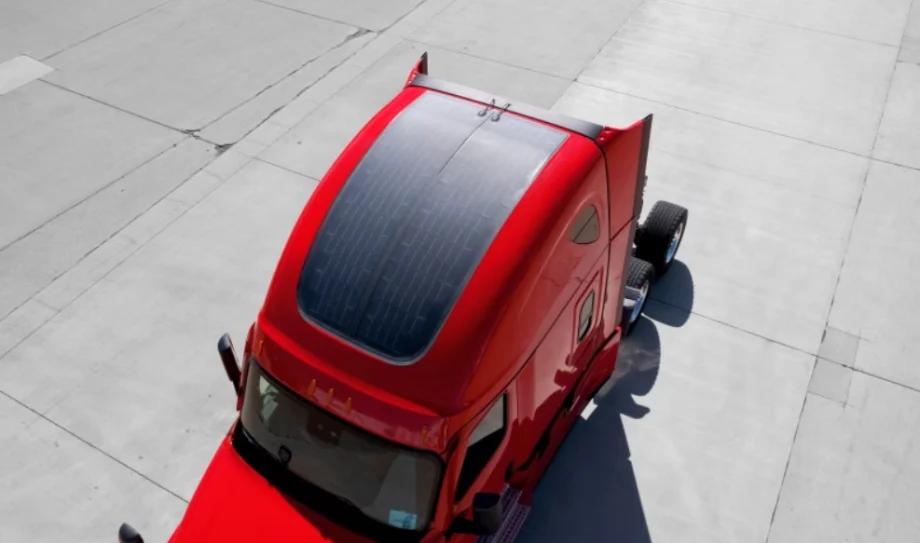
In testing with a fleet using about 500 watts of solar capacity, Vanair said trucks experienced less than 1% idle time on average over weekends and reduced battery replacements by roughly 70%.
Vanair
Vanair, a Lincoln Electric company, is expanding its EPEQ electrified power equipment platform into the Class 8 trucking market with solar panels, new 12-volt lithium batteries, and other power solutions to help reduce engine idling and extend battery life.
The company unveiled the products during a press conference at the Technology & Maintenance Council’s annual meeting in Nashville.
Solar Panels Designed for Trucks and Trailers
Vanair’s Solar Assist system is a flexible solar panel designed to maintain truck batteries and offset electrical loads when trucks are parked, reducing idling and battery replacements.
“We’re seeing up to a 200% increase in battery life by using these as battery tenders,” said Chip Jones, national manager of Vanair’s Electrified Products Group. “The goal is to keep that battery healthy, keep it charged and topped off so drivers aren’t dealing with dead batteries when it’s time to roll.”
The adhesive-mounted panels are about 1/8 inch thick and flexible enough to mount on curved surfaces such as aerodynamic fairings, cab roofs, or trailer tops -- without traditional mounting hardware.
The panels use a mesh-style conductive grid with more than 2,100 conductive pathways. They can continue to produce power even if part of the panel is damaged.
Unlike traditional glass solar panels that rely on direct sunlight for peak performance, Vanair's system can capture energy in low-light or partially shaded conditions, such as cloudy weather or in the snow.
In testing with a fleet using about 500 watts of solar capacity, Vanair said trucks experienced less than 1% idle time on average over weekends and reduced battery replacements by roughly 70%.
Battery failures are a persistent issue for fleets, particularly as trucks remain in service longer. Replacement batteries can cost $700 to $900 for lead-acid batteries and $800 to $2,000 for AGM batteries, not including labor or downtime.
The solar system can also be installed on trailers to help power refrigeration units, liftgates, and telematics systems, the company said.
Expanding the EPEQ Ecosystem for Class 8
Vanair has offered its EPEQ electrified power equipment platform in the vocational truck market since 2020, providing battery-powered air compressors, welders, hydraulic systems, and AC power for work trucks.
Vanair is now targeting Class 8 trucks with new 12-volt lithium iron phosphate (LiFePO4) batteries and inverters.
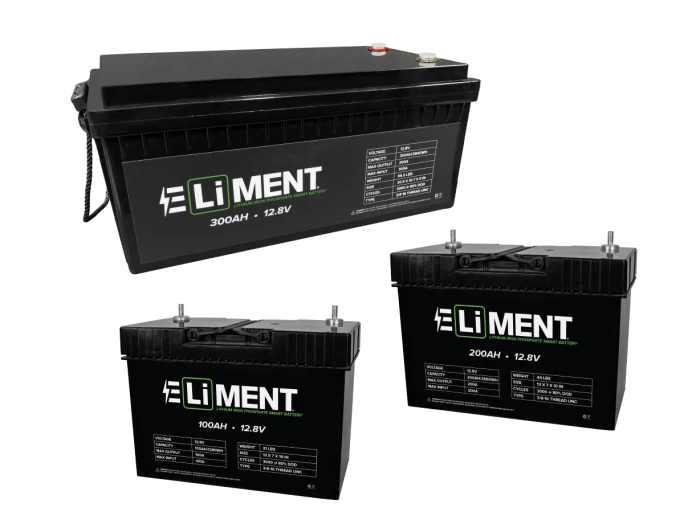
New 12-volt batteries can be paired with pure sine wave inverters
Vanair
The new ELiMent 12-volt batteries, available in 100-Ah and 200-Ah configurations, can be paired with pure sine wave inverters ranging from 1,000 to 3,000 watts to power onboard electronics, charge tools or support auxiliary loads in day-cab trucks, regional haul vehicles and maintenance trucks.
For higher-demand applications such as sleeper cabs, the system relies on Vanair’s 48-volt lithium battery modules, which can be combined in 5-kW increments up to 30 kW of power.
In those configurations, the system can run hotel loads such as HVAC systems, refrigerators, microwaves, and entertainment equipment during a driver’s rest period without idling the truck engine.
Battery-Powered Hydraulic System
Vanair also showcased its EPEQ EPTO system, a battery-driven hydraulic power solution designed for applications such as bulk trailers, pumps, compressors, and liftgates.
The system can deliver up to 9 gallons per minute of hydraulic flow while operating independently from the truck’s drivetrain. The batteries recharge while the truck is in motion, allowing drivers to power hydraulic equipment at delivery sites without running the engine.
Portable Charging for Electric Trucks
A portable 50-kW DC fast charger, offered under the Lincoln Electric power solutions brand, can charge heavy-duty electric trucks without the need for permanent charging infrastructure. The unit plugs into a 480-volt three-phase outlet.

Vanair's parent company also offers a new portable fast-DC electric charger.
Vanair
Jones said the goal is to give fleets a modular system that addresses multiple power needs with one platform.
Vanair also said a truck-mounted version would work well for mobile or rescue charging. In that configuration, the charger is mounted on a service truck along with a PTO-driven generator, allowing fleets or utilities to send a truck to recharge an electric vehicle that has run out of power in the field or needs enough charge to reach a charging station.
“Most electric APU solutions handle hotel loads,” he said. “The EPEQ ecosystem can do that, but it also provides solar charging, hydraulic power, and other auxiliary functions in a single integrated architecture.”
More Equipment

How Volvo Updated Its D13 for EPA 2027 [Watch]
Volvo’s updated D13 promises lower emissions without sacrificing performance or fuel economy. Take a closer look at what changed inside the engine in this HDT Spotlight video.
Read More →
Michelin Tire Improves Efficiency and Durability for Regional Fleets
The Michelin X Multi Energy D2 is a regional haul drive tire engineered to help fleets improve fuel efficiency, durability and traction in demanding stop-and-go operations.
Read More →
ZF Expands Commercial Vehicle Push in North America
ZF is expanding its North American commercial-vehicle presence with new transmission applications, electrification, trailer technology and autonomous-driving systems.
Read More →
Tesla Wants a Self-Driving Semi. Are Cameras Enough?
Could Tesla’s camera-only autonomous driving technology work on an 80,000-pound Semi? In this commentary, HDT's Deborah Lockridge takes a look at Tesla, Cybercab, and how autonomous trucks see the road.
Read More →
Kodiak: Driverless Long-Haul Truck Launch on Track for 2026
Kodiak AI says its driverless long-haul safety case is 93% complete and it remains on track to begin commercial operations by year-end 2026.
Read More →
What DOT’s Automated Vehicle Strategy Means for Trucking
The U.S. Department of Transportation issued a new automated-vehicle strategy that outlines plans for driverless-truck regulations, cross-state freight corridors, and federal safety standards.
Read More →
East Coast Port Launches $45M Electric Truck Push
The Port Authority of New York and New Jersey announced millions in incentives for zero-emission drayage trucks, yard tractors, and new charging hubs near the port.
Read More →
PlusAI Going Public to Fund Autonomous Truck Launch
A SPAC deal could provide PlusAI with up to $300 million as it works toward a 2027 commercial launch of factory-built autonomous trucks.
Read More →
NHTSA Moves to Rewrite Truck Fuel-Economy Rules
The National Highway Traffic Safety Administration says it lacks authority to regulate medium- and heavy-duty truck engines separately from complete vehicles, but the existing standards have not yet been eliminated.
Read More →
Detroit Opens Orders for EPA 2027 Engines
Detroit isn’t starting from scratch to meet EPA 2027 diesel emissions standards. Its Gen 6 DD13 and DD15 engines keep much of today’s platform while updating the fuel and aftertreatment systems.
Read More →