





Q&A: AEye’s Andrew Nelson on Lidar’s Role in Autonomous Trucking
How TuSimple’s Autonomous Driving Tech Works
Amazon Web Service puts the spotlight on TuSimple's autonomous truck technology in its latest episode of "Now Go Build."
April 24, 2023
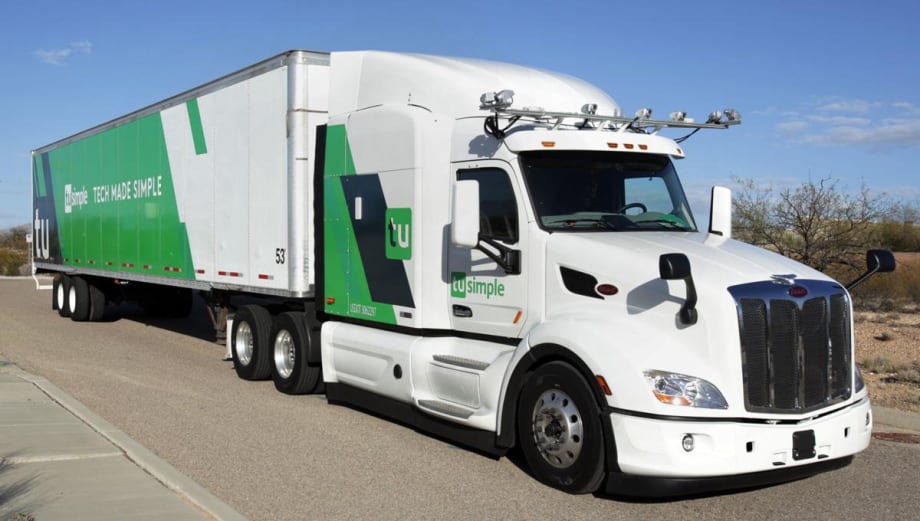
TuSimple removes certain components of a truck to integrate its cameras and sensors to detect vehicles and pedestrians.
Photo: TuSimple
4 min to read
Amazon Web Services’ latest episode of ‘“Now Go Build” provided a deep dive into autonomous trucking technology.
Amazon's Werner Vogels, chief technology officer and vice president, traveled to TuSimple’s facility in Arizona to learn more about the challenges with supply chain issues and whether autonomous trucking can help with these ongoing concerns. "Now Go Build" is a video series hosted by Vogels to highlight the startups and the technology "solving our planet’s most urgent problems."
In this episode, Vogels talked with TuSimple’s Ersin Yumer, engineering and operations executive; Graham Taylor, senior director of hardware; and Robert Rossi, VP autonomous operations group and maps, to better understand autonomous trucking and how it will change the industry. (And, of course, the role of Amazon's cloud services.)
A Look at Autonomous Trucking Tech
Yumer and Taylor explained how TuSimple’s autonomous truck technology works, starting with how the base trucks are outfitted with the company’s technology and sensors.
TuSimple removes the vehicle’s sleeper, bed, fridges, and more to install its equipment. Approximately 2,000 feet of cabling goes into the truck when accounting for the power, cameras, and sensors.
The video explores the placement of those cameras and sensors, including short-range lidar sensors on each side of the truck. Where hood mirrors would be, TuSimple added short-range lidar. Cameras and long-range lidar are placed on a rack on the top of the cab. This creates better visibility in front of the truck and helps detect pedestrians and other vehicles.
The video explained TuConnect and other technology and the role of Amazon's S3 cloud storage in TuSimple’s technology.
Rossi explained how the hardware moves sensor data to the software in the truck. The sensor data then goes into the autonomy software, where the raw sensor data is turned into metadata about what is around the vehicle, which then goes into the prediction engine. Based on the predictions, TuSimple's system is able to plan a trajectory around the obstacles. Taking the trajectory and profile information, the system creates actuator information and sends it back to the truck so the vehicle can steer and accelerate.
Key to this is the HD map, a compressed representation of the environment that the module can use. To get this, TuSimple takes the data and moves it into Amazon's S3, where it has a process that produces an encoded map. The map stays up-to-date in real time by receiving snippets of data from a truck run. The map is updated and sent to other trucks on the route, so following trucks, for instance, will know there's an accident or other obstacle ahead.
TuConnect is the dashboard where the company stores the state and health information of the trucks in the network.
Changing Logistics with Autonomy
Vogel also talked to experts on how autonomous driving technology will improve the supply chain, work-life balance for truckers, and efficiency of delivery.
"We're on the verge of a massive transformation of global logistics and coordination," Rossi said. "The perturbation caused by COVID-19 brought about the weaknesses in the system, and a global supply chain system needs reliability and resilience. Automation in many aspects of it is going to restore our logistics and provide a foundation of how products move."
Converting the middle mile to autonomy makes drivers' lives easier, potentially addressing the driver shortage and driver turnover.
"As they put together that network and in comes the autonomous driver, that's when you're going to get optimized networks, and it's going to increase capacity," said Lee White, president/founder of LM White Consulting. "We're going to need more drivers, technicians, and CDL-qualified people working in the supply chain than ever before."
TuSimple's History: A Timeline
2015: TuSimple was founded by Xiaodi Hou and Mo Chen.
2017: The company received a strategic investment from Nvidia and began autonomous freight operations with UPS and the U.S. Postal Service.
2020: The Autonomous Freight Network was unveiled, as well as partnerships with Navistar and with Traton (which later would buy Navistar).
2021: TuSimple completed its first autonomous truck run on open public roads without a human in the vehicle. The more than 80-mile run required the company to upfit an autonomous Class 8 truck to run from a large rail yard in Tucson, Arizona, to a distribution center in the Phoenix metro area.
2021: The company followed up with the announcement that Union Pacific Railroad was the first customer to move freight on TuSimple's fully automated trucking route between the Tucson and Phoenix metro areas.
2022: After questions arose about TuSimple's relationship to a Chinese startup, the company made leadership and management changes, cutting staff to focus on research, development, and “operationalizing” its technology. The company and Navistar announced an end to their nearly two-and-a-half-year partnership, which had been intended to co-develop autonomous semi-trucks for production by 2024.
2023: TuSimple introduced its proprietary, high-performance central compute unit. The TuSimple Domain Controller will serve as an autonomous truck's central computational unit, incorporating sensor inputs, high-performance computing, integrated vehicle control unit, and autonomous software.
More Equipment
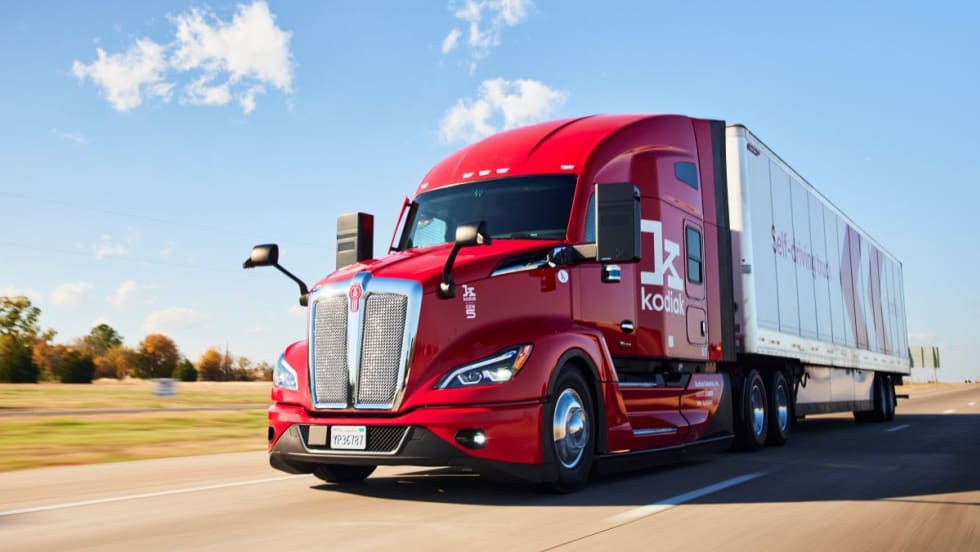
Autonomous Truck Testing Moves Ahead in California as Teamsters Challenge Rules
California has begun permitting heavy-duty autonomous truck testing, with Aurora and Kodiak among the first to receive approval, as the Teamsters sue the DMV over the new regulations.
Read More →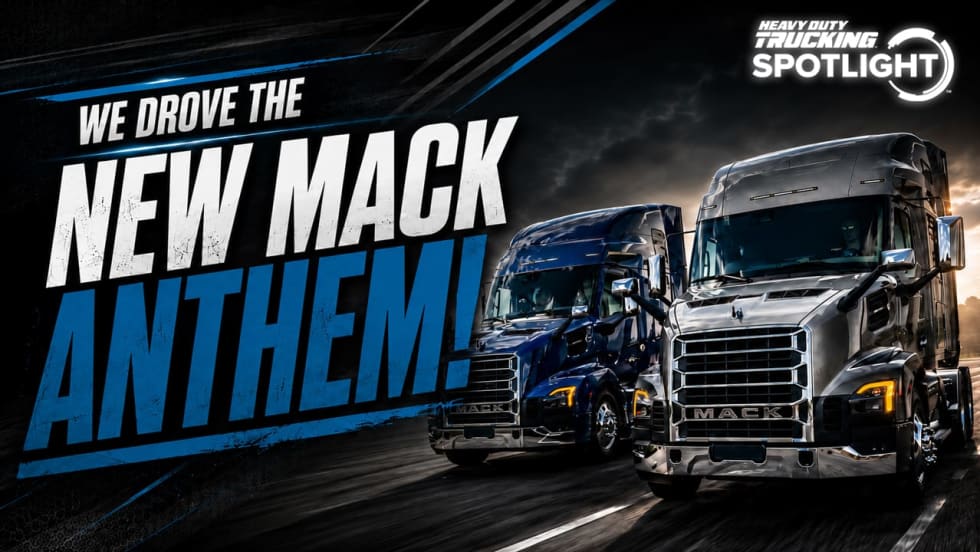
Behind the Wheel of the New Mack Anthem [Video]
HDT takes the new Mack Anthem around Mack’s Pennsylvania test track to see how its driver-focused design, technology, visibility and handling perform from behind the wheel.
Read More →
DTNA Plans New U.S. Truck Plant as Manufacturing Footprint Shifts
Daimler Truck North America is evaluating sites for a new assembly plant expected to open in 2029 while winding down operations at its longtime Portland manufacturing facility.
Read More →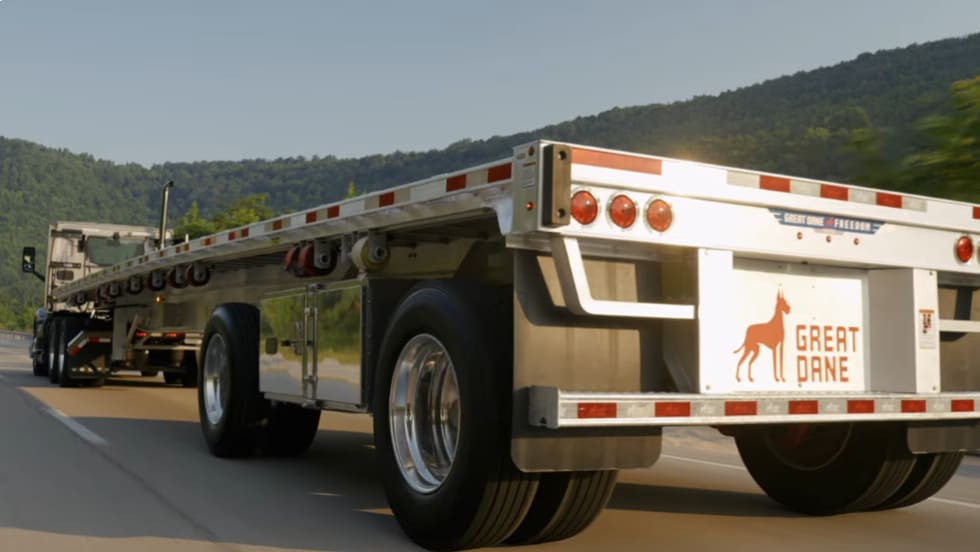
Great Dane Flatbed Trailer Offers Light Weight and Strength
Freedom Ultra is designed for a wide range of open-deck applications, including building materials, lumber, machinery, steel products, industrial freight, and coil hauling.
Read More →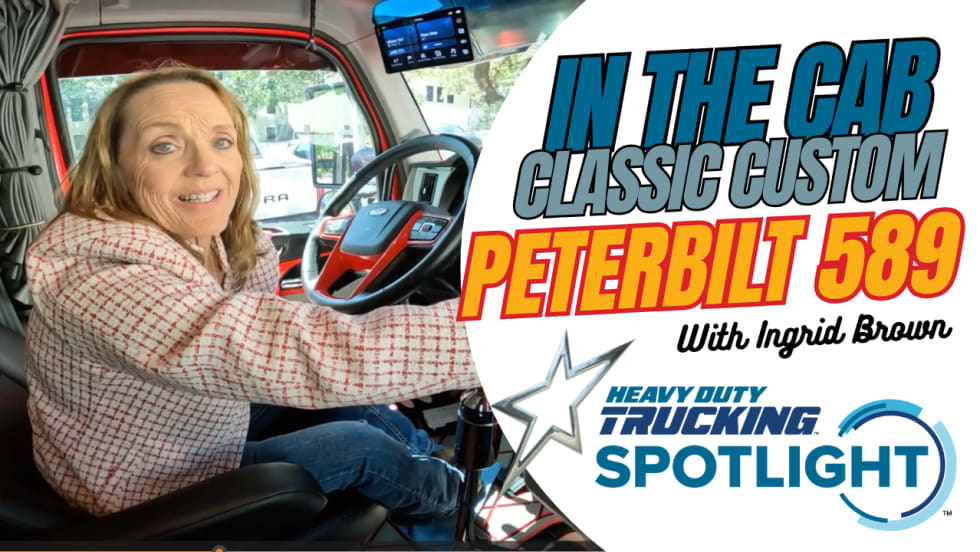
What It's Like Inside this Custom 2025 Peterbilt 589?
Take a driver's-eye tour of this customized 2025 Peterbilt 589 in this video, as longtime driver Ingrid Brown explains its features, compares it to previous models, and shares plenty of personality along the way.
Read More →
Drivers Put Western Star Trucks to the Test at Star Nation Experience
Watch to get an inside look at the Western Star trucks, technology, and community behind the Star Nation Experience 2026!
Read More →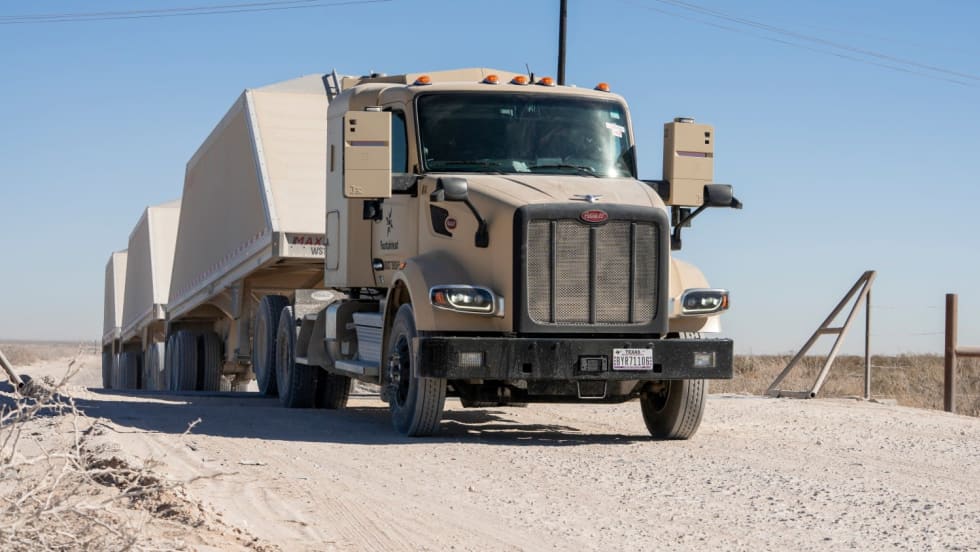
Atlas Expands Kodiak Driverless Truck Fleet in Permian Basin
Atlas Energy Solutions is expanding autonomous frac sand hauling in the Permian Basin with a second load-out location and plans for 100 driverless trucks by mid-2027.
Read More →
Putting Mack’s Command Steer to the Test
A test drive of Mack’s Command Steer active steering system evaluates how it can make truck driving easier and less tiring.
Read More →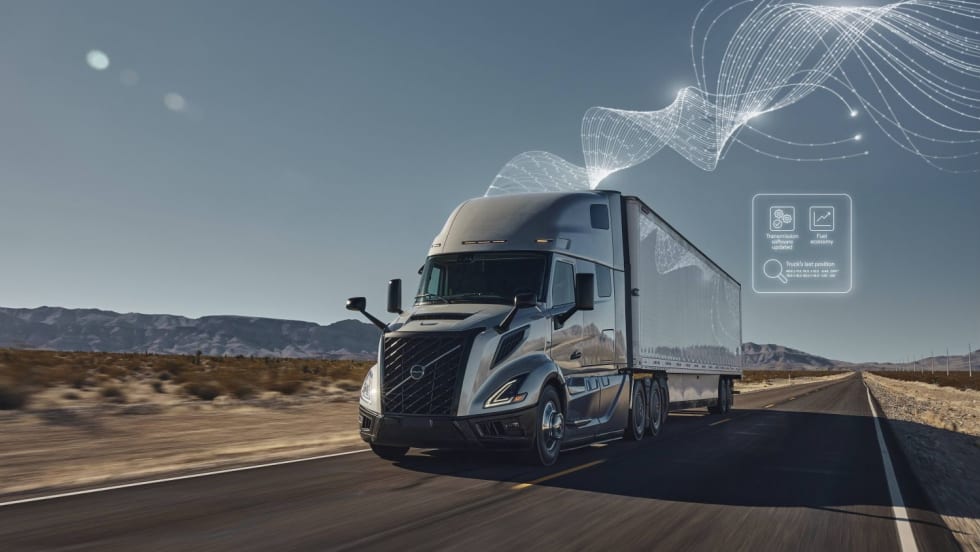
Mack, Volvo Expand DEF Derate Software Updates
The updated software gives Mack and Volvo truck owners more time to address DEF-related issues before the engine derates or the vehicle goes into reduced-speed inducement, following new EPA guidance.
Read More →
Rush, MCT Team Up to Grow Refrigeration Service Network
The joint venture will operate MCT's network of Carrier Transicold dealerships and mobile service locations, with the companies promising greater service capacity and uptime for refrigerated fleets.
Read More →