Webinar to Explore Ways to Rethink Truck Driver Pay
A Dec. 7 webinar will feature a fleet-executive panel discussion on how innovative compensation methods can help trucking companies recruit and retain drivers.
The driver shortage topped ATRI's list of top trucking concerns this year. How much does driver pay matter?
Photo: Jim Park
3 min to read
An upcoming HDT webinar will explore how innovative compensation methods can help trucking fleets recruit and retain drivers, including hourly pay, minimum salaries, certification-based pay tiers and more.
This will the first in a three-part webinar series on driver retention from the editors of Heavy Duty Trucking, sponsored by Drivewyze and Tenstreet. It will be held at 2 p.m. EST on Dec. 7, 2021.
The American Trucking Associations recently predicted that 2021 will close with a record-high driver shortage of 80,000. The COVID-19 pandemic’s disruptive impact on the labor market has led truck drivers to think hard about how much they should be paid and how well they should be treated to stay in trucking.
Pay issues are one of the main reasons drivers say they leave a company. But per-mile rates may not really be the culprit. How can you rethink your pay and bonus structures to make payday more predictable, to reward drivers for work beyond holding a steering wheel, and to keep them, not just recruit them?
The webinar will feature a Q&A portion allowing registrants to ask questions of the panelists. Three fleet panelists will share their challenges and success stories on the panel, moderated by HDT Editor in Chief Deborah Lockridge:
Steve Rush, President, Carbon Express
Steve Rush, a former HDT Truck Fleet Innovator, believes that “paying drivers by the hour and billing customers by the hour is the way out of this mess we are all in.” He also switched his tanker fleet to all day cabs, rethinking routes to get drivers home more, and putting them up in hotels when they’re on the road. Carbon Express, headquartered in Wharton, New Jersey, transports liquid bulk products across the United States and into Canada. The company recently was presented the American Trucking Associations’ Mike Russell Trucking Image Awards for its work to improve drivers’ quality of life, outreach to the community through social media, and work with America’s Road Team.
Jeremy Stickling, Chief Administrative Officer, Nussbaum Transportation
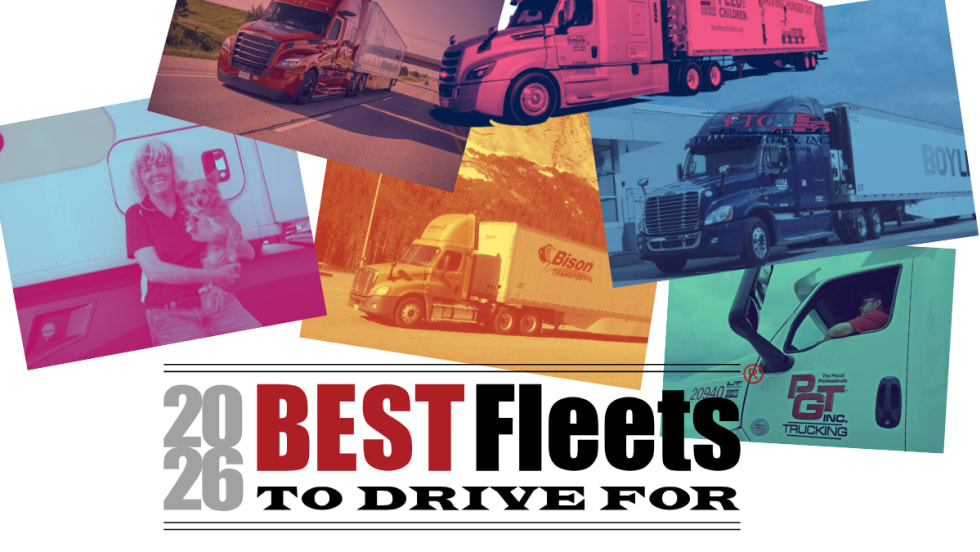
Jeremy Stickling, a former HDT Safety & Compliance Award honoree, oversees human resources, safety, and accounting at Hudson, Illinois-based Nussbaum Transportation Services, where he has overseen the restructuring of the company’s compensation plans. For instance, Nussbaum has different pay tiers based on different criteria, and an education/certification program that allows drivers to progress in their career and move up to higher pay tiers. With industry-leading driver retention rates, Nussbaum was the overall winner in the large fleet category for the second year in a row in the 2021 Best Fleets to Drive For program from the Truckload Carriers Association and CarriersEdge.
Luke Williams, President, Central Oregon Truck Company
One of the Top 20 Best Fleets to Drive for in 2021, the Redmond, Oregon, flatbed carrier (part of the Daseke family of companies) was one of the first trucking companies to implement a minimum weekly pay for drivers, and in 2020 raised the stakes with weekly truck driver salary pay. The fleet also offers dwell pay after an hour, loyalty pay, health and retirement benefits, and more. Williams, whose father founded the company, specializes in overseeing the daily fleet operations to meet both customer and driver expectations, and can share what the company has learned about salary pay for truck drivers.
Parts 2 and 3 of HDT's webinar series on driver retention will explore how fleets treat drivers, as well as how the use of technology affects driver recruiting and retention.
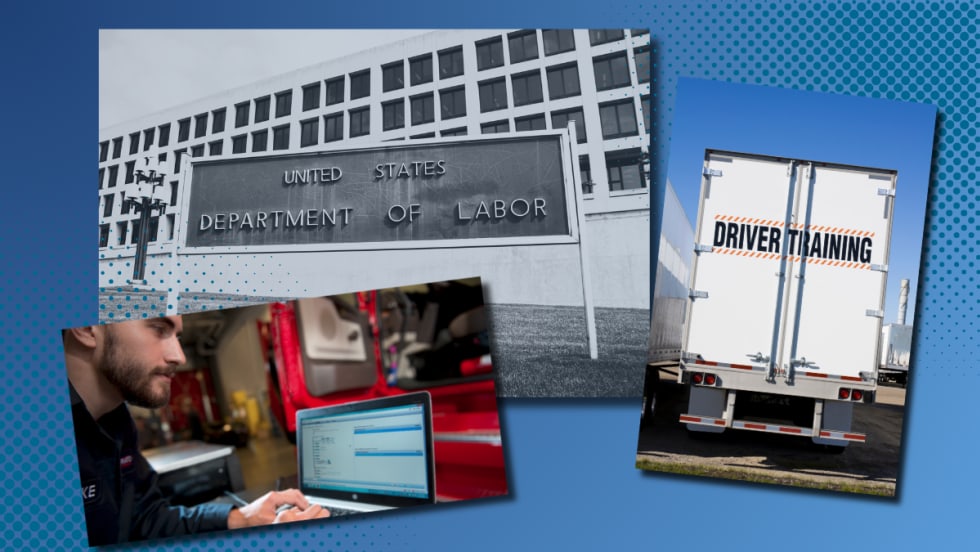
The Department of Labor plans to expand Pell Grant eligibility to some shorter workforce training programs, a move the American Trucking Associations said will help strengthen commercial driver training schools and diesel technician training programs.
For an industry that has watched this issue go back and forth for years, the independent contractor proposal marks the latest swing in the regulatory pendulum.
America’s Service Line adopted Link’s SmartValve and ROI Cabmate systems to address whole-body vibration, repetitive strain, and driver turnover. The trucking fleet is already seeing measurable results.
The Federal Motor Carrier Safety Administration issued more than 550 notices of proposed removal to commercial driver training providers following a five-day nationwide enforcement sweep. Investigators cited unqualified instructors, improper training vehicles, and failure to meet federal and state requirements.
Illinois is the latest state targeted and threatened with the loss of highway funding by the U.S. Department of Transportation in its review of states' non-domiciled CDL issuance procedures. The state is pushing back.
After a legal pause last fall, FMCSA has finalized its rule limiting non-domiciled commercial driver's licenses. The agency says the change closes a safety gap, and its revised economic analysis suggests workforce effects will be more gradual than first thought.