





4Gen Logistics Accelerates Toward a Fully Zero-Emission Drayage Fleet
Zero-Emission Truck Corridor Planned for West Coast
California, Oregon, Washington, British Columbia and Baja California are coordinating plans for truck charging and hydrogen fueling from Canada to Mexico.
August 26, 2026
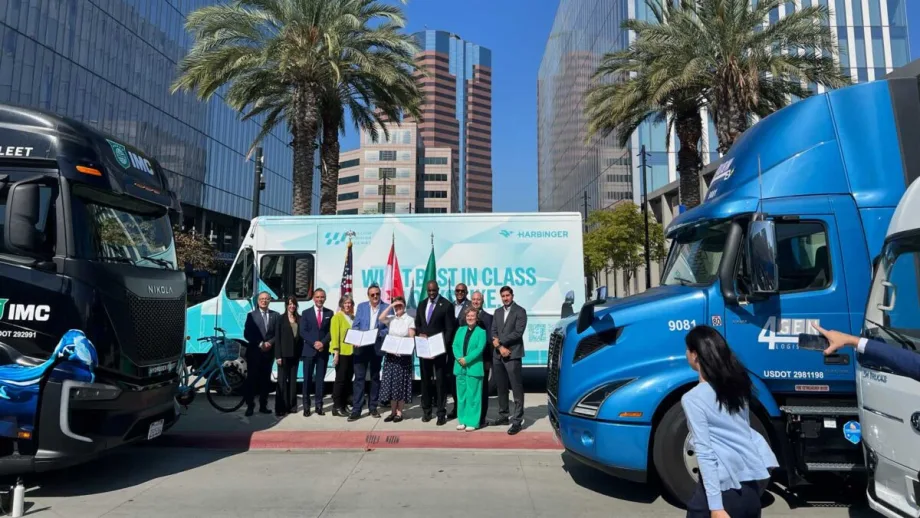
Officials kick off the West Coast ZEV corridor at the Port of Long Beach.
Credit:
Calstart
3 min to read
California, British Columbia, Oregon, Washington, and Baja California are working together on a network of charging and hydrogen fueling stations intended to support zero-emission trucks traveling the West Coast.
Government leaders announced the British Columbia to Baja California ZEV Corridor, or BC2BC, Aug. 26 at the Port of Long Beach.
The initiative would eventually allow battery-electric and hydrogen fuel-cell trucks to travel from Vancouver, British Columbia, to Baja California, Mexico, along a West Coast freight corridor centered on I-5 in the U.S.
The initial buildout is expected to include 20 electric truck charging stations and three hydrogen fueling stations. Nearly 10,000 trucks travel the corridor on an average day.
The five governments also committed to coordinating technical standards, infrastructure planning, and other requirements so trucks can use charging and fueling infrastructure across jurisdictions.
“With global fuel prices driving up the cost of moving goods, partnerships like this are more critical than ever to strengthen our economies and advance Governor Newsom’s zero-emission transportation goals,” said California Transportation Secretary Toks Omishakin.
Giving Fleets More Confidence in Charging
For fleets, one of the biggest challenges in adopting zero-emission trucks for long-haul or regional operations is knowing that compatible charging or fueling will be available along the route.
“Freight corridors are where electrification can deliver real operational value at scale,” said Aravind Kailas, advanced technology policy director at Volvo Group North America.
“By aligning charging infrastructure, technical standards, and planning across jurisdictions, the BC2BC initiative can give fleets greater confidence to plan routes, maintain uptime, and make long-term investment decisions,” he said.
Volvo Group North America, Southern California Edison, Tesla, EV Realty, and King Fio Trucking participated in the launch event.
Zero-emission trucks from IMC Logistics and 4Gen Logistics were on display, along with trucks from Volvo, Tesla and ZM Trucks.
Coordinating Zero-Emission Infrastructure
The five participating governments issued a statement of principles outlining plans to coordinate infrastructure and technical requirements across the corridor.
“The Port of the Future will need new, innovative technologies, energy sources, and sustainable practices to realize our goals of doubling our annual cargo volume to 20 million containers by 2050 and becoming the first zero-emission port in North America,” said Noel Hacegaba, CEO of the Port of Long Beach.
He said the agreement could help provide the infrastructure support trucking companies need to move toward zero-emission trucks on major freight routes between Canada and Mexico.
The BC2BC initiative is supported by the California State Transportation Agency, CALSTART/Drive to Zero and the Institute of Transportation Studies at the University of California, Davis. The organizations are helping coordinate planning and investment.
Next Steps in the West Coast ZEV Corridor Project
Following the August 26 launch, representatives from the five jurisdictions will hold technical meetings to coordinate standards, guidance and infrastructure planning.
The project expands on California's existing efforts to develop zero-emission truck charging and fueling infrastructure along West Coast freight routes by extending that coordination across the Canadian and Mexican borders.
The work also is expected to feed into the next edition of Caltrans' California-Baja California Border Master Plan, which will include plans for zero-emission vehicles and supporting infrastructure.
BC2BC is part of the broader Global Green Road Corridors initiative, which is working to develop lower-emission freight corridors connecting ports, logistics hubs and cities. Similar corridor projects are under development in Africa, Europe, the Americas and Asia.
More Fuel Smarts

Electric Yard Tractors Move Beyond Pilots
Operating-cost savings have overtaken sustainability goals as the leading reason surveyed fleets are adopting battery-electric terminal tractors, according to new NACFE research.
Read More →
Geotab Links Fleet Card to Vehicle Data
The new card combines fuel discounts with telematics-based purchase controls. Geotab’s analysis also points to potential savings from choosing lower-priced fuel stops.
Read More →
Fleet Economics Shape Electric Truck Outlook
ACT Research expects costs, charging infrastructure, and technology improvements to drive zero-emission commercial vehicle adoption as federal regulations and incentives retreat.
Read More →
Wex Adds Cardless Fuel Payments for Over-the-Road Customers
A new fuel card feature for Wex customers offers convenience and security.
Read More →
New California Law Could Shed Light on Electric Truck Prices
Why do battery-electric Class 8 trucks remain so expensive? A California bill signed by Gov. Gavin Newsom would give fleets and state agencies more visibility into what manufacturers charge.
Read More →
How Volvo Updated Its D13 for EPA 2027 [Watch]
Volvo’s updated D13 promises lower emissions without sacrificing performance or fuel economy. Take a closer look at what changed inside the engine in this HDT Spotlight video.
Read More →
Diesel Price Spike Shortens Payback for Natural Gas Trucks, Report Says
Energy Vision estimates fleets could recover the higher purchase price of an RNG-fueled Class 8 tractor in 1.3 to 2.8 years under current fuel-price scenarios.
Read More →
Calstart Becomes Catalyst Mobility, Reflecting Broader Focus
Calstart is now Catalyst Mobility, reflecting the nonprofit’s growing national role in clean transportation, including zero-emission trucks, infrastructure and incentive programs.
Read More →
Record Diesel Prices Squeeze Trucking Fleets
Average U.S. diesel prices have climbed to nearly $6 a gallon, surpassing the 2022 record as tight refinery capacity and Middle East disruptions keep fuel costs elevated.
Read More →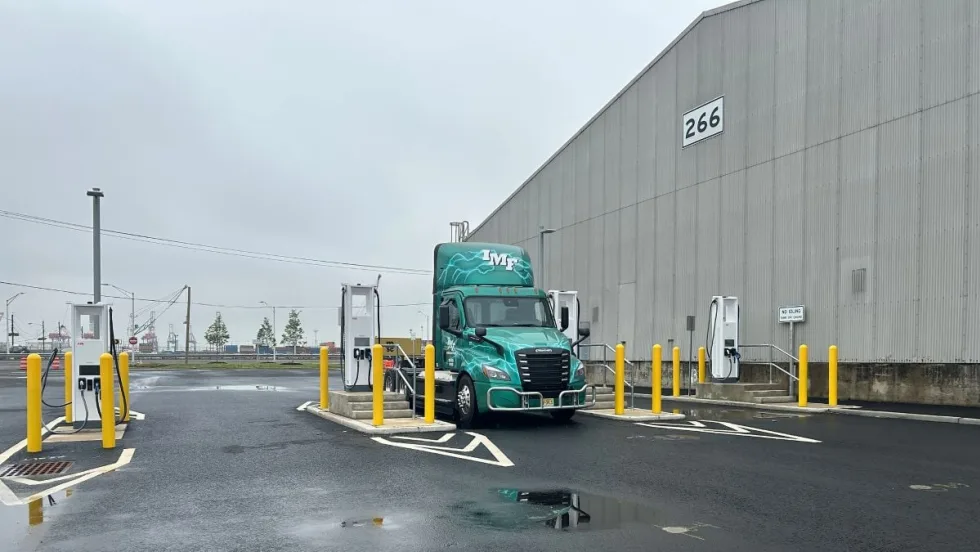
East Coast Port Launches $45M Electric Truck Push
The Port Authority of New York and New Jersey announced millions in incentives for zero-emission drayage trucks, yard tractors, and new charging hubs near the port.
Read More →