




New Clean Energy RNG Demo Truck Program Features Cummins X15N in Latest Cascadia
Clean Energy Fuels is launching a second heavy-duty natural-gas truck demo program featuring the Cummins X15N, this time in the Gen 5 Freightliner Cascadia.

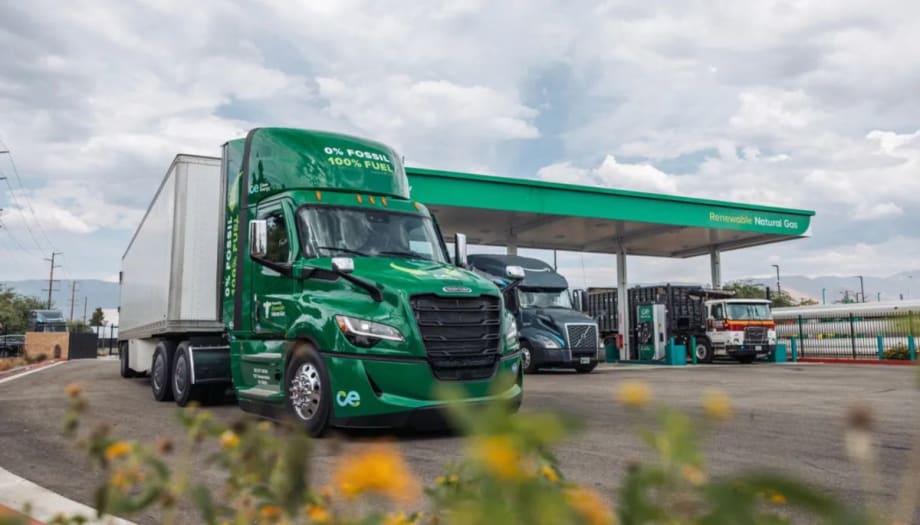
Clean Energy's second demo truck program will allow trucking fleets to try out the Cummins X15N natural gas engine in their own operations.
Photo: Clean Energy Fuels
Clean Energy Fuels is launching a second heavy-duty natural-gas truck demo program featuring the Cummins X15N engine.
Clean Energy’s demo truck program will give heavy-duty trucking fleets the opportunity to experience the capabilities of the Freightliner Cascadia Gen 5 equipped with the X15N. Participating carriers will be able to fuel at Clean Energy’s network of renewable natural gas stations nationwide, integrating low-carbon fueling into their own fleet operations.
The Cummins X15N engine is designed to run on RNG, a biogenic fuel derived from organic waste such as dairy manure. Fleets fueling with RNG can reduce emissions by more than 300%, according to Clean Energy, achieving negative carbon-intensity results while spending less per gallon of fuel.
The company said major motor carriers such as Walmart, Amazon, UPS, FedEx, Werner, Knight Swift, Food Express, Cemex and Mullen Group having placed orders for the new engine.
The demo truck will travel through key freight corridors in California, Texas, Arizona, Illinois, Ohio, Michigan, Pennsylvania, Florida, and other states, allowing large and mid-sized fleets to try and test the engine’s capabilities in real-world conditions.
The X15N Freightliner demo truck program is expected to run through 2028 or longer, as demand and interest are expected to grow.
Why So Much Interest in Cummins’ X15N natural gas engine?
Although natural-gas engines for trucks have been available for years, previous models, including Cummins’ previous 12-liter ISX12N, just didn’t have the power needed for many heavy-duty trucking operations requiring higher torque.
Clean Energy’s first X15N demo truck program, featuring a Peterbilt Model 579 day cab tractor, was launched last year.
The first demo truck has been praised by fleets who have operated it for the engine’s smooth handling through different terrains, impressive torque, per-gallon savings running on RNG, and fuel efficiency, according to a Clean Energy news release.
The new truck will be showcased at the American Trucking Associations’ Management Conference & Exhibition in San Diego from October 25–28. Attendees will have an exclusive preview before the program launches with its debut fleet partner, Airgas, a distributor of industrial, medical and specialty gases.
Clean Energy: X15N and RNG a ‘Clear Winner’
“Through one of the most tumultuous times in the history of the freight industry with evolving regulatory changes, impacts of tariffs, and overall economic uncertainty, the X15N/RNG solution has come out a clear winner for both carriers and shippers,” said Chad Lindholm, senior vice president at Clean Energy, in a release.
“The Cummins X15N truly is a game-changer, providing equivalent power and torque as its diesel equivalent, yet allowing fleets to claim significant carbon and NOx emission reductions with a fuel that is priced at a big discount to diesel," he continued.
“The reason we have a waiting list to test our demo trucks is because despite regulatory easing, operators of fleets and their customers continue to want to have the cleanest trucks. Viable electric and fuel cell options are years and years from becoming an affordable reality. RNG is the only solution that is here today, affordable, and clean.”
More Fuel Smarts

How Volvo Updated Its D13 for EPA 2027 [Watch]
Volvo’s updated D13 promises lower emissions without sacrificing performance or fuel economy. Take a closer look at what changed inside the engine in this HDT Spotlight video.
Read More →
Diesel Price Spike Shortens Payback for Natural Gas Trucks, Report Says
Energy Vision estimates fleets could recover the higher purchase price of an RNG-fueled Class 8 tractor in 1.3 to 2.8 years under current fuel-price scenarios.
Read More →
Calstart Becomes Catalyst Mobility, Reflecting Broader Focus
Calstart is now Catalyst Mobility, reflecting the nonprofit’s growing national role in clean transportation, including zero-emission trucks, infrastructure and incentive programs.
Read More →

Record Diesel Prices Squeeze Trucking Fleets
Average U.S. diesel prices have climbed to nearly $6 a gallon, surpassing the 2022 record as tight refinery capacity and Middle East disruptions keep fuel costs elevated.
Read More →
How Fuel Delivery Shapes Engine Performance
Fuel delivery depends on more than what happens at the injector. For fleet, maintenance and technical professionals, looking at the full path from pump to injector can provide useful context for understanding engine performance.
Read More →
East Coast Port Launches $45M Electric Truck Push
The Port Authority of New York and New Jersey announced millions in incentives for zero-emission drayage trucks, yard tractors, and new charging hubs near the port.
Read More →
California Bill Could Shed Light on Electric Truck Prices
Why do battery-electric Class 8 trucks remain so expensive? A California bill headed to Gov. Gavin Newsom would give fleets and state agencies more visibility into what manufacturers charge.
Read More →
Detroit Opens Orders for EPA 2027 Engines
Detroit isn’t starting from scratch to meet EPA 2027 diesel emissions standards. Its Gen 6 DD13 and DD15 engines keep much of today’s platform while updating the fuel and aftertreatment systems.
Read More →
Zero-Emission Truck Corridor Planned for West Coast
California, Oregon, Washington, British Columbia and Baja California are coordinating plans for truck charging and hydrogen fueling from Canada to Mexico.
Read More →
A Closer Look at Kenworth’s Electric T880E Vocational Truck [Video]
Learn more about Kenworth's T880E battery-electric vocational truck at the Paccar Technical Center, including its range, applications, upfitting considerations, and PTO options, in this HDT Spotlight video.
Read More →