




Hyliion's Pivot to Genset Production Could Power Trucking's EV Transition
Hyliion stopped taking orders for the ERX Hypertruck in October and will exit the powertrain market and focus on stationary power technology with its Karno Generator.

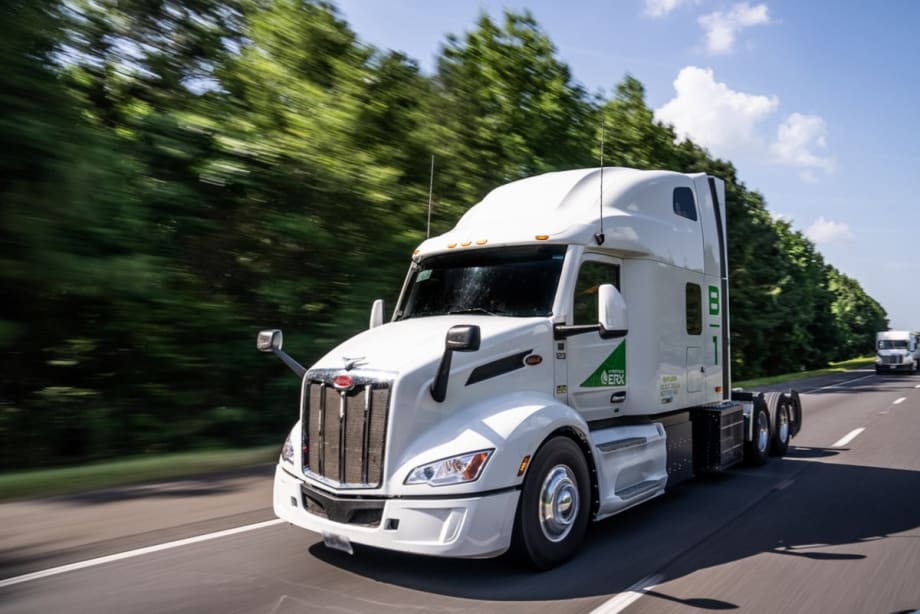
Hyliion stopped taking orders for the ERX Hypertruck in October, ahead of an announcement the company would exit the powertrain market and pivot to developing stationary power technology with its Karno Generator.
Photo: Hyliion
We will not see any more of Hyliion's ERX Hypertrucks at upcoming trade shows or exhibitions, but we may see the company's Karno generator powering EV charging stations.
In October Hyliion said it was looking at a range of options for its powertrain business. By mid-November, Hyliion founder and CEO Thomas Healy posted on his LinkedIn that the company had made the decision to wind down its electric powertrain operations and focus on the fuel-agnostic Karno generator, which he said "marks a significant strategic change for our company."
"We are going to pause the development or stop the development on the Hypertruck powertrain solution and focus our efforts toward the Karno generator solution," Healy told HDT in a late-November interview. "We're going to put the powertrain solution on the shelf, but we could bring it back later if it makes sense."
Healy said the company was also considering selling or licensing the technology.
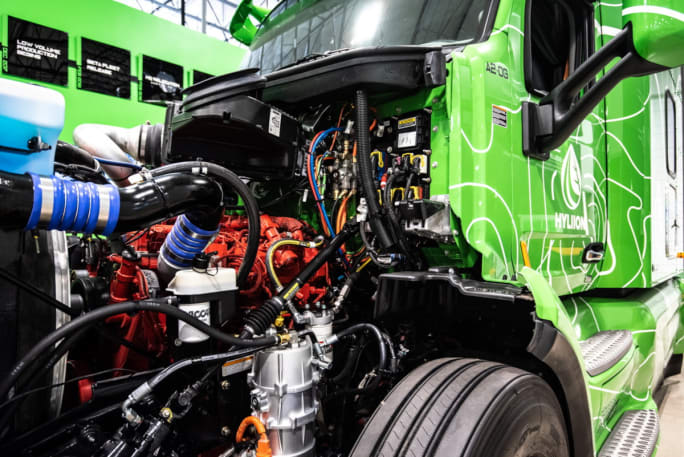
Despite achieving certification from the California Air Resources Board for its natural gas powered ERX, Hyliion would have had to go through the process all over again with the Cummins 15-liter engine.
Photo: Hyliion
Hyliion did achieve certification from the California Air Resources Board for the natural gas powered ERX and had a small fleet of trucks in testing. Despite fleets having interest in the truck, Healy says, those trucks will not be shipped to customers.
The company is also suspending development of the ERX with the new Cummins 15-liter natural gas engine.
"We're also stopping work in the 15-liter as well as our hybrid system. We're stopping shipments on that end as well," he said. "This is really a wind-down of all operations, or almost all operations, on the powertrain side and refocusing on the Karno."
Initially, according to Healy, the Karno generator was to be a second-generation powertrain for the ERX, replacing the natural gas engine. Plans for the powertrain (at the time) also included a hydrogen fuel cell. Hyliion suspended order intake in October and is now looking recovering as much of its production costs as possible.
"We're looking at how do we disposition those vehicles. The goal is to find ways to bring cash back into the organization for what we spent on them," Healy said.
Healy said ceasing development on the ERX powertrain will substantially reduce Hyliion's cash burn, leaving more than enough capital to commercialize the Karno generator as a stationary generator.
The anticipated spend on the ERX would have been about $140 million next year. That will drop to about $40 million once the ERX is off the books.
"Even with that substantial reduction in our spend, we still will be able to hit all the Karno milestones," he said. "We closed out last quarter with $325 or $324 million of cash, which gives us great runway. That puts us in a very strong capital position."
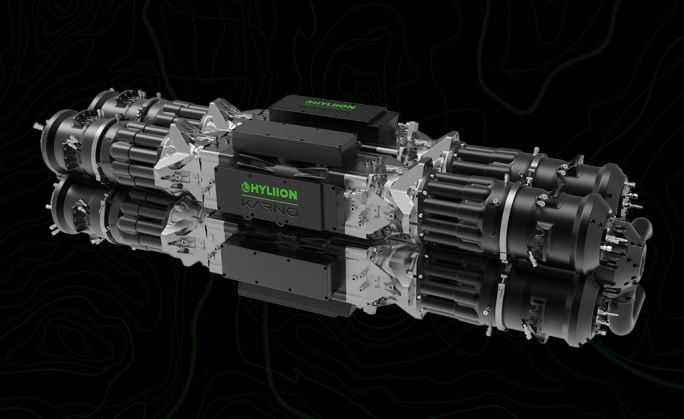
The Karno generator is a linear heat generator capable of operating on over 20 different fuels, including hydrogen, natural gas, propane, and conventional fuels. It's said to be very efficient, using fuel injection technology developed for use in jet aircraft engines.
Photo: Hyliion
Karno Generator
The Karno generator is a linear heat generator that uses advanced 3D metal printed components and proprietary flameless oxidation technology to produce clean electricity. It is expected to show improvements in fuel efficiency, require significantly lower maintenance costs, and have a much lower emissions profile than conventional [fossil fuel] generators. It is also capable of operating on over 20 different fuels, including hydrogen, natural gas, propane, and ammonia as well as conventional fuels.
Hyliion acquired the intellectual property for the Karno generator from GE Aviation in 2022 for close to $40 million. Originally intended to power the ERX, Hyliion is now developing the technology as a stationary generator application in a distributed grid model.
Healy sees several applications for the technology, including powering commercial buildings or hospitals and supplying electricity to facilities or towns in remote locations. He notes it would be particularly useful in supplementing renewable energy sources.
He also sees big opportunities taking landfill gas or flare gas and converting that into electricity. Or powering stand-alone off-the-grid EV charging stations.
"You could have your own Karno genset outside your facility that could actually be your primary source of electricity. Like the building we're in right now. One Karno generator could power this entire facility," he said.
"In most instances, it's cheaper than operating off the grid. So, you might as well have that be your primary source of electricity, and then use the grid as your backup energy source."
Healy added the Karno generator still has the design characteristics and parameters to enable mobile use of the technology, but the stationary market remains the primary focus.
"It could be us bringing it into the mobile space, it could be someone we partner with who has brands in the mobile space. That's something we'll determine as we go forward. But for right now, our efforts are really being put towards stationary power generation.
Toward an Electric Future
Hyliion's decision to exit the powertrain market comes at a time when the entire heavy-duty EV market is struggling. Healy said it's ugly right now. A lot of companies are filing bankruptcy, others are finding it increasingly difficult to raise money, component prices are increasing drastically, and sales are going nowhere, largely because of cost and the lack of infrastructure.
Healy said fleets have not been as aggressive on buying electric vehicles as we might have hoped for a few years ago. They are buying onesie-twosie numbers, and saying they'll wait for mandates to really force them to buy rather than buying proactively.
"If you think about where we were a couple of years ago, there was just so much investment being made, so many tailwinds behind electrification. You had major OEMs saying that by certain years they were only going to ship electric vehicles," he observed. "I think everyone was thinking that the only future is electric. Now, I think we're starting to see major pullbacks there.
"Even the big passenger car OEMs like the GMs and Fords of the world are now starting to say, well, maybe hybrid is more going to be the future. And you know, maybe the gasoline engine will be around for a little bit longer."
(See EV Transition Could Drag U.S. Auto Market)
Given the headwinds facing the electric vehicle industry right now, continuing forward in that just wasn't the right strategic move for the company, Healy told HDT.
"And based on the balance sheet, the kind of capital strength that we have right now, we feel like deploying that cash into the stationary generator market with Karno is what makes the most sense for shareholders."
Since charging infrastructure remains one of the big choke points right now, coming to market with a charging solution could be seen as a strategically smart move.
More Fuel Smarts

How Volvo Updated Its D13 for EPA 2027 [Watch]
Volvo’s updated D13 promises lower emissions without sacrificing performance or fuel economy. Take a closer look at what changed inside the engine in this HDT Spotlight video.
Read More →
Diesel Price Spike Shortens Payback for Natural Gas Trucks, Report Says
Energy Vision estimates fleets could recover the higher purchase price of an RNG-fueled Class 8 tractor in 1.3 to 2.8 years under current fuel-price scenarios.
Read More →
Calstart Becomes Catalyst Mobility, Reflecting Broader Focus
Calstart is now Catalyst Mobility, reflecting the nonprofit’s growing national role in clean transportation, including zero-emission trucks, infrastructure and incentive programs.
Read More →

Record Diesel Prices Squeeze Trucking Fleets
Average U.S. diesel prices have climbed to nearly $6 a gallon, surpassing the 2022 record as tight refinery capacity and Middle East disruptions keep fuel costs elevated.
Read More →
How Fuel Delivery Shapes Engine Performance
Fuel delivery depends on more than what happens at the injector. For fleet, maintenance and technical professionals, looking at the full path from pump to injector can provide useful context for understanding engine performance.
Read More →
East Coast Port Launches $45M Electric Truck Push
The Port Authority of New York and New Jersey announced millions in incentives for zero-emission drayage trucks, yard tractors, and new charging hubs near the port.
Read More →
California Bill Could Shed Light on Electric Truck Prices
Why do battery-electric Class 8 trucks remain so expensive? A California bill headed to Gov. Gavin Newsom would give fleets and state agencies more visibility into what manufacturers charge.
Read More →
Detroit Opens Orders for EPA 2027 Engines
Detroit isn’t starting from scratch to meet EPA 2027 diesel emissions standards. Its Gen 6 DD13 and DD15 engines keep much of today’s platform while updating the fuel and aftertreatment systems.
Read More →
Zero-Emission Truck Corridor Planned for West Coast
California, Oregon, Washington, British Columbia and Baja California are coordinating plans for truck charging and hydrogen fueling from Canada to Mexico.
Read More →
A Closer Look at Kenworth’s Electric T880E Vocational Truck [Video]
Learn more about Kenworth's T880E battery-electric vocational truck at the Paccar Technical Center, including its range, applications, upfitting considerations, and PTO options, in this HDT Spotlight video.
Read More →