





After the Crash: The Records That Can Make or Break a Trucking Company's Defense
Geotab Launches Tool to Speed Fleet Incident Investigations
Geotab Investigations brings telematics data, video, photos, reports and other evidence into one case file to help fleets determine what happened and resolve incidents faster.
August 12, 2026
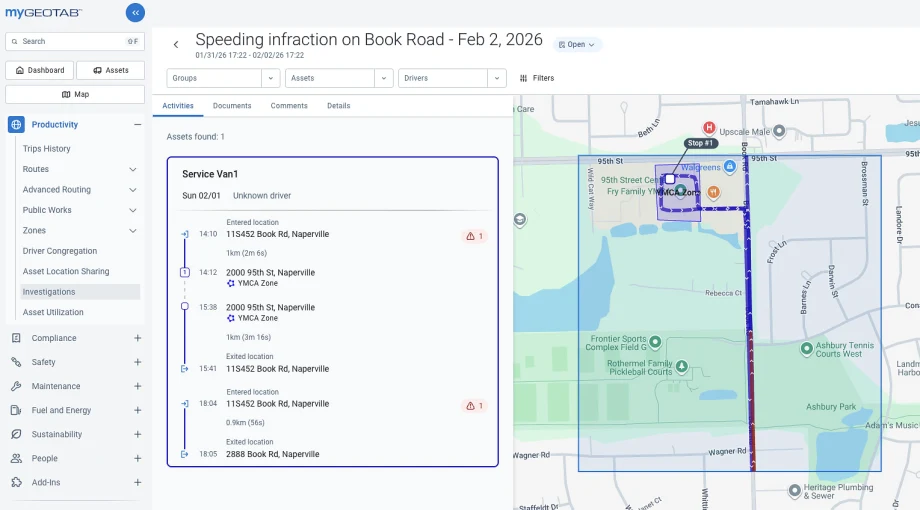
Geotab Investigations uses existing telematics data to reconstruct vehicle activity surrounding an incident. Supporting evidence can be added, such as photos, videos, reports and documents.
Credit:
Geotab
2 min to read
Geotab has launched a new tool designed to help fleets investigate crashes, complaints, property damage, and other incidents without having to piece together information from multiple systems and sources.
Geotab Investigations brings telematics data and other evidence related to an incident into a single case file, giving safety, compliance, and operations teams a clearer picture of what happened before, during, and after an event.
Bringing Incident Information Into One Place
Investigating a fleet incident can require information from operations and safety teams as well as insurers and legal departments. Vehicle and driver data may be in one system, while photos, video, reports, emails and other documentation are stored elsewhere.
Geotab said Investigations is designed to reduce that manual work and help fleets resolve cases more quickly, while creating a consistent record that can be used for insurance claims, compliance reviews or legal proceedings.
“Fleet-related incidents have cost companies billions of dollars in litigation and reputational damage, largely because critical data remains siloed,” said Sabina Martin, vice president of product management at Geotab.
“Geotab Investigations changes this by turning raw data into a structured, defensible system of record, providing fleet managers with the intelligence to mitigate risk and the evidence to protect their drivers, operations and bottom line.”
Reconstructing What Happened
The system uses existing telematics data to reconstruct vehicle activity surrounding an incident. Users can search by location and time to identify vehicles that may have been involved, then review trips, speed events, driver behavior, and location information to build a timeline.
That can also help protect drivers when complaints or claims don't match the data by giving fleets objective information about where a vehicle was and what it was doing at the time.
Building a Complete Case File
Fleets can add supporting evidence — including notes, emails, reports, documents, photos and video — to the same case rather than maintaining those records separately.
Another feature is a structured workflow that tracks a case from opening through resolution and maintains an auditable record of the investigation. The combined information can then be used by operations, safety, insurance, compliance, and legal teams when reviewing an incident or making decisions about a claim.
Geotab cautions that Investigations is not intended to serve as an evidence-preservation or legal-hold system. Fleets are responsible for preserving evidence and meeting legal requirements, and should consult legal counsel when litigation is involved.
More Safety & Compliance
Sponsored•October 6, 2026
A Camera Isn't a Safety Program. Here's What Brokers Are Screening for Now
Footage alone may not be enough to pass broker vetting processes. Here's what counts as a defensible safety program now.
Read More →
Marijuana and Trucking’s Drug-Testing Dilemma
Marijuana is getting stronger, laws are changing, and drug tests still can’t reliably establish impairment. What does that mean for truck drivers and the fleets that employ them?
Read More →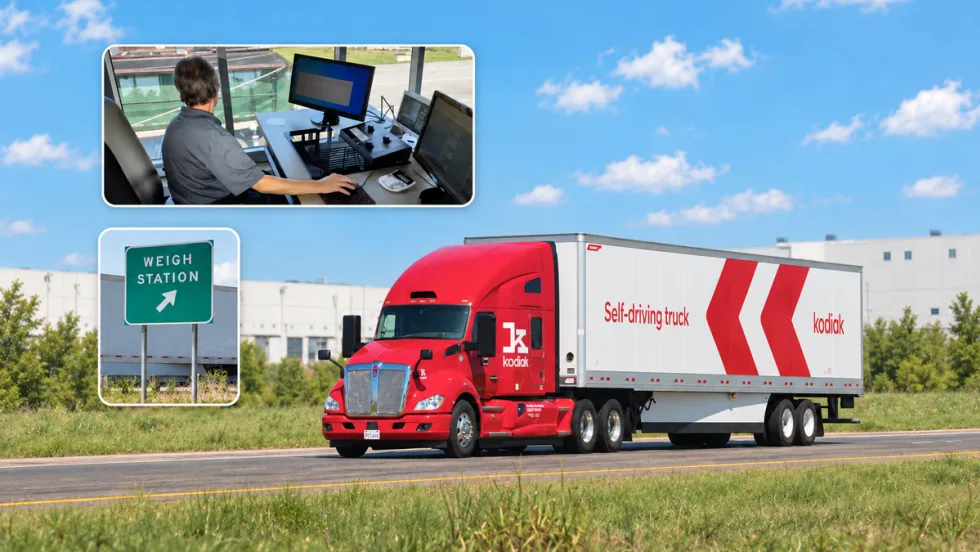
PrePass, Kodiak Connect Driverless Trucks to Roadside Enforcement
The system will allow enforcement agencies to verify Enhanced Inspection information and decide whether Kodiak’s autonomous trucks can bypass roadside screening sites.
Read More →

From One Generation to the Next: How Mentorship Builds Safer Truck Drivers
After three decades in trucking, Harold Perry shares what he's learned about driver safety, mentorship, and helping the next generation build confidence behind the wheel.
Read More →
FMCSA Pauses Biennial-Update Enforcement Amid Motus Transition
Carriers whose updates were due on or after June 1 have more time, while FMCSA works to stabilize its new registration system and warns of phishing sites impersonating its new carrier registration system, Motus.
Read More →
ZF Expands Commercial Vehicle Push in North America
ZF is expanding its North American commercial-vehicle presence with new transmission applications, electrification, trailer technology and autonomous-driving systems.
Read More →
Truck Drivers Need More Than Another Alert
Fleets have more visibility into truck health, safety events, and driver activity than ever. The next challenge is turning all that information into useful guidance for the person who has to decide what to do next.
Read More →
Tesla Wants a Self-Driving Semi. Are Cameras Enough?
Could Tesla’s camera-only autonomous driving technology work on an 80,000-pound Semi? In this commentary, HDT's Deborah Lockridge takes a look at Tesla, Cybercab, and how autonomous trucks see the road.
Read More →
What DOT’s Automated Vehicle Strategy Means for Trucking
The U.S. Department of Transportation issued a new automated-vehicle strategy that outlines plans for driverless-truck regulations, cross-state freight corridors, and federal safety standards.
Read More →
NYC Expands Speed, Pedestrian Safety Tech Across Fleet
New York City is expanding intelligent speed assistance and pedestrian-alert systems across its municipal fleet, moving the technologies from pilot programs into vehicle procurement and retrofit requirements.
Read More →