




EPA Proposal Could Ease 2027 Truck Costs and Buying Uncertainty
The proposal doesn't change the tougher NOx standard, but it would revise key implementation requirements that manufacturers say have driven up costs and complicated fleet purchasing decisions.


From left to right: Paccar CEO Preston Feight, ATA President & CEO Chris Spear, EPA Administrator Lee Zeldin, and EPA Assistant Administrator for the Office of Air and Radiation Aaron Szabo on stage at the Great American State Fair on the National Mall, discuss the new EPA proposal to change 2027 diesel emissions requirements.
American Trucking Associations
- The EPA proposal aims to ease truck costs and reduce buying uncertainties for the year 2027.
- It maintains the stricter nitrogen oxide (NOx) emission standards without any changes.
- Manufacturers could benefit from adjusted implementation requirements that currently inflate costs and complicate purchasing decisions.
*Summarized by AI
The Environmental Protection Agency has proposed significant changes to its 2027 heavy-duty diesel emissions rule that could reduce the cost of next-generation trucks while easing some of the uncertainty that has complicated fleet buying decisions.
The EPA proposed rule would leave in place the stringent nitrogen oxide (NOx) emissions standard scheduled to take effect with 2027 model-year heavy-duty diesel engines. However, it would delay some of the rule's costly implementation requirements, including longer useful-life requirements and expanded emissions warranties, while eliminating mandatory diesel exhaust fluid (DEF) engine derates.
EPA estimates the proposed changes would reduce costs by up to $6,000 per engine, though 2027 trucks are still expected to cost more than today's models.
The proposal comes after truck and engine manufacturers spent the past several years warning that while they could meet the lower NOx emissions standard, the rule's durability, warranty and enforcement provisions would add significantly to the cost and complexity of new trucks.
Reaction to Proposal
The Truck and Engine Manufacturers Association welcomed the proposal but emphasized the need for the agency to move quickly.
"As EPA moves forward, it is critical that the rule be finalized by the end of the year to provide manufacturers with the regulatory certainty necessary for compliance planning, go-to-market strategies, and product availability," the association said.
American Trucking Associations President and CEO Chris Spear joined EPA Administrator Lee Zeldin during the announcement, with ATA describing the proposal as rolling back "onerous, unachievable" provisions adopted by the previous administration.
The Owner-Operator Independent Drivers Association criticized the rollback of warranty periods. "We believe there are more productive solutions than drastically cutting extended warranty periods for small-business truckers at the behest of engine manufacturers and large fleets," said OOIDA Director of Federal Affairs Jay Grimes. The association urged EPA to maintain the 450,000 mile warranty coverage in the original 2027 emissions rule.
Environmental organizations criticized the proposal, arguing that weakening durability, warranty and inducement provisions could reduce real-world emissions performance over a truck's lifetime.
Could EPA Change Affect Fleet Buying Plans?
The proposal also could affect when fleets decide to buy trucks.
Uncertainty about the final cost of EPA 2027-compliant trucks has made it nearly impossible for manufacturers to set prices and for fleets to plan replacement cycles. OEMs have repeatedly said that without the original rule's warranty and useful-life requirements, price increases could be substantially lower than originally anticipated.
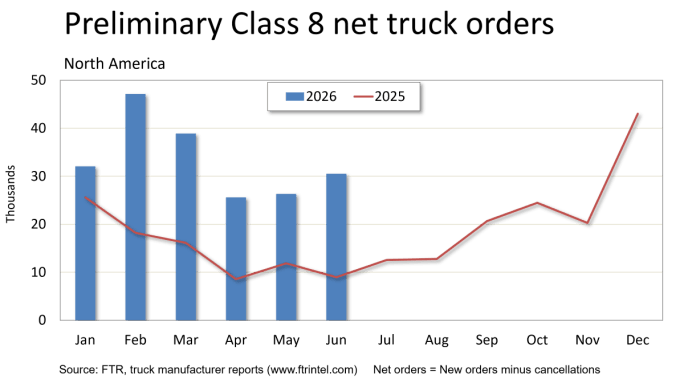
Nevertheless, Class 8 orders have been heating up this year. Freight rates have been rising. Some fleets are looking to add trucks as business improves. Others are simply replacing equipment they held onto longer than planned during the freight recession. In many cases, it's probably a little of both.
ACT Research and FTR both report that manufacturers are rapidly filling available 2026 production slots as improving freight conditions and regulatory uncertainty continue to drive demand.
"Strong orders this month, adding to an already full Class 8 backlog, suggest either higher-than-expected industry builds into year-end or orders increasingly spilling into the first half of 2027," said Carter Vieth, research analyst at ACT Research. He noted that improving freight conditions continue to support demand.
"As we say, truckers only buy trucks when they make money."
FTR
FTR reported June Class 8 orders reached the second-highest June total since it began tracking the market. Year-to-date orders are up 125% from a year ago, with remaining 2026 build slots expected to fill quickly. The firm said the market is shifting from one driven primarily by demand to one constrained by production capacity.
"The bigger question now is not demand, but how much of the 2026 backlog converts to production before uncertainty over EPA, tariffs, and USMCA reshapes fleet timing for 2027," said Dan Moyer, senior analyst, commercial vehicles, at FTR.
If finalized, EPA's proposal could remove one of the biggest unknowns facing fleets as they weigh whether to secure one of the remaining 2026 build slots or wait for 2027 models.
However, OOIDA said for owner-operators and small fleets, the rule does not affect an important unknown: The reliability of the new engines.
"The rule should ensure that truckers who purchase a new vehicle will not be constantly sidelined because of costly and repeated breakdowns that OOIDA members have historically experienced under new emissions regulations," Grimes said. "While longer testing timelines and permanent derate flexibility are helpful, they alone will not convince independent truckers that investing in a new vehicle is worth the financial risk."
What Would Change?
While the proposal has been described by supporters as a rollback of the Biden administration's 2027 heavy-duty emissions rule, it leaves the rule's centerpiece intact: the requirement that heavy-duty diesel engines reduce NOx emissions to 0.035 grams per horsepower-hour.
Instead, EPA is proposing changes to how manufacturers demonstrate compliance and how those emissions systems are supported throughout a truck's service life.
Among the proposed changes:
- Delay the expanded useful-life requirements until 2030.
- Maintain the current five-year/100,000-mile emissions warranty rather than expanding warranty coverage beginning in 2027.
- Replace mandatory DEF-related speed and power derates with visible and/or audible dashboard warnings.
- Allow manufacturers to temporarily sell engines that don't fully meet the new standard by paying EPA nonconformance penalties while they complete the transition.
According to EPA, the proposal would preserve nearly 90% of the NOx reductions expected under the original rule while reducing costs and giving manufacturers greater flexibility during the transition.
What's Next?
The proposal is now open for a 45-day public comment period, after which EPA will review comments before issuing a final rule.
More Equipment
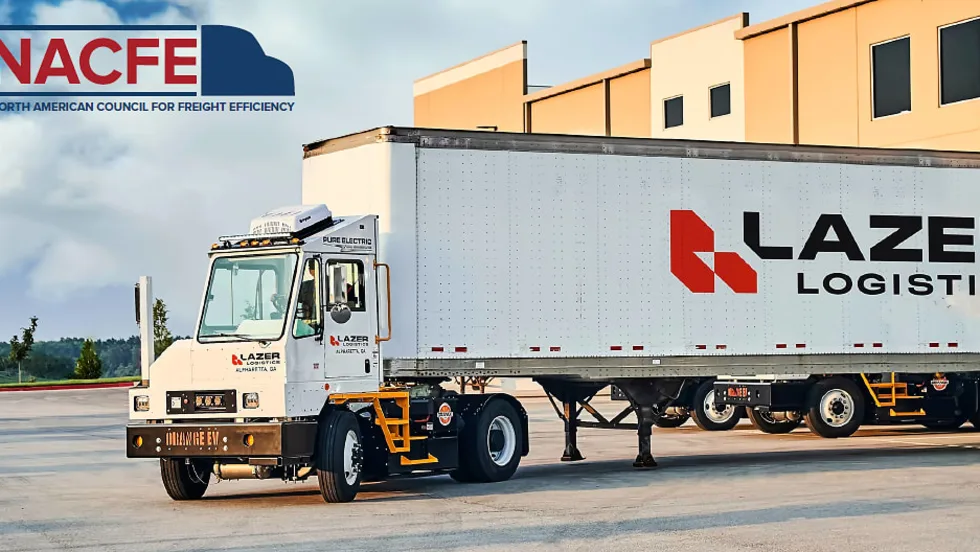
Electric Yard Tractors Move Beyond Pilots
Operating-cost savings have overtaken sustainability goals as the leading reason surveyed fleets are adopting battery-electric terminal tractors, according to new NACFE research.
Read More →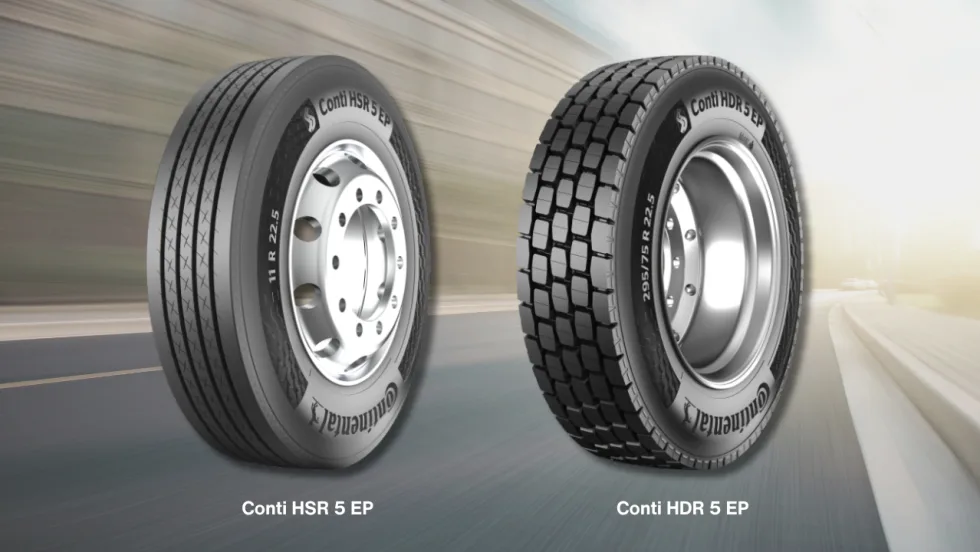
Continental Introduces New Regional Truck Tires
Continental says its new Generation 5 steer and drive tires for regional operations offer longer tread life, with estimated mileage gains of 22% and 19%, respectively.
Read More →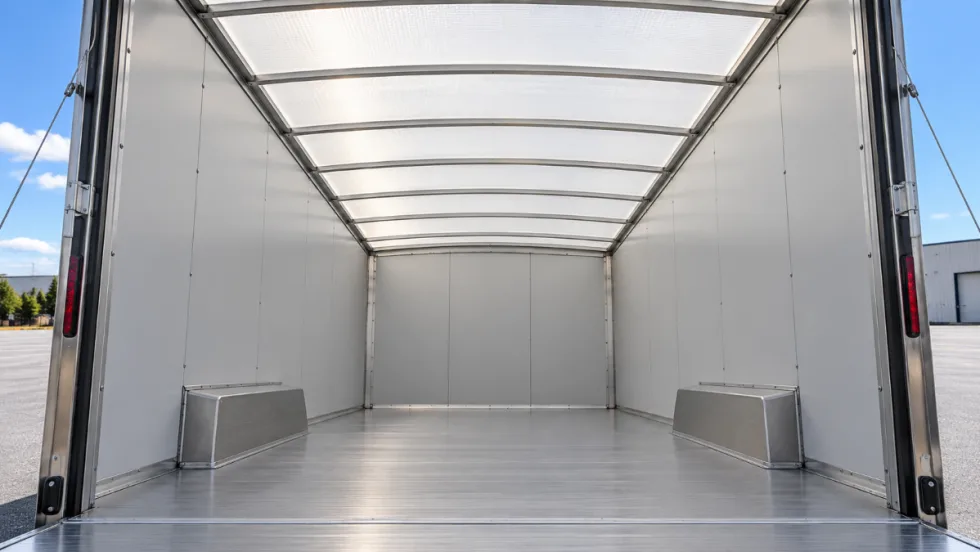
Tekmodo Introduces CargoBright Brand for Translucent Trailer Roofs
CargoBright is designed to diffuse daylight across the cargo area while performing as a working vehicle roof.
Read More →
Fleet Economics Shape Electric Truck Outlook
ACT Research expects costs, charging infrastructure, and technology improvements to drive zero-emission commercial vehicle adoption as federal regulations and incentives retreat.
Read More →
Kodiak Targets Dallas–Houston for Driverless Trucks
The company says its autonomous trucks are completing the I-45 run without a safety observer taking control. It plans to remove the observer by the end of 2026.
Read More →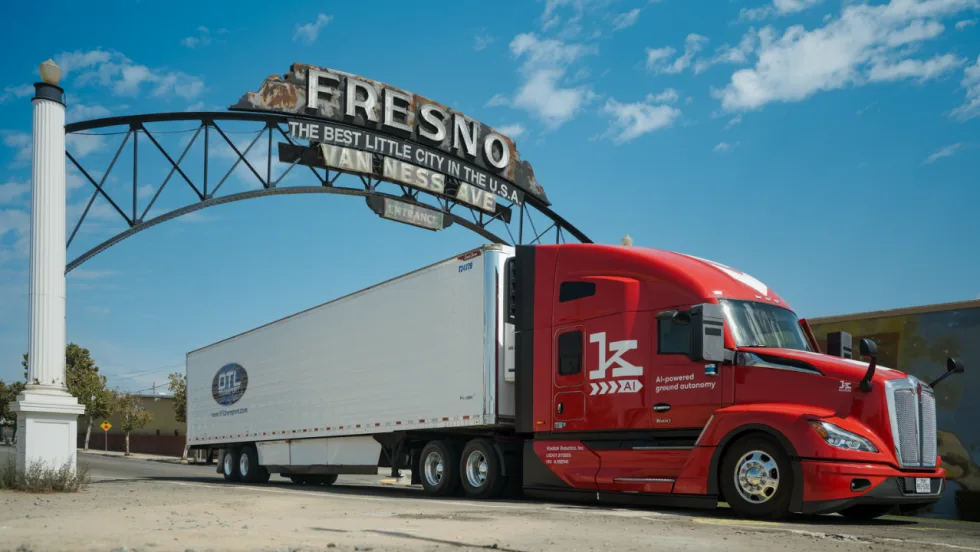
Kodiak Hauls Produce in California Autonomous Truck Pilot
Kodiak AI and DTL Transport have begun hauling produce between Fresno and Los Angeles under California’s new rules for testing heavy-duty autonomous trucks. A safety driver remains behind the wheel.
Read More →
Used-Truck Remarketing Math Is Changing
Used-truck value is no longer just a concern at trade-in. Decisions made throughout a truck’s first life can influence what it’s worth years later.
Read More →
How Volvo Updated Its D13 for EPA 2027 [Watch]
Volvo’s updated D13 promises lower emissions without sacrificing performance or fuel economy. Take a closer look at what changed inside the engine in this HDT Spotlight video.
Read More →
Michelin Tire Improves Efficiency and Durability for Regional Fleets
The Michelin X Multi Energy D2 is a regional haul drive tire engineered to help fleets improve fuel efficiency, durability and traction in demanding stop-and-go operations.
Read More →
ZF Expands Commercial Vehicle Push in North America
ZF is expanding its North American commercial-vehicle presence with new transmission applications, electrification, trailer technology and autonomous-driving systems.
Read More →