




America at 250: How the Truck Helped Connect a Continent
America was founded on revolutionary ideas, but it was built by movement. For 250 years, the nation has depended on ever-better ways to move people, products, and prosperity across a vast continent. No machine has carried that mission further — or more faithfully — than the truck.

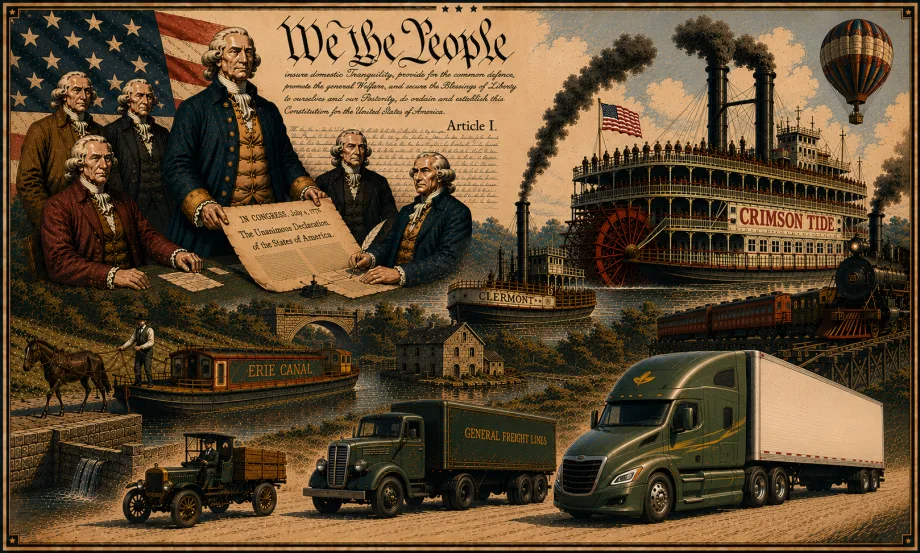
America has always been a nation on the move. Trucking was a natural evolution in that never-ending march forward.
- America's development over 250 years has been significantly influenced by advancements in transportation.
- The movement of people, goods, and wealth across the continent has been crucial to the nation's growth.
- Trucks have played a vital role in effectively connecting different parts of the United States.
*Summarized by AI
To our eyes, the American Revolution beckons to us from a great distance in time. With their powdered wigs, frock coats, and flowery language, the Founding Fathers often seem closer in time and thought to the court of Louis XVI than to the modern world.
Yet many historians argue the opposite. The founding of the United States was one of the first definitive acts of the Modern Age. The ideas those frilly men in stockings and wigs were espousing were radical beyond reason to sensible minds in London and other parts of the Old World.
The very notion of self-determination and a government deriving its authority from the people was as explosive and unsettling to Europe's Old Guard as Russia's communist revolution would be nearly 150 years later.
The Birth of the Industrial Age
As distant as those times seem today, it is often forgotten that the birth of the United States occurred almost simultaneously with the birth of the Industrial Age. The generation that signed the Declaration of Independence and framed the Constitution lived to witness the first stirrings of a technological revolution that would transform every aspect of human life.
That revolution, long before diesel engines or interstate highways, would need to address a transportation problem for the sprawling new nation.
Men who fought to secure the new nation's independence would see steamboats navigating America's rivers, receive news from distant places through the telegraph, travel faster than their fathers ever imagined, and marvel at the sight of the first balloons drifting through the sky.
Indeed, in 1807, a mere 31 years after the signing of the Declaration of Independence, an American inventor and engineer named Robert Fulton sailed a steam-powered boat called The Clermont up the Hudson River from New York City to Albany. The little ship made the 150-mile journey in a then-astonishing 32 hours, helping usher in the age of practical steam transportation.
In fact, two signers of the Declaration of Independence, Thomas Jefferson and James Madison, lived long enough to see steam transportation become a practical means of travel and begin to end the age of sailing ships.
And all of this was possible because the United States was a brand-new nation, born at precisely the moment when science and technology were joining forces to create a vastly new kind of world.
This was no small matter. America was a sprawling republic from the beginning, a nation measured not in city walls but in rivers, forests, mountains and seemingly endless horizons. To survive, let alone prosper, it needed more than liberty and ambition.
To survive and prosper, the young nation needed ways to move settlers, crops, raw materials and finished goods across a vast continent. That's why the story of America has always been, in part, the story of transportation.
For 250 years, each generation has built upon the achievements of the last. Wagon roads gave way to turnpikes and canals. Canals yielded to railroads. Railroads shared the stage with highways.
Each innovation shrank distances, opened new opportunities, and bound a vast continent more closely together.
When the motor truck emerged at the dawn of the twentieth century, it did not create America's transportation tradition.
It inherited it.
The Last Great Transportation Problem
By the late nineteenth century, railroads had conquered distance.
Steel rails linked the Atlantic and Pacific coasts. Freight could move across hundreds of miles with unprecedented speed and reliability.
Yet a critical problem remained unsolved.
No railroad track ran directly to a farm. No locomotive delivered freight to a general store. No rail line reached every factory, warehouse, mine or dock.
Goods still had to travel the first few miles to leave their point of origin and the last few miles once they reached their destination. And in 1900, those miles were still largely covered by horses.
For centuries, the wagon had been America's primary commercial vehicle. Farmers hauled crops to market in wagons. Merchants hauled goods from docks and rail yards in wagons. Teamsters carried freight between towns in wagons. Entire industries existed to build wheels, axles, harnesses, and carriages.
The horse-powered wagon was so deeply embedded in American commerce that few people imagined anything else.
Then along came the internal combustion engine.
How the Internal Combustion Engine Made Trucks Possible
The truck could not exist until a more fundamental problem had been solved.
For centuries, human civilization relied on muscle power. Men, horses, oxen, and mules moved nearly everything over land. Steam power revolutionized transportation during the nineteenth century, but steam engines were large, heavy and complex. They worked wonderfully aboard ships and locomotives, where size and weight were less important. They were ill-suited to the smaller, more flexible vehicles needed to navigate city streets and country roads.
Transportation needed a compact power source. It needed a propulsion system small enough to fit beneath a wagon but powerful enough to replace a team of horses.
The solution emerged through decades of experimentation by engineers and inventors across Europe and North America.
Throughout the nineteenth century, advances in metallurgy, machining and fuel systems gradually made practical internal combustion engines possible.
Instead of generating power from an external boiler, these engines burned fuel directly inside a cylinder, converting controlled explosions into mechanical motion.
It was an extraordinary technological breakthrough.
Among the most influential pioneers was Nikolaus Otto, whose four-stroke engine established the basic operating cycle still used in most gasoline engines today. Gottlieb Daimler and Wilhelm Maybach built on Otto's work and developed increasingly compact, lightweight engines that would work in vehicles.
Their work transformed the internal combustion engine from a stationary industrial machine into something capable of propelling a vehicle down a road. By the 1880s and 1890s, inventors were successfully applying these engines to bicycles, carriages and experimental automobiles.
The timing could hardly have been better.
Industrial America was expanding rapidly. Cities were growing. Farms were becoming more productive. Factories were producing more goods than ever before. Railroads carried freight across great distances, but millions of tons of cargo still needed transportation beyond the railhead.
For centuries, that work had belonged to horses. Now, for the first time, there was a practical alternative.
The automobile was the first visible result of the internal combustion revolution. Commercial transportation quickly followed. If an engine could move a passenger carriage, it could move a freight wagon. If it could carry a family across town, it could carry merchandise from a warehouse to a customer.
The leap from automobile to truck proved surprisingly small.
A Better Kind of Wagon
Many of the first commercial trucks were essentially motorized wagons.
Manufacturers often took familiar wagon frames and cargo beds and mounted small gasoline engines beneath them. Wooden wheels were still common. Steering systems were primitive. Brakes were rudimentary. Reliability was questionable.
To modern eyes, these early motorized contraptions look crude. They had far more in common with a farm wagon than a modern truck. But to people living in the early 1900s, they were revolutionary.
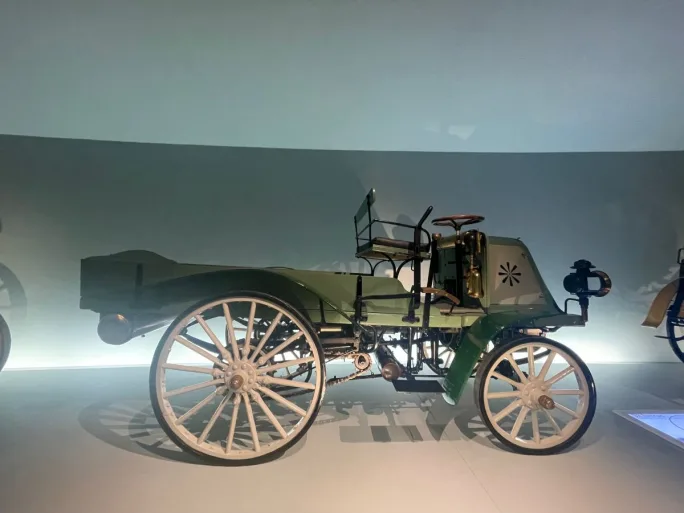
This 1898 Mercedes-Benz 'Business Vehicle' was typical of early truck design.
Jack Roberts
The concept was simple: Remove the horse. Keep everything else.
A farmer, merchant, or contractor seeing one of these early trucks for the first time would have instantly understood its purpose. It looked remarkably similar to the wagon already parked in his barn or yard.
Only now it could work all day without tiring. It didn't need feed or water. It didn't require stabling. It didn't get sick. And it could often travel farther and faster than a team of horses.
What happened next was one of the most rapid technological transformations in transportation history.
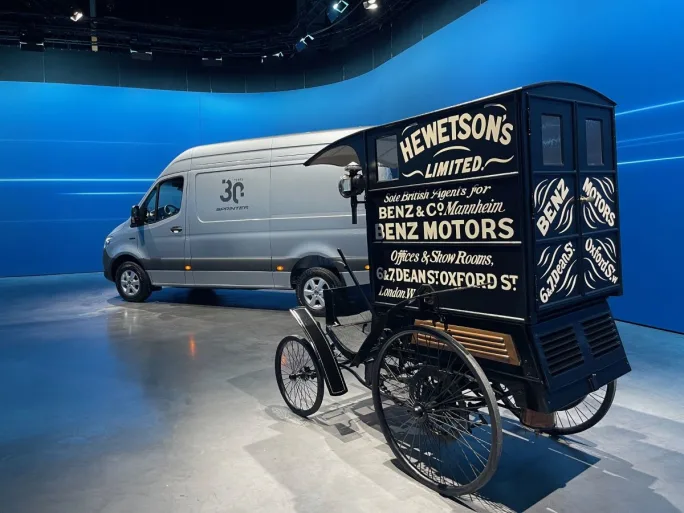
An 1898 Mercedes-Benz delivery wagon with its modern Sprinter counterpart.
Jack Roberts
The first practical commercial trucks emerged during the final years of the nineteenth century.
In Europe, Gottlieb Daimler and his engineers were already experimenting with purpose-built motorized delivery vehicles. Unlike many early American designs, Daimler's commercial vehicles were conceived from the beginning as motor-powered freight haulers rather than modified wagons.
Small delivery vans appeared in European cities, demonstrating that the future of freight transportation might not involve horses at all.
In the United States, several companies that remain familiar to truck fleets today helped turn that possibility into reality.
Autocar, founded in 1897, is widely recognized as America's oldest surviving motor vehicle manufacturer.
Mack Trucks began producing vehicles in 1900 and quickly earned a reputation for ruggedness and durability.
And it made perfect sense for farmer-focused International Harvester to enter the truck business shortly thereafter, bringing decades of experience serving farmers and rural America to the emerging field of truck design.
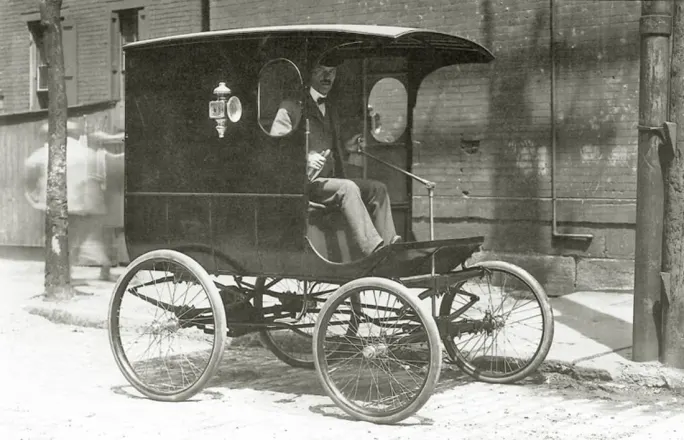
This 1897 Autocar delivery wagon is widely considered to be the first American truck.
Autocar
More than a century later, all three companies remain important names in commercial transportation, as well as Daimler, through Mercedes-Benz Trucks and Daimler Truck.
What is remarkable is not simply that these companies built trucks, but how fast the technology evolved.
Yet one man and one truck would do more than perhaps any other to introduce motorized transportation to ordinary Americans.
Henry Ford and the Democratization of Trucking
While the early truck pioneers proved that motorized freight transportation was possible, Henry Ford helped prove it could be practical for ordinary Americans.
The Model T, introduced in 1908, transformed personal transportation by making automobiles affordable for millions of people. Just as important for commerce, it familiarized Americans with gasoline engines, mechanical repairs, and motorized travel.
In 1917, Ford introduced the Model TT, a heavier-duty version of the Model T designed specifically for commercial work. It was not the first truck, nor was it the most capable truck of its era. But it may have been the most influential.
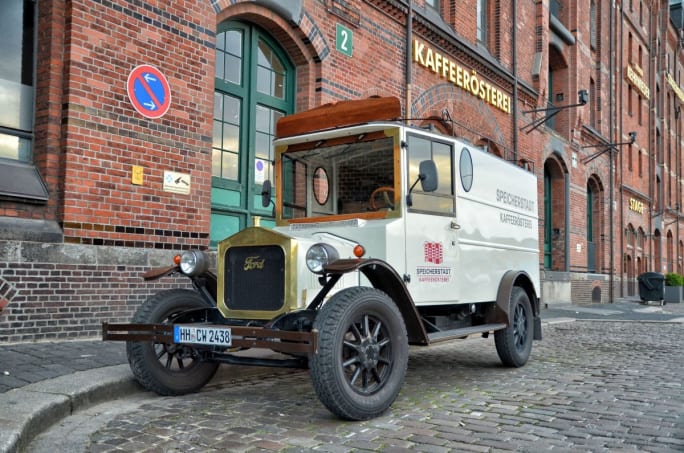
The Ford Model TT was a heavier duty version of the popular Model T and did much to solidify the value of trucks in the motoring public's mind.
Pexels/Onkel Ramirez
At the beginning of the twentieth century, America remained overwhelmingly rural. Millions of people lived on farms or in small agricultural communities. Farmers needed practical ways to move milk, livestock, grain, produce and supplies. Rural businesses needed dependable transportation between towns.
At the same time, America's cities were growing rapidly. Factories required raw materials, warehouses required distribution, retailers required deliveries. Railroads and ports required vehicles capable of moving freight efficiently through increasingly crowded urban environments.
The Model TT brought motorized hauling within reach of small businesses, tradesmen and farmers alike. Across rural America, owners adapted the chassis into stake beds, flatbeds, delivery trucks and utility vehicles.
Suddenly, powered transportation was no longer limited to large companies or wealthy operators.
The Truck Comes of Age
As engines became more powerful and reliable, trucks rapidly improved. Manufacturers introduced stronger frames. Pneumatic tires replaced iron-shod wheels. Payloads increased. Reliability improved. Maintenance became easier.
In little more than a decade, trucks evolved from noisy mechanical curiosities into serious commercial tools.
The speed of that transformation is difficult for modern observers to appreciate.
Imagine going from the Wright Brothers' Flyer to a DC-3 in fifteen years. That is roughly how dramatic trucking's early development felt to people living through it.
By the 1910s, trucking was becoming an established industry.
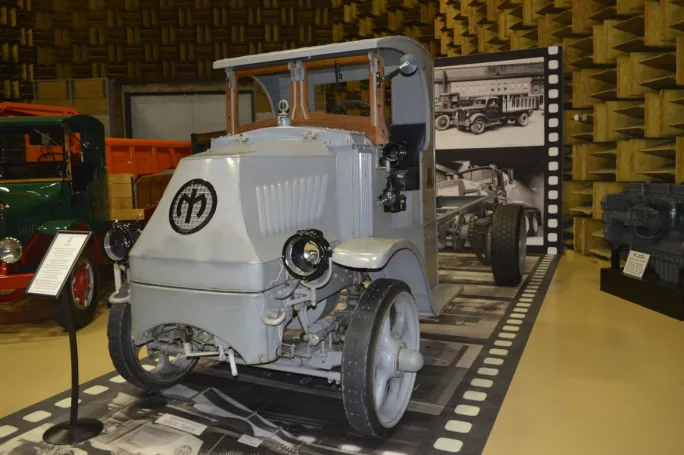
Introduced in 1916, the Mack AC is considered by some automotive historians to be the first modern truck design.
Jack Roberts
Manufacturers were designing trucks specifically for commercial work rather than adapting wagon designs. Engines grew larger and more dependable. Chassis became stronger. Roads slowly improved.
The First World War accelerated development even further.
Military planners quickly recognized the value of motorized logistics. Trucks could carry troops, ammunition, food and supplies wherever roads existed. Wartime production encouraged standardization, manufacturing improvements, and engineering innovations that would later benefit civilian fleets.
When the war ended, trucking emerged stronger than ever. The horse's days as America's primary freight mover were numbered.
The truck's greatest advantage wasn't speed or even cost. Railroads often remained the better choice for moving freight long distances. What trucks offered was flexibility: direct delivery to farms, factories, warehouses and stores without the need for tracks or waterways.
The truck solved a uniquely American problem: how to connect an enormous nation whose people and businesses were scattered across thousands of miles.
How Trucks Became the Backbone of American Freight Transportation
The truck is part of a continuum stretching back to the earliest days of the Republic.
It began with Conestoga wagons that carried freight across colonial roads. It grew with canal boats that opened the interior. Steamboats then conquered the rivers. Railroads eventually connected the coasts.
It was the truck — the "motor truck," as it was known at the time — that ultimately linked every farm, factory, warehouse and storefront in the nation into that vast, preexisting transportation network.
Each technology inherited the mission of its predecessor while expanding what was possible.
Each generation found a better way to move people and goods.
And each generation brought America a little closer together.
Today, as the United States celebrates its 250th birthday, the trucking industry occupies a unique place in that story.
The truck itself is only about 125 years old.
But the work it performs is as old as the nation.
Every day, millions of tons of freight move across highways that connect communities separated by mountains, deserts, forests and plains. Food arrives at grocery stores. Medicine reaches hospitals. Factories receive raw materials. Businesses receive inventory. Families receive packages.
The mission remains unchanged from the earliest days of the Republic: Move what is needed from where it is produced to where it is required.
For 250 years, America has depended on transportation to transform a vast geography into a functioning nation. For the past century, no vehicle has done more to fulfill that mission than the truck.
And behind every load, every delivery and every mile traveled stands another link in that long American chain: the professional driver.
These men and women carry forward a tradition that stretches from colonial teamsters and wagon masters to the operators of today's highly sophisticated commercial vehicles.
Over the decades, the equipment has changed.
The mission has not.
More Equipment
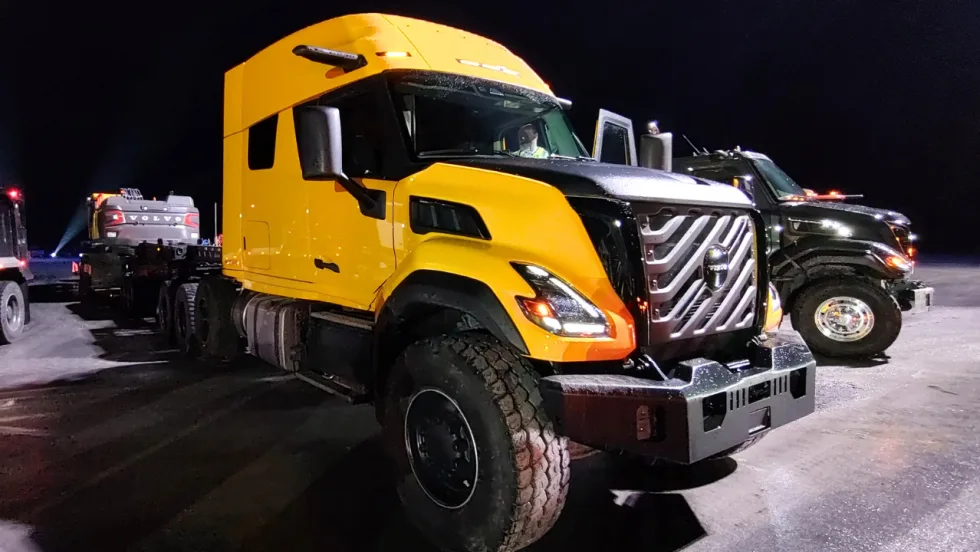
Volvo Unveils New VNX Heavy-Haul and Vocational Truck
Volvo Trucks has launched the VNX, a new vocational truck also available as a tractor in day cab and two sleeper configurations, with one heavy-haul model. The Volvo VNX is powered by Volvo's D13 platform, which delivers up to 540 horsepower and 1,950 pound-feet of torque and is EPA 2027-compliant.
Read More →
How GP Transco Cuts Trucking Fuel Costs, a Tenth of a Gallon at a Time
What’s another tenth of a mile per gallon worth? GP Transco shares how equipment upgrades and driver coaching turn small gains into meaningful fuel savings.
Read More →
Electric Yard Tractors Move Beyond Pilots
Operating-cost savings have overtaken sustainability goals as the leading reason surveyed fleets are adopting battery-electric terminal tractors, according to new NACFE research.
Read More →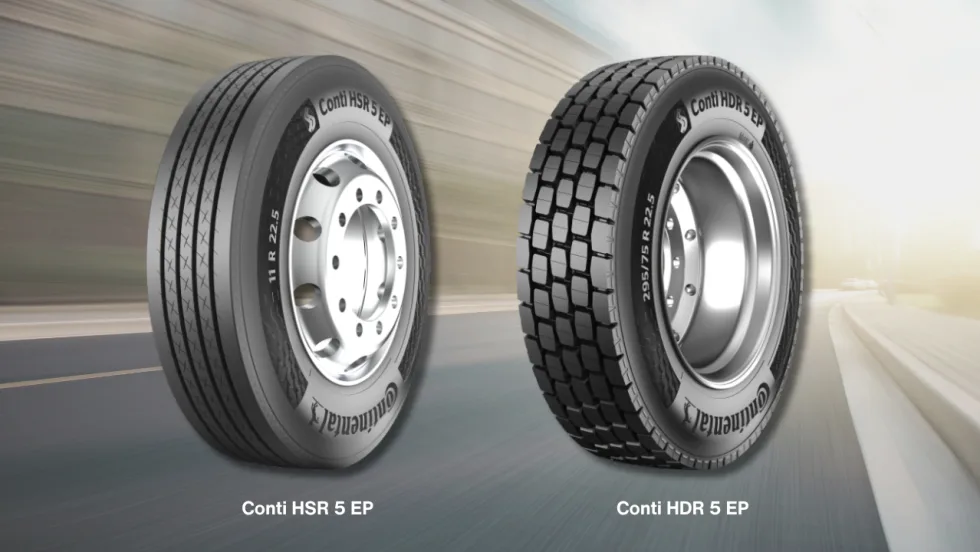
Continental Introduces New Regional Truck Tires
Continental says its new Generation 5 steer and drive tires for regional operations offer longer tread life, with estimated mileage gains of 22% and 19%, respectively.
Read More →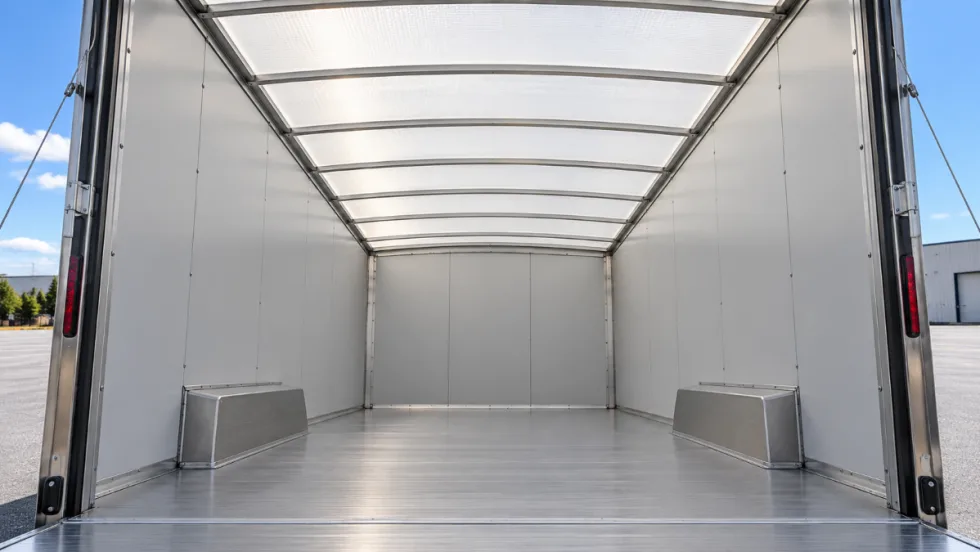
Tekmodo Introduces CargoBright Brand for Translucent Trailer Roofs
CargoBright is designed to diffuse daylight across the cargo area while performing as a working vehicle roof.
Read More →
Fleet Economics Shape Electric Truck Outlook
ACT Research expects costs, charging infrastructure, and technology improvements to drive zero-emission commercial vehicle adoption as federal regulations and incentives retreat.
Read More →
Kodiak Targets Dallas–Houston for Driverless Trucks
The company says its autonomous trucks are completing the I-45 run without a safety observer taking control. It plans to remove the observer by the end of 2026.
Read More →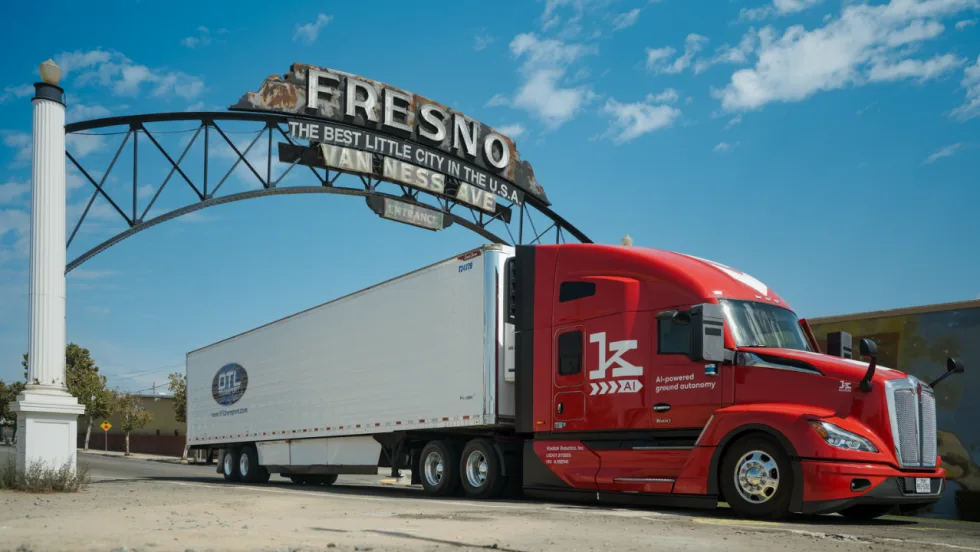
Kodiak Hauls Produce in California Autonomous Truck Pilot
Kodiak AI and DTL Transport have begun hauling produce between Fresno and Los Angeles under California’s new rules for testing heavy-duty autonomous trucks. A safety driver remains behind the wheel.
Read More →
Used-Truck Remarketing Math Is Changing
Used-truck value is no longer just a concern at trade-in. Decisions made throughout a truck’s first life can influence what it’s worth years later.
Read More →
How Volvo Updated Its D13 for EPA 2027 [Watch]
Volvo’s updated D13 promises lower emissions without sacrificing performance or fuel economy. Take a closer look at what changed inside the engine in this HDT Spotlight video.
Read More →