




Where to Now for Diesels?
Despite all the attention being given to electric drivetrains, diesel engines still have a long future ahead of them. Engineering, design and innovation centers have never been busier.

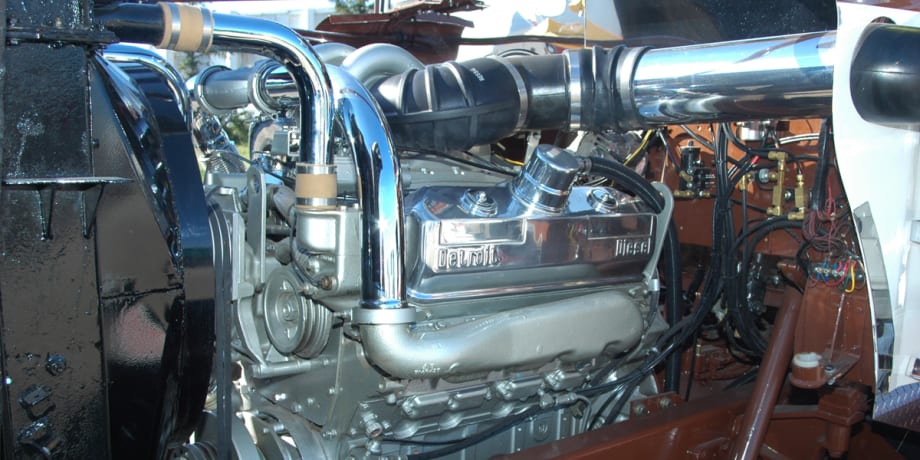
Diesel internal combustions have come a long way since Rudolph Diesel fired up the first one running on peanut oil. Experts agree there’s lots of life left in internal combustion engines.
Photo: Jim Park
We can be pretty sure that diesel engines will be with us for some time to come. There’s really nothing on the horizon that matches them for power density, low cost of ownership and operation, reliability, and availability of fuel, service and repair.
Battery-electric and fuel-cell electric trucks are making strides, but it could be as long as a decade before they become attractive alternatives to diesel in numbers large enough to matter.
Make no mistake, the industry is moving in that direction. But until then, regulators will push hard for ever-cleaner diesels. How is the industry doing in that regard? Surprisingly, well really — not that they get much credit for it.
Thanks to the introduction of cleaner fuels, advanced engine technology and particulate filters, both PM (particulate matter, aka soot) and NOx (nitrogen oxides) emissions have dropped by 98% since 1988. Diesel-related NOx emissions dropped by more than 40% between 2007 and 2017, while fine particle emissions (PM 2.5) from diesel engines declined by over 230,000 tons between 2008 and 2017, according to the Diesel Technology Forum.
The federal Environmental Protection Agency says mobile sources account for just under 5% of the fine particle emissions inventory. Wildfires are the largest source of emissions making up 43%, followed by dust from unpaved roads and rubber particles scrubbed from tires. But I digress.
Recently the Diesel Technology Forum concluded that 49% of all diesel-powered commercial vehicles on the road are powered by clean-diesel engine technology.
That said, the EPA has trucking in its sights once again. New greenhouse gas/fuel efficiency regulations, GHG Phase II, calls for improvements that will ratchet down CO2 emissions by an additional 24% by 2027 (compared to Phase I). Getting there will be a whole-truck effort involving aerodynamic design, lower-rolling-resistance tires, extended idle reduction technologies, and of course, engine, transmission, and driveline improvements.
On top of GHG Phase II, we’re facing new NOx-reduction and low-load-cycle emissions regulations being developed by the EPA and the California Air Resources Board. Meeting those targets will require even more from our not-so-humble diesels, including, among other technologies, mild hybridization, advanced exhaust gas recirculation, and cylinder deactivation.
Cylinder deactivation
Cylinder deactivation, or CDA, offers huge potential to reduce fuel consumption by using fewer cylinders under low-load conditions while reducing NOx emissions by maintaining higher aftertreatment system operating temperatures across a wider range of duty cycles. It will play a significant role in meeting GHG Phase II, as well as CARB’s proposed low-NOx rule.
CDA is accomplished by managing the valve train hydraulically to keep the exhaust and intake valves closed on certain cylinders while cutting off fueling to those cylinders, says Robb Janak, director of new technology for Jacobs Vehicle Systems.
“We basically just turn off the intake and exhaust valve main events cutting off fuel injection,” Janak says. “That shuts down the entire cylinder and forces the remaining cylinder to do more work, but more efficiently.”
It’s simple on/off deactivation strategy, but Jacobs has been working with Cummins and Silicon-valley-based tech company, Tula, to improve on that basic function. Testing of Tula’s Dynamic Skip Fire cylinder deactivation technology on a Cummins engine has already shown a 74% reduction in NOx emissions.
“Typical ‘already-in-place’ CDA is for two-mode deactivation, meaning half the engine is deactivated, or none of it is,” explains John Fuerst, Tula’s senior VP of engineering. “Tula’s strategies require all cylinders to be independently deactivatable so that such an ultimate deactivation flexibility can enable the [Dynamic Skip Fire] strategies.”
In addition to CDA, engineers are working on more precise ways to control exhaust gas recirculation, as well as water- and oil-pump functions for greater efficiency. Getting exhaust gas to flow back into the engine requires a pressure differential between the exhaust side and the intake side. Traditional ways of doing that limit the efficiency of the turbocharger and impose greater loads on the engine.
EGR pumps separate from the turbocharger could manage exhaust flows much more efficiently and with lower energy losses, says Mihai Dorobantu, Eaton Vehicle Group’s director of technology planning and government affairs. The same applies to fluids pumping throughout the engine. This will involve electric pumps whose flows can be optimized based on demand, not just spinning with the rotation of the engine.
“These parasitic losses are small, technically, but they contribute to losses in efficiency,” he says.
Brand-new engines?
With so much talk of hydrogen as a low- or carbon-free energy source, several companies are eying hydrogen-fueled internal combustion engines as lower-cost alternatives to hydrogen-fuel-cell vehicles.
Cummins, Volvo Trucks, and Westport Fuel Systems have all dipped their toes (OK their feet) into hydrogen ICEs.
They work on paper in a similar manner to natural-gas ICEs, and they have similar upsides and downsides. They require heavy storage tanks for the compressed gas, there are the inherent lubrication challenges to using a dry fuel, and H2 ICEs will continue to produce NOx and probably some fine particulate matter in the form of soot from the lubricating oil consumed during combustion.
On the positive side, because of the high energy content of the fuel source, these engines can run lean and therefore are quite fuel-efficient. And when using renewable H2, they are virtually carbon- and CO2-free. On that front, the environmental purists decry the use of dirtier sources of hydrogen such as that produced through steam methane reforming, while questioning the energy conversion losses incurred through electrolysis.
So, H2 could work as an alternative to ICE diesels, but they won’t be a get-out-of-jail-free card.
There’s also a brand-new type of diesel engine currently in development based on a very old principal — opposed-piston engines.
Achates Power is spearheading the engineering. Peterbilt is now testing a 10.6L, three-cylinder (six piston) engine that’s said to produce up to 300 kW (402 hp) and 1,750 lb-ft of torque.
These engines promise greater fuel efficiency because of the smaller displacement but high power-to-weight ratios and two-stroke operation. They are mechanically smaller and vastly less complex than traditional diesel engine designs.
In various tests, the engine already meets EPA’s 2027 CO2 and NOx targets. Calstart Executive VP Bill Van Amburg has been quoted as saying it’s “the cleanest-combustion, lowest-carbon combustion engine in the world.”
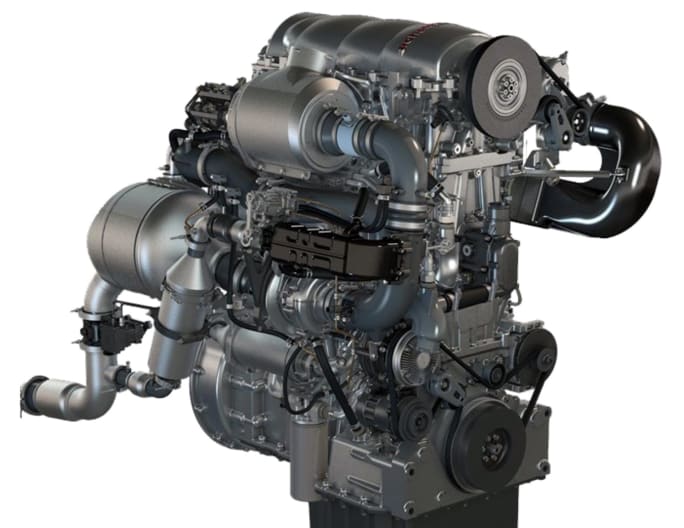
In modernizing the tried-and-true opposed-piston engine concept, Achates Power managed to produce one of the cleanest engines ever. Does it have a future in trucking?
Photo: Achates Power
With the pressing goals of GHG Phase II and the Low-NOx regs looming front and center for engine makers, their near-term strategies are in place and work is under way. But regulators will continue regulating, and until the industry come up with a battery that contains as much energy as a tank fuel of diesel fuel and weighs about the same, the internal combustion engine will continue its evolution. The first one ran on peanut oil. Who knows what the last one will be burning.
“Until today, we have essentially traded CO2 for NOx and NOx for CO2, but simultaneously reducing them by these enormous quantities creates a space for some real ingenuity and some real technology,” says Eaton’s Dorobantu. “Some people ask why we continue investing in internal combustion engines when for sure they’re going to go away. But I think it’s going to be exactly the opposite. There’s going to be a lot of investment in the internal combustion engine because it cannot go away anytime soon.”
More Equipment

More Trailer Data Through the Same Seven-Way [Video]
Can trucking’s standard seven-way connector handle more cameras and trailer data? Grote’s Adam Slade shows HDT how the company is using new technology with its 4See trailer system, not only to add a new backup camera but also to expand other capabilities — without adding another connection.
Read More →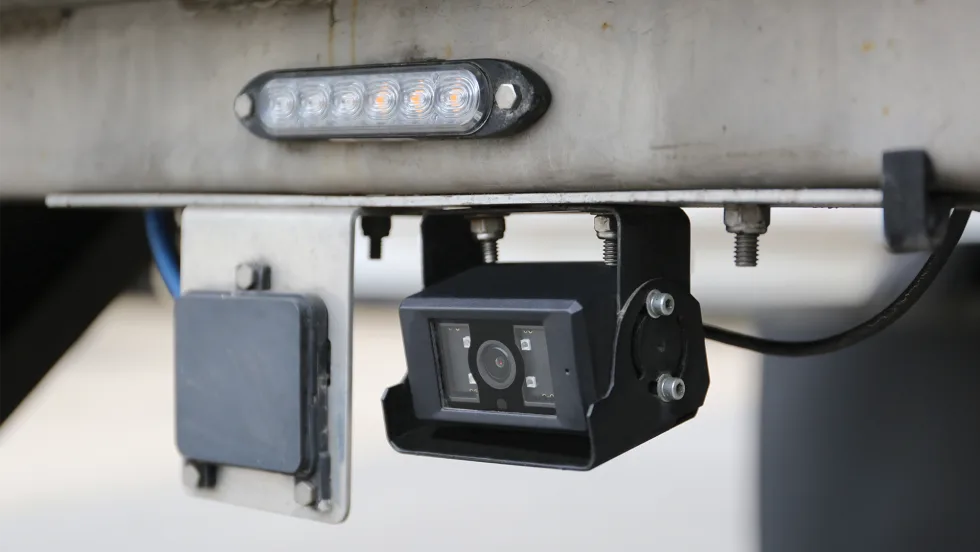
Grote: More Cameras, Same Seven-Way Connector
The next-generation 4See rear-view backup camera from Grote uses the standard seven-way connector and supports additional cameras and other trailer data.
Read More →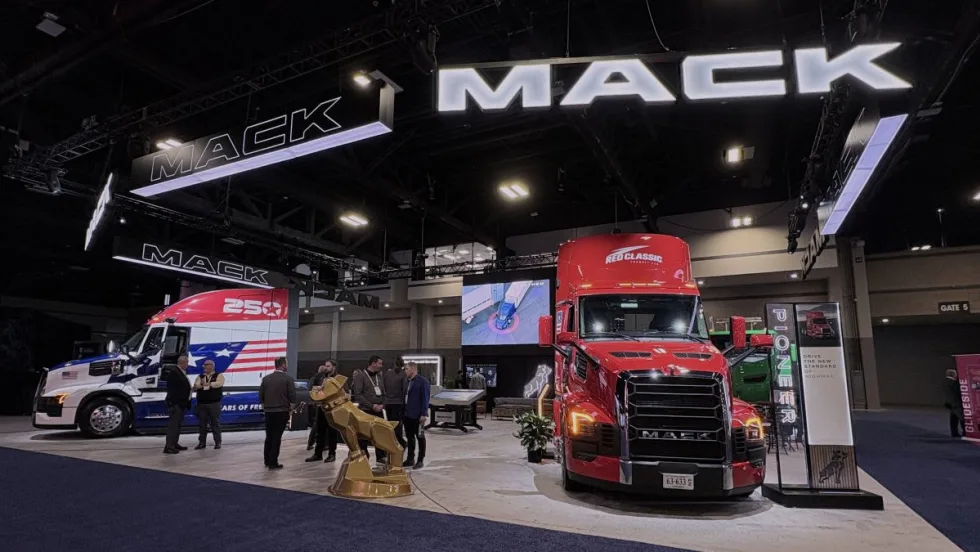
Trucks at ATA's 2026 MC&E in Charlotte, North Carolina [Photos]
From rigs decked out in patriotic America's 250 paint schemes to autonomous trucks and more, check out these photos from ATA's 2026 Management Conference & Exhibition.
Read More →
Help HDT Find Trucking’s Top Products
Have you come across a new product that could make a difference for trucking fleets? Nominate it for HDT’s 2027 Top 20 Products Awards by November 9.
Read More →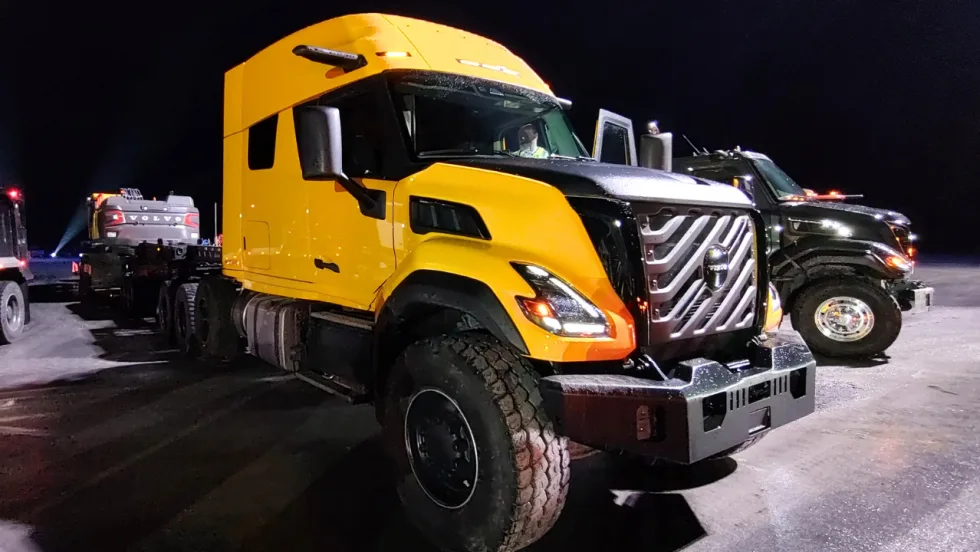
Volvo Unveils New VNX Heavy-Haul and Vocational Truck
Volvo Trucks has launched the VNX, a new vocational truck also available as a tractor in day cab and two sleeper configurations, with one heavy-haul model. The Volvo VNX is powered by Volvo's D13 platform, which delivers up to 540 horsepower and 1,950 pound-feet of torque and is EPA 2027-compliant.
Read More →
How GP Transco Cuts Trucking Fuel Costs, a Tenth of a Gallon at a Time
What’s another tenth of a mile per gallon worth? GP Transco shares how equipment upgrades and driver coaching turn small gains into meaningful fuel savings.
Read More →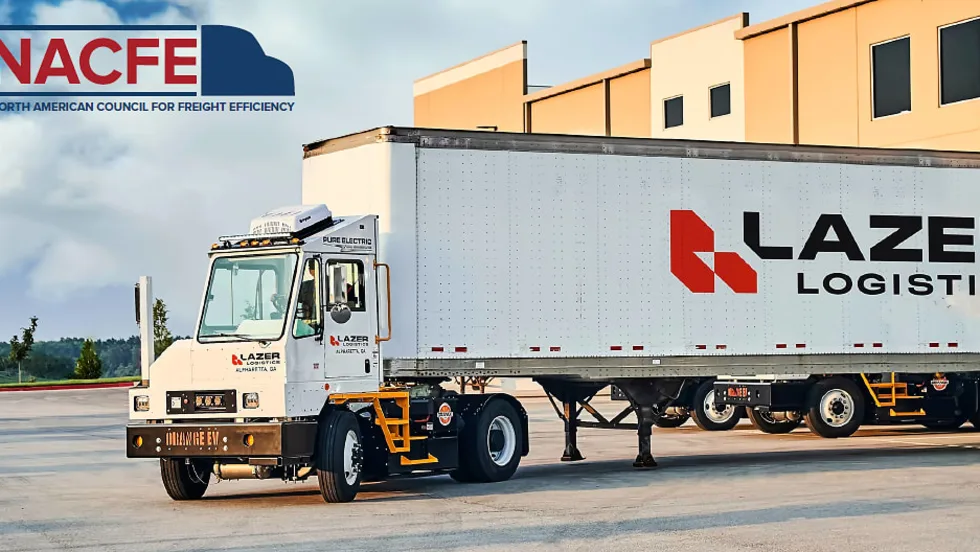
Electric Yard Tractors Move Beyond Pilots
Operating-cost savings have overtaken sustainability goals as the leading reason surveyed fleets are adopting battery-electric terminal tractors, according to new NACFE research.
Read More →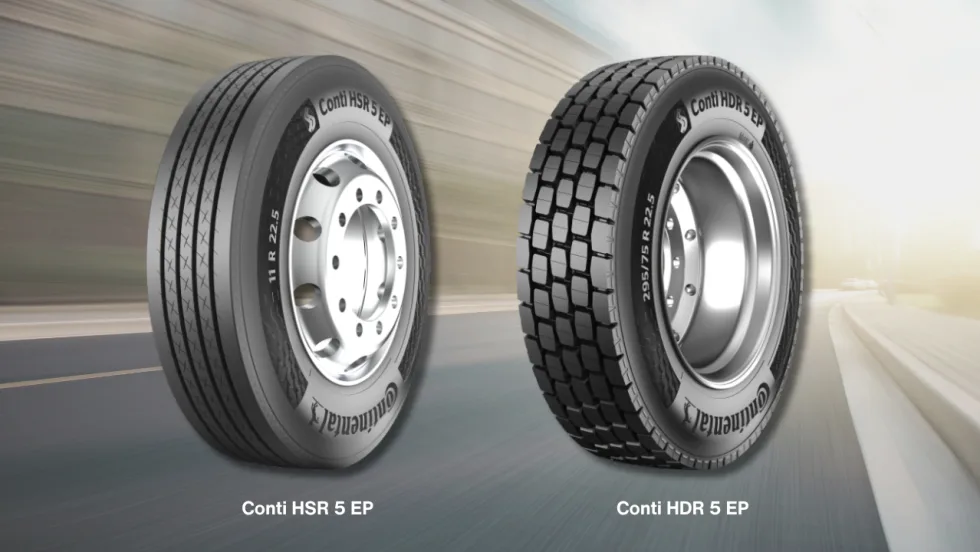
Continental Introduces New Regional Truck Tires
Continental says its new Generation 5 steer and drive tires for regional operations offer longer tread life, with estimated mileage gains of 22% and 19%, respectively.
Read More →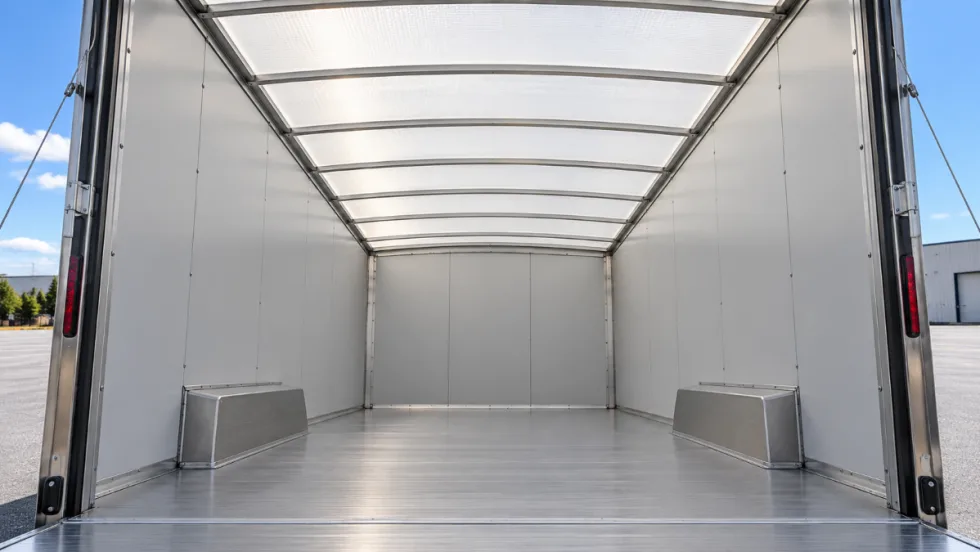
Tekmodo Introduces CargoBright Brand for Translucent Trailer Roofs
CargoBright is designed to diffuse daylight across the cargo area while performing as a working vehicle roof.
Read More →
Fleet Economics Shape Electric Truck Outlook
ACT Research expects costs, charging infrastructure, and technology improvements to drive zero-emission commercial vehicle adoption as federal regulations and incentives retreat.
Read More →