





Related: Why Volvo Sees Autonomous Trucks as an All-New Logistics Mode
Waabi, Volvo Claim Breakthrough in Scaling Autonomous Trucking
Waabi says its AI-powered virtual driver successfully transferred to Volvo Autonomous Solutions' Volvo VNL Autonomous platform without retraining or additional data, a milestone the companies say could dramatically accelerate commercialization of autonomous trucks.
June 26, 2026
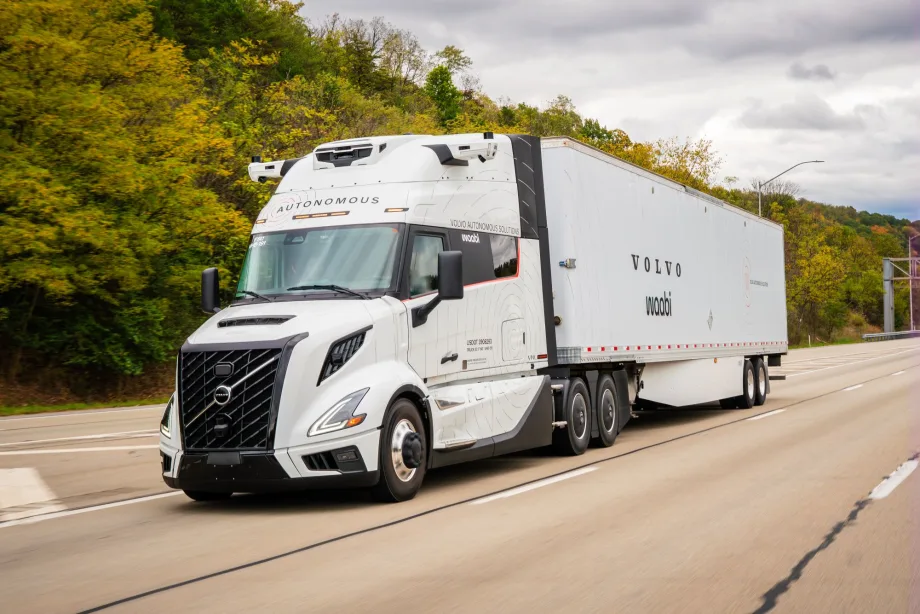
Waabi and Volvo Autonomous Solutions say they have solved one of autonomous trucking's most challenging technical problems.
Credit:
Waabi
3 min to read
Waabi and Volvo Autonomous Solutions (VAS) say they have achieved a significant milestone in autonomous trucking. The breakthrough demonstrates that Waabi's AI-powered virtual driver can operate a new truck platform without requiring additional training, engineering or data collection, the companies said.
The achievement marks an important step toward making autonomous trucking technology more scalable and commercially viable by allowing a single AI driving system to transfer seamlessly between different vehicle platforms, according to both companies.
Zero-Shot Transfer to Volvo VNL Autonomous
According to Waabi, its AI-based Waabi Driver was integrated with the Volvo VNL Autonomous platform and successfully operated on both highways and complex surface streets without requiring new real-world data, simulation data or fine-tuning.
The company describes the accomplishment as "zero-shot generalization." This means the virtual driver was able to adapt immediately to a completely different truck platform despite differences in vehicle size, sensor configurations, control systems and physical characteristics.
Waabi said the Volvo VNL Autonomous performed safely and smoothly from its first mile on public roads using the Waabi Driver.
The company argues that overcoming what it calls the "embodiment generalization" challenge has historically been one of the largest technical hurdles facing autonomous vehicle developers, with most systems requiring extensive engineering work whenever they are adapted to a new vehicle platform.
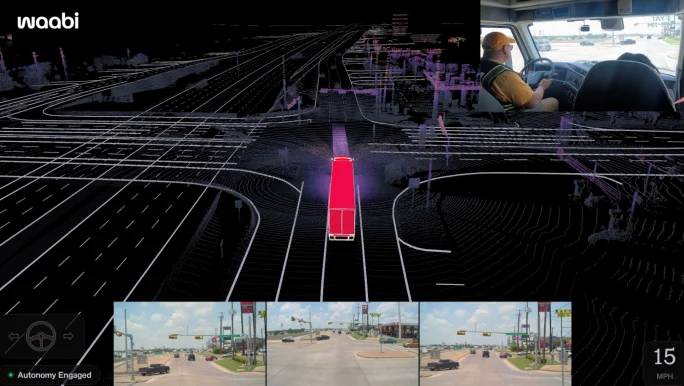
According to the companies, this technological breakthrough demonstrates that Waabi's AI-powered virtual driver can operate a new truck platform without requiring additional training, engineering or data collection.
Credit:
Waabi
Waabi also noted that its AI system previously demonstrated the ability to expand beyond highway driving into more complex surface-street environments, giving the company confidence that the technology could generalize across both driving environments and vehicle platforms.
Partnership Focuses on Commercial Scalability
Nils Jaeger, president of Volvo Autonomous Solutions, said the successful integration validates both companies' long-term partnership and highlights the flexibility of Volvo's autonomous truck platform.
"Road testing the Volvo VNL Autonomous, integrated with the Waabi Driver, on public roads is an important proof point of our partnership with Waabi," Jaeger said. "It also demonstrates the scalability of Volvo's autonomous truck platform, which is designed to integrate different vehicle models and virtual drivers to enable a wide range of use cases and applications."
Volvo said the platform was designed to support multiple autonomous driving systems, giving customers flexibility as commercial autonomous trucking deployments expand.
Waabi founder and CEO Raquel Urtasun said the milestone extends beyond autonomous trucking and demonstrates broader advances in physical AI.
"For the first time in the industry, we have shown that a virtual driver can generalize across fundamentally different embodiments without requiring a single training example -- neither real nor simulated -- or fine-tuning," Urtasun said.
The companies said the ability to deploy the same AI system across multiple vehicle platforms and operating environments could significantly reduce development time and costs while accelerating commercialization of autonomous freight transportation.
Waabi and Volvo Autonomous Solutions continue to develop autonomous trucking technology aimed at future commercial deployment, building on their partnership announced in 2025 to jointly develop and commercialize autonomous heavy-duty trucks.
More Equipment
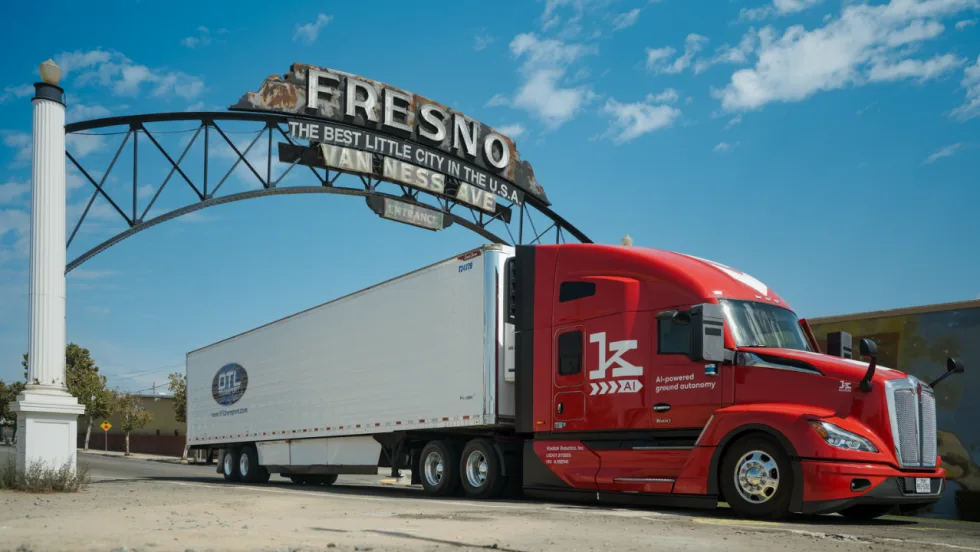
Kodiak Hauls Produce in California Autonomous Truck Pilot
Kodiak AI and DTL Transport have begun hauling produce between Fresno and Los Angeles under California’s new rules for testing heavy-duty autonomous trucks. A safety driver remains behind the wheel.
Read More →
Used-Truck Remarketing Math Is Changing
Used-truck value is no longer just a concern at trade-in. Decisions made throughout a truck’s first life can influence what it’s worth years later.
Read More →
How Volvo Updated Its D13 for EPA 2027 [Watch]
Volvo’s updated D13 promises lower emissions without sacrificing performance or fuel economy. Take a closer look at what changed inside the engine in this HDT Spotlight video.
Read More →
Michelin Tire Improves Efficiency and Durability for Regional Fleets
The Michelin X Multi Energy D2 is a regional haul drive tire engineered to help fleets improve fuel efficiency, durability and traction in demanding stop-and-go operations.
Read More →
ZF Expands Commercial Vehicle Push in North America
ZF is expanding its North American commercial-vehicle presence with new transmission applications, electrification, trailer technology and autonomous-driving systems.
Read More →
Tesla Wants a Self-Driving Semi. Are Cameras Enough?
Could Tesla’s camera-only autonomous driving technology work on an 80,000-pound Semi? In this commentary, HDT's Deborah Lockridge takes a look at Tesla, Cybercab, and how autonomous trucks see the road.
Read More →
Kodiak: Driverless Long-Haul Truck Launch on Track for 2026
Kodiak AI says its driverless long-haul safety case is 93% complete and it remains on track to begin commercial operations by year-end 2026.
Read More →
What DOT’s Automated Vehicle Strategy Means for Trucking
The U.S. Department of Transportation issued a new automated-vehicle strategy that outlines plans for driverless-truck regulations, cross-state freight corridors, and federal safety standards.
Read More →
East Coast Port Launches $45M Electric Truck Push
The Port Authority of New York and New Jersey announced millions in incentives for zero-emission drayage trucks, yard tractors, and new charging hubs near the port.
Read More →
PlusAI Going Public to Fund Autonomous Truck Launch
A SPAC deal could provide PlusAI with up to $300 million as it works toward a 2027 commercial launch of factory-built autonomous trucks.
Read More →