





Kodiak and Roehl Transport Launch Autonomous Route Between Dallas and Houston
Autonomous Truck Testing Moves Ahead in California as Teamsters Challenge Rules
California has begun permitting heavy-duty autonomous truck testing, with Aurora and Kodiak among the first to receive approval, as the Teamsters sue the DMV over the new regulations.
August 18, 2026
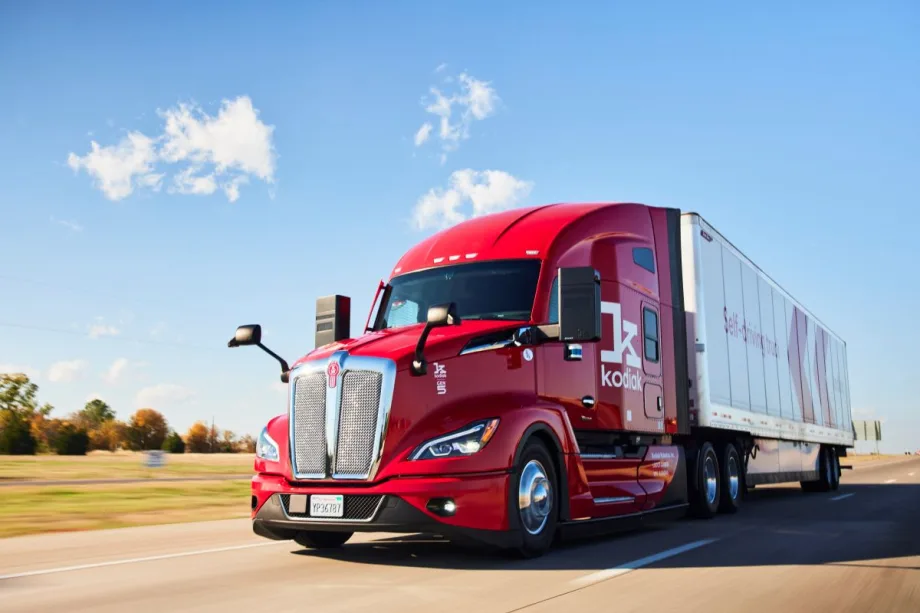
Kodiak CEO Don Burnette called California’s new autonomous vehicle regulations "a major unlock for freight innovation."
Credit:
Kodiak AI
4 min to read
- California has initiated testing for heavy-duty autonomous trucks, marking a significant development in transportation technology.
- Companies like Aurora and Kodiak are among the first to receive approval for this autonomous truck testing.
- The Teamsters union is challenging the new regulations by filing a lawsuit against the California DMV.
*Summarized by AI
Two autonomous-truck companies have received a permit to test autonomous trucks in California, but the Teamsters union is fighting it.
Aurora Innovation and Kodiak AI have received drivered testing permits under the California Department of Motor Vehicles’ newly expanded Autonomous Vehicle Tester program, which allows permitted heavy-duty autonomous vehicle developers to test and deploy their technology on California roads for the first time.
These permits allow autonomous trucks to operate in California with a safety driver behind the wheel.
Both companies are based in California, but they haven’t been able to deploy trucks in their home state because the rules didn’t allow them.
Gatik and Plus.ai are also permit holders, according to the California DMV website.
California's New Autonomous-Vehicle Regulations
In April 2026, the DMV enacted autonomous-vehicle regulations for the first time that allow commercial trucks and other vehicles over 10,000 pounds to operate fully autonomously on public roads in California.
The new regulations allowed AV manufacturers to apply for permits to test and deploy heavy-duty autonomous vehicle technology on California roadways.
The rule requires manufacturers to begin with testing using a safety driver and progress to driverless testing before applying for commercial deployment. Manufacturers must complete 500,000 miles of testing at each phase and prepare a structured safety case demonstrating the safety of vehicle hardware, software and operations.
Heavy-duty AVs must still stop at CHP weigh stations and comply with all applicable state and federal commercial motor vehicle requirements.
The rules also ban companies from testing on roads where the speed limit is 25 mph or less, unless the trucks are on a “direct route” between destinations.
“California’s comprehensive autonomous vehicle regulations are a major unlock for freight innovation,” said Don Burnette, Founder and CEO, Kodiak.
“This permit allows us to begin the first phase of scaling autonomous trucking coast-to-coast, while ensuring appropriate safety oversight from California regulators.”
Kodiak and Aurora received permits that authorize autonomous operations with a human safety driver aboard. The permit marks the first step in the DMV’s phased permitting approach, which progresses from drivered testing to driver-out testing and, ultimately, driver-out deployment.
Teamsters Challenge California Autonomous Vehicle Rules
Teamsters California has sued the California Department of Motor Vehicles over regulations allowing the testing of fully autonomous heavy-duty trucks on public roads, alleging the agency failed to adequately assess the rules’ economic and safety implications.
In a press release, the Teamsters union alleged that in order to “avoid a required study and public disclosure of the economic impacts of such a sweeping change, the DMV used a shortcut process meant for minor regulatory updates with less than $50 million in costs or benefits in the first year after implementation."
According to the Teamsters lawsuit, "the DMV’s rushed process vastly underestimated the costs of deploying self-driving trucks, outrageously claiming not a single job would be eliminated by autonomous heavy vehicles.”
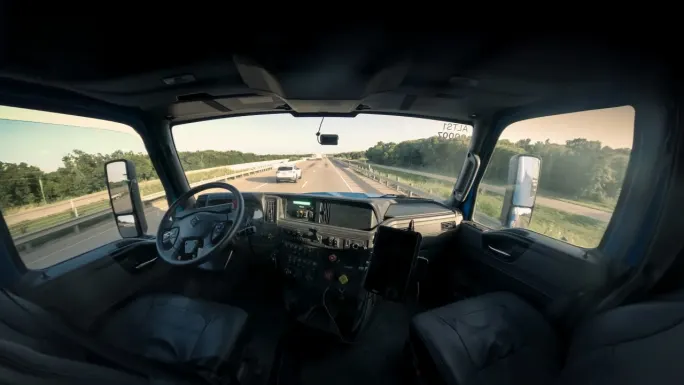
Even as it prepares to start testing autonomous trucks in California, Aurora has been signing on more customers to adopt its recenly announced next-generation truck.
Credit:
Aurora Innovation
Aurora Ramping Up Driverless Truck Deployments
Aurora said in its second-quarter financial report that it is fully allocated to exit the year with 200 driverless trucks in operation.
To be able to deliver those trucks by the end of the year, Roush is ramping toward a 1,000-truck annual production run-rate by October to keep pace with demand.
(Roush also works with Kodiak.)
Aurora has been signing on more customers in Texas, a hub of autonomous-truck development, to adopt its next-generation truck.
Charger Logistics signed on to deploy the Aurora Driver on the Dallas-Laredo route using Aurora’s newest fleet of driverless trucks.
Value Truck, a full-service and cross-border carrier, specializes in transporting heavy, oversized industrial equipment, retail goods, and perishables. The company will initially deploy the Aurora Driver on two routes, Dallas-Laredo and Fort Worth-Phoenix, freeing up its own drivers to focus on local freight.
Volvo Autonomous Solutions plans to begin its own driverless operations on the Volvo VNL Autonomous in Q1 2027, which Aurora said makes the third fleet of driverless trucks powered by the Aurora Driver.
In addition to Hirschbach’s order for 500 trucks, Aurora is already in discussions with additional customers on its Driver as a Service model for 2027 and beyond.
Autonomous Trucks and Cross-Border Trucking
Aurora says driverless truck technology has the potential to ease congestion at the U.S.-Mexico border.
As part of its announcement of the deal with Value Freight, Aurora explained that Laredo, Texas, is the busiest land port in the Western Hemisphere and handles approximately 40% of all freight moving between the U.S. and Mexico.
As manufacturing facilities move closer to the U.S., “nearshoring” is driving a surge in freight that travels through Laredo, leading to longer pick-up times for traditional drivers at congested U.S. border hubs. The Aurora Driver gives carriers a way to move that freight around the clock on American highways, without the hours-of-service limits that constrain traditional drivers.
Quick Answers
California has started allowing the testing of heavy-duty autonomous trucks, marking a significant step in the integration of autonomous technology in logistics.
*Summarized by AI
Topics:Equipment
More Equipment
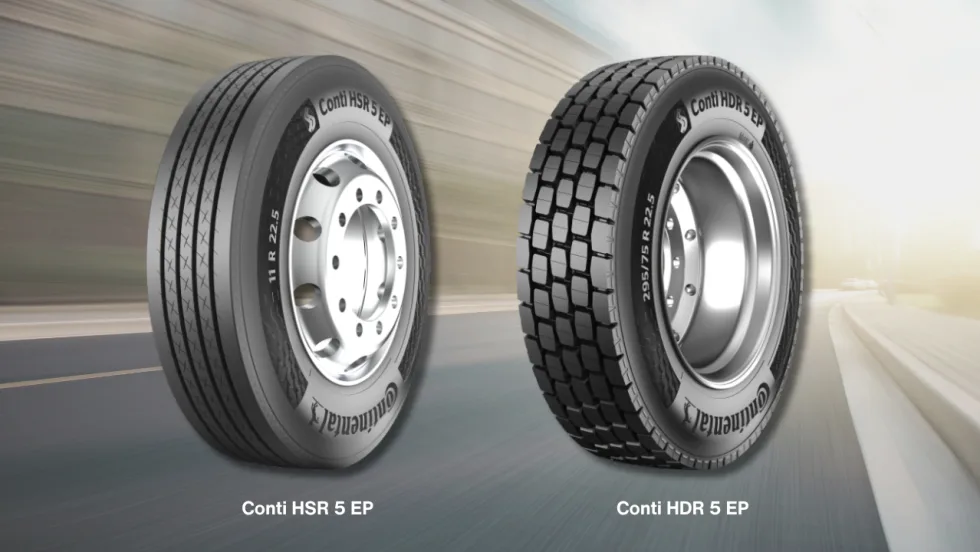
Continental Introduces New Regional Truck Tires
Continental says its new Generation 5 steer and drive tires for regional operations offer longer tread life, with estimated mileage gains of 22% and 19%, respectively.
Read More →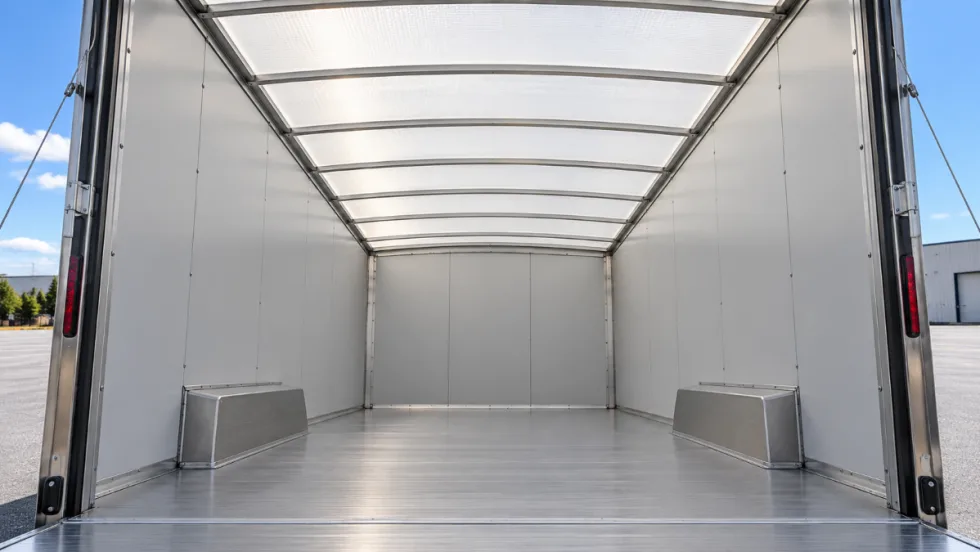
Tekmodo Introduces CargoBright Brand for Translucent Trailer Roofs
CargoBright is designed to diffuse daylight across the cargo area while performing as a working vehicle roof.
Read More →
Fleet Economics Shape Electric Truck Outlook
ACT Research expects costs, charging infrastructure, and technology improvements to drive zero-emission commercial vehicle adoption as federal regulations and incentives retreat.
Read More →
Kodiak Targets Dallas–Houston for Driverless Trucks
The company says its autonomous trucks are completing the I-45 run without a safety observer taking control. It plans to remove the observer by the end of 2026.
Read More →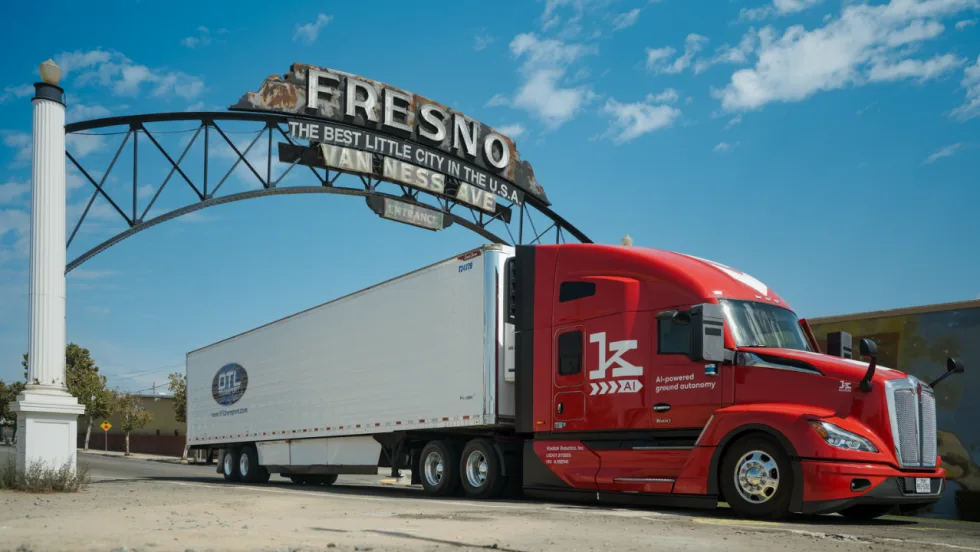
Kodiak Hauls Produce in California Autonomous Truck Pilot
Kodiak AI and DTL Transport have begun hauling produce between Fresno and Los Angeles under California’s new rules for testing heavy-duty autonomous trucks. A safety driver remains behind the wheel.
Read More →
Used-Truck Remarketing Math Is Changing
Used-truck value is no longer just a concern at trade-in. Decisions made throughout a truck’s first life can influence what it’s worth years later.
Read More →
How Volvo Updated Its D13 for EPA 2027 [Watch]
Volvo’s updated D13 promises lower emissions without sacrificing performance or fuel economy. Take a closer look at what changed inside the engine in this HDT Spotlight video.
Read More →
Michelin Tire Improves Efficiency and Durability for Regional Fleets
The Michelin X Multi Energy D2 is a regional haul drive tire engineered to help fleets improve fuel efficiency, durability and traction in demanding stop-and-go operations.
Read More →
ZF Expands Commercial Vehicle Push in North America
ZF is expanding its North American commercial-vehicle presence with new transmission applications, electrification, trailer technology and autonomous-driving systems.
Read More →
Tesla Wants a Self-Driving Semi. Are Cameras Enough?
Could Tesla’s camera-only autonomous driving technology work on an 80,000-pound Semi? In this commentary, HDT's Deborah Lockridge takes a look at Tesla, Cybercab, and how autonomous trucks see the road.
Read More →