




Great American Trucks: The Mack AC
The pugnacious Mack AC was tough, reliable and tenacious. It was in, in short, a Bulldog of a truck that became famous the world over.

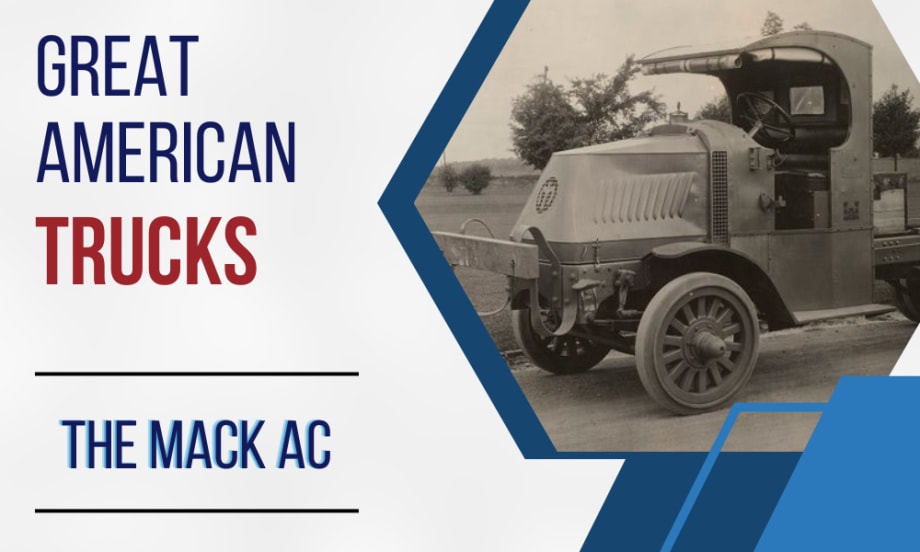
The Mack AC is the first featured truck in our Great American Trucks series.
Photo: National Archives/Canva
The earliest motor trucks – often called “commercial cars” at the time – often weren’t much more than a powered farm wagon. But by the mid-1910s, the basic design of the modern truck was starting to come into focus.
The company founded by two brothers, John and Augustus Mack, was an early commericial vehicle innovator, building its first dedicated truck in 1900. And by 1916, the Mack Truck Company, in Allentown, Pennsylvania, was ready to build on the lessons it had learned and take truck design to the next level. In 1916, Mack introduced its all-new AC model – a truck that would make its mark in the history books.
An Advanced Design for the Time
The Mack AC design is credited to the company’s chief engineer at the time, Ed Hewitt. His new truck was a two-wheel drive, two-axle vehicle that was so advanced for its time that 18 different patents were granted pertaining to various features on the truck. The AC came in three different sizes with payloads of 3.5, 5.5- and 7-5-ton payload capacities.
Power was delivered by a four-cylinder gasoline engine that cranked out a whopping 74 horsepower. In keeping with the advanced design of the AC, the engine featured a host of features, including an aluminum crankcase, a governor integrated into the camshaft timing gear and a three-speed manual gearbox with a clutch brake.
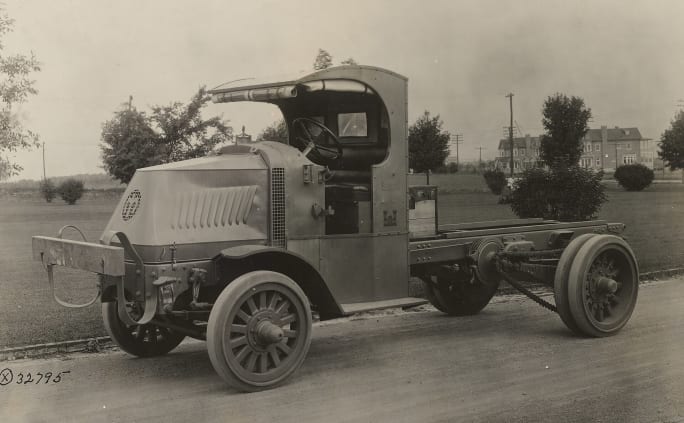
Driver comfort wasn't a priority for the Mack AC. But the truck was exceptionally tough and dependable in harsh working conditions.
Photo: National Archives
The AC featured a chain-drive powertrain (although a later, specialized, AK model variant experimented with an early driveshaft design). The chassis was cast from chrome-nickel steel that was heat-treated for added strength and durability.
Like any truck in 1916, the AC rode rough thanks to solid-rubber tires. And the driver and passenger sat exposed to the elements in an all-steel cab. A canvas roof was standard. But you could spec an all-metal roof for added protection.
One nod to driver ergonomics was the new steering wheel design. Most vehicles at the time featured a steering wheel sticking straight up out of the floor. This meant that steering a truck was akin to rotating a dinner plate on a table back and forth. But the Mack AC steering wheel extended out of the firewall at a 45-degree angle, giving drivers a much more comfortable and natural feel when driving.
But most striking of all was the truck’s blunt, pugnacious front end, dominated by a combination Mack logo and grill. Additional cooling louvers were cut into the sides of the hood to feed additional air to the AC radiator, which was mounted behind the engine.
The Bulldog is Born
The AC was an immediate hit for Mack in the U.S. But the design quickly captured the eye of the British Army as well.
World War was raging in Europe, with Great Britain and France locked in an epic struggle with Germany. The war had begun in 1914 with horse-drawn wagons bringing supplies up to the front lines. But increasingly, the French and British armies were turning to modern motor trucks to expedite the movement of materials. And the British liked what it saw in the Mack AC. Within months, the Mack AC was in France in British colors, hauling everything imaginable – even light tanks, searchlights and antiaircraft guns.
And the British soldiers — “Tommies” as they were called — absolutely loved the rugged American heavy truck. Before long, they started calling the blunt-nosed heavy-haulers “Bulldogs” in a nod to both their toughness and pugnacious front-end.
The British Army ordered around 2,000 Mack ACs. These were followed by another 4,500 in U.S. Army colors when America entered the war in 1917.
Before long, the Mack AC was universally known as the “Bulldog” in both armies. The name stuck. In 1922, Mack officially adopted the Bulldog as its corporate symbol. Over time, the Mack Bulldog would become an icon in its own right — one that still adorns every Mack truck built today.
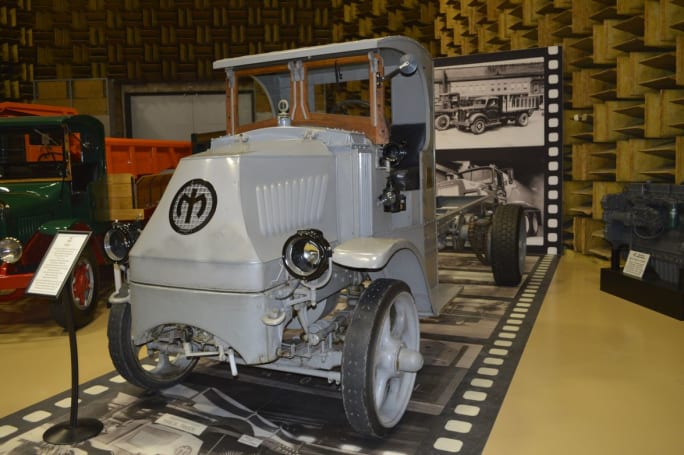
A Mack AC resides in a place of honor in the Mack Historical Truck Museum in Allentown, Pennsylvania.
Photo: Jack Roberts
A Truck for the Ages
The Mack AC was such a solid design that it remained in the Mack stable until 1938. And World War I isn’t its only page in the history books. Tough Bulldog ACs were commonly featured in newsreels in the 1930s helping crews build both the Golden Gate Bridge and Hoover Dam. The truck became closely associated with both massive projects in the minds of Americans.
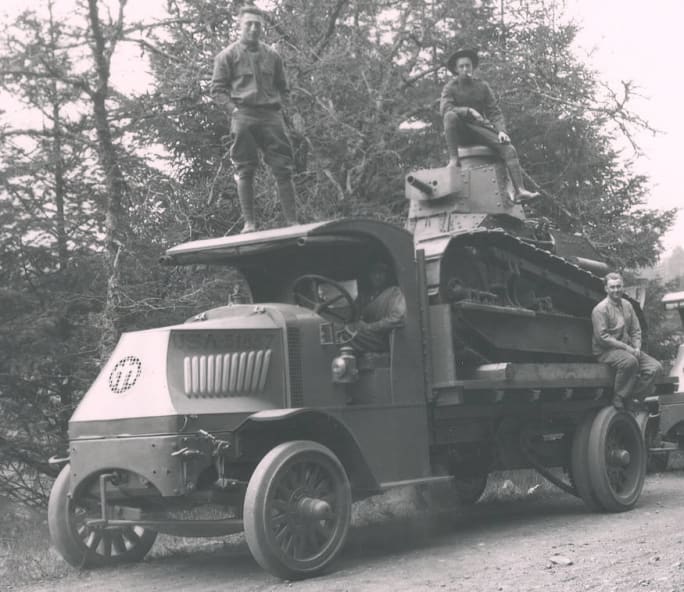
A U.S. Army Mack AC carrying an early model light tank.
Photo: National Archives
The AC remained in service long after Mack ceased production. Indeed, ACs were a common sight in American cities and on jobsites well into the 1950s and 1960s.
It could be argued that in many ways, the Mack AC set the template in place for the design of modern, heavy-duty commercial vehicles. Moreover, its service and subsequent reputation in Europe during World War I gave it an international presence that influenced truck-builders all over the globe.
The Mack AC was one of the most important truck designs in the history of motorized freight. It is a truck that unquestionably holds a place of honor as one of the greatest American trucks to ever hit the road.
More Equipment

How Volvo Updated Its D13 for EPA 2027 [Watch]
Volvo’s updated D13 promises lower emissions without sacrificing performance or fuel economy. Take a closer look at what changed inside the engine in this HDT Spotlight video.
Read More →
Michelin Tire Improves Efficiency and Durability for Regional Fleets
The Michelin X Multi Energy D2 is a regional haul drive tire engineered to help fleets improve fuel efficiency, durability and traction in demanding stop-and-go operations.
Read More →
ZF Expands Commercial Vehicle Push in North America
ZF is expanding its North American commercial-vehicle presence with new transmission applications, electrification, trailer technology and autonomous-driving systems.
Read More →
Tesla Wants a Self-Driving Semi. Are Cameras Enough?
Could Tesla’s camera-only autonomous driving technology work on an 80,000-pound Semi? In this commentary, HDT's Deborah Lockridge takes a look at Tesla, Cybercab, and how autonomous trucks see the road.
Read More →
Kodiak: Driverless Long-Haul Truck Launch on Track for 2026
Kodiak AI says its driverless long-haul safety case is 93% complete and it remains on track to begin commercial operations by year-end 2026.
Read More →
What DOT’s Automated Vehicle Strategy Means for Trucking
The U.S. Department of Transportation issued a new automated-vehicle strategy that outlines plans for driverless-truck regulations, cross-state freight corridors, and federal safety standards.
Read More →
East Coast Port Launches $45M Electric Truck Push
The Port Authority of New York and New Jersey announced millions in incentives for zero-emission drayage trucks, yard tractors, and new charging hubs near the port.
Read More →
PlusAI Going Public to Fund Autonomous Truck Launch
A SPAC deal could provide PlusAI with up to $300 million as it works toward a 2027 commercial launch of factory-built autonomous trucks.
Read More →
NHTSA Moves to Rewrite Truck Fuel-Economy Rules
The National Highway Traffic Safety Administration says it lacks authority to regulate medium- and heavy-duty truck engines separately from complete vehicles, but the existing standards have not yet been eliminated.
Read More →
Detroit Opens Orders for EPA 2027 Engines
Detroit isn’t starting from scratch to meet EPA 2027 diesel emissions standards. Its Gen 6 DD13 and DD15 engines keep much of today’s platform while updating the fuel and aftertreatment systems.
Read More →