




Engine Spec'ing 101
Spec'ing your first truck can be a daunting experience, here are some of the basics; your dealer can help with the rest.

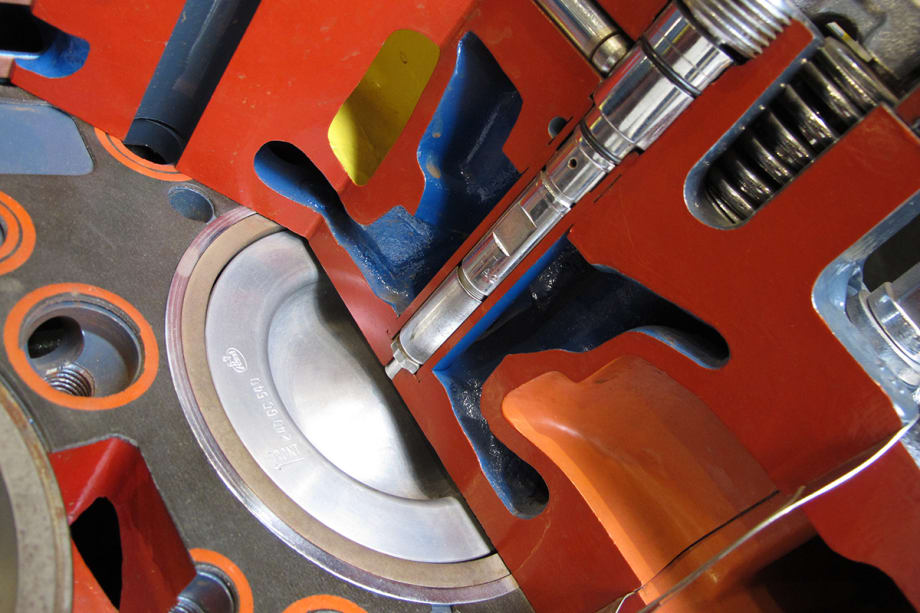
Engines do not work in isolation; consider all the possible use-cases and the rest of the driveline.
Photo: Jim Park
How fast do you want to go, how much weight are you planning to pull, and how much are you willing to spend to accomplish your goals? In a roundabout way, those are the three questions you need to ask before deciding on your engine spec.
There's actually much more on the table, but if you're planning to pull "average truckload weights" of between 50,000 and 70,000 lbs. gross weight on fairly flat ground, an engine producing 350 hp and 1,450 lb-ft of torque is all you really need. That would put you into 11-liter territory, with ratings of 325-425 hp and 1,250-1,550 lb-ft.
On the other hand, if you run high GVW loads or spend a lot of time driving in the mountains, you'll be much happier with something in the 15L or 16L range with 550-605 hp and 1,850-2,050 lb-ft. That said, plenty of fleets happily pull 80,000 lbs. over less demanding terrain with 13L engines dialed up to 500 hp/1,750-1,850 lb-ft.
There's really no pat answer to the question, "How much engine do I need?" Your engine spec depends on what you plan to do with the truck.
Truck Dealers Can Help With Spec'ing Truck Engines and Powertrains
Truck dealer sales reps are usually your best resource when it comes to spec'ing powertrains.
"The first question we usually ask our customers is, are you looking for best fuel economy, best performance, or a balance of both?" says Mike Stricker, director of component sales, Daimler Trucks North America. "We also ask if they are satisfied with the spec of the truck they currently own or drive. That is a good starting point. From there our teams utilize our proprietary spec’ing software – Detroit Spec Manager – which allows our experts to simulate customer routes and powertrain, application and vehicle configuration to compare myriad performance criteria to meet the customer’s needs."
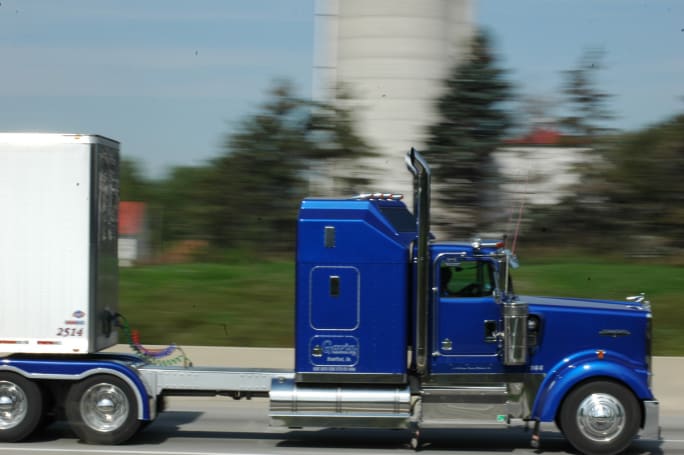
Horsepower is what keeps heavy trucks rolling at highway speed. You don't necessarily need more of it, you just need to spec the driveline so the horsepower is available when it's needed.
Photo: Jim Park
Such spec'ing programs can also reference the experiences of thousands of customers' in-service trucks along with established OE-specific performance metrics like startability and gradeability. "These metrics usually correspond with the best fuel efficiency, but the final specs are ultimately based on customer preference," he says.
Torque and horsepower are obviously prime considerations, but you also need to think about the physical size of the engine. They are available today in 11, 12, 13, 15 and 16L displacements. Engine rating charts show there's a lot of crossover in the 400-500 hp/1650-1850 lb-ft engines. You can get any of those ratings across several displacements.
"The last decade has seen significant migration of on-highway engines from 15L to 13L, with so much power being packaged in a smaller displacement," says Carl Hergart, director of powertrain and advanced engineering at the Paccar technical center. "A lot of this has to do with the fact that a majority of applications, especially over-the-road, typically are in the range of 400-510 hp and 1,550-1,850 lb-ft. Smaller displacement engines offer the added benefit of lighter weight."
Displacement does not affect fuel economy in a like-for-like situation. A 450/1850 13L engine will get you the same fuel mileage as a similarly rated 15L engine. So, does displacement make a difference?
"There can be distinct differences in displacements that need to be considered," says RaNae Isaak, Powertrain TCO & Consultancy Leader at Cummins. "A 450/1850 15L engine will operate differently from a similar 12L engine. As a couple examples, engine life can vary depending on the way the engine is used, and engine brake performance can be different.
"An engine needs to be able to do the job the customer wants or needs with relative ease. If not, higher fuel consumption, higher potential engine wear and other impacts can occur."
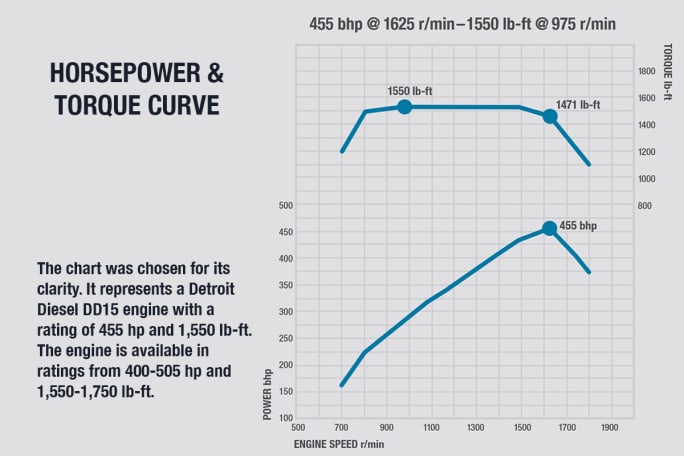
Source: Detroit Diesel
In most cases, larger displacement engines will be heavier than their smaller cousins, so that could be a factor in your decision. From a budget standpoint, the smaller displacement engines can be less expensive upfront — though there may be a penalty at trade-in time. In many cases, certain electronic features have blurred the distinction in displacement, such as the multi-torque options.
"Multi-torque ratings are a way to get the best of both worlds: torque when you need it and improved fuel economy when you don’t," says Isaak. "Torque management strategies allow a user to be better optimized automatically without any change in hardware."
It Depends on the Gears
The final decision on engine ratings depends on how the rest of the driveline will be spec'd — and it is not always clear which decision comes first. The driveline spec will determine the engine speed, which affects torque availability and ultimately fuel efficiency.
Volvo Trucks' powertrain marketing manager, John Moore, has an interesting way of looking at it. He says data collected from in-service customer trucks used to build predictive trip modeling has opened windows into powertrain spec'ing that allows customers to factor trip times into their decision, not just fuel economy and performance.
"Most drivers would tell you there's a big performance difference between a 450- and 500-hp engine," Moore says. "In fact, it can be as little as 2-3 mph on a 6% grade. You can hardly tell the difference, yet you'll probably have to pay more for a beefier driveline for the 500-hp engine and maybe even a higher price for the warranty coverage for that driveline. Is the 2-3 mph really worth all that?"
Programmable engine parameters can make 400-hp engines perform like 500-hp engines. Ask you dealer for help in setting up your engine.
Photo: Jim Park
Moore says that when Volvo runs trip time calculations comparing different drivelines (higher and lower numeric axle ratios with higher and lower engine speeds and horsepower), the differences in trip time for specific legs can be mere minutes, but the fuel savings can be significant.
Most dealers can now do those sorts of calculations, based on modeling and actual customer data. You tell the dealer sales rep what you plan to do with the truck, and they can come up with options and run scenarios. This can really help the buyer make the right decisions based on data, not seat-of-the-pants impressions or stories from other drivers.
However, buyers need to be upfront about their intent. Don't tell the sales rep you plan to operate at 65 mph on Interstate highways all the time if you'll be driving on a lot of two-lane roads at 55 mph.
Programmable Parameters
"There's a lot more opportunity for improving fuel economy and performance with programming," says Navistar's heavy-duty product segment marketing manager, Jim Nachtman. "There are parameters there that can be modified beyond the standard factory settings. For example, setting the cruise control to allow the truck to roll out slightly above the engine-brake-on setting allows you to conserve momentum and save fuel. That's an adjustable parameter."
There are dozens if not hundreds of engine parameters that can be adjusted to tweak the engine spec. A knowledgeable sales rep can help the buyer set the engine up for optimum performance and fuel economy.
Today's engine spec can hardly be considered in isolation. Powertrains are now fully integrated with engines and transmissions in constant communication and working together for optimum fuel efficiency or performance. And there's plenty of differentiation between the OEMs on this front. Many of the optional parameters, such as predictive cruise control or adaptive cruise control, are available through all manufacturers, but each one does it a bit differently. That's not to say better or worse, just different, and you may prefer one over another.
"Many new buyers don't realize all the options available to them," says Mack's director of product strategy, Roy Horton. "The dealer will ask the customer a lot of questions in the initial stages of the spec'ing process to determine what they are looking for. When the priorities emerge, they can start drilling down to specific options and parameters."
To get the best performance from the truck, the whole driveline has to be considered, from the engine to the rear axle ratios. The choice of driveline and rear axle ratio is part of the powertrain specification along with the engine and transmission. All components of the powertrain have to be carefully selected in order to get the optimum performance and efficiency.
If you're new at this or trading up from a 10-year-old truck, take full advantage of what the dealer can offer in terms of spec'ing suggestions. They are the experts.
More Equipment
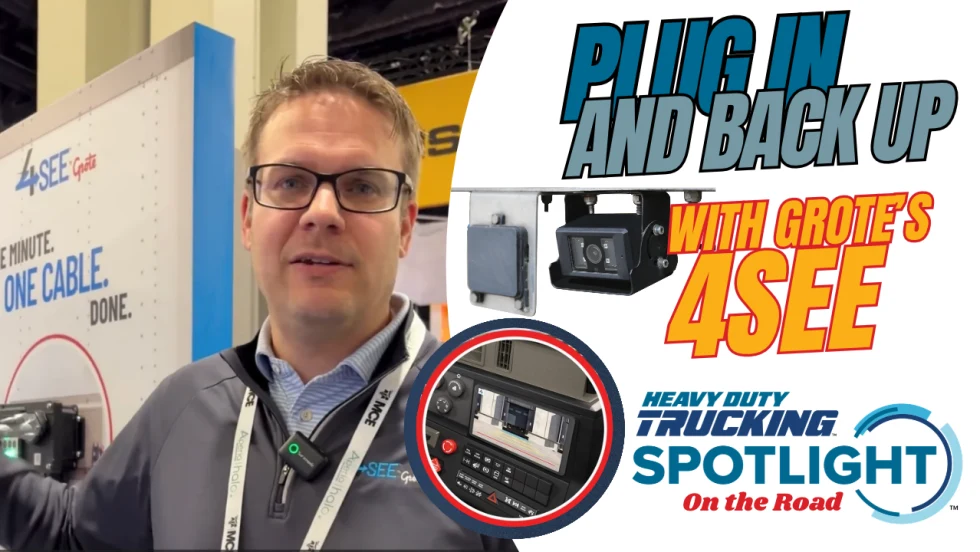
More Trailer Data Through the Same Seven-Way [Video]
Can trucking’s standard seven-way connector handle more cameras and trailer data? Grote’s Adam Slade shows HDT how the company is using new technology with its 4See trailer system, not only to add a new backup camera but also to expand other capabilities — without adding another connection.
Read More →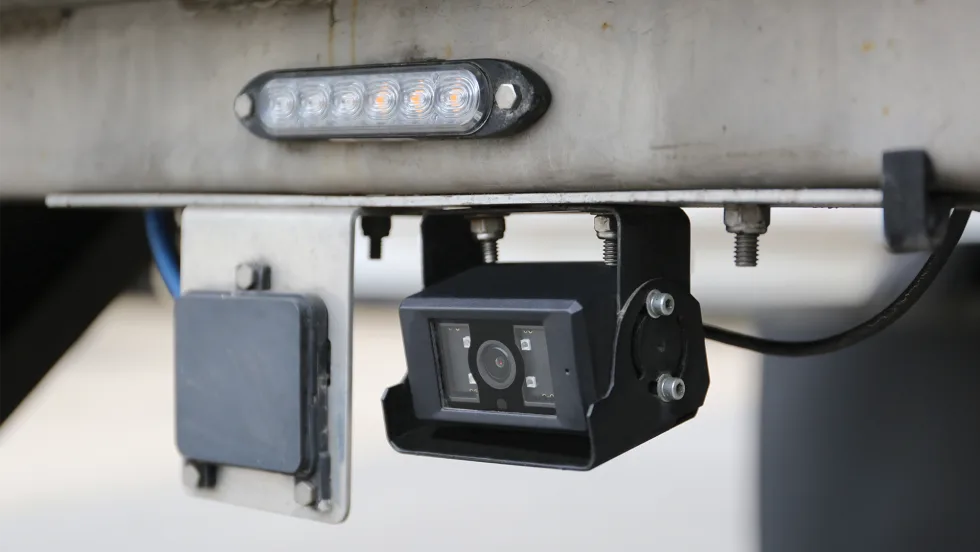
Grote: More Cameras, Same Seven-Way Connector
The next-generation 4See rear-view backup camera from Grote uses the standard seven-way connector and supports additional cameras and other trailer data.
Read More →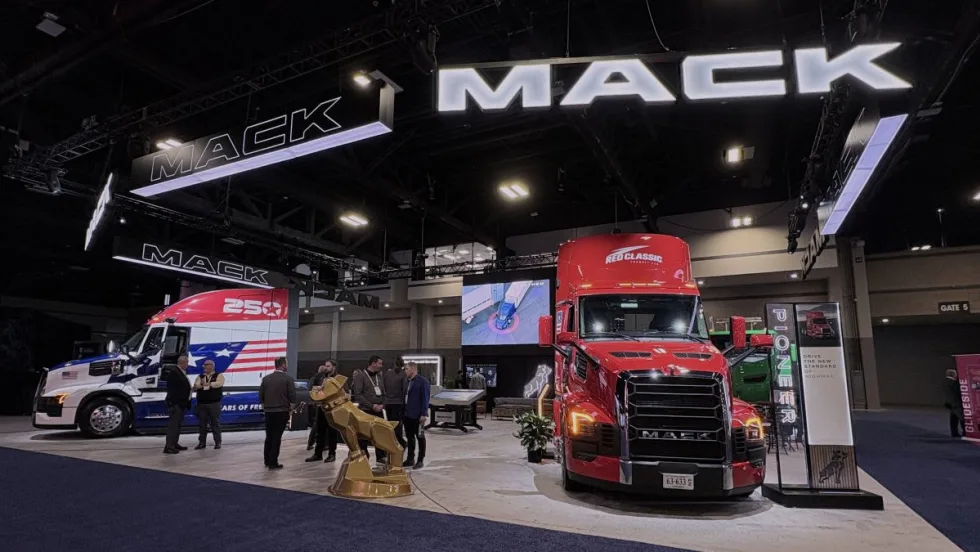
Trucks at ATA's 2026 MC&E in Charlotte, North Carolina [Photos]
From rigs decked out in patriotic America's 250 paint schemes to autonomous trucks and more, check out these photos from ATA's 2026 Management Conference & Exhibition.
Read More →
Help HDT Find Trucking’s Top Products
Have you come across a new product that could make a difference for trucking fleets? Nominate it for HDT’s 2027 Top 20 Products Awards by November 9.
Read More →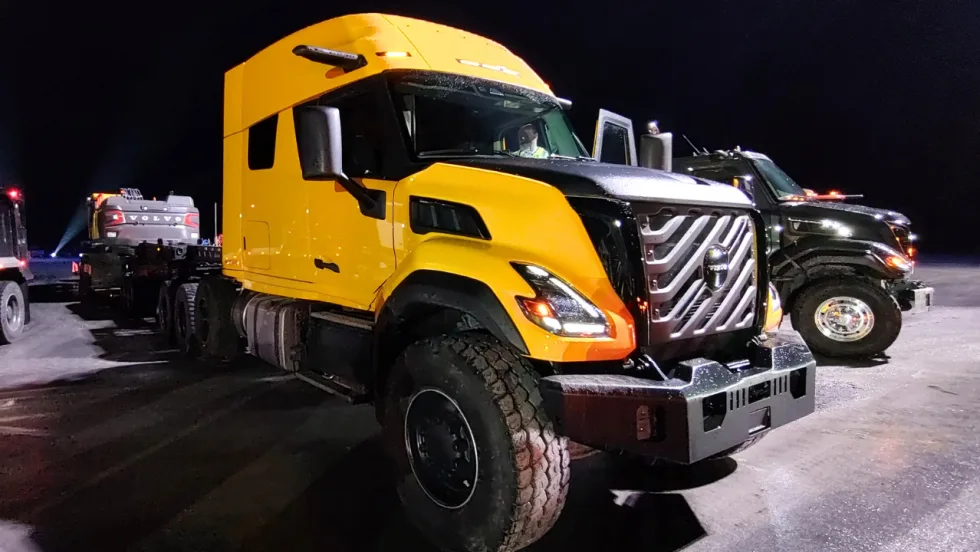
Volvo Unveils New VNX Heavy-Haul and Vocational Truck
Volvo Trucks has launched the VNX, a new vocational truck also available as a tractor in day cab and two sleeper configurations, with one heavy-haul model. The Volvo VNX is powered by Volvo's D13 platform, which delivers up to 540 horsepower and 1,950 pound-feet of torque and is EPA 2027-compliant.
Read More →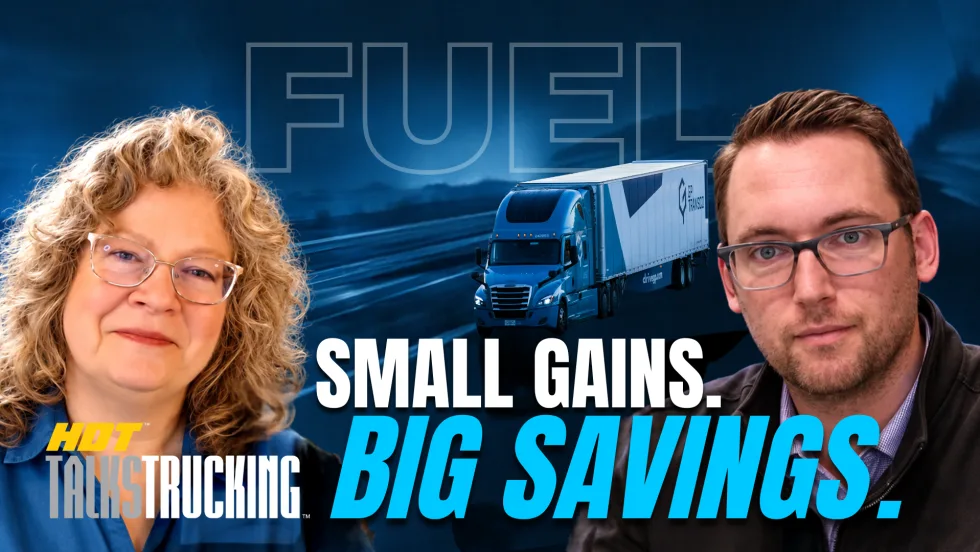
How GP Transco Cuts Trucking Fuel Costs, a Tenth of a Gallon at a Time
What’s another tenth of a mile per gallon worth? GP Transco shares how equipment upgrades and driver coaching turn small gains into meaningful fuel savings.
Read More →
Electric Yard Tractors Move Beyond Pilots
Operating-cost savings have overtaken sustainability goals as the leading reason surveyed fleets are adopting battery-electric terminal tractors, according to new NACFE research.
Read More →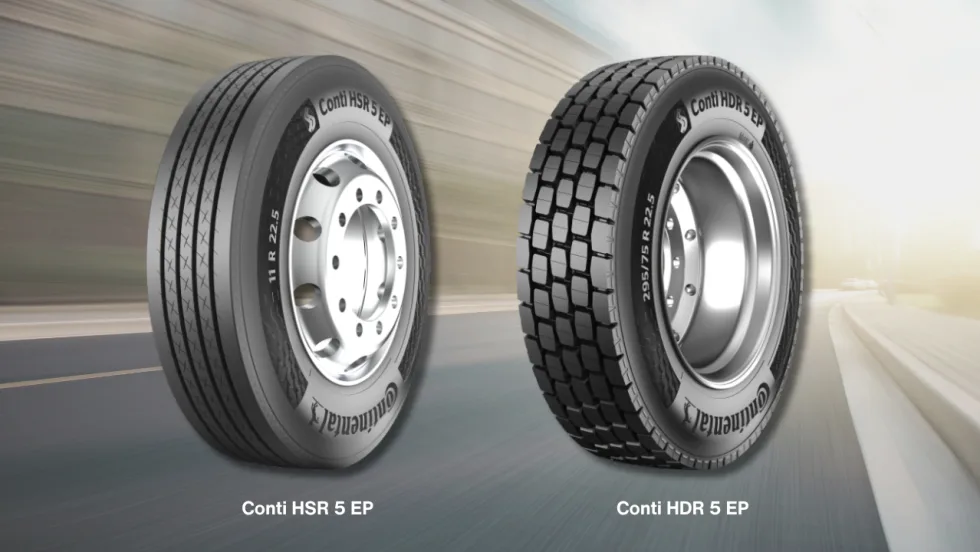
Continental Introduces New Regional Truck Tires
Continental says its new Generation 5 steer and drive tires for regional operations offer longer tread life, with estimated mileage gains of 22% and 19%, respectively.
Read More →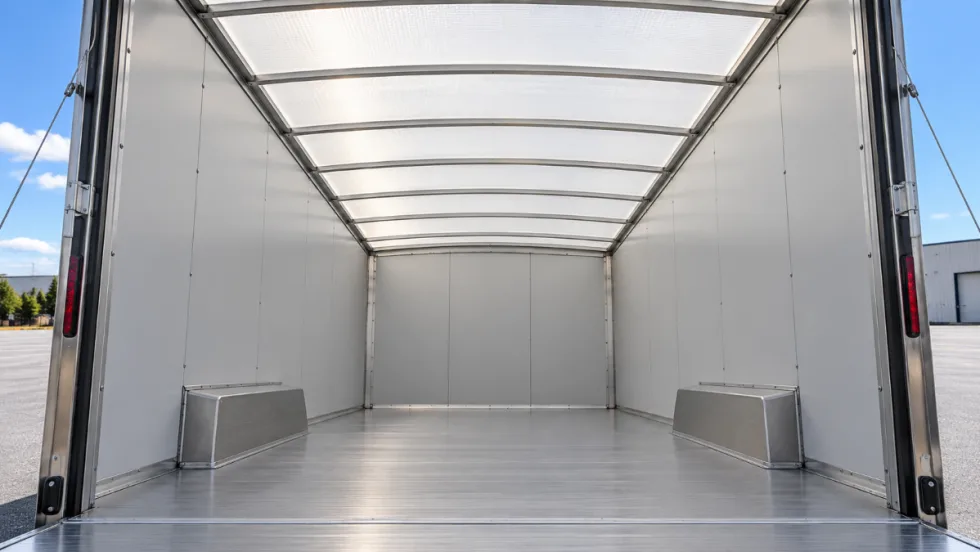
Tekmodo Introduces CargoBright Brand for Translucent Trailer Roofs
CargoBright is designed to diffuse daylight across the cargo area while performing as a working vehicle roof.
Read More →
Fleet Economics Shape Electric Truck Outlook
ACT Research expects costs, charging infrastructure, and technology improvements to drive zero-emission commercial vehicle adoption as federal regulations and incentives retreat.
Read More →