




A Component-by-Component Guide to Truck Spec’ing
Nothing is more important to your fleet’s success than properly spec’d trucks. But there are thousands of options out there, so determining which specs are best for your needs can be a challenge. Here's some advice from a longtime spec'ing authority.

Increasingly, trucks are spec'd with components fine-tuned for the application.
Photo by Deborah Lockridge
Nothing is more important to your fleet’s success than properly spec’d trucks. But there are thousands of options out there, so determining which specs are best for your needs can be a challenge. There are as probably as many opinions about which components to spec as there are options.
While fleets have good reasons for their opinions, understanding and building a truck suited for your specific application can reduce life cycle costs. Here are some things you should consider the next time you are reviewing your vehicle spec.
Choosing the Right Truck Tires
When ordering a Class 8 tractor, the first set of tires may be valued at between $4,000 and $6,000. Given the size of that investment, it is wise to research the tire manufacturers’ data books for the best tire model and tread design for your application.
The premium tire may not cost much more when ordered as part of a new vehicle spec. Weigh the upfront cost vs. mileage, rolling resistance, weight requirements, warranty, retreadability, and application when making your selection.
Don’t forget to consider the tire load rating to be sure it meets the axle weight rating. If your new vehicle has the same tire size but a different load rating as the rest of your fleet, make sure your people in operations know they must use the higher load rated tires for that specific unit and axle.
Spec'ing Truck Engines
Years ago, bigger was better when it came to engines. Today that may not be true. If you work an engine too hard, it will wear out quickly – but if you work it too easy, the exhaust may not get hot enough for the aftertreatment system to go through its regeneration cycles.
What’s the answer for your application? Work with the OEM to match up your specific duty cycle requirements with the engine’s performance sweet spot. There are many variables and trade-offs between efficiency and performance when it comes to engines. It’s not just about horsepower and torque. It’s about understanding the torque curve, engine RPM at average road speed, engine duty cycle, idle time, etc.
Don’t forget to compare extended warranty package pricing. Consider the duty cycle and application when deciding on extended warranties. In general, the more challenging the duty cycle, the more valuable extended coverages become.
Transmissions
Fully integrated automated manual transmissions are quickly becoming a standard in the marketplace. They are very fuel-efficient and become even more so when coupled with adaptive or predictive cruise control. These technologies allow the system to look ahead and determine the best gear and RPM for efficiency and performance.
These transmissions also help reduce maintenance costs by limiting certain conditions such as over-speeding, wheel spin out, manual shifting errors, over-torque, clutch damage, etc. But be careful: automated transmissions help reduce this shock load exposure, but do not eliminate all the exposure. This is especially true for city or other more stressful applications such as liquid bulk haulers, city refrigeration delivery, refuse, agriculture, and on-/off-road applications.

Automated transmissions offer advantages for many applications.
Photo: Volvo
Using a direct drive transmission vs. an overdrive transmission can also produce additional fuel efficiencies. Direct drives lock up the mainshaft in top gear, which has less moving parts, producing less parasitic loss. Direct drives can produce approximately 1% additional savings; however, as technology advances in overdrives, that efficiency gap may shrink.
When deciding whether to spec a direct or overdrive transmission, be sure to consider the amount of time the vehicle operates in top gear. Not enough time in top gear could have adverse effects on fuel consumption. Some fleets use a benchmark of 75% of driving time in top gear before considering a direct drive.
Drivability and resale value should also be considered when spec’ing a transmission. As the industry shifts to automated products, you need to consider the changing driver pool and whether potential drivers know how to operate a manual transmission. You also need to ask yourself what spec’ing a manual transmission may do to the used truck value years down the road. It is likely that the manuals will take a significant hit on the resale market. When considering the residual value shortfall and driver pool shortage with manuals, compared to the improved fuel efficiency and lower maintenance costs, the AMT investment makes sense.
Axle Ratios
Taking advantage of axle ratios that reduce engine rpm, at cruise speeds (as low as around 1,000 RPM’s) results in fuel savings in the 3% to 5% range. Generally speaking, if fuel efficiency is a more desired goal, consider axle ratios to slow down the engine speed at desired cruise speeds. If power and performance is a concern, a traditional axle ratio is a better option.
Be careful before jumping on the lower engine rpm bandwagon. There can be consequences. Generally, when you take advantage of axle gearing and lower engine rpm at cruise speed, you are also increasing torque on the driveline and rear axles. This added driveline and axle torque makes the driveline and axle more susceptible to shock load breaks and other damage. The OEMs have modeling software to assist with these calculations and you should always consult them prior to engine, transmission, and axle selections.
Drum or Disc Brakes?
While disc brakes have fewer parts, lower replacement cost, and less brake fade, there is an upfront investment premium over drum brakes. Is it worth the investment?
To answer that, you need to look at your application. In higher-mileage liquid bulk, fuel haulers, and trucks negotiating long steep declines, or mountains, disc brakes can have significant value — both financial and in brake fade. However, in lower mileage, less stressful applications, it may be hard to make the math work. New drum brake technology has improved brake fade and reduced brake costs considerably. However, disc brakes do generally have less fade in extreme conditions.
The Right Rear Axles for Your Operation
Replacing one drive axle with a tag axle on a tandem tractor can reduce fuel consumption some 2%-2.5% and reduce a vehicle’s weight by 350-400 lbs. The downside with these 6x2 axles is reduced traction, especially in snow, gravel, dirt, hills, and road bumps. In addition, tag axles lead to additional tire wear, which can be considerable.
The newer generation tag axles with liftable axles, axle load shifting technology, coupled with torque limiting parameter settings, can also lead to fuel savings and can have substantial traction assistance.
6x2 axles are not for everyone, but you may want to look at it for long-haul applications operating in suitable terrain and weather.

Proper spec'ing for the application up front can reduce maintenance headaches down the road.
Photo: NationaLease
Spec'ing Electrical Systems
As electrical demands increase, idle times decrease, and drive times get shorter, it’s more important than ever to spec the right alternator and battery combinations.
Basically, OEMs design charging and starting systems for general use then add some extra capacity. They don’t build base vehicles assuming every unit will have high liftgate usage, a high stop and start duty cycle, operate in extreme weather, or have additional power demands.
Under-spec’ed batteries and alternators not only lead to starting problems but also can cause voltage spikes and damage electronic modules and other electrical components. It’s up to the fleet to select high-amperage alternators and batteries with the needed cranking amps and reserve capacity.
Basically, you need to be sure you are putting more power into the batteries than you’re taking out. A battery can only be deeply discharged a certain number of times before it fails. This is especially true for flooded acid batteries with low reserve capacity. These failures don’t always show up right away. You may blame batteries for their own premature failure while the root cause is the fact that the electrical system was under-spec’ed.
The good news is there are a lot of ways to handle these electrical demands, including increasing the number of batteries, increasing the capacity of the batteries, spec’ing larger alternators, investing in solar panels, installing external chargers, and adding DC converters.
Air Systems
Air dryer selection is often overlooked and can be the root cause of many maintenance failures over the life of the vehicle. Poorly maintained or mis-spec’ed air systems can allow contaminants to migrate into all the air components.
Much like charging and starting systems, the base standard air systems used by OEMs is typically designed for average applications. For applications with frequent braking, lift-able axles, air-ride suspension, multiple trailers, high drop and hook activity, etc., air component usage should be considered when selecting the air compressor and dryer capacity.
Extended purge options and coalescing filters are also overlooked too often. These are very low-cost options that can have a significant impact on the life of brakes, transmissions, and other air components. Air system manufactures have guidebooks that can assist in selecting the right dryer and air system for the application.
Spec’ing today’s vehicles is a complicated process. New products and product upgrades occur on a regular basis. It is important to review vehicle specs every time you order a new vehicle. Just repeating the same spec you’ve used for years could mean you will be operating vehicles that no longer fit your applications or that will not be as efficient as they can or should be.
About the author: Joe Puff is vice president of truck technology and maintenance for NationaLease. He has more than 35 years of experience in complex sales and fleet operations, including extensive experience in commercial vehicle maintenance and is responsible for advising NationaLease members on new truck technology, industry trends, and maintenance best practices. NationaLease is a full-service truck leasing organizations with more than 900 locations throughout the U.S. and Canada and a combined customer fleet of over 155,000 tractors, trucks, and trailers. This article was authored under the guidance and editorial standards of HDT’s editors to provide useful information to our readers.
More Equipment
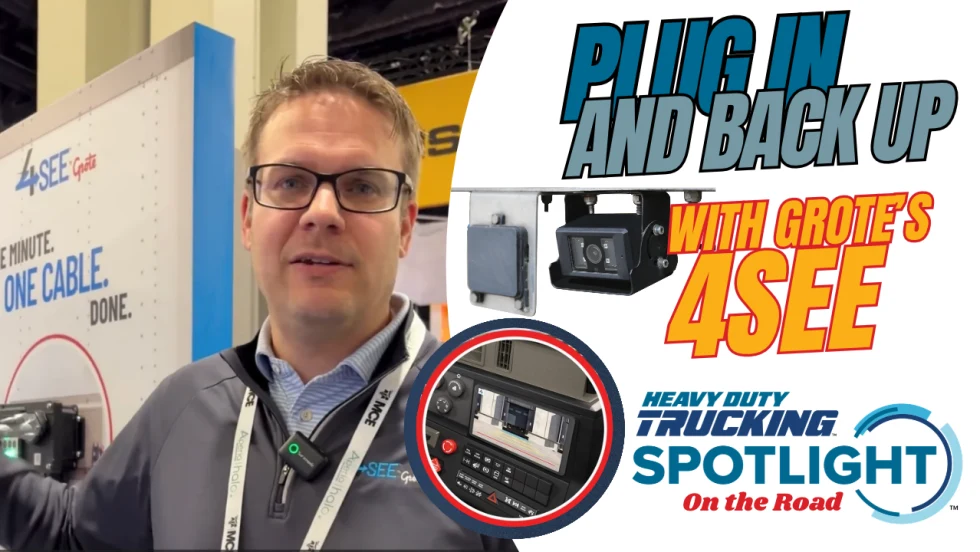
More Trailer Data Through the Same Seven-Way [Video]
Can trucking’s standard seven-way connector handle more cameras and trailer data? Grote’s Adam Slade shows HDT how the company is using new technology with its 4See trailer system, not only to add a new backup camera but also to expand other capabilities — without adding another connection.
Read More →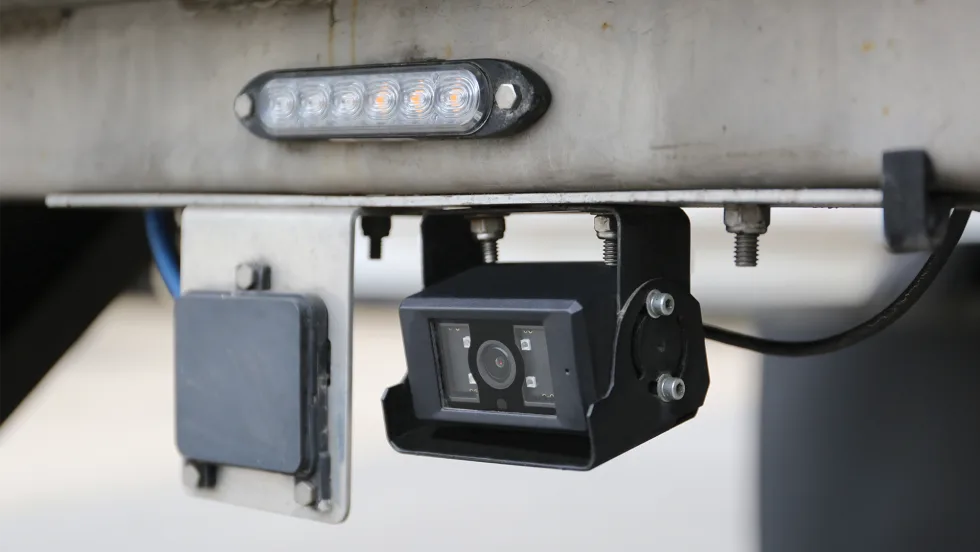
Grote: More Cameras, Same Seven-Way Connector
The next-generation 4See rear-view backup camera from Grote uses the standard seven-way connector and supports additional cameras and other trailer data.
Read More →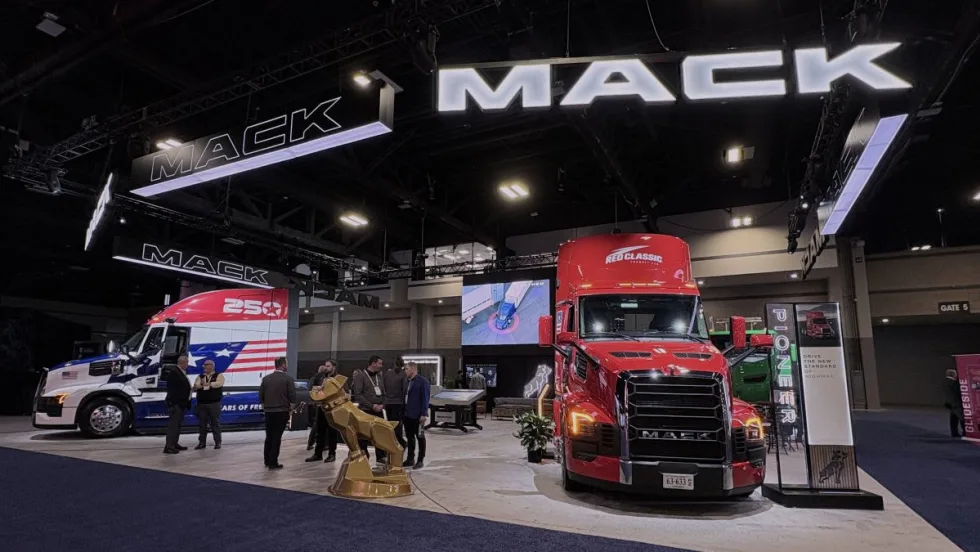
Trucks at ATA's 2026 MC&E in Charlotte, North Carolina [Photos]
From rigs decked out in patriotic America's 250 paint schemes to autonomous trucks and more, check out these photos from ATA's 2026 Management Conference & Exhibition.
Read More →
Help HDT Find Trucking’s Top Products
Have you come across a new product that could make a difference for trucking fleets? Nominate it for HDT’s 2027 Top 20 Products Awards by November 9.
Read More →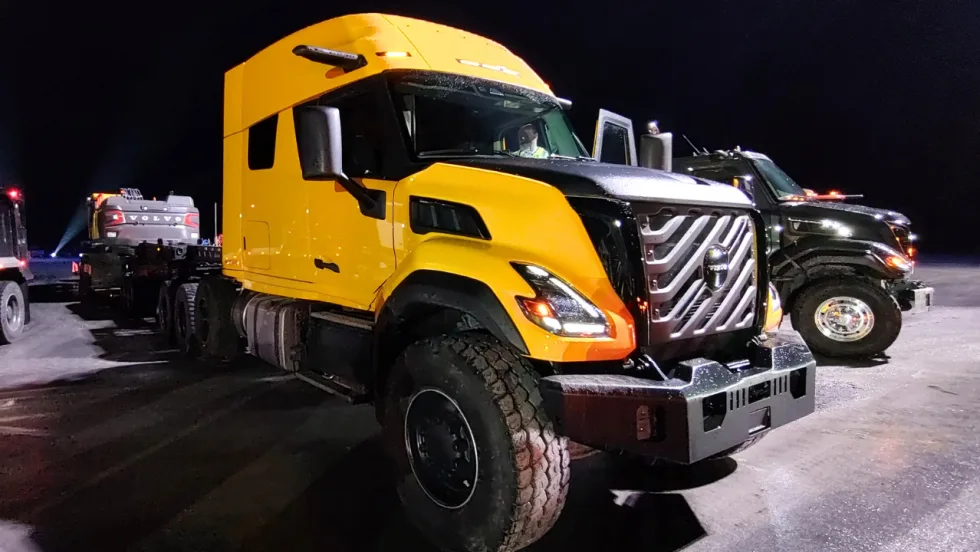
Volvo Unveils New VNX Heavy-Haul and Vocational Truck
Volvo Trucks has launched the VNX, a new vocational truck also available as a tractor in day cab and two sleeper configurations, with one heavy-haul model. The Volvo VNX is powered by Volvo's D13 platform, which delivers up to 540 horsepower and 1,950 pound-feet of torque and is EPA 2027-compliant.
Read More →
How GP Transco Cuts Trucking Fuel Costs, a Tenth of a Gallon at a Time
What’s another tenth of a mile per gallon worth? GP Transco shares how equipment upgrades and driver coaching turn small gains into meaningful fuel savings.
Read More →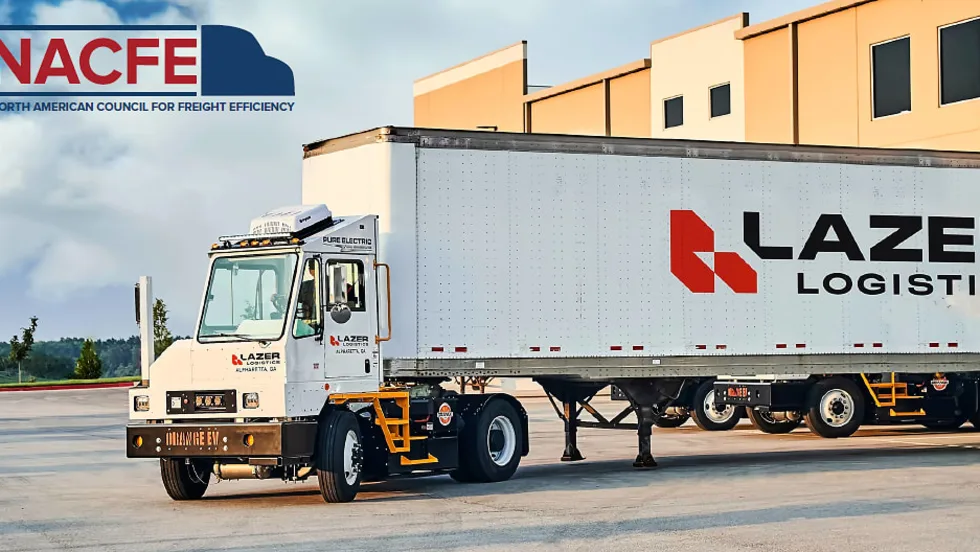
Electric Yard Tractors Move Beyond Pilots
Operating-cost savings have overtaken sustainability goals as the leading reason surveyed fleets are adopting battery-electric terminal tractors, according to new NACFE research.
Read More →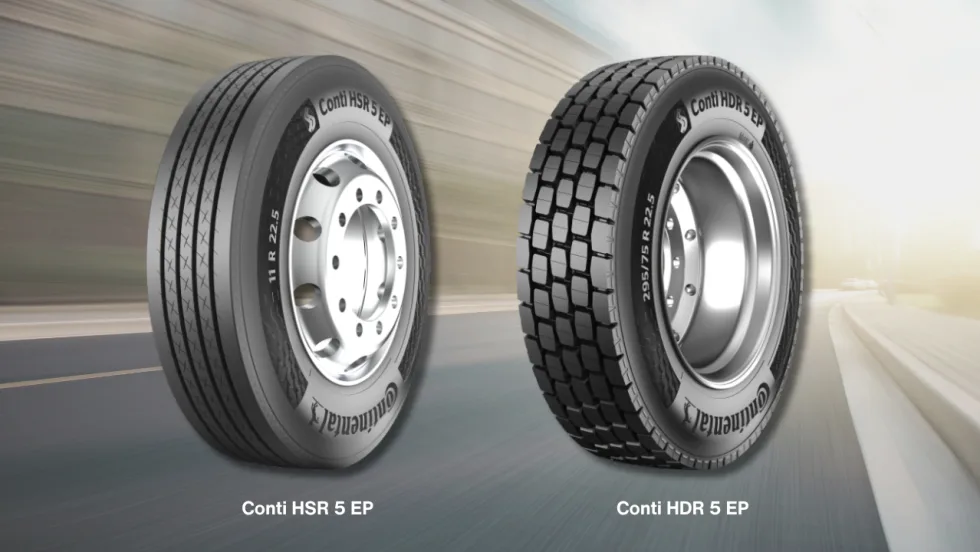
Continental Introduces New Regional Truck Tires
Continental says its new Generation 5 steer and drive tires for regional operations offer longer tread life, with estimated mileage gains of 22% and 19%, respectively.
Read More →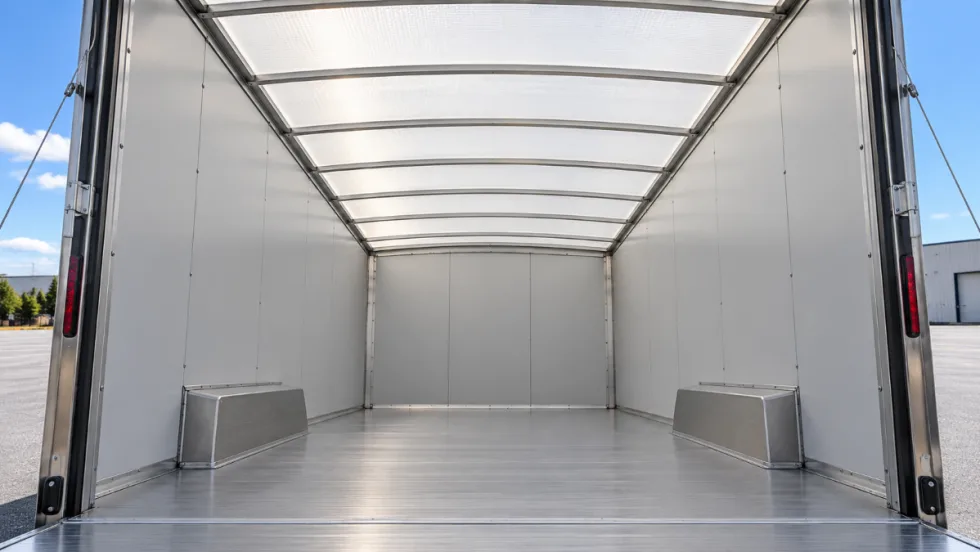
Tekmodo Introduces CargoBright Brand for Translucent Trailer Roofs
CargoBright is designed to diffuse daylight across the cargo area while performing as a working vehicle roof.
Read More →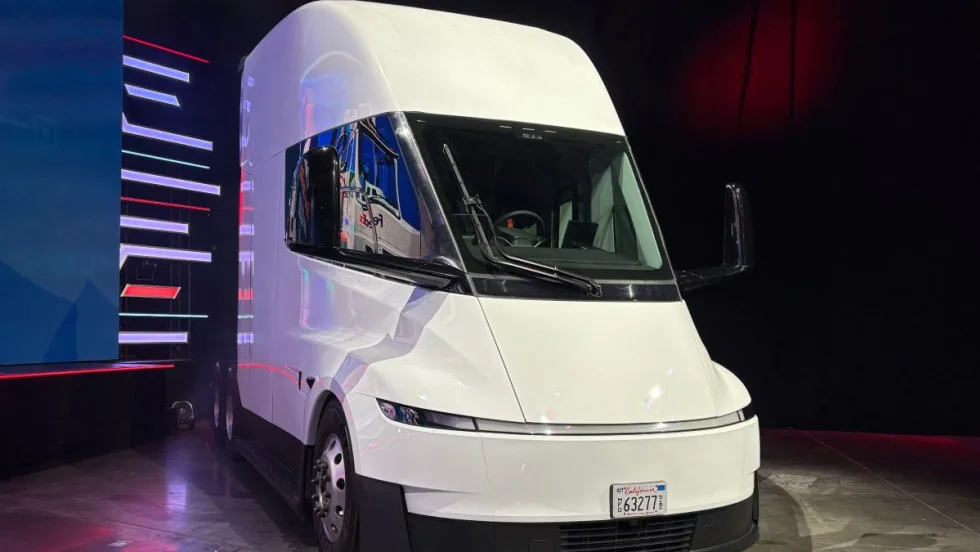
Fleet Economics Shape Electric Truck Outlook
ACT Research expects costs, charging infrastructure, and technology improvements to drive zero-emission commercial vehicle adoption as federal regulations and incentives retreat.
Read More →