




Connecticut Eyes Truck-Only Tolls
Taking a cue from Rhode Island, neighboring Connecticut is signaling that it too will soon target heavy trucks at toll stations on highways in the state.

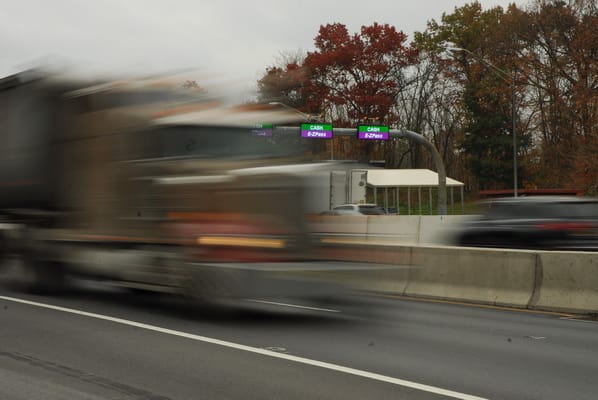
Rhode Island’s success with an electronic truck tolls on several highways has inspired the state’s newly elected governor, Ned Lamont, and Democrat majorities in the Connecticut House and Senate to specifically target trucks as a revenue source.
Photo: Jim Park
No one likes toll roads. But it seems an anti-trucking bias combined with angst over crumbling infrastructure has led Connecticut to take a cue from neighboring Rhode Island to seriously consider putting a system in place that will require truck-only tolling in the Constitution State.
According to news reports by The Connecticut Post, Rhode Island’s success with electronic truck tolling on several highways has inspired Connecticut's newly elected governor Ned Lamont (D) and solid Democratic majorities in the Connecticut House and Senate to specifically target trucks as a revenue source.
Rhode Island installed two toll gantries over a section of I-95 in the state in June, and since then, has generated more than 1.9 million from heavy duty trucks – almost $87,000 more than anticipated. Spurred on by the success of the truck tolls. Rhode Island has announced plans to eventually place 12 more overhead toll gantries on six highway corridors to generate $450 million over 10 years.
The toll gantries use automatic cameras to take a photograph of a truck’s license plate and then send a bill for use of the road to the vehicle’s registered owner.
A New Trend, Targeting Trucks?
Like most states today, Rhode Island is facing an infrastructure crisis, with roads and bridges steadily falling farther into states of disrepair. And, again as in most states, as dire as the situation is, most voters remain staunchly opposed to raising taxes to address the issue. Currently, Rhode Island projects it will need to spend $5 billion over the next decade to repair and maintain its aging roads and bridges.
The answer, at least according to Rhode Island Department of Transportation, is to target “the vehicles that cause the damage that needs to be repaired.” According to the state DOT, each toll collected is associated with a bridge or a group of bridges, and the revenue raised by trucks using the roads will be used to repair or replace that infrastructure.
According to Rhode Island DOT, the state initially expected to conduct 568,876 toll for its two introductory tolling stations during the first quarter of operation. However, once the final numbers were tallied, Rhode Island DOT said the state recorded 36,432 more transactions than expected.
While Rhode Island’s experiences have boosted tolling proponents in Connecticut, the reality is the state has been eyeing toll roads as a revenue source for some time now. According to The Connecticut Post newspaper, the state’s last General Assembly session supported tolls for everyone driving on state highways and four-lane state routes with officials predicting such a move could generate as much as $1 billion a year. That effort stalled in the House due to Republican opposition to the bill.
In the wake of the midterm elections earlier this month, however, the political landscape has changed. Democrats significantly expanded their majority in the House and retook the state Senate by a comfortable margin.
During the campaign, Lamont told voters that toll roads would start with, “some of our biggest trucks, coming in from out of state, using our roads, tax-free, create tons of maintenance issues, and we’ll see where it goes from there.”
"Governor-elect Lamont has a plan for electronic tolling of heavy trucks, as he proposed during his campaign," Lacey Rose, Lamont’s spokeswoman said. Connecticut political observers now say they expect the truck toll bill will appear before lawmakers sometime next year, citing widespread support for the measure within the state.
Serious Opposition
Not everyone is excited about the idea of toll roads – even ones limited only to big trucks. Republicans in the state remain generally opposed to tax increases of any sort. And other policy groups are arguing that selectively targeting big trucks for tolls will simply expand Connecticut’s infrastructure problems out beyond the main highways to smaller roads as cars and trucks wishing to avoid congestion or paying to use a road will take alternate routes on smaller state roads.
However, officials in Rhode Island report they are not seeing any such trend. The state’s DOT initially expected to see approximately 300 trucks divert around tolling locations. But, the agency said, a study showed that only 4 large trucks actually did so during the survey period.
Stauncher opposition is likely to come on the national front, as the American Trucking Associations has voiced opposition to the proposed bill as well. ATA has already sued Rhode Island over its “trucks only” tolling initiative, arguing the law violates the interstate commerce clause of the U.S. Constitution. And the lobbying group is expected to take similar legal action in Connecticut should the proposed toll bill become law.
"Truck tolls are discriminatory," Joe Sculley, president of the Motor Transport Association of Connecticut, which represents more than 1,400 trucking companies, told The Connecticut Post, and added that truck tolls would be challenged in court if authorized in Connecticut.
"They say truckers tear up the roads, highways and bridges but it’s the chemicals they apply during the winter that tears up the roads," Sculley said. "I think a number of groups would sue if we do something that is near Rhode Island."
Tolls are simply not fair because they target one segment of the motoring public, Sculley noted. "You are saying that five percent of the people who use the road will pay 100 percent of the cost," he said. "We now pay six times our fair share in taxes."
Truckers pay an estimated $17,000 a year per big rig in federal and state taxes, according to industry estimates.
More Fleet Management

Color Match Smarter: Tools That Restore & Perform
For fleet managers and collision repair professionals keeping heavy-duty trucks on the road, getting the color right the first time isn't just about appearance — it's about efficiency, turnaround time, and bottom-line results. Discover how today's digital color tools are transforming the repair process from guesswork to precision.
Read More →
FMCSA Pauses Biennial-Update Enforcement Amid Motus Transition
Carriers whose updates were due on or after June 1 have more time, while FMCSA works to stabilize its new registration system and warns of phishing sites impersonating its new carrier registration system, Motus.
Read More →
2026 Blueprint for Countering Smarter Supply Chain Theft
Cargo theft is no longer just the cost of doing business. It's a multi-billion-dollar criminal enterprise exploiting vulnerabilities across your fleet, drivers, and supply chain.
Read More →


How Telematics Improves Visibility, Control, and Performance in Refrigerated Fleets
Explore how telematics help refrigerated fleets improve visibility, uptime, efficiency, compliance, and cargo protection across connected cold chain operations.
Read More →
What the U.S.-Canada Trade War Means for Trucking
Escalating U.S.-Canada tariffs could disrupt cross-border freight, reduce truck volumes, raise costs, and create new uncertainty for carriers on both sides of the border.
Read More →
What Are Trucking’s Top Concerns for 2026?
The American Transportation Research Institute wants to know what's worrying trucking fleet managers, drivers, and other stakeholders in its annual Industry Issues survey.
Read More →
American Trucking Associations Looks for a New Leader
ATA President and CEO Chris Spear abruptly left his job at the association on August 21, at a pivotal time for the trucking industry.
Read More →
Public Wi-Fi Cybersecurity Risks: How Truck Drivers and Fleets Can Protect Their Data
Public Wi-Fi can expose truck drivers and fleets to credential theft, malware, and other cyber threats. Here’s how to reduce the risk on the road.
Read More →
For Nicky Cupp, Fleet Innovation Starts With Frustration
HDT Truck Fleet Innovator Nicky Cupp turns everyday pain points at Fraley & Schilling into opportunities for better technology and smarter processes.
Read More →
Adam Buttgenbach’s Approach to Electric Trucks: Start With Where They Fit
HDT Truck Fleet Innovator Adam Buttgenbach helped PepsiCo build one of North America’s largest EV fleets by focusing on where electric trucks make operational sense.
Read More →