




Carrier Transicold Introduces TRU for Center-Split Refrigerated Trailers
Carrier-Transicold’s new 8811MT TRU is designed for center-split refrigerated trailer layouts.

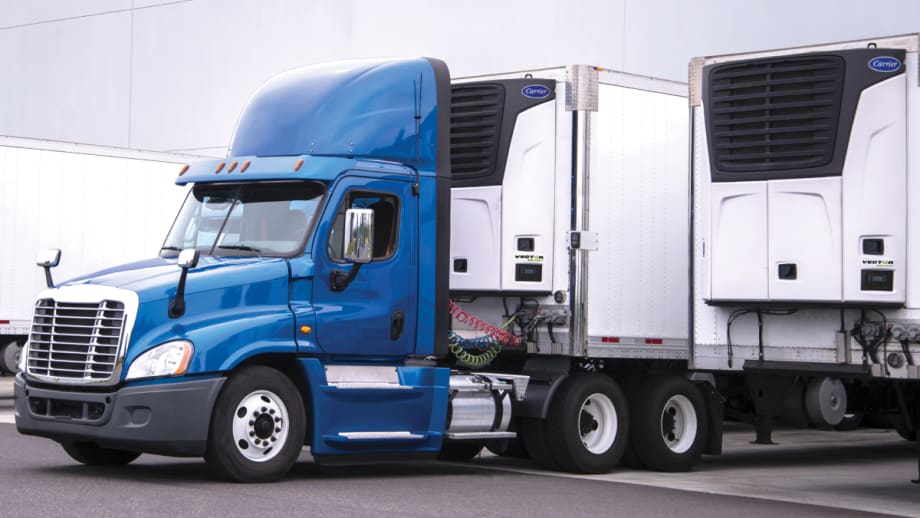
Carrier Transicold’s Vector 8811MT refrigeration unit for center-divide trailers offers fuel efficiency and lifetime compliance with CARB regulations.
Photo: Carrier Transicold
Carrier Transicold has introduced its Vector 8811MT TRU. The company said the 8811MT is a multi-temperature refrigeration unit for center-divide trailers. Carrier Transicold said the unit delivers better fuel efficiency and lifetime compliance under the California Air Resources Board’s (CARB) latest regulations for transport refrigeration units (TRUs).
Cooling for Separate Refrigerated Compartments
The Vector 8811MT is designed for trailers split lengthwise with a center-dividing wall, creating two refrigerated compartments.
Dual evaporators and fans eliminate the need for a remote evaporator, simplifying installation for two-zone setups.
Additionally, the Vector 8811MT’s all-electric architecture enables it to independently manage both climate zones more efficiently than competitive dual-discharge systems that are mechanically interconnected.
The design also leaves a 15-inch-wide area between evaporators to place the trailer’s center wall, allowing pallet arrangements that can increase cargo capacity by up to 17% compared to systems that require trailers to be divided precisely down the middle.
“The Vector 8811MT brings the industry-leading efficiency and sustainability of our Vector trailer refrigeration platform to grocers, food distributors and other fleets that use center-wall divided trailers,” said Bill Maddox, senior manager of product management, truck trailer Americas, Carrier Transicold. “The engine delivers a 96% reduction of particulate emissions compared to its predecessor and is lifetime CARB-compliant without exhaust gas recirculation. Whether you need compliance with stricter regulations in California or simply want to take productivity to the next level, the Vector 8811MT is a great choice for fleets with center-divide trailers.”
Other benefits of the Vector 8811MT, according to Carrier-Transicold include:
Greater sustainability – The engine’s fuel filtration system and diesel oxidation catalyst push particulate, hydrocarbon and NOx emissions to new lows.
Built-in electric standby – When parked, the Vector 8811MT can use power from the electrical grid. Refrigeration and freezing capacities remain constant during loading, unloading and staging, unlike competitive dual-evaporator refrigeration systems that can lose more than 10% of their rated capacity with standby power.
Simplified maintenance – The Vector 8811MT uses Carrier Transicold’s E-Drive all-electric refrigeration system. With E-Drive, individual components such as fans and compressors activate only when needed. They run fewer hours, last longer and eliminate routine maintenance items such as belts, pulleys and shaft seals.
Lynx Fleet ready – The Vector 8811MT comes with Lynx Fleet telematics hardware already installed. From day one, fleets can monitor unit cooling and performance using their choice of three data plans.
More Equipment

How Volvo Updated Its D13 for EPA 2027 [Watch]
Volvo’s updated D13 promises lower emissions without sacrificing performance or fuel economy. Take a closer look at what changed inside the engine in this HDT Spotlight video.
Read More →
Michelin Tire Improves Efficiency and Durability for Regional Fleets
The Michelin X Multi Energy D2 is a regional haul drive tire engineered to help fleets improve fuel efficiency, durability and traction in demanding stop-and-go operations.
Read More →
ZF Expands Commercial Vehicle Push in North America
ZF is expanding its North American commercial-vehicle presence with new transmission applications, electrification, trailer technology and autonomous-driving systems.
Read More →
Tesla Wants a Self-Driving Semi. Are Cameras Enough?
Could Tesla’s camera-only autonomous driving technology work on an 80,000-pound Semi? In this commentary, HDT's Deborah Lockridge takes a look at Tesla, Cybercab, and how autonomous trucks see the road.
Read More →
Kodiak: Driverless Long-Haul Truck Launch on Track for 2026
Kodiak AI says its driverless long-haul safety case is 93% complete and it remains on track to begin commercial operations by year-end 2026.
Read More →
What DOT’s Automated Vehicle Strategy Means for Trucking
The U.S. Department of Transportation issued a new automated-vehicle strategy that outlines plans for driverless-truck regulations, cross-state freight corridors, and federal safety standards.
Read More →
East Coast Port Launches $45M Electric Truck Push
The Port Authority of New York and New Jersey announced millions in incentives for zero-emission drayage trucks, yard tractors, and new charging hubs near the port.
Read More →
PlusAI Going Public to Fund Autonomous Truck Launch
A SPAC deal could provide PlusAI with up to $300 million as it works toward a 2027 commercial launch of factory-built autonomous trucks.
Read More →
NHTSA Moves to Rewrite Truck Fuel-Economy Rules
The National Highway Traffic Safety Administration says it lacks authority to regulate medium- and heavy-duty truck engines separately from complete vehicles, but the existing standards have not yet been eliminated.
Read More →
Detroit Opens Orders for EPA 2027 Engines
Detroit isn’t starting from scratch to meet EPA 2027 diesel emissions standards. Its Gen 6 DD13 and DD15 engines keep much of today’s platform while updating the fuel and aftertreatment systems.
Read More →