




CARB Gives Break to Fleets Making 'Good Faith' Efforts to Meet Regulations
The California Air Resources Board announced that it will give a break to some truckers who are working to meet a January deadline for upgrades to their aging diesel fleets.
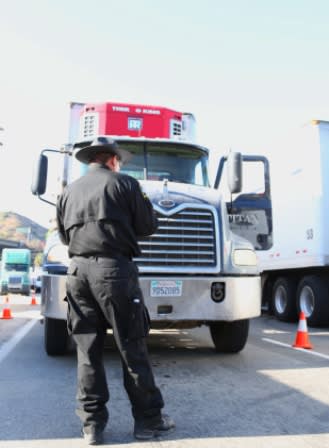
The California Air Resources Board announced that it will give a break to some truckers who are working to meet a January deadline for upgrades to their aging diesel fleets.
As we reported last week, potential changes include increasing the low-use vehicle thresholds. It's also looking at adjustments to the "NOx-exempt" vehicle provisions and granting fleets in certain areas more time to meet the filter requirements.
The move comes as larger fleets are required under the Statewide Truck and Bus Regulation to complete the upgrade for most of their trucks with diesel particulate filters by Jan. 1, 2014, and as smaller fleets are just beginning to undertake similar actions.
“The Air Resources Board is implementing new, flexible compliance options for truck owners who show they have made good faith efforts to comply with the regulation before Jan. 1, 2014, and is providing additional time for many fleets to complete their clean-up efforts,” said CARB Executive Officer Richard Corey.
CARB will recognize "good faith" efforts of vehicle owners to comply with the Jan. 1 deadline. Fleets of any size that demonstrate they took one of the following actions before Jan. 1, 2014, and report into TRUCRS will not be subject to enforcement action until July on any truck for which they:
Entered into an agreement with an authorized retrofit installer for a DPF retrofit
Signed a purchase contract and ordered a replacement truck equipped with a DPF (2007 model year engine or newer)
Were approved or denied a loan of other financing for a retrofit DPF or replacement truck
Funds for fleet upgrades are available, including $30 million in Prop 1B grants targeted for use by small fleet owners with three or fewer trucks. In addition, state-sponsored loans through the Truck Loan Assistance Program, which recently received $20 million to help small businesses comply with the regulation, are also available. Owners of logging trucks may also be eligible for $3 million in grant monies. (For more on funding opportunities, visit www.arb.ca.gov/msprog/truckstop/azregs/fa_resources.htm.)
Next month, CARB staff will conduct workshops throughout the state to hear comments on planned regulatory changes. For a list of locations, go to www.arb.ca.gov/msprog/onrdiesel/documents/2013-12%20Workshops.pdf.
Proposed amendments to the regulation, which are still under development, are expected to provide additional time for owners in specified regions to complete their clean-up efforts. Also, owners of lower-use vehicles throughout the state are expected to gain flexibility options as well.
For more information on the specified regions, what constitutes a “good faith effort” to comply with the Truck and Bus Regulation, or which fleets are being afforded with additional time to comply, truck owners are urged to view today’s advisory here: www.arb.ca.gov/msprog/mailouts/msc1328/msc1328.pdf.
Anyone with questions on regulatory requirements can visit CARB’s Truck Stop Website, call 1-866-6DIESEL, or email 8666Diesel@arb.ca.gov.
The Truck and Bus Regulation was adopted in 2008 to clean up harmful emissions from nearly all heavy-duty diesel trucks operating in California. The regulation was amended in 2010 to provide economic relief to truckers affected by the recession, particularly small fleets, by delaying the first compliance requirements by one year and extending the time the truck could be operated before needing to be replaced.
The regulation requires most heavy trucks in California to install soot (diesel particulate) filters or upgrade to newer models with filters by Jan. 1, 2014, and that nearly all trucks have them installed by Jan. 1, 2016.
Out of the 260,000 trucks registered in California that need a soot filter, about 140,000 are already compliant, with another approximately 100,000 using regulatory flexibility to delay their compliance date. About 20,000 still need filters by the end of 2013, with 5,000 of these being in large fleets.
For small fleets (three or fewer vehicles), Jan. 1, 2014, is a critical compliance milestone because for the first time at least one vehicle in each fleet will need to comply. CARB estimates that about 15,000 vehicles in small fleets still need to retrofit or upgrade to meet this compliance deadline.
More Fuel Smarts

How Volvo Updated Its D13 for EPA 2027 [Watch]
Volvo’s updated D13 promises lower emissions without sacrificing performance or fuel economy. Take a closer look at what changed inside the engine in this HDT Spotlight video.
Read More →
Diesel Price Spike Shortens Payback for Natural Gas Trucks, Report Says
Energy Vision estimates fleets could recover the higher purchase price of an RNG-fueled Class 8 tractor in 1.3 to 2.8 years under current fuel-price scenarios.
Read More →
Calstart Becomes Catalyst Mobility, Reflecting Broader Focus
Calstart is now Catalyst Mobility, reflecting the nonprofit’s growing national role in clean transportation, including zero-emission trucks, infrastructure and incentive programs.
Read More →

Record Diesel Prices Squeeze Trucking Fleets
Average U.S. diesel prices have climbed to nearly $6 a gallon, surpassing the 2022 record as tight refinery capacity and Middle East disruptions keep fuel costs elevated.
Read More →
How Fuel Delivery Shapes Engine Performance
Fuel delivery depends on more than what happens at the injector. For fleet, maintenance and technical professionals, looking at the full path from pump to injector can provide useful context for understanding engine performance.
Read More →
East Coast Port Launches $45M Electric Truck Push
The Port Authority of New York and New Jersey announced millions in incentives for zero-emission drayage trucks, yard tractors, and new charging hubs near the port.
Read More →
California Bill Could Shed Light on Electric Truck Prices
Why do battery-electric Class 8 trucks remain so expensive? A California bill headed to Gov. Gavin Newsom would give fleets and state agencies more visibility into what manufacturers charge.
Read More →
Detroit Opens Orders for EPA 2027 Engines
Detroit isn’t starting from scratch to meet EPA 2027 diesel emissions standards. Its Gen 6 DD13 and DD15 engines keep much of today’s platform while updating the fuel and aftertreatment systems.
Read More →
Zero-Emission Truck Corridor Planned for West Coast
California, Oregon, Washington, British Columbia and Baja California are coordinating plans for truck charging and hydrogen fueling from Canada to Mexico.
Read More →
A Closer Look at Kenworth’s Electric T880E Vocational Truck [Video]
Learn more about Kenworth's T880E battery-electric vocational truck at the Paccar Technical Center, including its range, applications, upfitting considerations, and PTO options, in this HDT Spotlight video.
Read More →