




ATA Bid to Cut Funding for HOS Restart Draws Sharp Reaction
The American Trucking Associations is trying to get Congress to cut off funding for the restart provision of the hours of service rule -- a maneuver that has provoked a sharp response from Anne Ferro, chief of the Federal Motor Carrier Safety Administration, and concern among some carriers and the enforcement community.

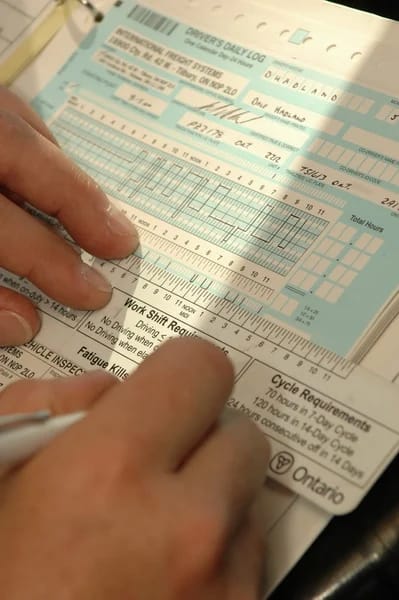

The American Trucking Associations is trying to get Congress to cut off funding for the restart provision of the hours of service rule.
The maneuver provoked a sharp response from Anne Ferro, chief of the Federal Motor Carrier Safety Administration.
“Your push to have Congress rescind funding to enforce the current HOS rule puts the issue back on the track of confusion, uncertainty and litigation,” wrote Ferro in an email to ATA leaders.
Some trucking companies also are concerned by ATA’s approach.
The Trucking Alliance, a group of carriers that have been lobbying Congress and FMCSA for the electronic logging mandate and other safety initiatives, says ATA’s maneuver could slow implementation of electronic logs and cause other problems.
“I don’t think it’s the right approach,” said Steve Williams, chairman and CEO of Maverick USA and chairman of the Alliance. “All ATA is doing is antagonizing FMCSA. I would prefer to take a more constructive, long-term approach on this,” he said.
The Alliance is one of several groups advocating a different solution. It has joined with the Commercial Vehicle Safety Alliance, which represents the police who enforce the rules, and Advocates for Highway Safety to push for a study of the restart using data from electronic logging devices, once FMCSA clears that rule, said Alliance Managing Director Lane Kidd.
CVSA does not want to go back to the old restart rule so soon after it adjusted to the new one, said executive director Steve Keppler.
ATA contends that the restart provision is unproductive and does not improve safety.
“There’s not a carrier or driver we’ve spoken to who has said that this restart is helping in terms of safety,” said Dave Osiecki, executive vice president and chief of national advocacy at ATA.
Besides cutting carrier productivity, the rule reduces the time available to drivers and owner-operators, which in effect cuts their pay, ATA contends. Not all fleets use the restart, but some of those that do say their drivers are resigning in search of better circumstances.
The association wants Congress to tell FMCSA to stop enforcing two pieces of the provision: the requirement that a driver take off two consecutive periods of 1 a.m. to 5 a.m. during a 34-hour restart, and the once-a-week restriction on use of the restart.
ATA wants the agency to go back to the pre-2013 version of the restart, which does not have those restrictions, for a year while the Government Accountability Office finishes its study of the restart provision, Osiecki said.
ATA's progress
So far, the ATA language has not gotten into the appropriations bills.
The House bill calls for a report from FMCSA on the safety benefits of the restart but it does not cut off enforcement funds.
Senior Senate appropriators favor a study of the issue rather than the funding cutoff that ATA is pushing, said a participant in the process who could not speak on the record.
The appropriations process is not complete, so ATA may yet get what it wants. If it does not, it will pursue the restart suspension in the highway bill that Congress is now considering, Osiecki said. ATA has supported stand-alone bills by Sen. Kelley Ayotte, R-N.H., Rep. Richard Hanna, R-N.Y., that would achieve that goal.
But the highway bill is not likely to pass this year, which is why ATA is pushing the appropriations tactic, Osiecki said.
ATA also has been pursuing the issue directly with the FMCSA.
In a recent meeting with Administrator Ferro, ATA asked the agency to collect data on the restart as a prelude to starting a new rulemaking.
ATA wants the agency to gauge the effect of the restart on carriers, drivers and shippers, and to figure out how many drivers were legally working extended hours under the old version of the restart. This would lead to a new rulemaking “that takes into account the real-world information and data collected and analyzed during this new process.”
Ferro: 'This has got to stop'
ATA presented this approach to Ferro at a meeting May 8, and followed up with a letter that spelled out the details.
In her email reply, Ferro said she was pleased by ATA’s recommendations.
“[They] offered momentum for a collaborative approach to data collection, research and open discussion,” she wrote.
But ATA had followed its first letter with a second saying it was concerned that this approach was being misinterpreted to suggest that ATA wants a study of the restart.
“We are not requesting a study of the restart,” Osiecki said in an interview. “The study is already going on at GAO.”
In this second letter, ATA said it will continue to lobby Congress for relief from the new hours of service restart rule.
“We are asking Senate and House appropriators to support a recission in funding for the new rule, reverting back to the pre-July 2013 rule,” ATA said.
In her reply, Ferro said this message “applied a hard brake to the momentum, at least to ATA’s participation in a productive, fact-based, open discussion of the issues.”
She also charged that ATA is presenting misleading information to members of Congress “by asserting that previous years’ decrease in overall crash rates are an indication that fatigue-related crashes are no longer a safety concern.”
She continued: “The decline in fatal crash rates between 2004-2009 reversed course to increase 18% by 2012. This has got to stop. You know it and your colleagues know it.”
Ferro told Heavy Duty Trucking/Truckinginfo that the agency is “committed to moving forward with robust data collection and fact-based decision making with full public participation in its drive to prevent fatigue-related fatalities and to raise the bar for safety in this industry.”
But the agency opposes ATA’s move to cut off funding for restart enforcement.
“Were Congress to act upon ATA’s request, it would be rolling back, arbitrarily, a research-based rule that is projected to save 19 lives each year and prevent 1,400 crashes and 560 injuries,” Ferro said in a statement.
“This rule has been in place almost a full year; a year in which the industry has seen higher profitability than any year since 2009. The ensuing confusion and uncertainty would open up new loopholes for abuse and renewed litigation.”
The agency maintains that the restart provision improves safety, citing a study that found the new provision more effective at preventing fatigue than the old one was. ATA’s research arm, the American Transportation Research Institute, contends that the agency study is flawed and inconclusive.
'We've never had facts'
The members of The Trucking Alliance fear that besides slowing the ELD mandate, ATA’s tactics could create more uncertainty in the supply chain, confuse driver training and enforcement and precipitate legal challenges.
The members are Maverick USA, Knight Transportation, J.B. Hunt, Dupre’, Boyle Transportation and Fikes Truck Line.
Maverick CEO Williams said the restart rule has had a negative effect on his operations by making it more difficult to get drivers home. However, there has not been enough time to quantify any effect on safety, one way or the other, he said.
The Alliance wants to improve the rule “in the appropriate forum,” he said.
But the ATA approach could lead to a delay in the electronic logging mandate pending at FMCSA, the Alliance’s top priority, he said.
“I think it's incumbent on the regulator to do credible, unquestionable, undeniable research to answer (the restart) question once and for all,” he said.
“The only way to do that is with facts, and we’ve never had facts. We all have opinions, and I think we all have to admit that we really don’t know what the answer is.”
He continued: “I’m not fighting for a particular rule; I’m fighting for whatever works the best for improving highway safety and reducing fatigue and improving the quality of lives of my employees.”
Up until now, the Alliance has avoided getting into the hours-of-service argument, aside from the electronic logging aspect of the issue.
Williams described this moment as a response to the situation. He said he would rather not be involved, but “the Alliance’s first and primary objective was the ELD mandate, and anything that would slow it down is the number one priority for us to be involved with, even if it's an argument about hours of service.”
The Alliance, CVSA and Advocates want FMCSA to expedite work on the ELD mandate and start gathering field data as soon as possible from early adopters of the technology.
The mandate still is under review at the agency, which is accepting comments until June 26. It probably will take the agency at least the rest of the year to review all of the comments, make changes and publish a final rule.
Carriers would then have two years to comply with the mandate, but carriers that already use ELDs could be in compliance and producing data within months, said Kidd.
'Like a Yo-Yo'
The safety enforcement community also is concerned about ATA’s approach.
CVSA's Keppler said that while he understands some carriers don’t like the rule, it is too soon to pass judgment on it.
“From our perspective, the new rules haven’t even been in place a year,” he said. “Our longstanding approach with respect to hours of service … is to make sure that we have a comprehensive set of data to evaluate whether or not they’re working from a safety perspective.”
He went on: “I understand there are people that have issues, I get that, but first and foremost they are safety rules and we need to evaluate their impact on safety. Frankly, less than a year’s worth of data is not enough time.”
The enforcement community also is concerned about having to go back and retrain officers and change its software so soon after the current rule was implemented.
“We feel like a yo-yo,” he said. “Back and forth and back and forth creates problems for enforcement and industry, too.”
One Carrier’s Restart
One of the carriers at the FMCSA meeting on the restart was Kevin Burch, president of Jet Express, which he says provides “rolling inventory” for General Motors.
Burch’s problem with the restart is that it forces him away from a business model he’s used for years, to the detriment of his company drivers and the owner-operators he uses.
These days, demand for autos has GM asking for Saturday deliveries twice a month. But if Burch dispatches a driver or owner-operator on Saturday, he cannot get him back in time to complete the two-night restart and go back on the road Monday morning.
One effect is that GM is now asking Jet how many loads it will be able to haul on a coming Saturday, and is turning the excess loads over to carriers in the spot market, Burch said.
Other than changing his business model, the only way he could handle these “turn-back loads” would be hire a hundred or so drivers once every two weeks, he said.
“It’s a major disruption in the supply chain,” Burch said.
“I have owner-operators who have been on established runs for years, now coming to me saying, 'You’re using other carriers, taking business away.' All I can say is that if you work on Saturday I’ve got to find somebody else to work on Monday. They’re losing money and the company is losing money.”
Burch said he has seen a 10% reduction in his pool of owner-operators and company drivers.
“They have gone where they can make more money, where they don’t use the 34-hour restart.”
He said he sees no change in the company’s safety performance, one way or the other.
More Drivers

Truck Drivers Need More Than Another Alert
Fleets have more visibility into truck health, safety events, and driver activity than ever. The next challenge is turning all that information into useful guidance for the person who has to decide what to do next.
Read More →
FMCSA Removes 110 Truck Driver Training Schools from Certified ELDT List
Federal regulators also are targeting more than 160 additional training providers and launching a nationwide audit of third-party CDL skills testers as part of a broader crackdown on trucking fraud.
Read More →
Hours of Service Pilot Programs: FMCSA Readies for 2027 Rollout
Two pilot programs could eventually reshape hours-of-service rules, giving truck drivers options to pause their 14-hour clock or use longer split sleeper rest periods.
Read More →
Medical Cards, English Proficiency Reshape Roadcheck Violations
Medical-card violations jumped to the top of the driver out-of-service list during CVSA’s 2026 International Roadcheck, while English-language proficiency violations appeared among the leading violations for the first time.
Read More →
Driver Trust Can Make or Break the Success of Fleet Safety Technology
New Teletrac Navman research suggests that onboarding, transparency about driver data, and positive feedback can play a significant role in how commercial drivers respond to safety and coaching technology.
Read More →
EEOC Sues KLLM Over Alleged Sex Discrimination in Driver Training
KLLM is facing a federal sex-discrimination lawsuit over policies the EEOC alleges put female truck driver trainees at a disadvantage.
Read More →
FMCSA Moves to Codify English Language Requirements for Commercial Drivers
By changing regulations on English-language proficiency requirements for commercial drivers, rather than relying on a guidance memo, the FMCSA said future administrations won't be able to walk back the Trump administration's stricter enforcement with just a memo.
Read More →
Drivers Put Western Star Trucks to the Test at Star Nation Experience
Watch to get an inside look at the Western Star trucks, technology, and community behind the Star Nation Experience 2026!
Read More →
Trump Administration Looks to Put More Veterans Behind the Wheel
The Freedom Haulers program pulls together existing and expanded programs at several federal agencies to recruit veterans to drive commercial heavy-duty trucks and cut the red tape for them to get a CDL, training, and employment.
Read More →
Putting Mack’s Command Steer to the Test
A test drive of Mack’s Command Steer active steering system evaluates how it can make truck driving easier and less tiring.
Read More →