




Fleet Advantage's Brian Antonellis on the Growing Need to Replace Old Trucks
Fleet Advantage's Brian Antonellis says it's time for fleets to get back to the fundamentals of good maintenance practices. And that includes replacing older, inefficient equipment.

Brian Antonellis thinks that this moment is less about carriers reacting to market forces – and about getting back to the fundamentals of good fleet maintenance.
PacLease/Fleet Advantage/Canva
The North American trucking industry is nothing if not dynamic these days.
Perhaps "chaotic" would be a better word.
Fuel prices are volatile. Equipment cycles have been disrupted. Inflation. And truck production has tightened.
All of which means fleets are being forced to rethink both operational and purchasing decisions.
And yet, in spite of all that, it seems that this trucking industry is determined to finally shake off an unprecedentedly long freight recession. The problem is, every time it shows some signs of economic life, the rug is pulled out from under its feet.
That was the undercurrent at the TMC Annual Meeting in March, when Heavy Duty Trucking sat down to talk with Brian Antonellis at the Fleet Advantage booth on the show floor.
Antonellis is the Senior Vice President of Fleet Operations at Fleet Advantage. And he thinks that this moment is less about carriers reacting to market forces – and about getting back to the fundamentals of good fleet maintenance.
With diesel prices climbing and uncertainty continuing to rattle the trucking industry, fleets are facing pressure from multiple directions at once, Antonellis noted. Add shifting truck production capacity and looming regulatory changes into the mix, and fleet planning has become more complex than ever.
Here's what Antonellis said fleets are telling him about how they’re responding to current market forces – and what their plans for the future are.
The following interview has been edited for clarity and length.
HDT: What are your customers telling you right now, especially with fuel prices where they are?
Antonellis: It’s pretty crazy right now. I saw diesel at about $5 this morning for the national average, and there are people out there talking about $200-a-barrel oil. There’s just a lot of uncertainty, and nobody really knows how long it’s going to last.
So, the way we’re looking at it -- and the way we’re advising customers -- is similar to how we approached tariffs when those were unpredictable. You don’t know when relief is coming, so now is the time to double down on what you can control.
You can’t control fuel prices. Sure, maybe you hedge a little bit, maybe you save a few cents, but that’s not where you win. What you can control is how your trucks are performing today. Your equipment is telling you something. It’s telling you whether it’s running efficiently or not.
HDT: What does focusing on what fleets can control actually look like in practice?
Antonellis: It starts with the data. We’ve been helping customers really dig into their MPG performance and identify where the gaps are.
For example, you might have a fleet averaging 8.4 MPG, which sounds fine on the surface. But then you find out that 8% of your fleet is running below 7 MPG. That’s a big opportunity.
So, the next step is building an action plan with the maintenance teams and operations folks. Why are those trucks underperforming? Is it the spec? Is it maintenance? Is it driver behavior? That’s where fleets can make meaningful gains, especially when fuel costs are high.
HDT: At the same time, fleets have been stretching equipment cycles. Is that still happening?
Antonellis: It has been. And that’s been part of the challenge. We’ve seen a couple of stops and starts over the past few years where fleets thought they were going to move forward, and then something changed -- whether it was the economy, supply chain issues, or pricing.
But I think we’re heading into a different phase now.
HDT: How would you describe that shift? Is this still a prebuy environment?
Antonellis: A couple of years ago, we were clearly talking about a 2027 prebuy. But what I’m seeing now is less about prebuy and more about what I’d call a return to common sense.
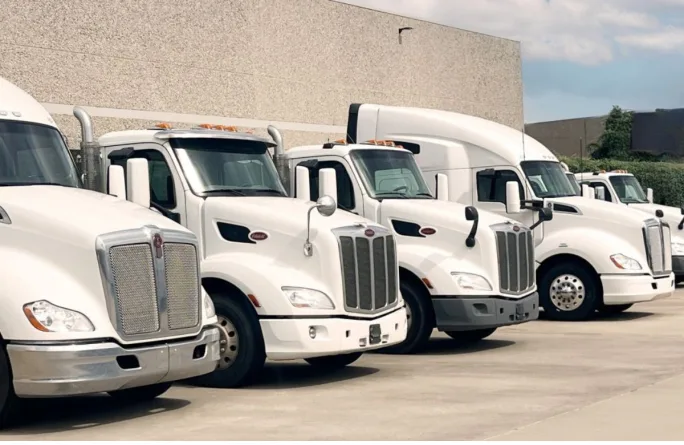
Like it or not, new truck prices will rise significantly next year. That's a fact Antonellis says is pushing many carriers to buy now before production constraints come into play.
PacLease/Canva
Fleets know there are regulatory changes coming. They also know OEM production has been cut back because orders were soft. Lines have been slowed or even closed in some cases.
So now fleets are saying, “Okay, we need to make a decision.”
HDT: What’s driving those decisions right now?
Antonellis: It comes down to timing and cost.
If you’re taking delivery of new trucks in Q3 or Q4, you’ve got a certain price. But if you wait and order in Q1 or Q2 of next year, you’re hearing the same thing from pretty much every OEM: Prices could be $10,000 to $15,000 higher per truck.
At the same time, you still need the equipment. And the math is pretty brutal. So, fleets are starting to pull forward purchases that maybe they would have delayed if operating costs weren’t rising so quickly.
You can call it a prebuy if you want. But really it’s just practical decision-making. Do you want to pay more later, or do you move now?
HDT: Are you seeing differences between private fleets and for-hire carriers?
Antonellis: Yes, definitely.
Private fleets tend to have more consistency in their business. They’re not as exposed to the volatility of the for-hire market, so they’re in a better position to commit.
What we’re seeing is that many of those private fleets are moving ahead and placing orders.
HDT: How are production constraints playing into this?
Antonellis: They’re starting to matter more and more.
We’re not building trucks at the same pace we were before. At one point, production might have been at an annual 315,000-unit run rate. Now it’s closer to 240,000.
So as we move through the year, things are going to tighten up. That balance between supply and demand is going to get more constrained, especially as more fleets decide it’s time to act.
HDT: What does all of this mean for fleets trying to plan the rest of the year?
Antonellis: It really reinforces the same message: focus on what you can control and make decisions based on what you know today.
You can’t predict fuel prices. You can’t control global events. But you can improve how your fleet operates. And you can make smart, timely decisions about equipment.
Right now, we’re seeing fleets move away from waiting for the “perfect” moment and instead act based on fundamentals. And in this environment, that’s probably the right approach.
More Fleet Management

Geotab Links Fleet Card to Vehicle Data
The new card combines fuel discounts with telematics-based purchase controls. Geotab’s analysis also points to potential savings from choosing lower-priced fuel stops.
Read More →
How MFA Helps Protect Trucking Fleets
Multi-factor authentication adds protection when passwords are stolen. Here’s how it works and where fleets should start.
Read More →
How Better Freight Data Helps Trucking Teams Get Ahead of Disruption
Trucking and logistics teams have plenty of data. The problem is getting the right information in front of the right people soon enough to act. Better-connected data can help teams spot trouble earlier and make smarter decisions before small problems become big ones.
Read More →

Trimble: Taking Artificial Intelligence in Trucking Beyond Faster Tasks
At Insight 2026, Trimble executives argued that fleets may need to redesign workflows to get more from AI as it introduced new products and enhancements. AI’s value will depend on how fleets combine automation with their people's knowledge.
Read More →
Build a bulletproof fleet: Uniting ELDs and dash cams for total compliance
An ELD can prove compliance, but it cannot always prove what happened on the road. Discover how uniting accurate ELD data with AI-powered dash cam video can help your fleet strengthen compliance, defend against liability, protect drivers and reduce operational costs.
Read More →
Nominations Open for HDT Emerging Leaders
Heavy Duty Trucking is looking for accomplished trucking fleet professionals under 40 who are making an impact and helping lead the industry forward.
Read More →
Why Private Fleets Are Taking More Freight
Private fleets are putting their own trucks on demanding customers and high-cost lanes as companies seek greater control over service, costs, and capacity.
Read More →
Color Match Smarter: Tools That Restore & Perform
For fleet managers and collision repair professionals keeping heavy-duty trucks on the road, getting the color right the first time isn't just about appearance — it's about efficiency, turnaround time, and bottom-line results. Discover how today's digital color tools are transforming the repair process from guesswork to precision.
Read More →
FMCSA Pauses Biennial-Update Enforcement Amid Motus Transition
Carriers whose updates were due on or after June 1 have more time, while FMCSA works to stabilize its new registration system and warns of phishing sites impersonating its new carrier registration system, Motus.
Read More →
2026 Blueprint for Countering Smarter Supply Chain Theft
Cargo theft is no longer just the cost of doing business. It's a multi-billion-dollar criminal enterprise exploiting vulnerabilities across your fleet, drivers, and supply chain.
Read More →