




Volvo Sees Market ‘Tipping Point’ as New VNL Orders Surge
Soft freight conditions persist, but aging fleets, strong order intake, and new-product momentum signal a more optimistic second half of 2026, Volvo Trucks North America says.

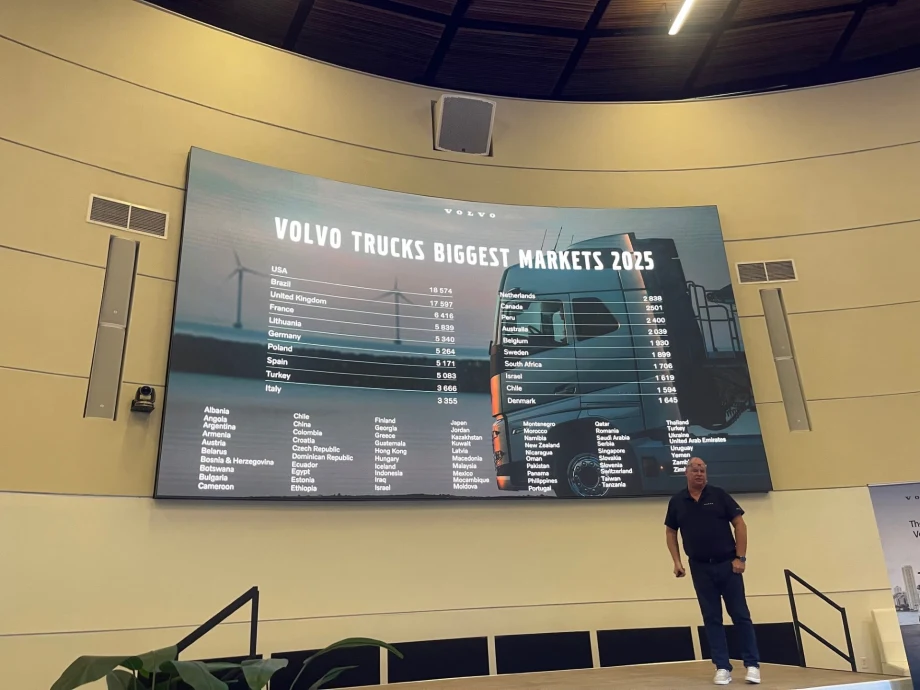
Magnus Koeck, vice president of strategy, marketing, and brand management said Volvo Trucks North America has already sold 16,000 brand-new VNL model trucks.
Jack Roberts
Volvo Trucks North America is navigating a U.S. truck market that looks weak on the surface but is quietly building momentum underneath, according to Magnus Koeck, vice president of strategy, marketing, and brand management.
Volvo invited media to its North American truck manufacturing plant and Customer Center in New River Valley, Virginia on April 1. The highlight of the event was the first media test-drives of the new Volvo VNR tractor, which the OEM launched earlier this year.
Ahead of track-time, however, Koeck took some time to brief journalists on the state of the North American trucking market from Volvo’s point of view. He also gave an update on how Volvo’s new VNL is performing now that it has entered into full production in New River Valley.
Aging Fleets Drive Replacement Demand
Opening his remarks, Koeck noted that freight demand and carrier profitability remain soft, with margins still hovering around roughly 3%. This, he admitted, is not where fleets need them to be. But at the same time, he said, order activity has surged in recent months.
February marked the strongest orders for that particular month on record, and the highest single monthly order intake since 1996.
That disconnect -- weak current conditions paired with strong forward-looking indicators -- is shaping Volvo’s outlook for 2026, Koeck added.
“We will start slow,” Koeck said. “But then it will gradually improve. We will see a very happy back end of this year.”
Koech said one of the biggest forces behind the recent spike in orders is simple: fleets are running older equipment longer than usual.
The average age of tractors in operation has climbed to around 6.5 to 7 years. These are historically high levels outside of recessionary periods.
And those older trucks are creating mounting pressure on maintenance costs, uptime, and operational efficiency for fleets.
“We are at a tipping point,” Koeck said. “Customers can’t keep their trucks longer. They require more parts, more service, and more maintenance. And none of that is free.”
As a result, fleets are beginning to re-enter the new truck market. But it’s not necessarily because freight is booming today. But rather because holding onto aging equipment is becoming more expensive than replacing it.
Another factor contributing to rising order activity is early positioning ahead of EPA 2027 emissions regulations.
While Koeck said the prebuy effect hasn’t fully materialized yet, Volvo expects it to gain momentum -- particularly for larger fleets that are already modeling future compliance costs.
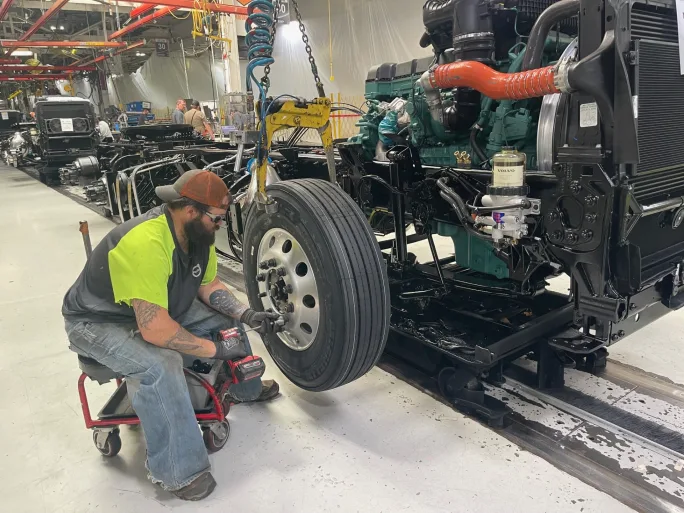
With VNL production already in full swing, Volvo is now ramping up VNR production at its New River Valley manufacturing plant.
Jack Roberts
At the same time, Koeck noted, many of the orders being placed now are for later production slots, suggesting fleets are planning for improved conditions rather than reacting to current ones.
“This is not related to the demand that we see now,” Koeck noted. “But we do see a positive outlook for later this year among our customers.”
That optimism is translating into a cautious but noticeable shift in market sentiment.
16,000 New VNLs on the Road
Even in a soft freight environment, Koeck said operating cost improvements remain a powerful driver of purchasing decisions.
He highlighted the economics behind Volvo’s latest aerodynamic and powertrain improvements, using real-world fuel price scenarios to illustrate the impact.
And the Iran war is obviously playing a role with fuel prices today. Koeck noted that diesel recently reaching as high as $7.69 per gallon in parts of California. The national average, as of April 1, is above $5 a gallon.
But in that environment, Koeck noted that Volvo estimates a 10% fuel efficiency gain can deliver significant annual savings for fleets.
At a national average of $5.38 per gallon, that equates to roughly $7,800 in yearly savings per truck. California-level pricing could push that figure above $10,000 annually, he added.
Koeck tied that 10% fuel-efficiency improvement directly to Volvo’s new-generation platform strategy, led by the redesigned VNL and now extending to the new VNR.
The recently launched VNL, he said, represents “the safest, most fuel-efficient, most comfortable and connected truck Volvo has ever built.”
It’s also a truck, he said, that is setting the benchmark for Volvo’s latest aerodynamic, powertrain, and connectivity gains.
And North American market is responding, Koeck said. He noted that Volvo has already produced 16,000 new VNL models since production began.
Those same core improvements are now carrying over into the VNR, giving regional-haul customers access to similar efficiency gains that were previously concentrated in long-haul applications.
He emphasized that the efficiency gains are not just theoretical, pointing to early customer data supporting Volvo’s claims.
With fuel representing one of the largest operating expenses, Koeck framed the improvement as an immediate bottom-line benefit -- effectively boosting carrier margins by several percentage points depending on fuel prices.
Beyond cost, the improvements also translate into substantial emissions reductions, reinforcing the growing importance of sustainability alongside economics.
VNR Production Ramps Up
Against that backdrop, Volvo is rolling out the next phase of its product strategy with the updated VNR regional haul platform.
The new truck has already generated approximately 2,000 orders, Koeck said, with deliveries beginning as Volvo ramps up manufacturing.
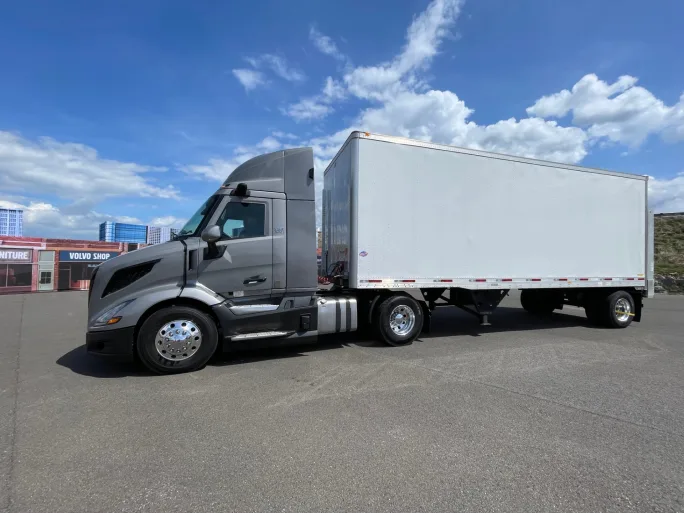
A new Volvo VNR prepares enter the test track at the Volvo Customer Center in Dublin, Virginia.
Jack Roberts
Together, the two new models represent the first two products on Volvo’s new North American platform, with a third variant (most likely a new vocational/heavy-haul VNX model) expected later this year.
Capacity Expansion Signals Confidence
Volvo is backing its product push with significant manufacturing investments across North America.
The company is investing heavily in its New River Valley plant in Dublin, Virginia, while also building a new $700 million factory in Monterrey, Mexico.
The Mexico facility -- set to begin construction later this year -- will serve as a complementary plant, increasing capacity rather than replacing U.S. production.
“This plant will always be our major plant for Volvo in North America,” Koeck said of the New River Valley facility. “But we need more capacity in order to meet expected demand.”
Dealers are also investing heavily, contributing roughly $1 billion of their own capital to expand service capacity, including infrastructure for electric trucks, he added.
Beyond hardware, Volvo continues to emphasize its broader ecosystem of services ranging from financing and insurance to uptime solutions and connectivity.
Modern Volvo trucks now generate extensive operational data, allowing fleets to track metrics such as fuel economy, idle time, and utilization in real time.
Over-the-air update capability is also expanding, reducing the need for shop visits and improving uptime. Koeck said this is a growing priority as fleets look to maximize efficiency in a challenging freight environment.
“We are not just selling trucks,” Koeck said. “We are selling the total package.”
A Slow Start, Stronger Finish Expected
For 2026, Volvo expects a familiar pattern: a sluggish start followed by improving conditions as the year progresses.
Retail truck registrations in early 2026 have been historically low, and March is expected to remain soft. But improving order trends, aging fleets, and cautious optimism among customers point to a stronger second half.
“I am more optimistic now than I was two months ago,” Koeck noted.
If those signals hold, the industry may be approaching an inflection point, he added: A market driven less by immediate freight demand and more by the fundamental need to refresh an aging fleet.
More Fleet Management

How MFA Helps Protect Trucking Fleets
Multi-factor authentication adds protection when passwords are stolen. Here’s how it works and where fleets should start.
Read More →
How Better Freight Data Helps Trucking Teams Get Ahead of Disruption
Trucking and logistics teams have plenty of data. The problem is getting the right information in front of the right people soon enough to act. Better-connected data can help teams spot trouble earlier and make smarter decisions before small problems become big ones.
Read More →
Trimble: Taking Artificial Intelligence in Trucking Beyond Faster Tasks
At Insight 2026, Trimble executives argued that fleets may need to redesign workflows to get more from AI as it introduced new products and enhancements. AI’s value will depend on how fleets combine automation with their people's knowledge.
Read More →


Nominations Open for HDT Emerging Leaders
Heavy Duty Trucking is looking for accomplished trucking fleet professionals under 40 who are making an impact and helping lead the industry forward.
Read More →
Why Private Fleets Are Taking More Freight
Private fleets are putting their own trucks on demanding customers and high-cost lanes as companies seek greater control over service, costs, and capacity.
Read More →
Color Match Smarter: Tools That Restore & Perform
For fleet managers and collision repair professionals keeping heavy-duty trucks on the road, getting the color right the first time isn't just about appearance — it's about efficiency, turnaround time, and bottom-line results. Discover how today's digital color tools are transforming the repair process from guesswork to precision.
Read More →
FMCSA Pauses Biennial-Update Enforcement Amid Motus Transition
Carriers whose updates were due on or after June 1 have more time, while FMCSA works to stabilize its new registration system and warns of phishing sites impersonating its new carrier registration system, Motus.
Read More →
2026 Blueprint for Countering Smarter Supply Chain Theft
Cargo theft is no longer just the cost of doing business. It's a multi-billion-dollar criminal enterprise exploiting vulnerabilities across your fleet, drivers, and supply chain.
Read More →
How Telematics Improves Visibility, Control, and Performance in Refrigerated Fleets
Explore how telematics help refrigerated fleets improve visibility, uptime, efficiency, compliance, and cargo protection across connected cold chain operations.
Read More →
What the U.S.-Canada Trade War Means for Trucking
Escalating U.S.-Canada tariffs could disrupt cross-border freight, reduce truck volumes, raise costs, and create new uncertainty for carriers on both sides of the border.
Read More →