




TCO: Trucking's Moving Target
Understanding total cost of ownership can give you powerful insights into every aspect of your fleet operations.

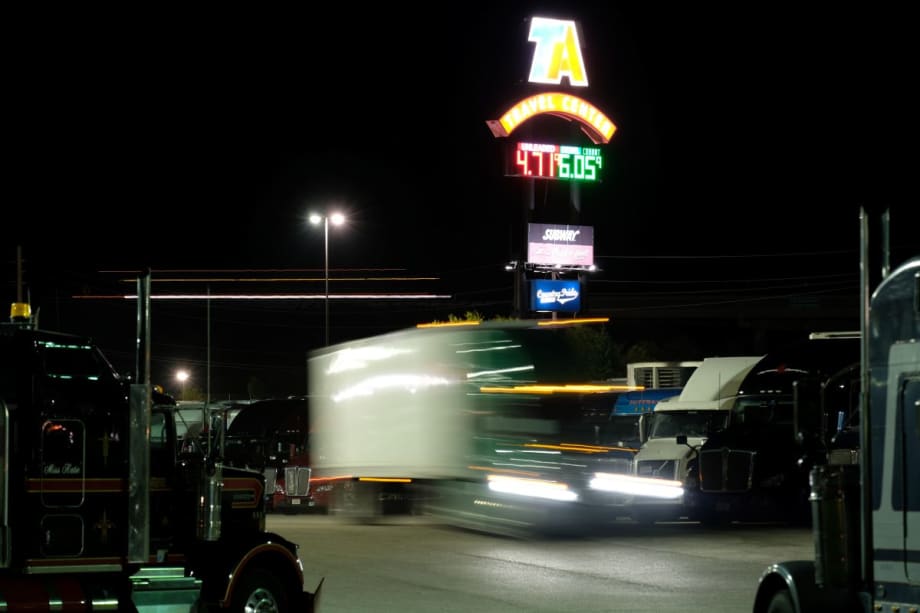
Total Cost of Ownership is a constantly moving target that requires consistency and accuracy to calculate correctly.
Photo: Jim Park
Is your fleet making money? That can be a surprisingly hard question, particularly in the daily grind of keeping trucks moving and making deliveries on time.
Understanding a fleet’s bottom line requires understanding the total cost of ownership of the assets that enable your business to function — the full lifecycle costs of owning and operating a commercial vehicle.
But TCO can tell you so much more than whether your business is profitable.
It can give you powerful insights into every aspect of your operations. Drilling down into the data, fleet operators can make informed decisions on vehicle acquisition strategies, maintenance, and asset replacement schedules.
Buying the Truck is Just the Beginning
The up-front cost of a truck (or tire, or trailer) is just the beginning. Calculating total cost of ownership can help you determine the true costs of running trucks beyond their purchase price.
It can also identify a multitude of cost-saving opportunities. These might include better vehicle selection or spec’ing, routing changes, or maintenance practices. TCO can also help fleets determine the best fuel and powertrain options for their operations, including new zero-emission powertrains.
Paul Rosa is Penske Truck Leasing's senior vice president of procurement and fleet planning. He’s also the father of three boys who came to him one day wanting a dog — which became an object lesson in what TCO is all about.
“They’d pooled their money together to buy the dog, and they thought that was pretty much the end of it," Rosa says. "But then, I said, ‘Okay. But about food? Training? Vet services? Treats? A leash? A kennel? And all the time involved? And everything else that goes into owning a dog?’”
It may be a simplified analogy, “but that is total cost of ownership in a nutshell,” he says. “The costs don’t stop once you buy an asset. You also pay to own and operate that asset. And understanding those costs is critical for fleets.”

Buying a truck is like buying a dog, Paul Rosa says. You have to calculate and understand ongoing costs beyond the initial purchase price.
Photo: Jack Roberts
TCO Means Looking at Equipment Holistically
Brian Antonellis, senior vice president of fleet operations for Fleet Advantage, explains that TCO is about looking at a piece of equipment holistically.
Many fleet operators use TCO to calculate asset costs on a yearly basis, he says. But he advises fleets he consults with to “trend” the lifecycle costs of a truck from the very first day it goes to work.
“What you’re really trying to do with TCO is predict the end of useful life for that asset,” Antonellis says. “That’s not the ‘end of life’ from the truck’s functional capability. But rather from the viewpoint of the economic capability of that asset.”
Consider that a brand-new Class 8 truck will easily accumulate a million miles over its usable life. You need to focus on the long-term costs associated with that piece of equipment to understand how it is performing.
"If you think about it, you know a truck is capable of running 1 million miles. It just depends on how many of those miles you want to pay for.”
In essence, Antonellis says, TCO calculations should be an ongoing project — constantly comparing the cost of operating a piece of equipment versus its value and when would be the best time to replace it with a new piece of equipment.
The problem, of course, is that many different factors play into owning and operating a truck. And those factors change with application, geography, and the time of year.
Not only will no two fleets calculate TCO using the same metrics, a single fleet may well have to calculate TCO differently for assets engaged in different types of work, areas of the country, or terrain.
Making the TCO Metrics Work
TCO is a combination of many comprehensive metrics that include indirect and direct costs associated with the operation, Rosa says. Understanding how to factor both types of costs is critical for determining accurate TCO.
Fuel is the largest cost most fleets deal with, followed by drivers.
The wages and benefits you pay your drivers are direct costs, but there are also indirect costs associated with them.
Fleets that lack a sound interview and qualification process for new driver hires and a long-term pay strategy to retain them can quickly find indirect costs piling up on a piece of equipment. That's because now you have to factor in the replacement costs for losing drivers.
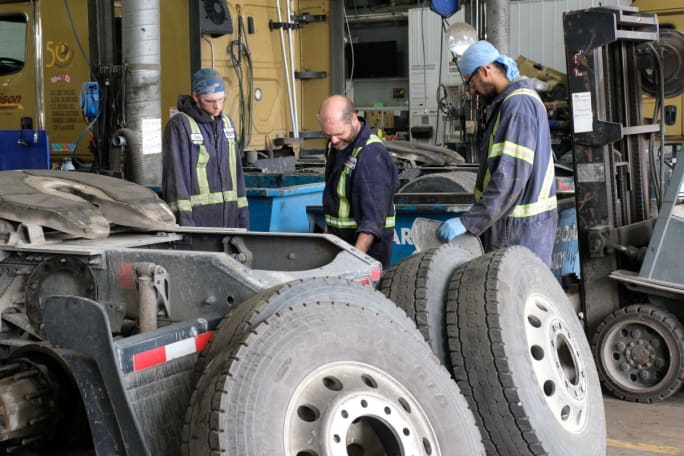
As trucks get older, they get more costly to operate. TCO can tell you when it's time to invest in new vehicles.
Photo: Jim Park
“It’s the same thing with maintenance. What are you going to do if you can’t use a truck?" Rosa says. "Are you going to lease a vehicle? That’s another indirect cost that has to be taken into account."
There are many others, such as tolls, licenses, permits, registration fees, and insurance.
An accident is certainly an indirect cost, Antonellis adds. But something as basic as tires can be, as well.
“What if you have a food service fleet and your tires, usually last about half of their life cycle because your trucks drive over curbs all day long?” he says. “You want to exclude that as a TCO metric.”
That’s because your drivers are still going to back over that same curb every day, Antonellis says, no matter what kind of truck you buy. And no matter how careful they are, they’re getting mirrors knocked off all the time.
“It’s a very different environment from a truck operating in the Midwest where you never hit curbs or have to back down alleys or anything like that,” he adds.
“So focus on what the truck is doing. And try to exclude factors that come into play from where it’s operating, versus how it’s operating.”
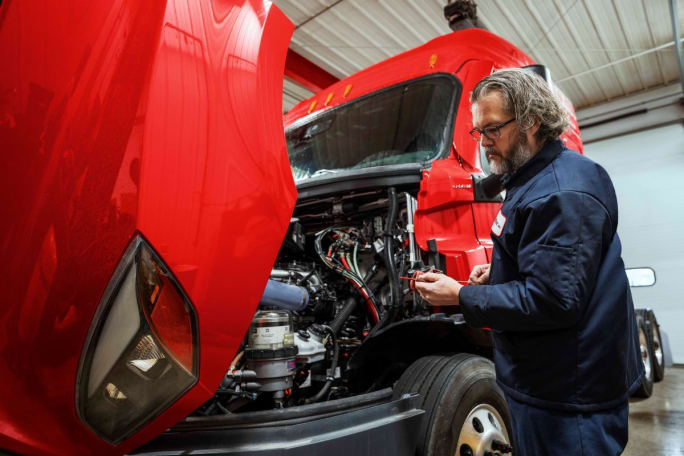
TCO is aimed at predicting the end of a truck's useful life in your specific operations.
Photo: Citgo
Why Total Cost of Ownership is a Moving Target
Tracking fuel consumption is a major TCO component, and it illustrates the complexities of accurately calculating the cost of owning a commercial vehicle.
Antonellis says that, on average, a new Class 8 truck loses about 2% of its fuel economy every year. This is known as “fuel degradation.”
“If you’re disposing of your equipment every four years, around the 450,000-mile mark, then a new piece of equipment is going to be getting about 8% better fuel economy than that truck,” Antonellis explains.
But at the 450,000-mile mark, the fuel degradation gap starts to widen increasingly fast.
Most fleets running new trucks see a TCO of around 1.5 to 2 cents a mile, Antonellis says. That translates to an operating cost of $1,500 to $2,000 annually.
“But all of the sudden, around the five-year mark, TCO shows you that it’s costing you $12,000 to $15,000 a year to operate that truck,” he says.
“So naturally, you assume that if you replace that unit with a new truck, you’re going to save $13,000 to $20,000 a year by going back to Year One operating and fuel costs.”
If only things were that simple.
“But then you have to return to reality,” Antonellis says. “Because we’ve gone through a pretty dramatic inflationary period over the past few years. So the finance charge for a new truck is going to be a heck of a lot more now than it was when you bought that piece of equipment back in 2020.”
This is one reason why understanding TCO is so powerful for fleets, he says. You can take all the increased costs of financing a new truck and compare them with the operational savings you’ll see by going back to a Year One maintenance and operating schedule. With that knowledge, you can confidently decide the correct replacement time for your assets.
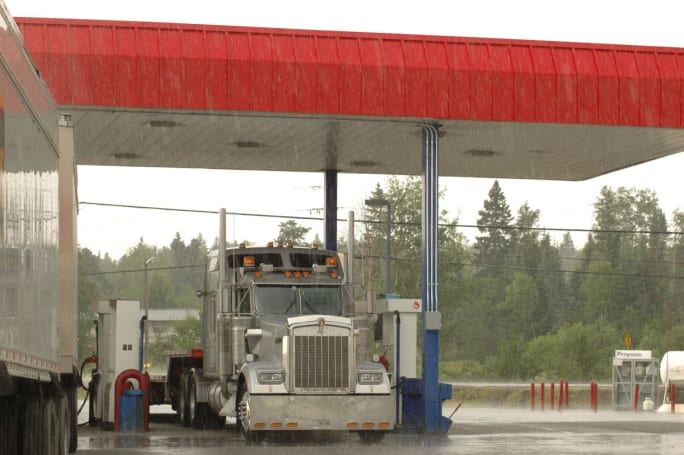
Fuel consumption is a major TCO component for fleets -- and a metric that has to be adjusted every year.
Photo: Jim Park
It's also why you have to stay on top of your TCO metrics and make sure you’re plugging in as many current metrics as possible, Rosa adds.
“A lot of fleets get caught in a TCO trap because they pencil everything out the first year and assume those numbers will be good for the life of the truck,” he says.
“TCO is a continuous evaluation process. Some costs go up over the life of a truck. But other metrics can get better over time — especially if you’re acting on the TCO data.
"So, if your TCO metrics aren’t current, you could be spending more money on something or not taking advantage of potential savings without realizing it."
Both Rosa and Antonellis stress that the key to making the most out of total cost of ownership calculations is to constantly revisit and verify the inputs in the parameters that make up your TCO equation.
More Fleet Management

Color Match Smarter: Tools That Restore & Perform
For fleet managers and collision repair professionals keeping heavy-duty trucks on the road, getting the color right the first time isn't just about appearance — it's about efficiency, turnaround time, and bottom-line results. Discover how today's digital color tools are transforming the repair process from guesswork to precision.
Read More →
FMCSA Pauses Biennial-Update Enforcement Amid Motus Transition
Carriers whose updates were due on or after June 1 have more time, while FMCSA works to stabilize its new registration system and warns of phishing sites impersonating its new carrier registration system, Motus.
Read More →
2026 Blueprint for Countering Smarter Supply Chain Theft
Cargo theft is no longer just the cost of doing business. It's a multi-billion-dollar criminal enterprise exploiting vulnerabilities across your fleet, drivers, and supply chain.
Read More →


How Telematics Improves Visibility, Control, and Performance in Refrigerated Fleets
Explore how telematics help refrigerated fleets improve visibility, uptime, efficiency, compliance, and cargo protection across connected cold chain operations.
Read More →
What the U.S.-Canada Trade War Means for Trucking
Escalating U.S.-Canada tariffs could disrupt cross-border freight, reduce truck volumes, raise costs, and create new uncertainty for carriers on both sides of the border.
Read More →
What Are Trucking’s Top Concerns for 2026?
The American Transportation Research Institute wants to know what's worrying trucking fleet managers, drivers, and other stakeholders in its annual Industry Issues survey.
Read More →
American Trucking Associations Looks for a New Leader
ATA President and CEO Chris Spear abruptly left his job at the association on August 21, at a pivotal time for the trucking industry.
Read More →
Public Wi-Fi Cybersecurity Risks: How Truck Drivers and Fleets Can Protect Their Data
Public Wi-Fi can expose truck drivers and fleets to credential theft, malware, and other cyber threats. Here’s how to reduce the risk on the road.
Read More →
For Nicky Cupp, Fleet Innovation Starts With Frustration
HDT Truck Fleet Innovator Nicky Cupp turns everyday pain points at Fraley & Schilling into opportunities for better technology and smarter processes.
Read More →
Adam Buttgenbach’s Approach to Electric Trucks: Start With Where They Fit
HDT Truck Fleet Innovator Adam Buttgenbach helped PepsiCo build one of North America’s largest EV fleets by focusing on where electric trucks make operational sense.
Read More →