




From Long Haul to Short Loops: The New Math Behind Day Cabs
As warehouse networks expand, predictable regional routes are replacing long-haul runs—reshaping how fleets spec, operate, and resell day cabs.
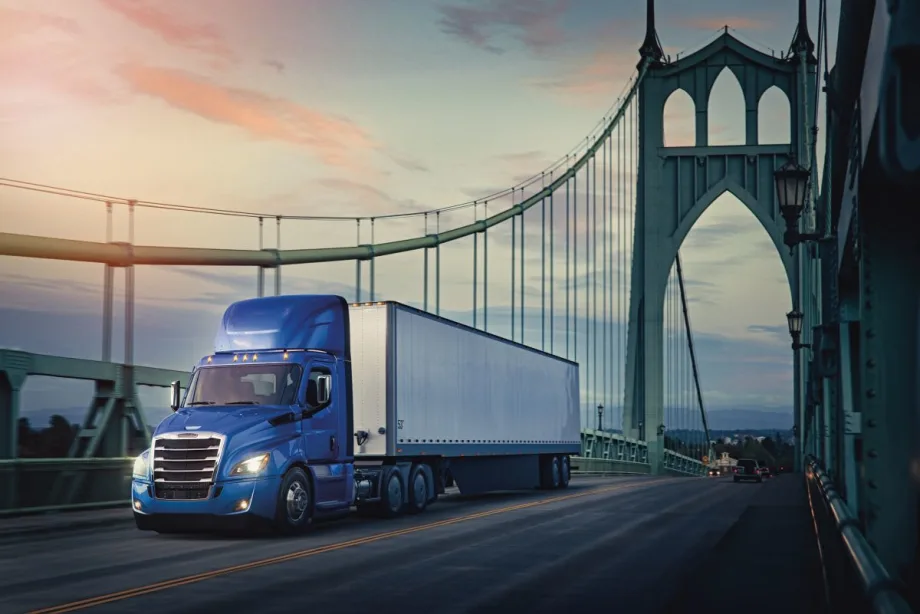
Compressed routes and home-daily schedules are driving demand for new and used day cabs.
SelecTrucks
- Regional routes have been increasing compared to traditional long-haul routes.
- This shift is changing how fleets specify, operate, and manage the resale of day cabs.
- Fleets are adapting to the new demands by optimizing day cab designs for regional efficiency and operational predictability.
*Summarized by AI
Drive through almost any major freight corridor, and you'll see an indication of a big change in trucking networks: Warehouses. Lots of them.
More than 2.5 billion square feet of industrial warehouse space was built in the United States between 2020 and 2024. Why? Fulfilling online orders takes about three times more warehouse space per dollar of revenue than traditional brick-and-mortar retail. Retailers now consistently operate multiple fulfillment centers within 200 miles of major metro areas.
Regional warehouses are more numerous, larger than before, and increasingly located closer to where people live. That expanding footprint has pulled freight inward, shortening runs and reshaping daily operations.
The shift from long-haul corridors to regional distribution networks is redefining operational and equipment strategies, as well as the used truck market, but not in a one-size-fits-all way.
The Rise of Day Cabs in Regional Operations
As routes compress and freight flows become more predictable, some segments are leaning heavily into day cabs, especially private and regional distribution operations.
That doesn’t necessarily indicate a broad industry shift away from sleepers. Instead, it signals a meaningful realignment inside specific customer groups where duty cycles now favor home-every-night consistency.
Where day cabs may have been viewed more as a niche or secondary option in the past, recent warehouse growth has made them a focal point of truck buying decisions and carries downstream implications for depreciation and remarketing performance.
However, this does not reflect a permanent market-wide pivot. Recent buying patterns are more indicative of cyclical factors, including private fleet replacement and expansion, and stronger vocational demand.
Understanding these dynamics is important.
Shorter Loops Are Replacing Long Runs
As e-commerce has expanded, freight patterns have become more structured.
Long, open-ended runs are giving way to fixed loops that connect fulfillment centers to regional distribution hubs and delivery terminals. Predictability is becoming a priority. When a run is roughly 200 miles out and 200 miles back, it can fit cleanly within a single shift. Trucks leave the yard in the morning, cycle freight through the network, and return to the same facility by day’s end.
As shorter, repeatable routes become more prevalent in warehouse-driven operations, equipment requirements are shifting accordingly.
Sleeper tractors were built for long-distance, multi-day flexibility, yet many are now assigned to work that typically doesn’t require an overnight stay. In those applications, sleeper features may go underutilized.
Day cabs better match the duty cycle and deliver the same hauling capability without unnecessary equipment, making them a more practical fit for certain warehouse and regional operations.
E-Commerce Has Shifted the Center of Gravity to the Middle Mile
E-commerce is pushing more freight into the middle mile, where consistency matters more than flexibility.
Large networks such as FedEx and Amazon, which alone operate more than 600 active U.S. logistics facilities, rely on tightly coordinated facilities that must stay in sync to meet delivery expectations. Freight moves continuously between nodes on fixed schedules. And that leaves little margin for delay or downtime.
Day cabs are a natural fit for that environment. They are designed for dock-to-dock transfers on the same lanes, day after day, supporting the kind of repeatable operations middle-mile networks demand.
Many fleets now increasingly prioritize specifications that emphasize reliability and control, including advanced safety systems and ease of service, rather than features intended for extended time on the road.
That carries directly into the used market, where buyers running similar middle-mile routes look for trucks that reflect how their networks actually operate.
Home-Every-Night Routes Are Reshaping Driver Expectations
Drivers have influenced this shift in a very tangible way.
After years on the road, many experienced drivers see these fixed, warehouse-based routes as a step toward more regular schedules and a way to get home every night. Trucking companies that can offer this type of work often see steadier staffing and lower turnover, particularly in competitive labor markets.
That stability carries through to the equipment. Day cab miles tend to accumulate at a more consistent pace, maintenance follows a more predictable pattern, and service records are easier for the next owner to evaluate.
Many carriers have shortened average trip lengths to improve home-time frequency, a shift that increases the appeal of day cab equipment configured for regional, out-and-back operations.
Even when buyers don’t know the specific route history, they recognize the difference. Trucks that reflect a steady, well-managed operating life are easier to own and more likely to support strong resale performance.
Buyer Segments Shape Who Buys What
Once day cabs reach the secondary market, geography can shape performance. But it often reflects something more specific: which buyer segments are active in that region.
Buyer expectations can shift dramatically from one market to the next, and recent demand patterns are also influenced by cyclical factors, including private fleet replacement and expansion, and strong vocational demand.
In some markets, the operating environment and buyer priorities shape what used trucks sell fastest. High-corrosion areas, including regions with heavy road salt or coastal exposure, tend to drive closer scrutiny of frames, wiring, and undercarriage condition. In those regions, condition and maintenance documentation can determine not simply how a truck is priced, but also whether a truck is considered at all.
In other regions, particularly those tied to agriculture, construction, or medium-duty vocational work, buyers tend to evaluate trucks through a different lens. Durability, mechanical condition, and acquisition cost may take precedence over electronic features or cosmetic refinements.
These regional and market differences can affect pricing as well as what resale channels will work best.
Specs and Utilization Define Resale Outcomes
Utilization expectations are also a factor.
Buyers are generally comfortable with higher mileage on sleeper tractors because long-haul duty cycles are built into the assumption. Day cabs, however, are judged differently.
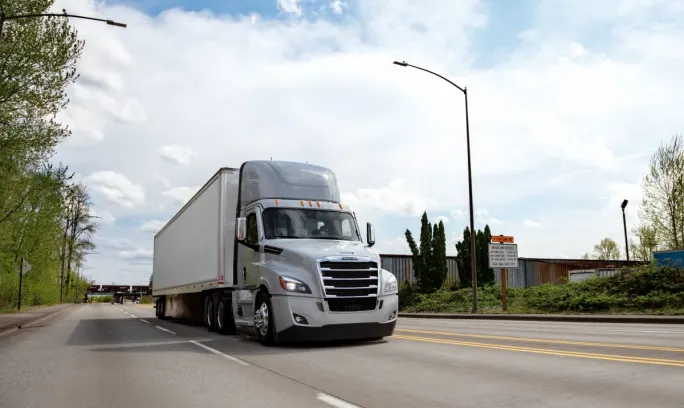
In warehouse and parcel operations, safety systems are increasingly viewed as baseline requirements due to insurance standards and customer policies.
SelecTrucks
In many warehouse and regional applications, lower annual mileage is expected. A four-year-old day cab showing 400,000 miles often draws closer scrutiny and narrows the buyer pool.
And the cycle can swing quickly. For instance, we saw day cab inventory briefly leading in late 2024, but by January 2026 it had become a tighter market, with day cab inventory down about 13% year-over-year.
That underscores how resale outcomes hinge on how well the specs and utilization match the next buyer’s duty cycle.
In both environments, when supply tightens or loosens, the best performers are still the trucks with a clean history, the right mileage, and other specs buyers require.
Specifications carry equal weight when looking at selling used trucks.
In warehouse and parcel operations, safety systems are increasingly viewed as baseline requirements due to insurance standards and customer policies. Trucks without them may struggle to reach serious consideration.
Other factors might include new tires or PTO preparation, which can broaden a truck’s potential applications. Remaining warranty coverage appeals to buyers who can’t afford large, unexpected repair costs.
Remarketing Success Depends on Placement, Not Volume
The big picture? All these factors fundamentally change how day cabs should be remarketed.
Oversupply rarely develops evenly across the country. Instead, it tends to concentrate in specific metro areas, while other regions continue to support steady buyer demand.
Because day cab values correlate more closely with regional economic activity than national freight trends, geographic price variations can exceed 30% between strong and weak markets.
Where a truck is sold can matter as much as when.
In this landscape, effective remarketing depends less on total inventory levels and more on strategic placement. Moving trucks into the right regions, identifying where reconditioning will generate a meaningful return, and recognizing when speed of sale matters more than incremental price are all critical considerations.
Some units are best positioned in premium retail channels, while others perform better as value-oriented offerings where liquidity and turnover are the priority.
Day Cabs Are Built for the Warehouse Economy
Warehouse growth may have slowed slightly, but it’s not going away. Distribution networks continue to expand. New-truck prices are still higher than prior years. Operating requirements are becoming more demanding.
In this freight economy, well-specified day cabs built for short-haul, repeatable work have become a big asset for warehouse-driven networks.

Marc Sutton
SelecTrucks
About the Author: Marc Sutton leads Daimler Trucks North America’s used truck sales and distribution network strategy, focusing on maximizing resale value in the secondary market and building the network of SelecTrucks licensees and dealers. Since joining the company in 2011, he has held roles in product strategy, network development, extended service coverage, and the project management office.
This article was authored and edited according to Heavy Duty Trucking’s editorial standards and style to provide useful information to our readers. Opinions expressed may not reflect those of HDT.
Quick Answers
Predictable regional routes are becoming more common due to the expansion of warehouse networks, allowing fleets to utilize shorter and more efficient routes, and by truck drivers who desire more time at home.
*Summarized by AI
More Equipment

Kodiak Targets Dallas–Houston for Driverless Trucks
The company says its autonomous trucks are completing the I-45 run without a safety observer taking control. It plans to remove the observer by the end of 2026.
Read More →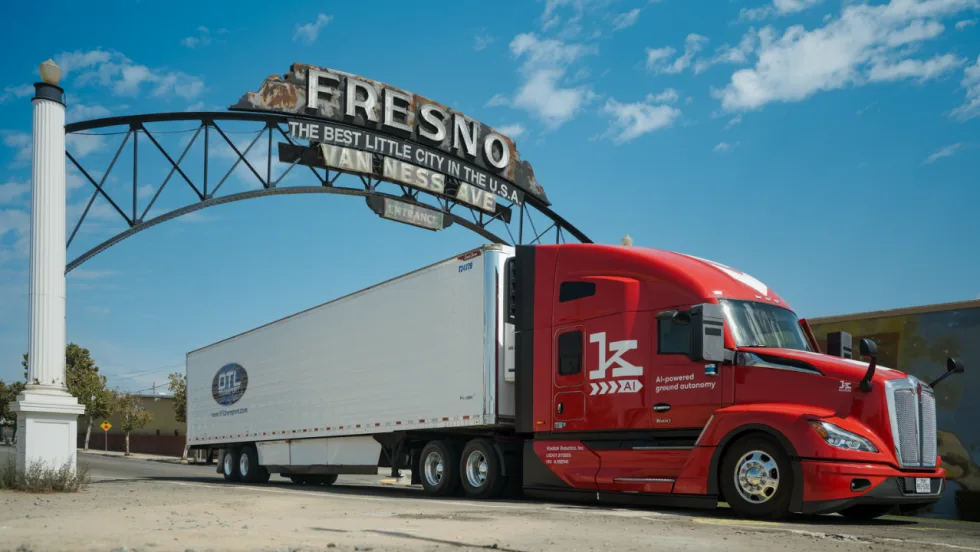
Kodiak Hauls Produce in California Autonomous Truck Pilot
Kodiak AI and DTL Transport have begun hauling produce between Fresno and Los Angeles under California’s new rules for testing heavy-duty autonomous trucks. A safety driver remains behind the wheel.
Read More →
Used-Truck Remarketing Math Is Changing
Used-truck value is no longer just a concern at trade-in. Decisions made throughout a truck’s first life can influence what it’s worth years later.
Read More →
How Volvo Updated Its D13 for EPA 2027 [Watch]
Volvo’s updated D13 promises lower emissions without sacrificing performance or fuel economy. Take a closer look at what changed inside the engine in this HDT Spotlight video.
Read More →
Michelin Tire Improves Efficiency and Durability for Regional Fleets
The Michelin X Multi Energy D2 is a regional haul drive tire engineered to help fleets improve fuel efficiency, durability and traction in demanding stop-and-go operations.
Read More →
ZF Expands Commercial Vehicle Push in North America
ZF is expanding its North American commercial-vehicle presence with new transmission applications, electrification, trailer technology and autonomous-driving systems.
Read More →
Tesla Wants a Self-Driving Semi. Are Cameras Enough?
Could Tesla’s camera-only autonomous driving technology work on an 80,000-pound Semi? In this commentary, HDT's Deborah Lockridge takes a look at Tesla, Cybercab, and how autonomous trucks see the road.
Read More →Kodiak: Driverless Long-Haul Truck Launch on Track for 2026
Kodiak AI says its driverless long-haul safety case is 93% complete and it remains on track to begin commercial operations by year-end 2026.
Read More →
What DOT’s Automated Vehicle Strategy Means for Trucking
The U.S. Department of Transportation issued a new automated-vehicle strategy that outlines plans for driverless-truck regulations, cross-state freight corridors, and federal safety standards.
Read More →
East Coast Port Launches $45M Electric Truck Push
The Port Authority of New York and New Jersey announced millions in incentives for zero-emission drayage trucks, yard tractors, and new charging hubs near the port.
Read More →