





“Making sure that the drivers get back home in their bed for their sleep cycle really became our priority.” — Keith Wilson, Titan Freight Systems
A Happy Medium: How Drivers Influence Regional Freight Movement
As more drivers look toward regional haul as a more predictable trucking job, some fleets are adapting their operations to meet those expectations.
April 6, 2023
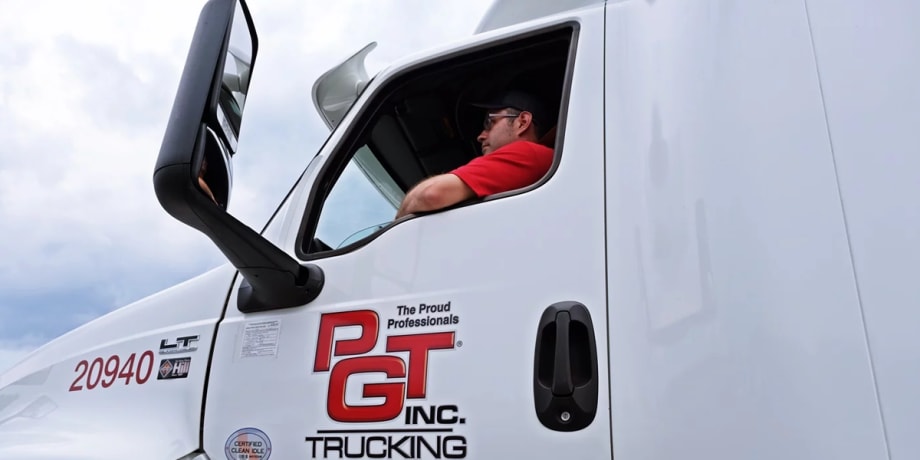
PGT’s Katie Irvine calls regional haul the “the happy medium” between over-the-road and local routes.
Photo: PGT Trucking
5 min to read
For the past few years, regional haul has been noticeably increasing in popularity among drivers, who more than ever are expressing a desire to be home more often. Some fleets have been working toward more predictable freight routes to help make that happen.
Titan Freight Systems, a general freight carrier providing overnight services across the Pacific Northwest, recognized the need to break up long routes to avoid layovers for its drivers about three years ago. Ever since, the regional less-than-truckload carrier has been running a successful meet-and-swap operation.
“It’s very difficult to go from Spokane, Washington, to Portland, Oregon, which is about 350 miles away, and it’s difficult to get them back. That’s a 700-mile turn, and hours of service would preclude us from doing that,” explains Keith Wilson, Titan president and CEO, and a 2022 HDT Truck Fleet Innovator.
Where once the answer was a layover in Eugene (about 110 miles away from Portland) every other day for drivers, Titan instead reworked its network to get drivers on this route home every night.
Now, a driver in Eugene and a driver in Spokane start their route at the same time, heading for a halfway point. The Eugene driver will pick up the load in Portland and meet the Spokane driver between Portland and Spokane. There, the drivers will swap trailers and head back to their home terminals.
While more connections like this one leave room for some issues and introduce a slight freight delay, it’s a marginal loss of efficiency when factoring in driver satisfaction, Wilson says.
“Making sure that the drivers get back home in their bed for their sleep cycle really became our priority, and they really appreciated that support,” Wilson says. The meet-and-swap operations led to about a 15-minute delay in nightly vital operations, but Wilson says the fleet has experienced a “much stronger driver satisfaction quotient,” and is no longer hearing quality-of-life concerns from those drivers.
At PGT Trucking, a Pennsylvania-based flatbed carrier that specializes in regional haul, drivers also see regional operations as a means for more predictability. Or, as PGT Communications and Media Director Katie Irvine calls it, “the happy medium.”
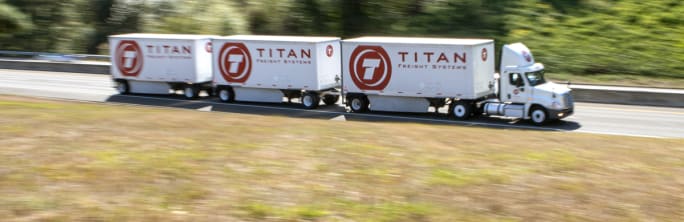
Making sure drivers are home each night became a priority for Titan, which has noticed an increase in driver satisfaction since eliminating layovers on some routes.
Photo: Titan Freight Systems
“Regional routes are this happy medium, somewhere between the old school over-the-road, running from East Coast to West Coast and back again, and these local trips. You make a lot of money when you’re over the road. You maybe don’t make as much money when you’re running local, but you’re home,” she says. With the right operations, regional can serve the in between.
Regional Truck Drivers: Never Far from Home
Not all regional drivers can be home every night, but there is some predictability and comfort in knowing that they’ll never be more than 400 miles from home (or less, depending on how your fleet defines regional.
Knowing the next load is in the same area creates predictability and familiarity that many drivers prefer. That same predictability often also offers drivers more clarity in how much money they’re going to make.
“It does feel like a lot of the newer drivers that are coming into the industry want as much home time as possible,” says PGT Trucking Director of Operations Tyler Damazo. “In transportation, there’s never anything that's guaranteed. But with our regional drivers, we all but guarantee that they'll be home on the weekends. As long as something unforeseen doesn't happen. There’s a lot of predictability with the way our terminals are located in our freight network and customers.”
The solution to the driver shortage is "work life balance," says for-hire carrier Paper Transport's CEO Ben Schill.
"If you're going to continue to chase drivers that are going to be on the road for three months at a time... you're chasing a dying breed of worker," Schill says. "The industry just needs to change, and there's a lot that are trying to do it."
Paper Transport, for example, runs operations where half of its drivers are home daily.
"You have significant retention improvements in drivers that are home daily versus out on the road," he says. "More and more of the industry is going to go that that route to have a stable workforce. You know, you're always going to have drivers that can make a lot of money that are going to stay out on the road, but again, that's a smaller and smaller pool that that we're chasing as an industry.
Regional-Haul Operations Allow Fleets to Build Predictability into the Unpredictable
Regional-haul operations excel at serving a variety of customers and loads. While new drivers may look to regional for more predictable work schedules, they still need to be versatile drivers who can adapt to the often-unpredictable landscape of regional haul.
PGT Trucking, for example, has carved out a pretty good niche primarily serving the steel industry in Pennsylvania. But that doesn’t mean drivers can get too comfortable. It also hauls building materials and serves other industries.
“In the hiring process, every incoming driver talks to somebody in operations to make sure they don’t have any restrictions as far as what they’re going to haul,” PGT’s Damazo says. “We’re well-versed in the commodities and customers that we work with, so if we have a driver landing in Chicago and he needs to get to Virginia… we have customers that ship down there. Just because you’re primarily a steel hauler doesn’t mean today you’re not going to take a lumber load to get you home.”
Because PGT knows its customers and freight offerings well, it has been able to build in a lot of forecasting and predictability for their drivers.
At Titan, all its drivers are doing shift work for this reason. While you can’t control everything in transportation, leaning on what you can foresee can be enough for many drivers.
“Predictably 90% of the time [our drivers] know exactly their start time,” Titan’s Wilson said. “Now, the end time is always subject to the freight volume.”
This article appears in the April 2023 issue of Heavy Duty Trucking.
Editor's Note: This article was updated on April 21 at 11 A.M. to include comments from Paper Transport.
Explore the entire collection of 'How Freight Movement is Changing.'
Subscribe to Our Newsletter
More Fleet Management

Sponsored•September 16, 2026
Color Match Smarter: Tools That Restore & Perform
For fleet managers and collision repair professionals keeping heavy-duty trucks on the road, getting the color right the first time isn't just about appearance — it's about efficiency, turnaround time, and bottom-line results. Discover how today's digital color tools are transforming the repair process from guesswork to precision.
Read More →
FMCSA Pauses Biennial-Update Enforcement Amid Motus Transition
Carriers whose updates were due on or after June 1 have more time, while FMCSA works to stabilize its new registration system and warns of phishing sites impersonating its new carrier registration system, Motus.
Read More →
Sponsored•September 14, 2026
2026 Blueprint for Countering Smarter Supply Chain Theft
Cargo theft is no longer just the cost of doing business. It's a multi-billion-dollar criminal enterprise exploiting vulnerabilities across your fleet, drivers, and supply chain.
Read More →


Sponsored•September 1, 2026
How Telematics Improves Visibility, Control, and Performance in Refrigerated Fleets
Explore how telematics help refrigerated fleets improve visibility, uptime, efficiency, compliance, and cargo protection across connected cold chain operations.
Read More →
What the U.S.-Canada Trade War Means for Trucking
Escalating U.S.-Canada tariffs could disrupt cross-border freight, reduce truck volumes, raise costs, and create new uncertainty for carriers on both sides of the border.
Read More →
What Are Trucking’s Top Concerns for 2026?
The American Transportation Research Institute wants to know what's worrying trucking fleet managers, drivers, and other stakeholders in its annual Industry Issues survey.
Read More →
American Trucking Associations Looks for a New Leader
ATA President and CEO Chris Spear abruptly left his job at the association on August 21, at a pivotal time for the trucking industry.
Read More →
Public Wi-Fi Cybersecurity Risks: How Truck Drivers and Fleets Can Protect Their Data
Public Wi-Fi can expose truck drivers and fleets to credential theft, malware, and other cyber threats. Here’s how to reduce the risk on the road.
Read More →
For Nicky Cupp, Fleet Innovation Starts With Frustration
HDT Truck Fleet Innovator Nicky Cupp turns everyday pain points at Fraley & Schilling into opportunities for better technology and smarter processes.
Read More →
Adam Buttgenbach’s Approach to Electric Trucks: Start With Where They Fit
HDT Truck Fleet Innovator Adam Buttgenbach helped PepsiCo build one of North America’s largest EV fleets by focusing on where electric trucks make operational sense.
Read More →